On this page
How to identify it
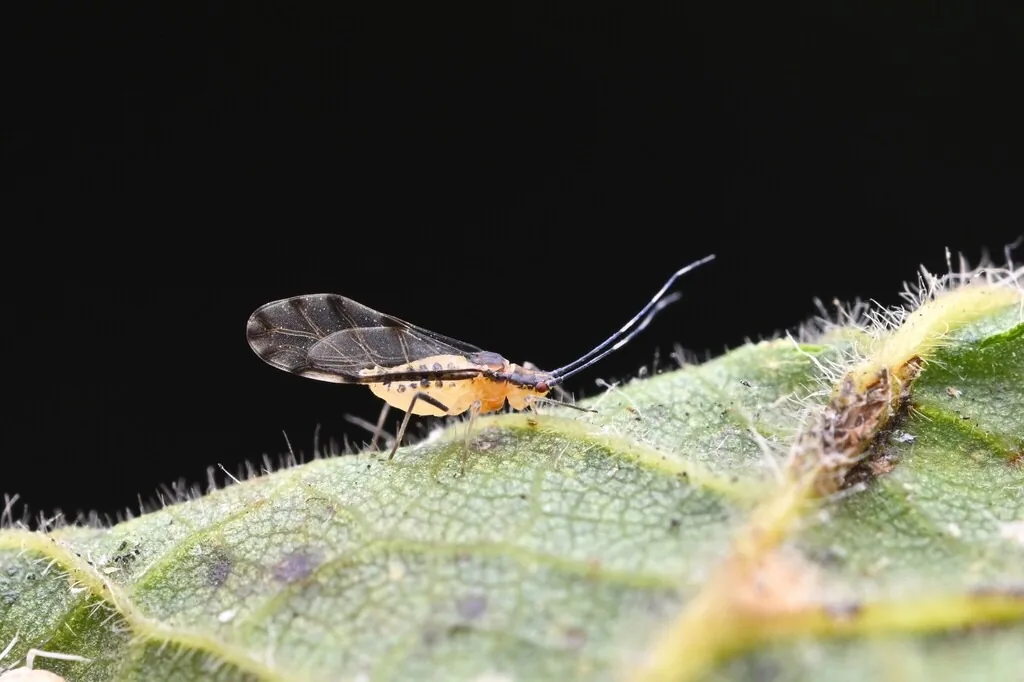
- Aphids are green with black stripes along the sides, about 0.07 to 0.12 inch long; winged forms have clouded wings.[1][2]
- Colonies feed on the undersides of leaves, and surfaces below infested trees turn shiny with honeydew and then black with sooty mold.[1][2]
- Brown to bronze aphid mummies on leaves show where parasitoid wasps have struck.[1]
Where it lives
Native to Europe and first reported in North America in 1886; it is found on street trees in the Northeast, the Pacific Northwest and California.[1][2]
Biology and life cycle
There are many generations a year, all on linden; winged males and egg-laying females appear in mid to late summer and lay the overwintering eggs.[1]
Damage and signs
Health risk
Control
Prevention
Where it is a problem, plant hairier, more resistant lindens such as Tilia platyphyllos, T. mongolica or T. petiolaris.[1]
Biological control
European parasitoid wasps are established in North America, and the PNW handbook notes the aphid is controlled by releasing parasitoids; lady beetles and aphid midges also feed on it.[1][2]
Common questions
Sources
- UMass Extension Landscape, Nursery and Urban Forestry Program (Landscape Insect & Mite Guide), “Eucallipterus tiliae (Linden Aphid).” www.umass.edu/agriculture-food-environment/landscape/publications-resources/insect-mite-guide/eucallipterus-tiliae (accessed 2026-10-16)
- Pacific Northwest Insect Management Handbook (Oregon State, Washington State, University of Idaho), “Linden (Tilia)-Aphid (Hosts and Pests of Landscape Plants).” pnwhandbooks.org/insect/hort/landscape/hosts-pests-landscape-plants/linden-tilia-aphid (accessed 2026-10-16)
- iNaturalist, “Eucallipterus tiliae taxon page (order and family).” www.inaturalist.org/taxa/389228 (accessed 2026-10-06)