On this page
How to identify it
- Aphids are tiny, about 2 mm (UMass) or under 1/16 inch (Morton), pale green to cream with a fine white waxy coating.[1][3]
- Early signs are curled, dwarfed leaves folded upward along the midvein, with the aphids hiding inside.[1][2][3]
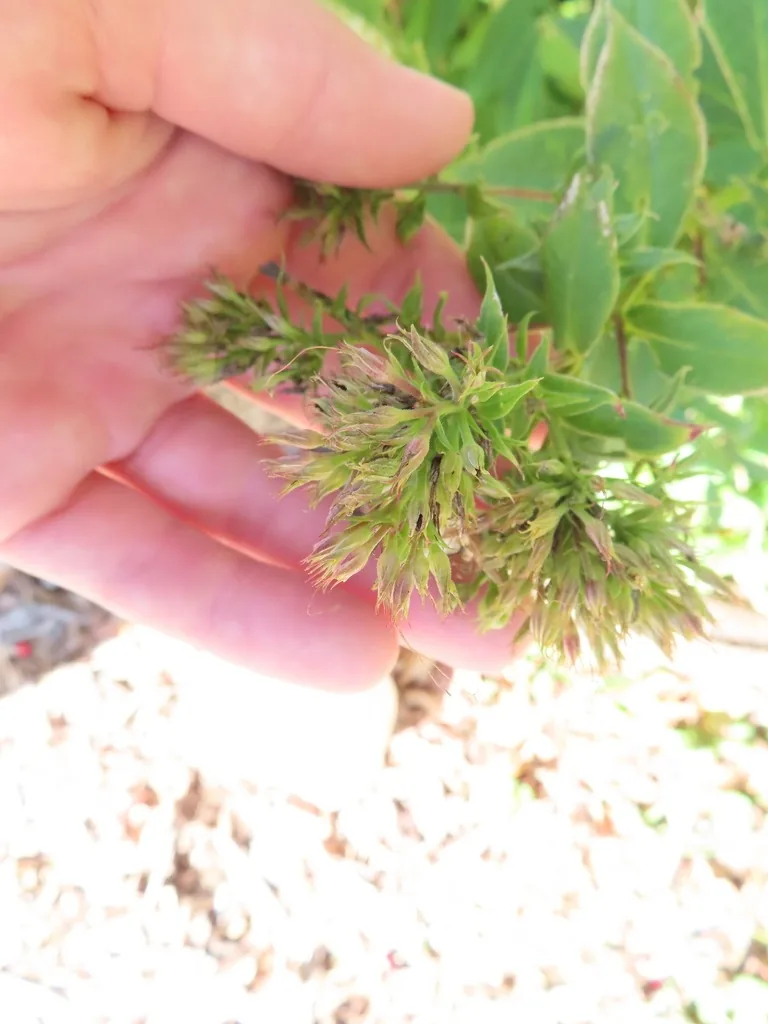
- Later, clusters of short, weak side shoots form witches' brooms whose leaves brown and die before fall color, staying obvious through winter.[1][2][3]
Where it lives
Native to Europe; first found in North America in Quebec in 1976 and in Illinois in 1981, it has since spread wherever bush honeysuckles grow.[1][2]
Biology and life cycle
It spends its whole life on honeysuckle: black eggs overwinter on twigs and buds and hatch at budbreak.[1][3]
Females give birth to live young without mating through summer; winged males and wingless females appear in late summer or September to mate and lay the overwintering eggs.[1][2][3]
Illinois notes about 90 percent of eggs are laid on the damaged tissue.[2]
Damage and signs
- Tatarian, Amur, Morrow's, small-leaved and blueleaf honeysuckles are hosts, with Tatarian honeysuckle among the most susceptible.[1][3]
- Saliva toxins stunt shoot growth, and the brooms are usually killed by frost.[1][2]
- It rarely kills plants, but repeated brooming weakens them and spoils their looks.[3]
Health risk
Control
Prevention
Illinois reports 'Arnold Red' Tatarian honeysuckle and small shrub varieties resist damage, and Morton notes over-pruning and heavy nitrogen feeding encourage aphids.[2][3]
Traps and physical control
Prune branches about 6 inches below last year's brooms in winter or early spring, before the eggs hatch, and destroy the prunings.[1][2][3]
Biological control
Lady beetles and hoverflies eat the aphids, though UMass doubts they prevent damage in landscapes.[1][3]
Pesticides
Once the leaves fold and brooms form, sprays can't reach the aphids; Illinois advises treating only at the first sign of damage during new growth.[2][3]
Common questions
Sources
- UMass Extension Landscape, Nursery and Urban Forestry Program (Landscape Insect & Mite Guide), “Hyadaphis tataricae (Honeysuckle Aphid).” www.umass.edu/agriculture-food-environment/landscape/publications-resources/insect-mite-guide/hyadaphis-tataricae (accessed 2026-10-16)
- University of Illinois Extension, “Honeysuckle Aphid (plant problem selector).” selectors.extension.illinois.edu/pathogen/honeysuckle-aphid (accessed 2026-10-16)
- The Morton Arboretum, “Honeysuckle Aphid (plant care resources).” mortonarb.org/?p=28590 (accessed 2026-10-16)
- iNaturalist, “Hyadaphis tataricae taxon page (order and family).” www.inaturalist.org/taxa/81905 (accessed 2026-10-06)