On this page
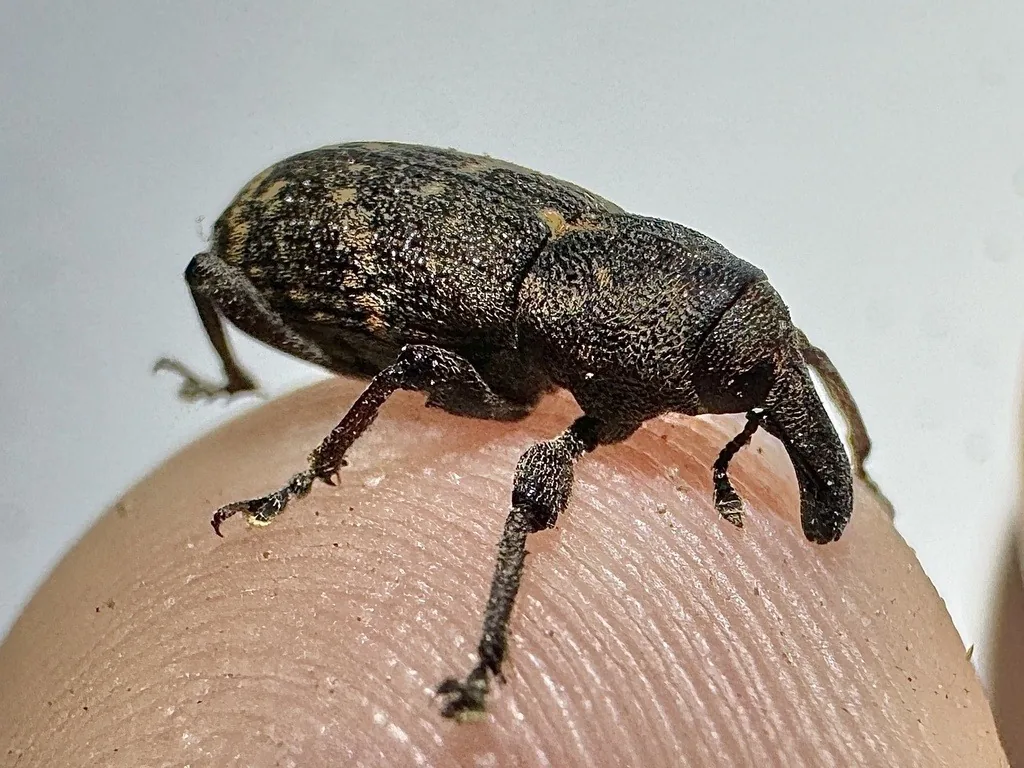
How to identify it
Look-alikes
| Look-alike | How to tell them apart |
|---|---|
| Pine root collar weevil | Has a similar life cycle, but its larvae feed under the bark at and below the soil line of living trees, yellowing and killing the foliage.[2] |
Where it lives
A serious pest in southern Illinois and the South, especially in nurseries, Christmas tree farms and cutover pine land.[1][2]
Biology and life cycle
Adults overwinter and emerge from late April to June; they feed at night and hide in leaf litter by day, and many live two seasons.[2]
Eggs are laid in the roots of freshly cut pine stumps, where larvae feed through summer before emerging in fall.[1][2]
Damage and signs
- Adults chew bark down to the wood on seedlings and twigs, girdling them so tips flag, turn reddish and die.[1][2]
- It breeds in pines, hemlocks, junipers, spruces, firs and cedars and likely attacks any conifer near an area where trees were cut.[1]
- NC State says it readily invades landscapes; Illinois says it seldom bothers landscapes because little breeding material is left there.[1][2]
Health risk
Control
Sanitation
Grind out the stumps of cut conifers so the weevils have nowhere to breed.[2]
Pesticides
A landscape-labeled pyrethroid applied as soon as damage is noticed should protect conifers.[1]
Common questions
Sources
- NC State Extension, “Pales Weevil (PDIC Factsheet).” content.ces.ncsu.edu/pales-weevil (accessed 2026-10-16)
- University of Illinois Extension, “Pales Weevil and Root Collar Weevil.” extension.illinois.edu/insects/pales-weevil-and-root-collar-weevil (accessed 2026-10-16)
- iNaturalist, “Hylobius pales taxon page (order and family).” www.inaturalist.org/taxa/221937 (accessed 2026-10-06)