On this page
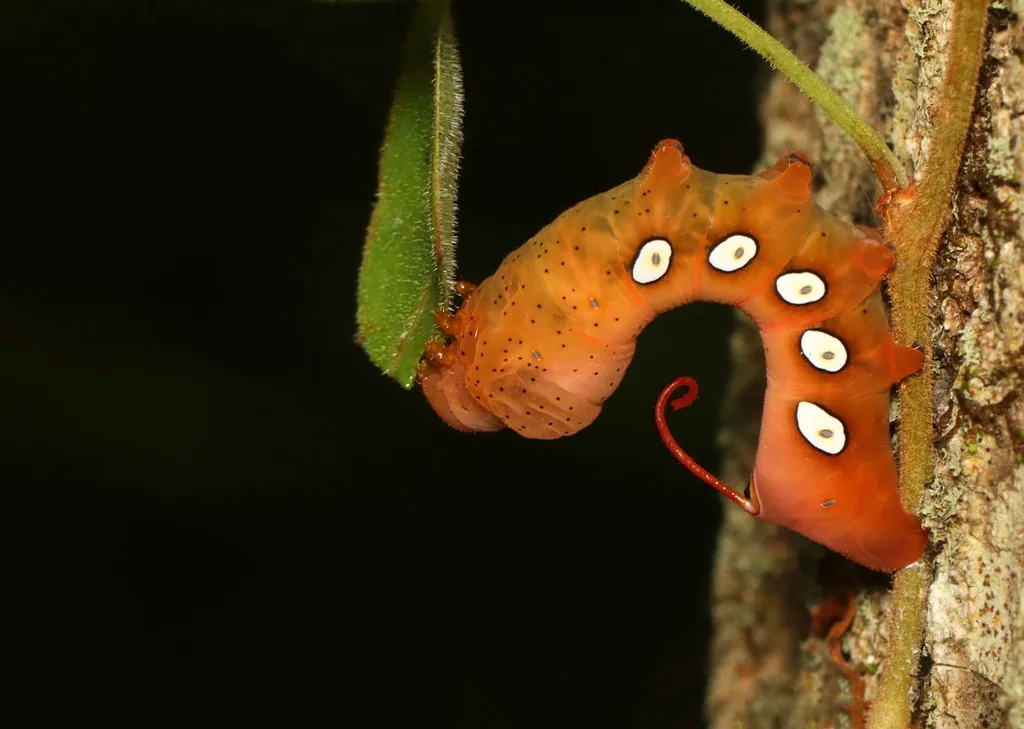
How to identify it
Look-alikes
| Look-alike | How to tell them apart |
|---|---|
| Abbott's sphinx | Another grape-family sphinx; its mature caterpillar is mottled brown with ten green square patches and an eye-like knob at the rear.[2] |
| Virginia creeper sphinx | MDC lists it with the pandorus and achemon sphinxes as caterpillars unwelcome in vineyards.[3] |
Where it lives
Recorded in Minnesota and Missouri on grape-family vines.[1][2][3]
Biology and life cycle
It overwinters as a pupa several inches deep in soil; adults emerge in June and July and lay eggs.[2]
Caterpillars are active from July into September, and there is one generation a year.[1][2]
Damage and signs
Health risk
Control
Traps and physical control
Ornamental plants usually tolerate caterpillar feeding, so treatment is often unnecessary; when only a few are present, remove them by hand.[2]
Common questions
Sources
- University of Minnesota Extension (What insect is this?), “Pandora sphinx.” apps.extension.umn.edu/garden/diagnose/insect/trees-shrubs/caterpillars/large/pandorasphinx.html (accessed 2026-10-16)
- University of Minnesota Extension, “Caterpillars on ornamental plants (Yard and Garden).” extension.umn.edu/yard-and-garden-insects/caterpillars-ornamental-plants (accessed 2026-10-16)
- Missouri Department of Conservation, “Sphinx Moths (Hawk Moths) (Field Guide).” mdc.mo.gov/discover-nature/field-guide/sphinx-moths-hawk-moths (accessed 2026-10-16)
- iNaturalist, “Eumorpha pandorus taxon page (order and family).” www.inaturalist.org/taxa/47914 (accessed 2026-10-06)