PestControlBasics
Menu

Tersa Sphinx

Xylophanes tersa[3]

The tersa sphinx is a sphinx moth whose large, eyespotted caterpillars feed on pentas, firebush and related plants.[1][2]

Group
Insect
Order
Lepidoptera
Family
Sphingidae
US records
25 states
Sources
3 cited
Updated
2026-10-16
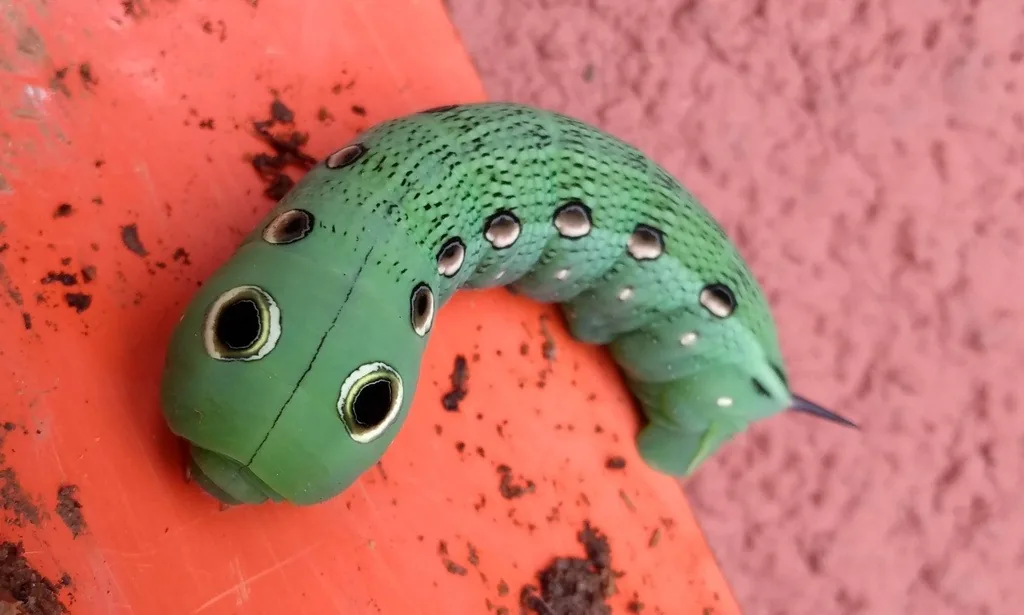
Tersa sphinx caterpillar, green with eyespots along its side
Tersa sphinx caterpillar, green with eyespots along its side. (c) Cajá-manga, some rights reserved (CC BY) — via iNaturalist, CC BY 4.0
On this page
  1. Identification
  2. Look-alikes
  3. Where it lives
  4. Biology
  5. Damage and signs
  6. Health risk
  7. Control
  8. Related profiles
  9. Common questions
  10. Sources

How to identify it

  • Caterpillars grow to about 3 inches long, carry a horn at the rear and presumably gain protection by mimicking snakes.[1]
  • Adult moths visit flowers such as four o'clocks, honeysuckle and milkweed for nectar.[1]

Look-alikes

Look-alikeHow to tell them apart
Tomato hornwormAnother sphinx moth caterpillar with a rear horn; the tersa sphinx feeds on pentas and buttonweed rather than tomatoes.[1]

Where it lives

Found in the southern United States, including North Carolina and Texas.[1][2]

US map: public records from 25 states since 1990 (GBIF).

Biology and life cycle

Caterpillars feed on pentas, broadleaf buttonweed, candy corn vine, catalpa, firebush and smooth buttonplant, and have been reported on joe-pye weed.[1]

Damage and signs

  • Young caterpillars feeding on pentas can damage flower buds so they never open.[2]
  • In spite of the threatening horn, the caterpillars are harmless.[1]

Health risk

Harmless to people and pets despite the horn.[1]

Control

Traps and physical control

Pick caterpillars off the plants by hand; insecticides are rarely needed.[1]

Common questions

What is the big caterpillar with eyespots on my pentas?
Likely a tersa sphinx caterpillar, which mimics a snake.[1][2]
Can the horn sting?
No; the caterpillars are harmless.[1]

Sources

  1. NC State Extension, “Tersa Sphinx (PDIC Factsheet).” content.ces.ncsu.edu/tersa-sphinx (accessed 2026-10-16)
  2. Texas A&M AgriLife Extension (Insects in the City), “Early instar tersa moth caterpillar on penta (Insects in the City image page).” citybugs.tamu.edu/factsheets/landscape/chewing/chewing-damage/early-instar-tersa-moth-caterpillar-on-penta/ (accessed 2026-10-16)
  3. iNaturalist, “Xylophanes tersa taxon page (order and family).” www.inaturalist.org/taxa/69737 (accessed 2026-10-06)

Updated 2026-10-16. Built from sourced records. Spot an error? Tell us.