On this page
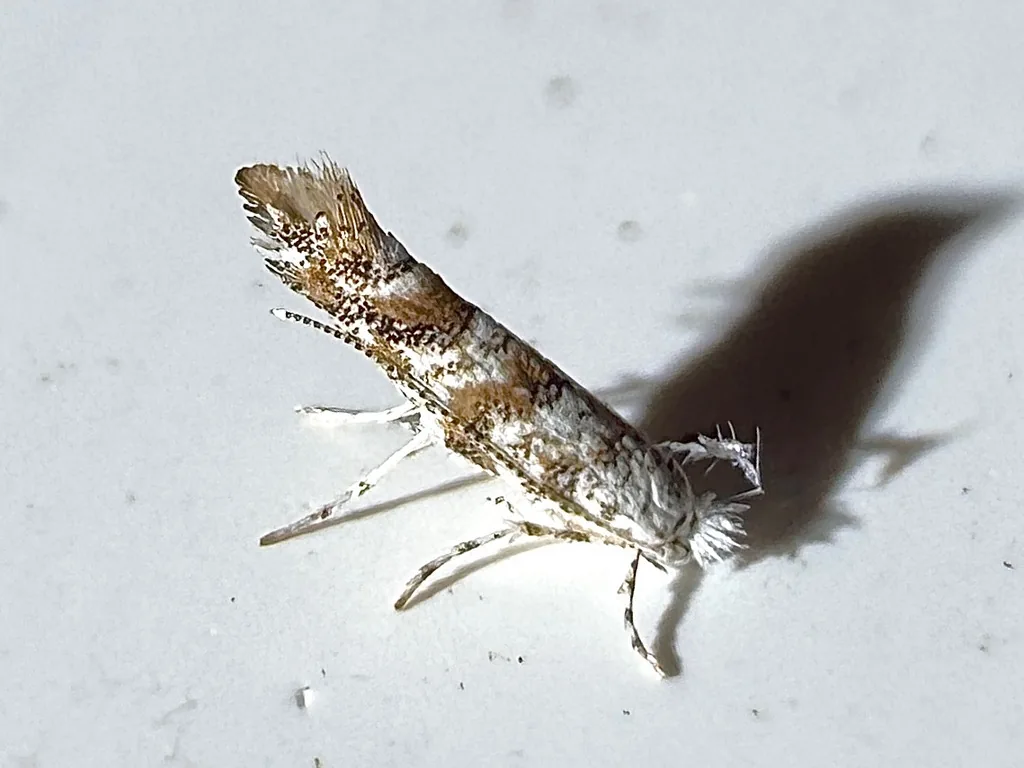
How to identify it
Look-alikes
| Look-alike | How to tell them apart |
|---|---|
| Gregarious oak leafminer | Cameraria cincinnatiella, a white oak species that packs up to 12 larvae into one mine.[1] |
Where it lives
Reported on oaks in New England and North Carolina; it is usually more common on oaks in natural areas than in yards.[1][2]
Biology and life cycle
It overwinters in fallen oak leaves (NC State says as larvae, UMass as pupae); tiny moths emerge in spring and cement eggs one at a time to the new leaves.[1][2]
NC State reports two or more generations a year in North Carolina; UMass gives 2 to 5 for the genus, depending on climate.[1][2]
Mature larvae spin a flimsy white cocoon inside the mine and pupate there.[2]
Damage and signs
- It prefers white oaks but also attacks bur, black and red oaks.[1][2]
- Mines turn brown, and heavy infestations cause browning and early leaf drop by late summer.[1][2]
- In rare heavy years most of a tree's foliage can be killed, but the injury is largely cosmetic and the tree's health is rarely at risk.[1][2]
Health risk
Control
Sanitation
Rake up and destroy fallen oak leaves in fall, where the insects overwinter; it works best when nearby oaks are cleaned up too.[1][2]
Biological control
Parasitoid wasps and predators kill many leafminers every year; NC State puts it at 21 to 25 percent, and UMass lists at least 14 parasitoid species.[1][2]
Pesticides
NC State does not recommend chemical treatment, and UMass notes sprays are often unnecessary.[1][2]
Common questions
Sources
- UMass Extension Landscape, Nursery and Urban Forestry Program (Landscape Insect & Mite Guide), “Cameraria spp. (Oak Blotch Leafminer).” www.umass.edu/agriculture-food-environment/landscape/publications-resources/insect-mite-guide/cameraria-spp (accessed 2026-10-16)
- NC State Extension, “Solitary Oak Leafminer (PDIC Factsheet).” content.ces.ncsu.edu/solitary-oak-leafminer (accessed 2026-10-16)
- iNaturalist, “Cameraria hamadryadella taxon page (order and family).” www.inaturalist.org/taxa/215951 (accessed 2026-10-06)