On this page
How to identify it
Where it lives
Found wherever witchhazel and river birch grow together, including North Carolina and Maryland.[1][2]
Biology and life cycle
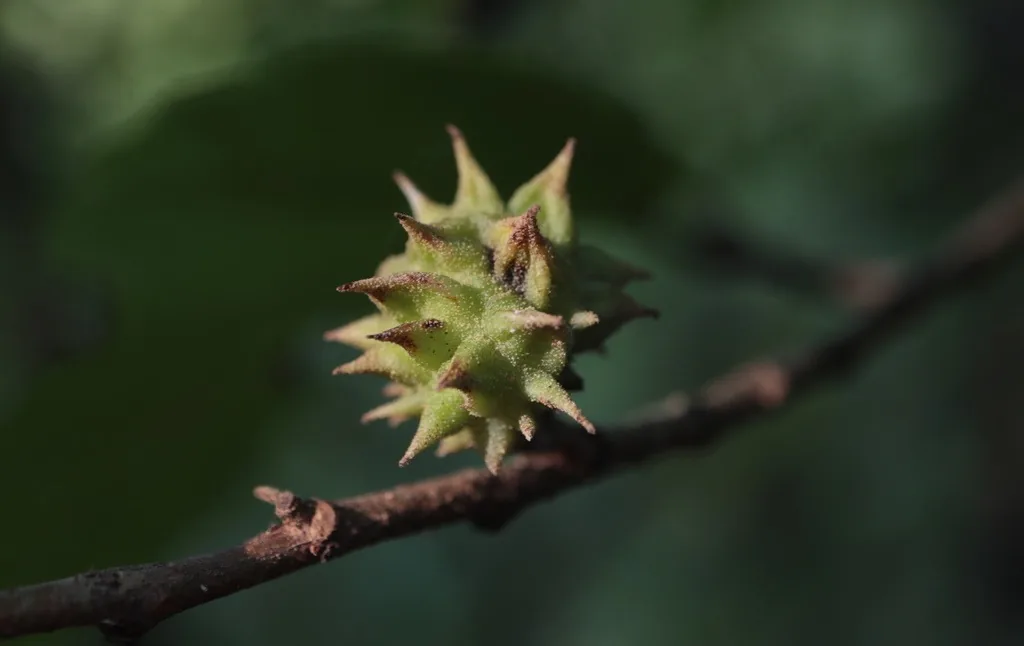
Eggs laid on witchhazel in June and July hatch the next spring; the nymphs feed on flower buds and cause a spiny gall where winged aphids develop.[1]
Winged aphids fly to birch and produce a scale-like generation that overwinters on birch until bud break.[1]
Damage and signs
Health risk
None to people or pets.[1]
Control
Prevention
Treat the birch galls as cosmetic; they cause no serious injury and really need no treatment.[1]
Pesticides
If galls must be prevented, a landscape aphid insecticide such as imidacloprid applied to birch at bud break in early spring works, but it must be repeated every year.[1]
Common questions
Sources
- NC State Extension, “Spiny Witchhazel Gall Aphid (PDIC Factsheet).” content.ces.ncsu.edu/spiny-witchhazel-gall-aphhid (accessed 2026-10-16)
- University of Maryland Extension (Home and Garden Information Center), “Spiny Witchhazel Gall Aphid (pest identification images).” extension.umd.edu/resource/spiny-witchhazel-gall-aphid-images (accessed 2026-10-16)
- iNaturalist, “Hamamelistes spinosus taxon page (order and family).” www.inaturalist.org/taxa/127421 (accessed 2026-10-06)