On this page
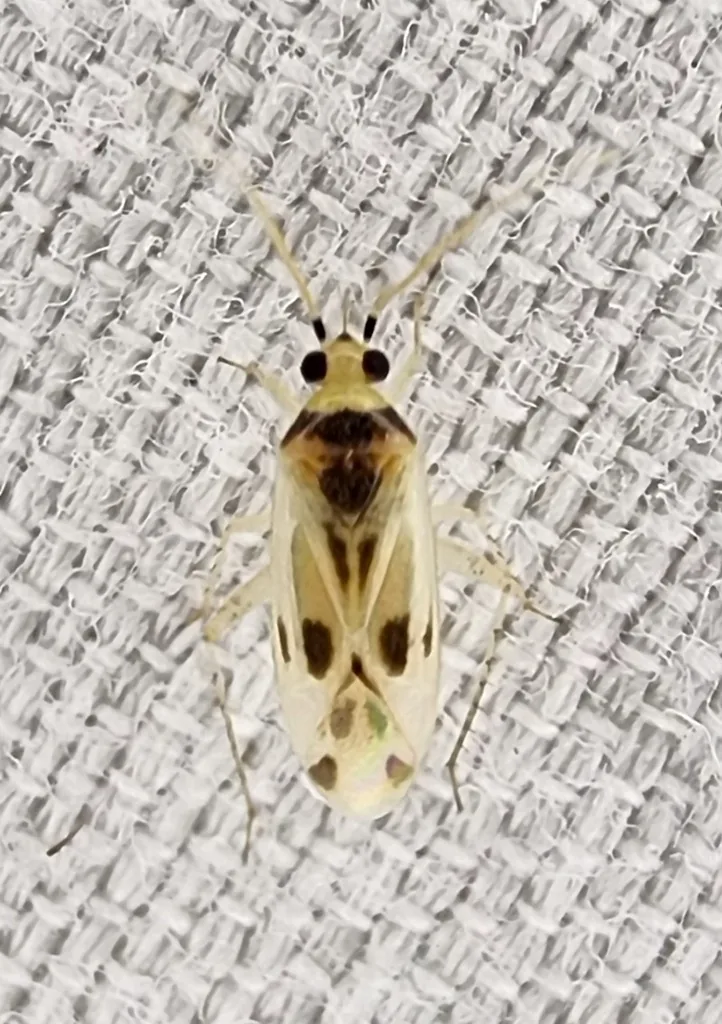
How to identify it
Look-alikes
| Look-alike | How to tell them apart |
|---|---|
| Sycamore leaf beetle | Its adults and larvae chew larger, irregular holes in sycamore leaves than this bug's feeding spots.[2] |
| Sycamore lace bug | Another sap feeder on sycamore leaves.[1][2] |
Where it lives
Known from the northeastern United States and parts of Canada, and from Utah.[1][2]
Biology and life cycle
It overwinters as eggs in the bark or woody tissue near buds; eggs hatch in spring once leaves have expanded to about 1 1/2 inches.[1][2]
Nymphs feed on both leaf surfaces, adults are present until midsummer, and there is one generation a year.[1][2]
Damage and signs
Health risk
Control
Prevention
Keep trees healthy and tolerate the mostly cosmetic damage; check leaves for nymphs as they expand in spring.[1][2]
Traps and physical control
On small trees, nymphs can be washed off with a strong jet of water.[2]
Common questions
Sources
- Utah State University Extension (Integrated Pest Management), “Sycamore Plant Bug (Ornamental Pest Guide).” extension.usu.edu/planthealth/ipm/ornamental-pest-guide/arthopods/plant-lace-seed-bugs/sycamore-plant-bug.php (accessed 2026-10-16)
- UMass Extension Landscape, Nursery and Urban Forestry Program (Landscape Insect & Mite Guide), “Plagiognathus albatus (Sycamore Plantbug).” www.umass.edu/agriculture-food-environment/landscape/publications-resources/insect-mite-guide/plagiognathus-albatus (accessed 2026-10-16)
- iNaturalist, “Plagiognathus albatus taxon page (order and family).” www.inaturalist.org/taxa/495015 (accessed 2026-10-06)