On this page
How to identify it
Look-alikes
| Look-alike | How to tell them apart |
|---|---|
| Woolly apple aphid | A related Eriosoma aphid that also uses elm but spends the summer on apple, forming white woolly patches and galls on bark and roots.[2] |
Where it lives
Found on American elm in New England and on elms in the Pacific Northwest.[1][2]
Biology and life cycle
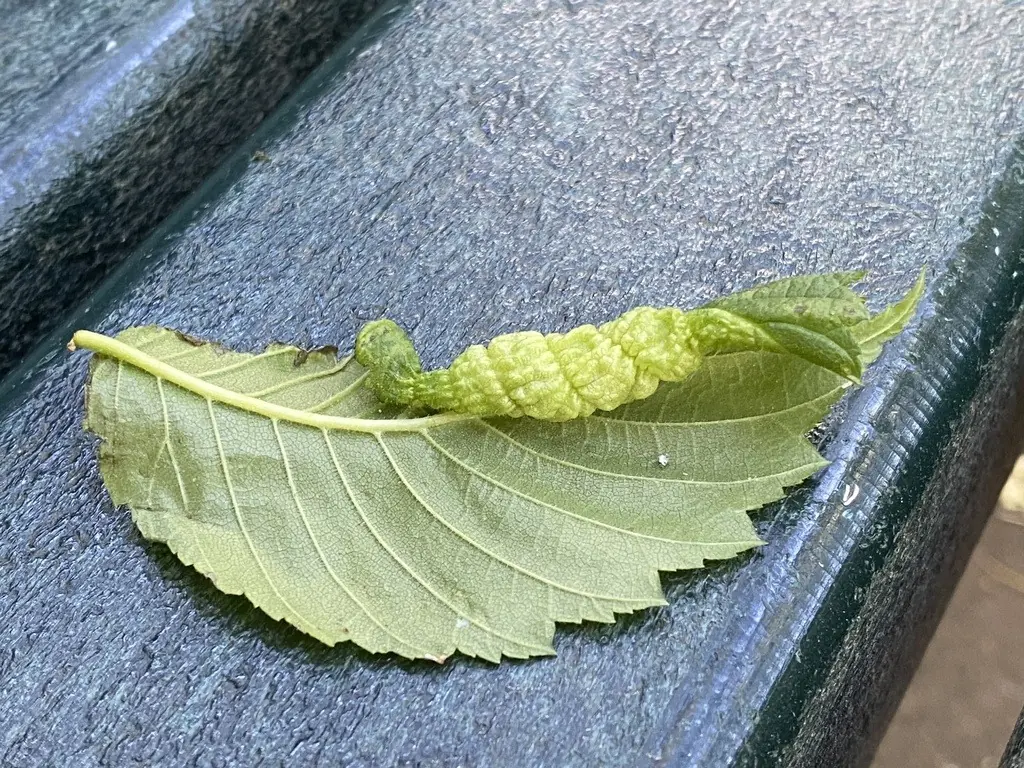
Eggs overwinter in elm bark crevices and hatch as leaves unfold; one wingless female can produce about 200 young without mating.[1][2]
Winged aphids leave the curled leaves for serviceberry, feed on its roots for several generations through summer, then fly back to elm in fall to lay eggs.[1][2]
Damage and signs
Health risk
Control
Prevention
Avoid planting elm near serviceberry, although the winged aphids can travel long distances.[1]
Traps and physical control
On small trees, pick off and destroy curled leaves with aphids early in the season.[1]
Biological control
Lady beetles, lacewings, hover fly larvae and the parasitoid wasp Aphelinus mali attack it, and predators are often already at work when the aphids are noticed.[1][2]
Pesticides
Check trees as they leaf out; once leaves are curled the damage can't be undone, so any treatment has to come early.[2]
Common questions
Sources
- UMass Extension Landscape, Nursery and Urban Forestry Program (Landscape Insect & Mite Guide), “Eriosoma americanum (Woolly Elm Aphid).” www.umass.edu/agriculture-food-environment/landscape/publications-resources/insect-mite-guide/eriosoma-americanum (accessed 2026-10-16)
- Pacific Northwest Insect Management Handbook (Oregon State, Washington State, University of Idaho), “Elm (Ulmus)-Aphid (Hosts and Pests of Landscape Plants).” pnwhandbooks.org/insect/hort/landscape/hosts-pests-landscape-plants/elm-ulmus-aphid (accessed 2026-10-16)
- iNaturalist, “Eriosoma americanum taxon page (order and family).” www.inaturalist.org/taxa/454393 (accessed 2026-10-06)