On this page
How to identify it
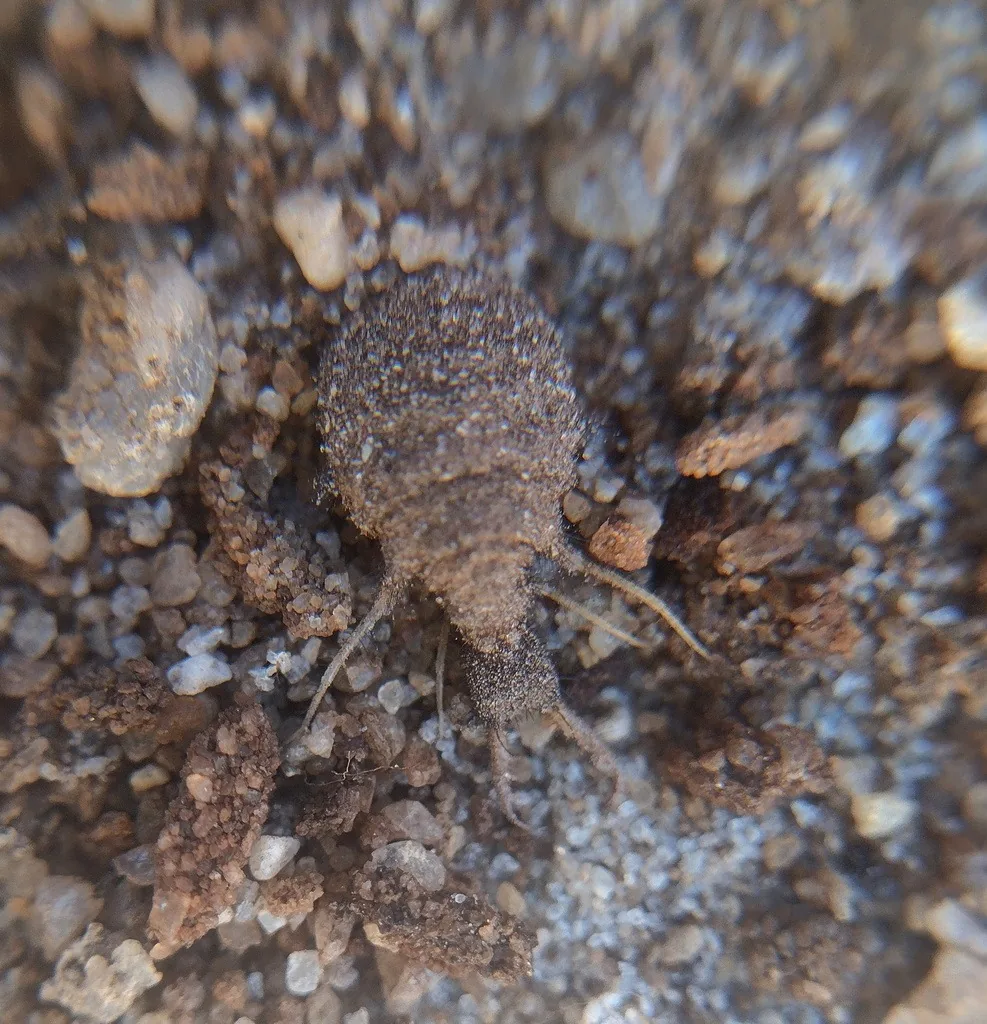
- Doodlebugs have three pairs of legs, a flattened head and sickle-shaped jaws that inject venom into prey.[2]
- Adults are slender and brown, up to about 1 3/4 inches long, with four similar, oval, net-veined wings held roof-like at rest and large eyes.[1][2]
- Adults are easily confused with damselflies, but antlions have longer, clubbed antennae.[1][2]
Look-alikes
| Look-alike | How to tell them apart |
|---|---|
| Damselflies | Damselflies have very short antennae; antlions have long, clubbed ones.[1][2] |
| Lacewings | Close relatives in the same order with similar net-veined wings.[2] |
Where it lives
Antlions prefer dry, sandy places; Florida alone has 22 species, the most in the eastern United States.[1][2]
Biology and life cycle
Depending on species, larvae hide under leaves or wood, dig pits in sand, or live in dry tree holes; they feed mainly on ants and other small insects.[1][2]
Larvae can feed for two years, molt three times and then pupate in a buried cocoon of sand and silk; adults emerge about four weeks later.[1][2]
Adults are weak fliers, active at night and attracted to lights; they live about four weeks and eat nectar, pollen and other insects.[1][2]
Damage and signs
Health risk
Control
Prevention
No control is needed; they are beneficial. Planting a variety of native flowering plants supports antlions and lacewings.[2]
Common questions
- What are the little cone-shaped pits in dry sand?
- Usually doodlebug traps made by antlion larvae.[2]
- Why are they called doodlebugs?
- For the winding, doodle-like trails the larvae leave in sand.[1][2]
- Do antlions bite people?
- No; they are harmless predators of small insects.[1][2]
- Is that a dragonfly at my porch light?
- It may be an antlion adult; look for long, clubbed antennae.[1][2]
Sources
- University of Florida IFAS Extension (EDIS, Featured Creatures), “An Antlion, Glenurus gratus (Say) (EENY-393).” ask.ifas.ufl.edu/publication/IN708 (accessed 2026-10-16)
- Utah State University Extension (Integrated Pest Management), “Beneficial Insects: Lacewings and Antlions (July 2008).” extension.usu.edu/planthealth/research/beneficial-insects-lacewings-antlions.php (accessed 2026-10-16)
- iNaturalist, “Myrmeleontidae taxon page (order and family).” www.inaturalist.org/taxa/49358 (accessed 2026-10-06)