On this page
How to identify it
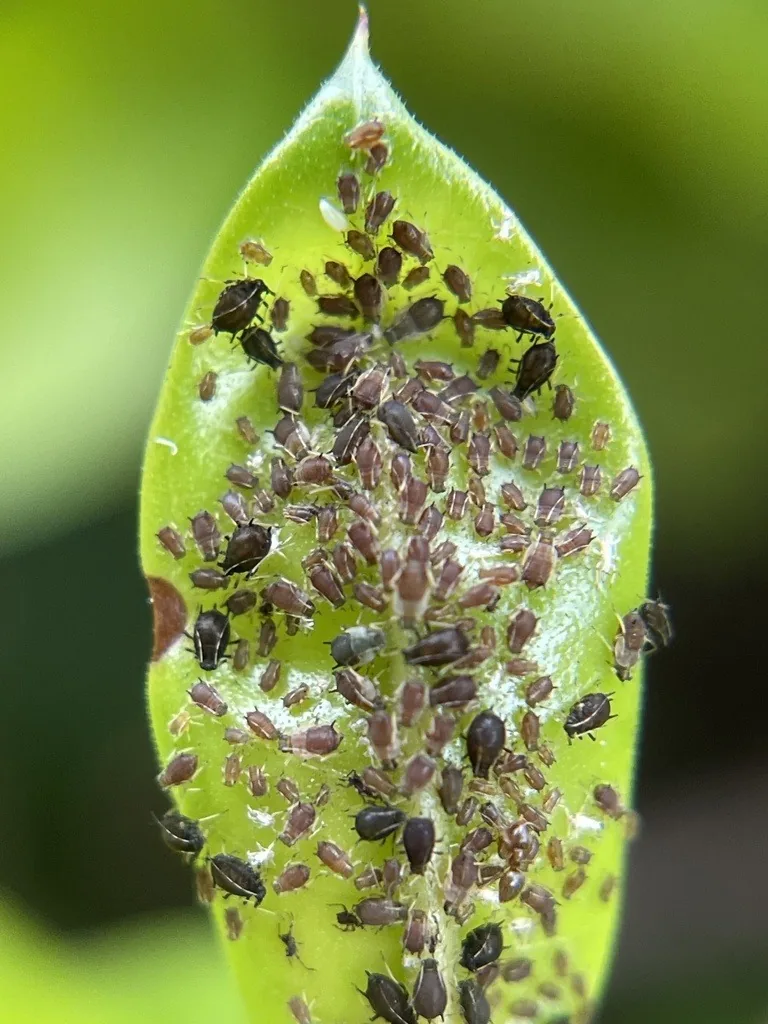
- About 0.1 inch long and usually shiny black, though some are dull black to mahogany.[1]
- Colonies gather on new growth, winter buds and the most tender plant tissue.[1]
- On citrus, color separates the three most common aphids: black citrus aphids are shiny black, spirea aphids are always bright green, and cotton aphids range from yellow to green to dull black, often with several color forms in one colony.[2]
Look-alikes
| Look-alike | How to tell them apart |
|---|---|
| Spirea aphid | Also common on citrus, but always bright green.[2] |
| Melon (cotton) aphid | Can be dull black, but its colonies usually mix yellow, green and dark individuals; black citrus aphids are shiny black.[2] |
Where it lives
Found throughout the tropics and subtropics, including the Pacific Islands, and in greenhouses in temperate regions. UC IPM lists it among the three most common aphids on California citrus, and the Pacific Northwest handbook covers it on camellia.[3][2][1]
Biology and life cycle
It is highly polyphagous and has been recorded on plants in more than 70 families.[3]
Aphids on citrus give birth to live young without mating for generation after generation, so their numbers can rise sharply in a short time.[2]
Infestations can be severe in any season and are often a problem on plants growing in sheltered places.[1]
Damage and signs
- It is particularly important on citrus, cacao, coffee and tea, and also attacks sugar apple, fig, mango and a variety of ornamentals.[3]
- Aphid feeding on citrus flower and leaf buds and on leaf undersides makes leaves curl toward the stem. The sticky honeydew they excrete can coat surfaces and attract ants.[2]
- On shrubs and trees the feeding damage is usually minor, though it can weaken buds and expanding shoots.[1]
- It has been implicated in spreading at least five plant viruses, and UC IPM names it among the aphids that can transmit citrus tristeza virus.[3][2]
Health risk
The sources describe it only as a plant pest; none mentions any risk to people or pets.[1][2][3]
Control
Prevention
On citrus, aphids are mainly a problem on young trees and on varieties that keep putting out new growth; their numbers fall once the foliage hardens off. Citrus tolerates a lot of leaf curling without any loss of yield.[2]
Biological control
Parasitic wasps, lacewings, lady beetles, syrphid fly predators and fungal diseases usually keep aphids on citrus below damaging levels, and UC IPM says natural enemies normally bring them under control within about six weeks.[2]
Pesticides
UC IPM says an insecticide application on citrus is rarely warranted and reserves sprays for special situations, such as area-wide programs against citrus tristeza virus.[2]
Common questions
- What are the shiny black aphids on my citrus or camellia shoots?
- They are likely black citrus aphids, which are about 0.1 inch long and gather in colonies on new growth and buds.[1][2]
- Do I need to spray black citrus aphids on citrus?
- Usually not. Natural enemies normally control aphids on citrus within about six weeks, and citrus tolerates leaf curling without losing yield.[2]
- Can black citrus aphids spread plant diseases?
- Yes. They have been implicated in spreading at least five plant viruses, including citrus tristeza virus.[3][2]
Sources
- Pacific Northwest Pest Management Handbooks (Oregon State University, Washington State University and University of Idaho Extension), “Camellia (Camellia)-Black citrus aphid, Pacific Northwest Insect Management Handbook.” pnwhandbooks.org/insect/hort/landscape/hosts-pests-landscape-plants/camellia-camellia-black-citrus-aphid (accessed 2026-11-09)
- University of California Statewide IPM Program, “Aphids, UC IPM Pest Management Guidelines: Citrus.” ipm.ucanr.edu/agriculture/citrus/aphids/ (accessed 2026-11-09)
- USDA APHIS PPQ Identification Technology Program (AphID), “AphID: Toxoptera aurantii fact sheet.” www.aphid.aphidnet.org/Toxoptera_aurantii.php (accessed 2026-11-09)
- iNaturalist, “Aphis aurantii taxon page (order and family).” www.inaturalist.org/taxa/1609506 (accessed 2026-11-09)