On this page
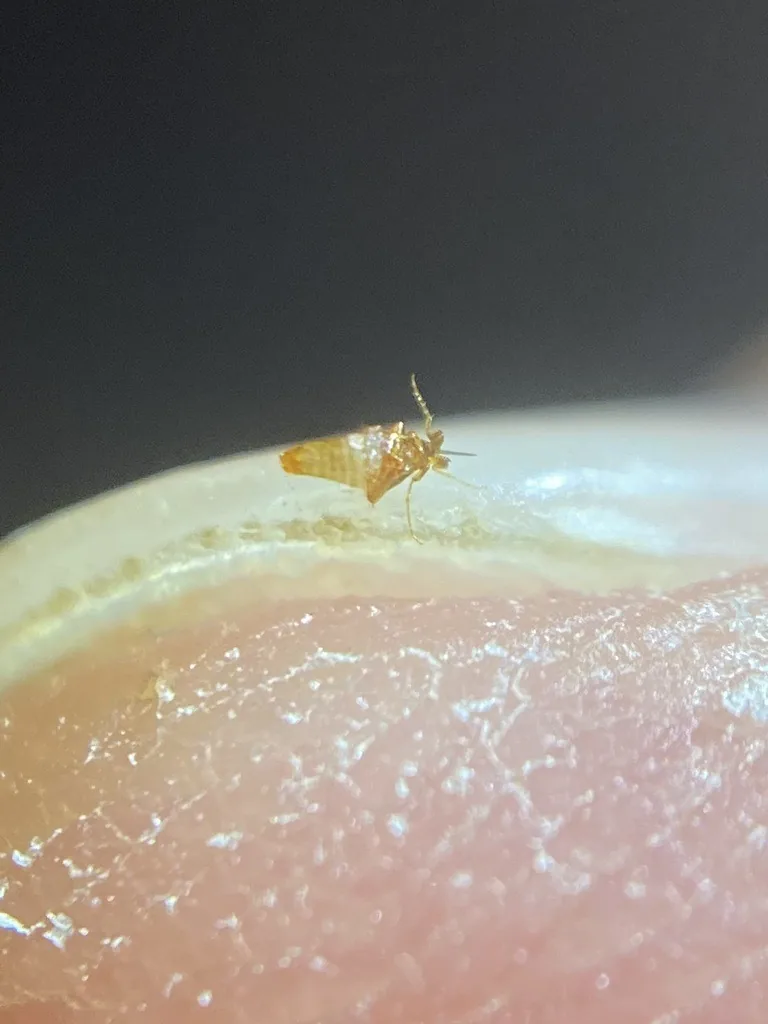
How to identify it
- Tungiasis is diagnosed by the lesion, not the free-living flea. An embedded female sits inside the epidermis as a growing foreign body; the last segments of her abdomen form a small cone that stays in contact with the outside, leaving an opening of a quarter to half a millimeter through which she breathes, defecates, mates and expels eggs. The surrounding skin becomes red, swollen, painful and itchy.[1]
- Within a week of penetrating, the non-fertilized female grows to about 2,000 times her original size. Lesions are mostly on the feet, which is where bare skin meets infested ground, but people who sleep on the floor get them on other parts of the body too.[2][1]
- In heavily affected people the picture is a dozen or more viable fleas in the feet at once, with suppuration, ulcers, deformed or lost toenails and a characteristic hobbling gait. In travelers the disease is usually mild: one or a few lesions picked up at a beach.[1]
Look-alikes
| Look-alike | How to tell them apart |
|---|---|
| Human flea (Pulex irritans) | A free-living flea that bites and leaves; it does not embed in the skin. Only Tunga females burrow in and stay.[1] |
| Sticktight flea (Echidnophaga gallinacea) | Also attaches firmly to its host for long periods, but externally, on skin of poultry and pets; the chigoe female is inside the epidermis.[1] |
Where it lives
Tungiasis originated in South America and was carried to sub-Saharan Africa in the 19th century. Tunga penetrans is widespread in South America (every country except Chile) and sub-Saharan Africa and occurs on several Caribbean islands; in the Americas, recent cases are reported from Brazil, Venezuela, Ecuador, Argentina, Peru, Mexico, Paraguay, Barbados, Colombia and Bolivia. It is not established in the United States; US cases are imported by travelers. In one study, 3.2 percent of international visitors who spent one to three weeks at beaches near Fortaleza in northeastern Brazil acquired it.[1][2]
Biology and life cycle
Tunga penetrans and its relative T. trimamillata are the only fleas in which the non-fertilized female penetrates the host's skin and remains there until she dies in place after four to six weeks. She feeds from capillaries in the dermis and releases her eggs through the opening at her rear.[1]
Off the host the cycle is like any flea's. Expelled eggs fall to the ground, larvae hatch in one to six days (usually three or four), pupate five to seven days later, and the adult forms inside the puparium in 9 to 15 days, so a new adult can emerge about 20 days after an egg lands. In houses without solid floors, the whole cycle can run indoors, in the sleeping quarters.[1]
The disease is a zoonosis with three overlapping cycles: human, domestic animal and wild. Dogs, cats and rodents in rural South America, and pigs, sheep and goats kept in houses at night in Uganda, act as reservoirs, so which animals matter depends on the local pattern of living with them. Adult females can also move from one person to another during close contact.[1][2]
Transmission peaks in the dry season, and attack rates in endemic communities can reach six newly penetrating fleas per person per day. Prevalence is highest in children aged 5 to 14 and in elderly people, a pattern suggesting no protective immunity develops.[1]
Damage and signs
- Tungiasis is a disease of poverty: it thrives where houses have no solid floor, people cannot keep shoes on, and animals share the compound. In poor rural and urban communities of Brazil, Nigeria and Madagascar, prevalence in the high season can reach 60 percent, and in parts of East Africa it has re-emerged with hundreds of thousands of cases. Children with many lesions miss school and perform worse; adults lose mobility and income.[1]
Health risk
The embedded flea causes acute inflammation (redness, swelling, pain, itching), and in endemic areas bacterial superinfection is almost universal, with aerobic and anaerobic bacteria including Clostridia isolated from lesions; where tetanus vaccination coverage is low, tungiasis has been linked to tetanus. Severe or repeated infections lead to abscesses, ulcers, lymphangitis, tissue death, fissures, thickened skin, deformed toes and lost nails. Digging fleas out with shared, unsterilized pins, needles or thorns, as is common in endemic areas, risks transmitting blood-borne infections. In travelers, who usually have one or a few lesions, the illness is generally mild.[1]
Control
Prevention
Closed, solid shoes partially protect against penetrating fleas, though exposure often happens indoors where shoes are not worn, and one Brazilian study found no protective effect from closed shoes alone. A repellent based on coconut oil applied to the feet twice a day cut attack rates by almost 100 percent in trials in Brazil and Madagascar, and existing lesions resolved within weeks once new penetrations stopped.[1][2]
Sanitation
Because the free-living stages develop in dust and organic debris on unsealed floors and bare ground, solid floors, cleaning of sleeping quarters and control of fleas on dogs, cats, pigs and other animals around the house address the reservoir. A small Brazilian trial of an imidacloprid-permethrin treatment on animals temporarily reduced their parasite load.[1]
Traps and physical control
Regular inspection of the feet and prompt removal of embedded fleas are described as the best available way to keep damage down. Extraction should be done with sterile instruments; a burrowed flea cannot be removed without bleeding, which is why shared, unsterilized tools are a hazard.[1]
Pesticides
The World Health Organization recommends a two-component dimeticone oil as the treatment for tungiasis. In a 2026 randomized trial in Kenyan children, 88 percent of fleas were dead 11 days after dimeticone treatment versus 77 percent with a 5 percent sodium carbonate solution, the traditional village treatment; sodium carbonate did not prove non-inferior but may be an alternative where dimeticone is unavailable. The 2014 review found no systemic drug effective against burrowed fleas.[3][1]
Common questions
- Can I get chigoe fleas in the United States?
- Not from US soil. The flea is established in South America, the Caribbean and sub-Saharan Africa, and US cases are in people returning from those regions, typically after walking barefoot on beaches or unsealed floors.[1][2]
- What does the lesion look like?
- A swollen, red, painful and itchy spot, most often on a foot, with a tiny dark opening in the center where the flea's rear end meets the air. The flea inside grows to roughly 2,000 times her size within a week and lives there four to six weeks.[1][2]
- Should I dig it out myself?
- Removal is the standard approach, but it must be done with a sterile instrument because the flea cannot be extracted without bleeding. Shared pins and needles spread blood-borne infections. A dimeticone oil that kills the embedded flea is the WHO-recommended treatment where available.[1][3]
Sources
- PLoS Neglected Tropical Diseases, open access via PubMed Central, “Feldmeier, Heukelbach, Ugbomoiko, Sentongo, Mbabazi, von Samson-Himmelstjerna and Krantz. Tungiasis: a neglected disease with many challenges for global public health. PLoS Neglected Tropical Diseases 8(10) (2014) e3133, PMC4214674.” pmc.ncbi.nlm.nih.gov/articles/PMC4214674/ (accessed 2026-11-10)
- Revista Panamericana de Salud Publica (Pan American Health Organization), open access via PubMed Central, “Saboya-Diaz, Nicholls, Castellanos and Feldmeier (Pan American Health Organization). Current status of the knowledge on the epidemiology of tungiasis in the Americas. Revista Panamericana de Salud Publica 46 (2022) e124, PMC9426953.” pmc.ncbi.nlm.nih.gov/articles/PMC9426953/ (accessed 2026-11-10)
- Tropical Medicine and Health (Springer Nature), “Suzuki, Kamiya, Smith, Kaneko and colleagues (Nagasaki University, Kenya Medical Research Institute). Effectiveness of dimeticone oils versus sodium carbonate solution in the treatment of tungiasis in Kenya: a non-inferiority randomised trial. Tropical Medicine and Health 54 (2026) 46, PMID 41821059.” pubmed.ncbi.nlm.nih.gov/41821059/ (accessed 2026-11-10)
- iNaturalist, “Tunga penetrans taxon page (order and family).” www.inaturalist.org/taxa/308601 (accessed 2026-11-10)