On this page
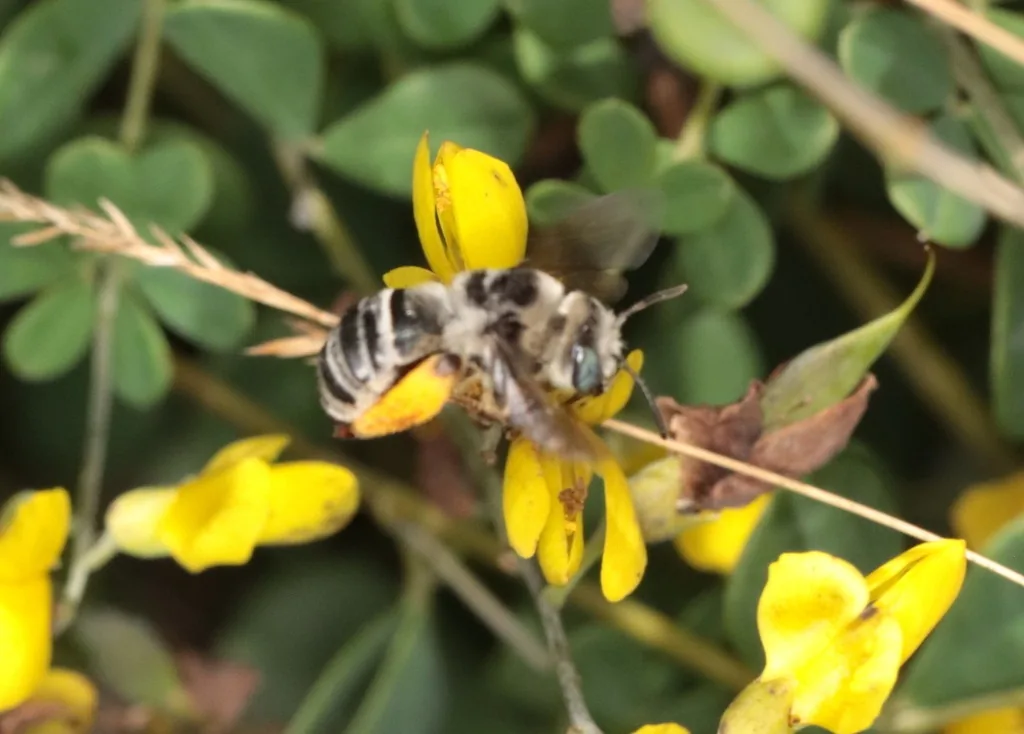
How to identify it
Look-alikes
| Look-alike | How to tell them apart |
|---|---|
| Squash bees | Members of the same longhorn bee tribe that collect pollen only from squash-family flowers.[2] |
Where it lives
The most widely distributed Melissodes, from northwestern Canada across the continental United States to southern Mexico.[1]
Biology and life cycle
It nests underground; much of its life cycle is still unstudied.[1]
Adults are typically most active in late summer and fall.[1]
Damage and signs
- No damage: it pollinates wildflowers such as ironweed, sneezeweed and mountain mint, and crops including squash, sunflower and blueberry.[1]
Health risk
A valuable native pollinator that is not aggressive.[2]
Control
Prevention
No control is needed; long-horned bees are gentle pollinators.[2]
Common questions
Sources
- University of Florida IFAS Extension (EDIS, Featured Creatures), “Common Long-Horned Bee, Melissodes communis (EENY-756).” ask.ifas.ufl.edu/publication/IN1304 (accessed 2026-10-16)
- Missouri Department of Conservation, “Longhorn Bees (Field Guide).” mdc.mo.gov/discover-nature/field-guide/longhorn-bees (accessed 2026-10-16)
- iNaturalist, “Melissodes communis taxon page (order and family).” www.inaturalist.org/taxa/224858 (accessed 2026-10-06)