On this page
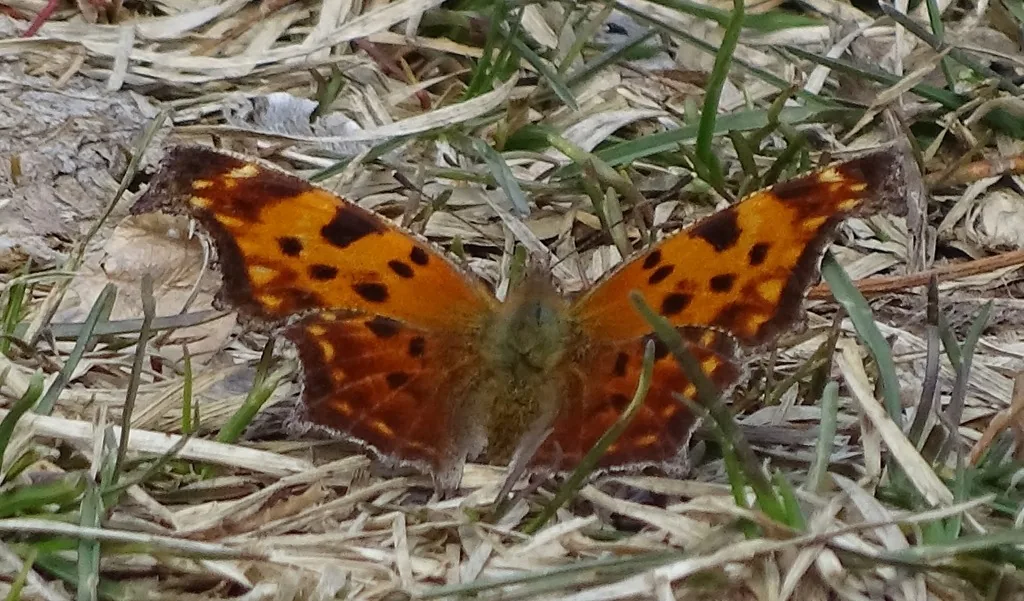
How to identify it
Look-alikes
| Look-alike | How to tell them apart |
|---|---|
| Question mark | Larger, with an extra dot beside the comma mark and a dark line over the three black forewing spots.[1][2] |
| Gray comma | Heavily streaked underneath with an L-shaped comma mark.[2] |
Where it lives
Most of the eastern United States, south to north-central Florida and the northern Gulf states and west to eastern Wyoming and Colorado.[1][2]
Biology and life cycle
There are two generations a year; the fall brood overwinters as adults, which is why commas may fly on warm, sunny winter days.[1][2]
Females lay eggs singly or stacked up to nine high under host leaves.[1][2]
Caterpillars hide by day in silk-tied leaves and feed at night.[1][2]
Adults feed on tree sap and fermenting fruit, rarely on flowers, and also visit mud, carrion and droppings.[1][2]
Damage and signs
Health risk
Control
Prevention
No control is needed.[2]
Common questions
Sources
- University of Florida IFAS Extension (EDIS, Featured Creatures), “Eastern Comma, Hop Merchant, Comma Anglewing, Polygonia comma (EENY-455).” ask.ifas.ufl.edu/publication/IN817 (accessed 2026-10-16)
- Missouri Department of Conservation, “Eastern Comma (Field Guide).” mdc.mo.gov/discover-nature/field-guide/eastern-comma (accessed 2026-10-16)
- iNaturalist, “Polygonia comma taxon page (order and family).” www.inaturalist.org/taxa/54064 (accessed 2026-10-06)