โš  Extreme Risk Disease Vector Indoor Specialist

German
Cockroach

Blattella germanica

The hardest roach to eliminate. One mated female produces 400,000 descendants in a year. Standard sprays make infestations worse. Here's what actually works.

Size1/2 โ€“ 5/8 inch
ColorTan, 2 dark stripes
Egg Capsule30โ€“40 eggs each
Lifespan100โ€“200 days
PeakYear-round indoors
๐Ÿชณ
Quick Reference Card
German Cockroach
ColorTan/light brown, 2 black stripes behind head
WingsYes โ€” but rarely flies
Where FoundKitchens, bathrooms, warm/humid areas
Active WhenNight. Seeing them daytime = large infestation
Entry MethodGrocery bags, used appliances, luggage
Egg CapsuleBrown, carried by female until hatch
Risk LevelHIGH โ€” Allergen + Disease
Spray Barrier?MAKES IT WORSE
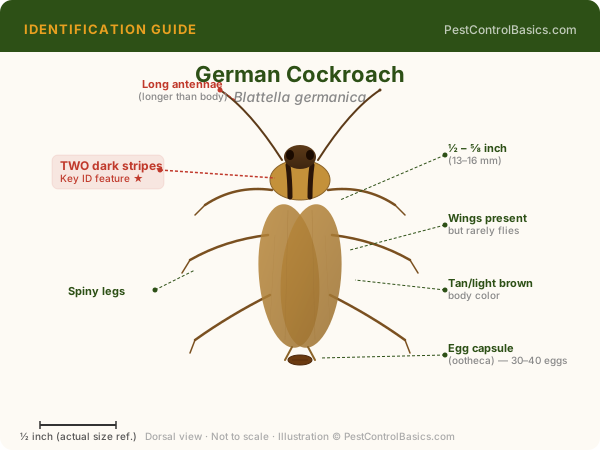
๐Ÿ“ FIELD GUIDE ILLUSTRATION
German cockroach (Blattella germanica) identification illustration with labeled anatomical features โ€” PestControlBasics.com

Original illustration by PestControlBasics.com. Use anatomical labels above to confirm your identification. For photo references, see the identification section below.

Origin & Spread

Despite the name, it didn't come from Germany

The German Cockroach is misnamed โ€” entomologists believe it originated in Southeast Asia, likely the Indian subcontinent. European traders called it "German" because it arrived in their countries via German trade routes in the 18th century. The name stuck, even though Germany had nothing to do with its origin.

Today it is the most common cockroach species inside structures worldwide. Unlike outdoor roaches that occasionally wander in, the German cockroach is an obligate indoor species โ€” it cannot survive cold temperatures and has evolved to live exclusively in human structures. It travels not by flying or crawling in from outside, but by hitchhiking โ€” in grocery bags, cardboard boxes, used appliances, furniture, and luggage.

๐Ÿ›’ How They Enter Your Home

The #1 source of new infestations is used cardboard boxes, secondhand appliances (especially microwaves and toasters), and grocery bags from infested stores. A single pregnant female with her egg capsule is enough to start a full infestation within 2โ€“3 months. Always inspect secondhand appliances thoroughly before bringing them inside.

400K
Potential descendants from one female in a single year
30โ€“40
Eggs per capsule โ€” female carries it until hatching
6 wks
From egg to reproductive adult under ideal conditions
Identification Guide

German vs. other cockroaches โ€” it matters

Treatment varies by species. American cockroaches (the big ones) are outdoor roaches that occasionally wander in โ€” very different problem, very different solution. Here's how to confirm you're dealing with a German cockroach.

The Two Stripes
Two parallel dark brown/black stripes running from head to wingtip on the pronotum (shield behind head). This is the definitive marking. No other common household roach has this.
Size
Half to five-eighths of an inch fully grown. Much smaller than the American cockroach (1.5โ€“2 inches). If the roach is large, it's likely a different species with different treatment needs.
Location
Almost always in kitchens and bathrooms. Prefers warm, humid, dark harborage near food and water. Found behind refrigerators, under stoves, inside cabinet hinges, under sinks.
Egg Capsule (Ootheca)
A brown, purse-shaped capsule about 1/4 inch long. The female carries this attached to her abdomen until just before hatching โ€” a key biological difference from other species.
Daytime Sighting
German cockroaches are nocturnal. Seeing them during the day is a serious warning โ€” it means the harborage is so overcrowded that lower-status roaches are being pushed out into the open. Indicates a large, mature infestation.
Fecal Spotting
Small, dark, pepper-like specks on walls and surfaces near harborage areas. You may also see dark smear marks in corners and along edges where they travel. A "musty" odor in heavy infestations.
โš  Health Risks Are Serious

German cockroach allergens are a leading cause of childhood asthma โ€” especially in urban environments. Their shed skins, feces, and saliva contaminate food surfaces and trigger allergic reactions. They mechanically spread Salmonella, E. coli, and dozens of other pathogens by walking across food preparation areas. This is not a "nuisance" pest โ€” it's a genuine public health threat.

The Biggest Mistake

Why spray barriers make infestations worse

This is the single most important thing on this page. Most people grab a can of raid or a spray barrier product and treat their kitchen. This is exactly the wrong move โ€” and here's why.

Roaches Detect and Avoid Repellents

German cockroaches are extraordinarily good at detecting repellent chemicals and simply routing around them. A spray barrier along baseboards does not kill the colony โ€” it fragments it. Roaches scatter to new harborage areas throughout the structure, spreading the infestation to rooms that weren't previously affected.

Repellents Prevent Bait from Working

If you apply a repellent spray and then attempt to use gel bait (the correct treatment) in the same area, the roaches will smell the repellent and avoid the bait entirely. You've now poisoned your own treatment plan. Repellents and baits are mutually exclusive โ€” you must choose one.

They Develop Resistance Fast

German cockroaches have the fastest-known resistance development of any urban pest. Populations exposed to pyrethroids (the most common spray ingredient) can develop resistance within a single generation. Some urban populations are now resistant to multiple classes of insecticide simultaneously.

๐Ÿ’ก The Counterintuitive Truth

The best thing you can do if you have a German cockroach infestation is to put down your spray can and do nothing with chemicals until you're ready to apply gel bait correctly. A week of waiting is far better than a week of spraying that makes the problem worse and harder to treat.

MethodKills Roaches?Reaches Harborage?Eliminates Colony?Verdict
Spray Barrier (Raid, etc.)Some workersNoNo โ€” spreads itAvoid
Gel Bait (Advion, Maxforce)Yes + colonyYes โ€” they carry itYes, 1โ€“2 weeksBest method
Boric Acid PowderYesIf applied correctlyPartialGood supplement
IGR (Gentrol)SterilizesYesPrevents re-growthUse with bait
Ultrasonic DevicesNoNoNoUseless
Bombs / FoggersSome workersNo โ€” they hide deeperNo โ€” spreads colonyAvoid
Reproduction

Why you can't afford to wait

No pest reproduces faster in a structure than the German cockroach. Understanding the math explains why small infestations explode and why early treatment is critical.

๐Ÿ“… German Cockroach Reproductive Timeline
1
Female
One mated female enters your home
โ€บ
6
Weeks
First egg capsule hatches โ€” 30โ€“40 nymphs
โ€บ
3
Months
Nymphs mature, each female begins reproducing
โ€บ
400K
1 Year
Potential population from one original female

A female German cockroach produces 4โ€“8 egg capsules in her lifetime, each containing 30โ€“40 eggs. She carries each capsule until just before hatching โ€” meaning she is a mobile egg incubator that you can never catch and destroy with a spray. The only way to stop reproduction is to eliminate the females, which requires they consume bait and die before producing their next capsule.

Activity Pattern

Year-round threat โ€” but peaks exist

๐Ÿ“… German Cockroach Activity โ€” Indoor Structures (Year-Round)
Jan
Feb
Mar
Apr
May
Jun
Jul
Aug
Sep
Oct
Nov
Dec

Unlike outdoor pests, German cockroaches are active year-round indoors. Activity peaks in summer when heat and humidity accelerate reproduction. However, winter infestations are equally serious โ€” the warmth of your heating system provides ideal conditions. There is no "off season" for German cockroaches.

Treatment Guide

The protocol that actually eliminates them

The correct treatment sequence is: clean โ†’ declutter โ†’ gel bait โ†’ IGR โ†’ monitor โ†’ repeat in 2 weeks. No sprays. No bombs. Here's exactly what to use and how.

๐Ÿ’ก Application Rule: Small Dots, Many Locations

Apply gel bait in pea-sized dots (NOT smears) in 10โ€“20 locations per room โ€” inside cabinet hinges, under appliances, behind the fridge, under the sink, along edges where roaches travel. Small dots in many places outperform large globs in few places. Replace every 2 weeks or when consumed.

๐Ÿ‡
Gel Bait โ€” #1 Recommended
Advion Cockroach Gel Bait (Indoxacarb)
How it works: Roaches eat the bait, return to harborage, die, and are eaten by others โ€” cascading kill effect through the colony. Indoxacarb is a metabolic activator โ€” roaches activate the poison themselves. Extremely palatable to even bait-averse populations. Apply 3โ€“5 small dots per 10 sq ft in harborage areas. Do not apply near sprays or cleaning products.
โ˜…โ˜…โ˜…โ˜…โ˜…
Gold Standard
๐Ÿ’Š
Gel Bait โ€” Strong Alternative
Maxforce FC Magnum (Fipronil)
How it works: Fipronil-based bait with a secondary kill effect โ€” a roach that consumes it and contacts others transfers the active ingredient. Good choice when alternating with Advion to prevent bait aversion. Roaches can develop preference fatigue with any single bait โ€” rotating every other treatment cycle improves results significantly.
โ˜…โ˜…โ˜…โ˜…โ˜…
Excellent
๐Ÿงช
IGR โ€” Sterilizes the Colony
Gentrol Point Source IGR (Hydroprene)
How it works: Insect Growth Regulator โ€” disrupts the juvenile hormone that allows nymphs to mature into reproductive adults. Treated nymphs become sterile adults. Used alongside bait, it prevents the colony from rebounding between bait applications. Place Gentrol discs in enclosed spaces (under sink, inside cabinets). Long-lasting โ€” one disc works for 3 months.
โ˜…โ˜…โ˜…โ˜…โ˜…
Essential Add-On
๐ŸชŸ
Desiccant Dust โ€” Harborage Treatment
CimeXa Dust (Amorphous Silica Gel)
How it works: Applied as a thin layer in voids, wall gaps, and under appliances. Physically destroys the roach's waxy cuticle causing death by dehydration โ€” no chemical resistance possible. Last resort for heavy harborage areas where bait alone isn't reaching. Apply with a bulb duster into wall voids and under major appliances. Lasts years unless disturbed.
โ˜…โ˜…โ˜…โ˜…โ’ธ
Very Good
๐Ÿ˜
Monitoring Tool
Catchmaster or Victor Sticky Traps
How it works: Not a treatment โ€” a diagnostic tool. Place in corners and under appliances to track population levels and harborage locations. Count captures weekly to gauge whether treatment is working. If captures are declining week-over-week, you're winning. If flat or increasing, adjust bait placement or switch products.
โ˜…โ˜…โ˜…โ˜…โ˜…
Must Have
๐Ÿ”’ When to Call a Professional

DIY treatment is effective for light-to-moderate infestations when done correctly. However, if you've had a German cockroach infestation for more than 3 months, are seeing them during the day, or have multiple rooms affected โ€” professional treatment with access to commercial-grade products and equipment will achieve faster, more complete results.

โš™
Commercial Gel โ€” Licensed Only
Vendetta Plus (Clothianidin + IGR)
Combines a neonicotinoid insecticide with a built-in IGR in a single gel formulation. The IGR component prevents bait-surviving nymphs from reaching reproductive maturity. Professionals apply this in larger volumes with commercial applicator guns, reaching harborage areas DIYers typically miss. Colony elimination in 7โ€“14 days in most cases.
โ˜…โ˜…โ˜…โ˜…โ˜…
Pro Standard
๐Ÿ’จ
Void Treatment โ€” Licensed Only
Actisol Pyrethrin Injection System
A motorized injection system that forces insecticide mist deep into wall voids, under cabinetry, and behind appliances โ€” reaching harborage areas that no spray, bait, or dust can access by hand. Used as a flush-and-kill treatment to drive roaches out of deep harborage so they contact bait. Typically used in severe infestations or commercial kitchens.
โ˜…โ˜…โ˜…โ˜…โ˜…
Severe Cases

๐Ÿ”— Active ingredient deep-dive: Indoxacarb (Advion) โ€” How the Cascade Kill Works

DG
Derek Giordano
Certified Pest Control Operator ยท Former Business Owner
Derek ran his own pest control company in Florida for several years, servicing thousands of regular customers. All content is based on hands-on field experience and current EPA & university extension guidelines.
🧪 Recommended Treatment Products
Cockroach Gel Bait Guide Advion/Indoxacarb Bait Gentrol IGR Boric Acid Dust Fipronil
Full product guides with mixing rates, safety info, and brand comparisons. → Browse All 121 Pesticide Guides

Related Resources

๐Ÿ“š Full Pest Library๐Ÿงช DIY vs. Pro Quiz๐Ÿ’ฐ Cost Guide๐ŸŒฟ IPM Guide๐Ÿ” Find a Pro
๐Ÿ”— Related Pests
Brown Banded Cockroach American Cockroach Oriental Cockroach Smoky Brown Cockroach Wood Roach
Compare similar pests to confirm your identification. โ†’ Use our ID Flowchart
๐Ÿ”ฎ
Reviewed by Derek GiordanoContent on PestControlBasics.com is developed with input from certified pest management professionals and cross-referenced against EPA, CDC, and university extension guidance. Last reviewed: April 2026.
Related Pests
๐Ÿ“š Sources: EPA Cockroach Control ยท CDC Cockroach Allergens
Published: Jan 1, 2025 ยท Updated: Apr 7, 2026

The relationship between humidity and cockroach pressure

Cockroaches are humidity-sensitive in ways that drive their distribution within a home more than most homeowners realize. German cockroaches need access to water and prefer microclimates above about 70% relative humidity; American cockroaches range further into outdoor and crawlspace environments because they tolerate broader conditions; Oriental cockroaches are particularly tied to damp areas like basements, around floor drains, and along foundation perimeters. The practical implication is that dehumidification and moisture management aren't just adjacent to pest control โ€” they're a direct intervention. A basement that runs at 50% humidity rather than 75% supports a fraction of the Oriental cockroach population that the wetter basement would; a kitchen with a fixed undersink leak supports a population that wouldn't exist with the leak repaired. This is the reason competent pest inspections include moisture meter readings and probe inspections of pipe penetrations: the moisture conditions are part of the diagnosis, not background context. Homeowners who address chronic moisture issues โ€” running dehumidifiers in basements, repairing slow leaks, improving bathroom ventilation, sealing crawlspace vapor barriers โ€” often see cockroach pressure drop substantially without any direct pest treatment, simply because the microclimate that supported the population is no longer available.

How regional pest pressure should shape what you buy

The retail pest control aisle is largely undifferentiated by region, but pest pressure is enormously regional, and the disconnect leads to predictable purchasing mistakes. A homeowner in the Gulf Coast facing year-round subterranean termite pressure and large peridomestic cockroach populations has dramatically different needs from a homeowner in the upper Midwest facing rodent invasion in October and bed bugs in apartments. The product mix that makes sense for each is different, the level of investment that's justified is different, and the cadence of application is different. Generic shopping advice and product reviews tend to wash out these regional patterns by averaging across users. The better approach is to identify the two or three pests that actually drive pressure in your specific area, then build a product and treatment plan around those rather than around the broad category. Local cooperative extension publications, state agricultural department pest fact sheets, and regional pest control company blog content tend to be more useful sources of guidance than national review sites, precisely because they're calibrated to the conditions you're actually treating.

Ootheca management: why egg cases need separate handling

A cockroach egg case is a hardened protein structure designed specifically to protect developing nymphs from desiccation, predators, and many insecticides. Spray and bait treatments that kill adults very effectively often leave intact ootheca behind, and those ootheca hatch on their own schedule weeks after treatment. This is the predictable pattern behind the complaint that a successful initial treatment seemed to come back from nowhere a month later โ€” it didn't come back from nowhere, it hatched from cases that survived. Effective programs anticipate this by scheduling follow-up treatment to catch the hatch, using insect growth regulators that disrupt nymph development even when adults aren't present, and physically removing visible ootheca during inspection. German cockroach ootheca are carried by the female until close to hatch, which gives bait programs a window of opportunity if adults are killed before deposition; American and Oriental species deposit ootheca much earlier, which means the cases are typically already separated from adults by the time treatment happens. Knowing which species you're dealing with shapes how you handle this problem.

๐Ÿ—บ๏ธ US Distribution โ€” German Cockroach

Common Occasional Not Present
States Present
51
Occasional
0
Primary Region
All 50 states (indoor pest)
๐Ÿ“Š Source: University extension services, USDA, CDC vector data, and published entomological surveys.