On this page
How to identify it
- Nymphs are found by the frothy white fluid they secrete over themselves on twigs and shoots; the froth keeps them moist and hides them from predators.[1]
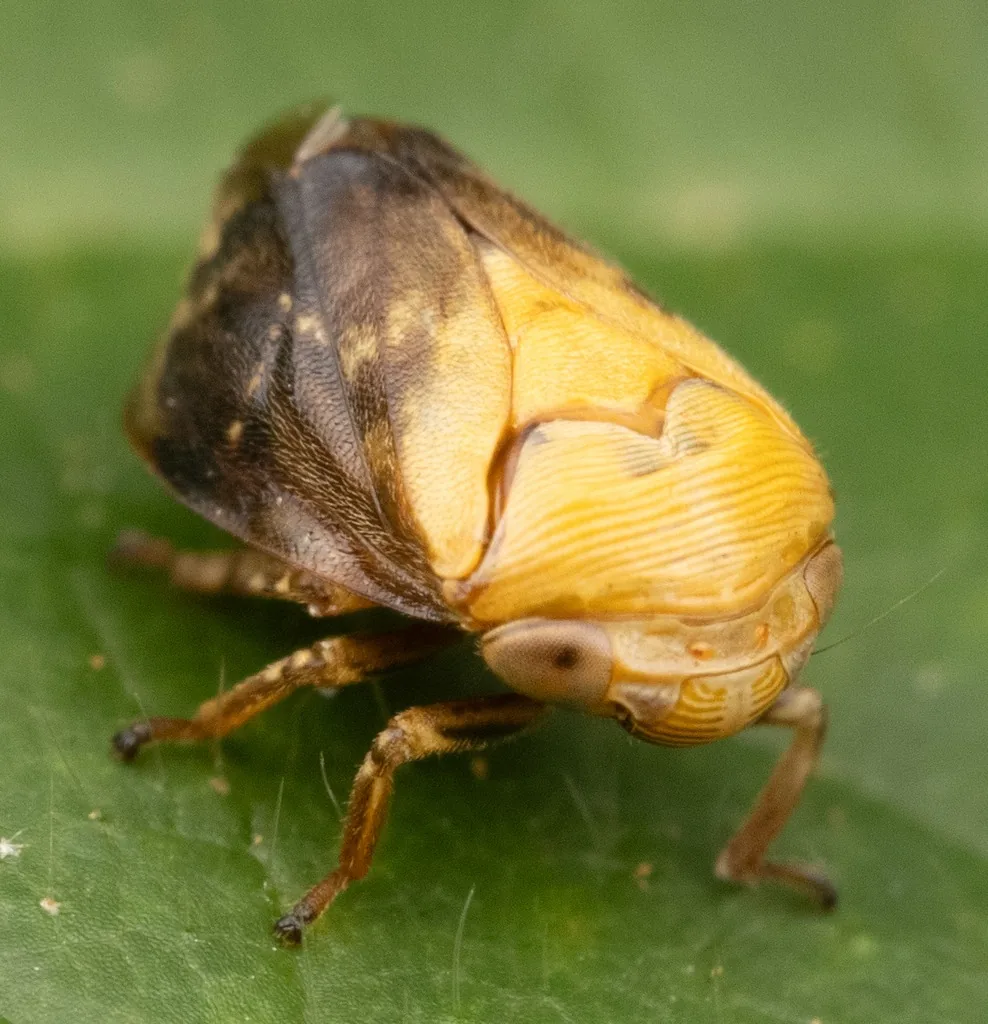
- Adults resemble leafhoppers; spittlebug adults vary in size and color by species but are typically brown and about 6 mm (1/4 inch) long.[1]
- The host tells you a lot: adults feed on hickories, including pecan, mockernut, shagbark and bitternut hickory. Records from hazelnut, maple and linden are probably strays.[3]
Look-alikes
| Look-alike | How to tell them apart |
|---|---|
| Pine spittlebug | A spittlebug of pines; the pecan spittlebug lives on pecan and other hickories.[1][3] |
| Diamondbacked spittlebug (Lepyronia quadrangularis) | Abundant in weedy areas east of the Rockies and only a suspected occasional carrier of pecan leaf scorch; the pecan spittlebug is the common spittlebug of pecan orchards and transmitted the bacterium at 11.4 percent in group tests.[3][2] |
| Glassy-winged sharpshooter | A leafhopper seen on young vigorous pecan shoots that also transmitted the pecan leaf scorch bacterium (4 percent in tests); the pecan spittlebug is the froth-making species common in southeastern pecan orchards.[2] |
Where it lives
Recorded from Alabama, Florida, Georgia, Indiana, Kansas, Louisiana, Maryland, Michigan, Mississippi, New Jersey, Ohio, South Carolina, Tennessee, Virginia and Washington, DC, as well as Canada and Mexico; common in pecan orchards of the southeastern United States, and listed among New Mexico's spittlebugs by NMSU.[3][2][1]
Biology and life cycle
Hosts are hickories: pecan, mockernut (white-heart) hickory, shagbark hickory and bitternut hickory.[3]
Spittlebugs spend the winter as eggs laid in the bark of twigs and branches. Nymphs emerge in spring and feed on xylem sap under their spittle; adults are present in summer and keep feeding. There is one generation a year and metamorphosis is incomplete.[1]
Nymphs often die of desiccation in hot weather. Ants, spiders and birds are natural enemies.[1]
Xylella fastidiosa, the pecan bacterial leaf scorch bacterium, is typically spread by spittlebugs and leafhoppers. In Louisiana tests, pecan spittlebugs that fed on infected pecan terminals transmitted it to healthy pecan at a rate of 11.4 percent.[2]
Damage and signs
- Feeding by nymphs and adults causes little to no damage to trees; large infestations can distort, stunt and yellow leaves, and the damage is rated aesthetic.[1]
- The real concern on pecan is disease: pecan bacterial leaf scorch causes economically significant crop loss on some cultivars in the Southeast, and the pecan spittlebug is one of the insects shown to move the bacterium from tree to tree. Whether vector management is needed in commercial orchards is still an open research question.[2]
Health risk
A sap-feeding plant insect; none of the sources mentions any effect on people or pets.[1][2]
Control
Prevention
Infestations are usually not high enough to warrant chemical control. Remove spittlebug-infested weeds in spring so nymphs do not disperse to trees and shrubs.[1]
Traps and physical control
Knock nymphs off with a high-pressure stream of water. Pruning out spittle-covered branches works too, but may do more damage than the spittlebugs.[1]
Biological control
Encourage natural enemies, including ants, spiders and birds; hot weather kills many nymphs by drying them out.[1]
Pesticides
Insecticidal soap can be used if applied thoroughly to the nymphs. Pecan growers worried about leaf scorch should know that studies have not yet established whether controlling vectors reduces its spread.[1][2]
Common questions
- There are blobs of white foam on my pecan twigs. What makes them?
- Spittlebug nymphs: on pecan and hickories, the pecan spittlebug. The froth keeps the nymph moist and hides it from predators. Hose it off if it bothers you; the feeding itself does little harm.[1][3]
- Should I spray my pecans for spittlebugs?
- Usually not. NMSU says infestations are rarely high enough to justify insecticides, and insecticidal soap is the option if you must. The spittlebug can carry pecan bacterial leaf scorch, but researchers have not yet shown that vector control is needed in orchards.[1][2]
- Is this the same bug that scorches pecan leaves?
- Not directly. Pecan bacterial leaf scorch is caused by Xylella fastidiosa; the pecan spittlebug, like some sharpshooter leafhoppers, can pick the bacterium up from infected pecan shoots and pass it to healthy trees.[2]
Sources
- New Mexico State University College of Agricultural, Consumer and Environmental Sciences, “Integrated Pest Management (IPM) Strategies for Common Insect Pests of Trees in New Mexico (Guide H-174), spittlebugs section.” pubs.nmsu.edu/_h/H174/index.html (accessed 2026-11-10)
- American Phytopathological Society (Plant Disease), “Insect Transmission of Xylella fastidiosa to Pecan (Sanderlin and Melanson 2010, Plant Disease 94:465-470).” doi.org/10.1094/PDIS-94-4-0465 (accessed 2026-11-10)
- European Food Safety Authority (EFSA Journal), “Pest categorisation of non-EU Cicadomorpha vectors of Xylella spp. (EFSA Panel on Plant Health 2019, EFSA Journal 17(6):5736).” doi.org/10.2903/j.efsa.2019.5736 (accessed 2026-11-10)
- iNaturalist, “Clastoptera achatina taxon page (order and family).” www.inaturalist.org/taxa/202619 (accessed 2026-11-10)