On this page
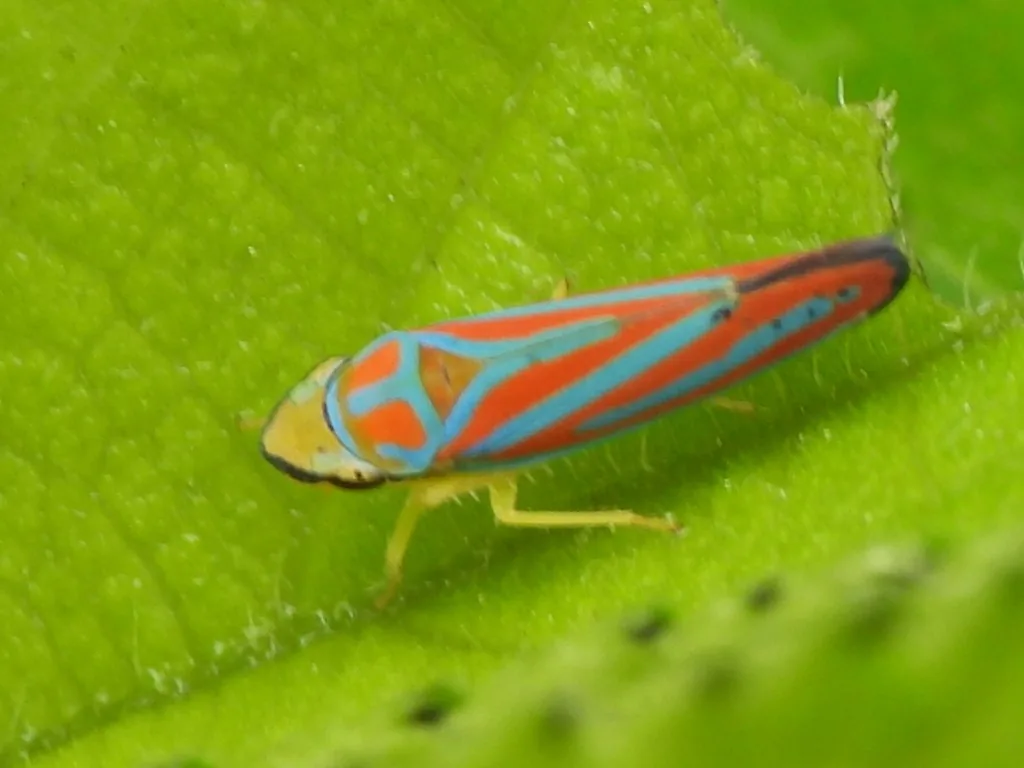
How to identify it
Look-alikes
| Look-alike | How to tell them apart |
|---|---|
| Leafhoppers | One of many leafhoppers; a close relative, G. fennahi, feeds only on rhododendron.[1] |
Where it lives
Found in woodlands, meadows and landscapes in Massachusetts and North Carolina.[1][2]
Biology and life cycle
UMass suggests monitoring from July through the first killing frost.[1]
Damage and signs
- Egg laying causes oval swellings under leaves that may leave 4 mm scars or holes, and nymph feeding distorts new rhododendron growth.[1]
- Hosts include rhododendron, azalea, mountain laurel, rose, privet, crapemyrtle, Scotch broom and fruit bushes.[1][2]
- It can transmit Pierce's disease and leaf scorch bacteria to grape, oak, elm, sycamore and other trees and shrubs.[2]
Health risk
Control
Keep them out
Fine netting can protect small plantings or nursery plants during active periods.[1]
Pesticides
Plants may be reinfested soon after short-residual sprays such as insecticidal soap, neem or oils, but any product labeled for home landscape leafhoppers should work.[2]
Common questions
Sources
- UMass Extension Landscape, Nursery and Urban Forestry Program (Landscape Insect & Mite Guide), “Graphocephala coccinea (Redbanded Leafhopper / Sharpshooter).” www.umass.edu/agriculture-food-environment/landscape/publications-resources/insect-mite-guide/graphocephala-coccinea (accessed 2026-10-16)
- NC State Extension, “Redbanded Leafhopper on Ornamental Plants (PDIC Factsheet).” content.ces.ncsu.edu/the-red-banded-leafhopper-on-ornamental-plants (accessed 2026-10-16)
- iNaturalist, “Graphocephala coccinea taxon page (order and family).” www.inaturalist.org/taxa/56925 (accessed 2026-10-06)