PestControlBasics
Menu

Rhododendron Gall Midge

Clinodiplosis rhododendri[3]

The rhododendron gall midge is a tiny native fly whose maggots feed in the new growth of rhododendrons, curling and distorting the leaves.[1][2]

Group
Insect
Order
Diptera
Family
Cecidomyiidae
Sources
3 cited
Updated
2026-10-16
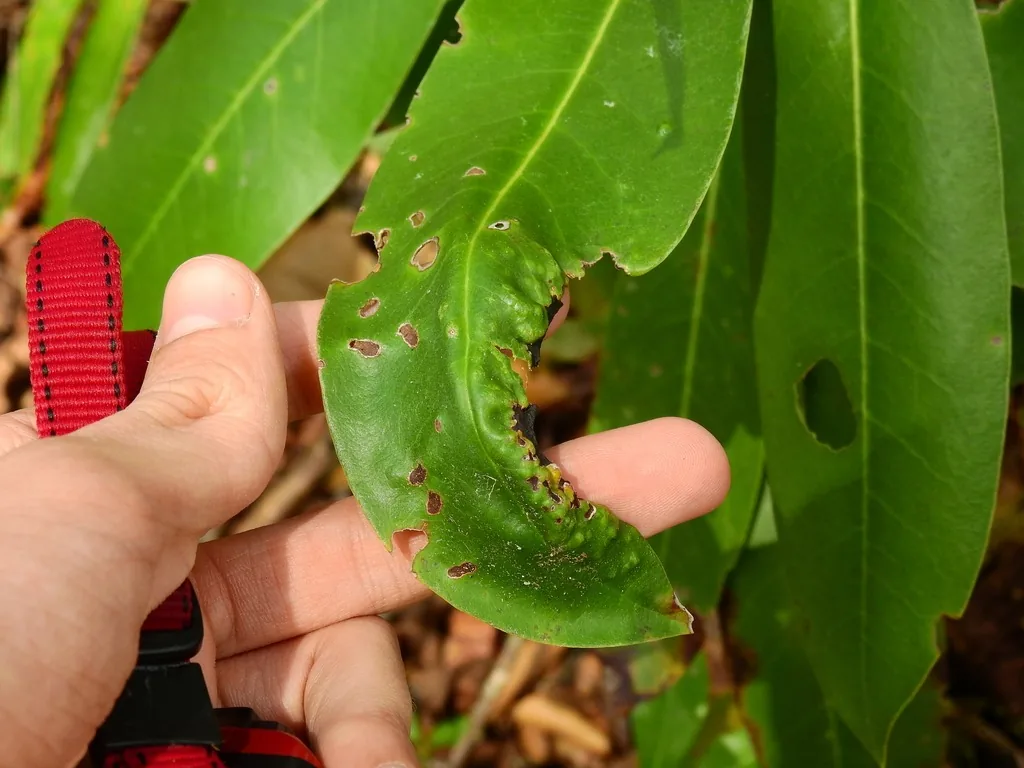
Rhododendron leaf curled and distorted by gall midge feeding
Rhododendron leaf curled and distorted by gall midge feeding. Photo: Yann Kemper, public domain (CC0), via iNaturalist
On this page
  1. Identification
  2. Where it lives
  3. Biology
  4. Damage and signs
  5. Health risk
  6. Control
  7. Related profiles
  8. Common questions
  9. Sources

How to identify it

  • Adults are very small, light brown, mosquito-like flies; maggots are flattened, whitish and tiny.[1]
  • Damaged young leaves turn yellow, in-roll, twist and pucker as they leave the bud scales.[1][2]

Where it lives

A native pest reported from North Carolina to Connecticut.[1][2]

Biology and life cycle

It overwinters as a non-feeding prepupa in a flimsy silk cocoon in soil; adults emerge in spring to lay eggs on new growth.[1]

In Connecticut most populations complete three generations a year, sometimes four or five, from May to October.[2]

Damage and signs

  • Hosts include Rhododendron catawbiense, R. maximum, R. ponticum and their hybrids.[1][2]
  • Infested buds produce puckered, discolored leaves that may drop early, and buds attacked severely may die.[1][2]

Health risk

None to people or pets.[1][2]

Control

Sanitation

Remove and destroy newly infested foliage; this may eliminate the problem within a year or two.[1]

Pesticides

Any treatment is timed to bud break and may need repeating with later flushes of growth.[1][2]

Common questions

Why are my rhododendron's new leaves curled and puckered?
Rhododendron gall midge maggots feeding in the new growth are a common cause.[1][2]

Sources

  1. NC State Extension, “Rhododendron Gall Midge (PDIC Factsheet).” content.ces.ncsu.edu/rhododendron-gall-midge-1 (accessed 2026-10-16)
  2. UConn Integrated Pest Management Program, “Rhododendron Gall Midge.” ipm.cahnr.uconn.edu/rhododendron-gall-midge/ (accessed 2026-10-16)
  3. iNaturalist, “Clinodiplosis rhododendri taxon page (order and family).” www.inaturalist.org/taxa/1268779 (accessed 2026-10-06)

Updated 2026-10-16. Built from sourced records. Spot an error? Tell us.