On this page
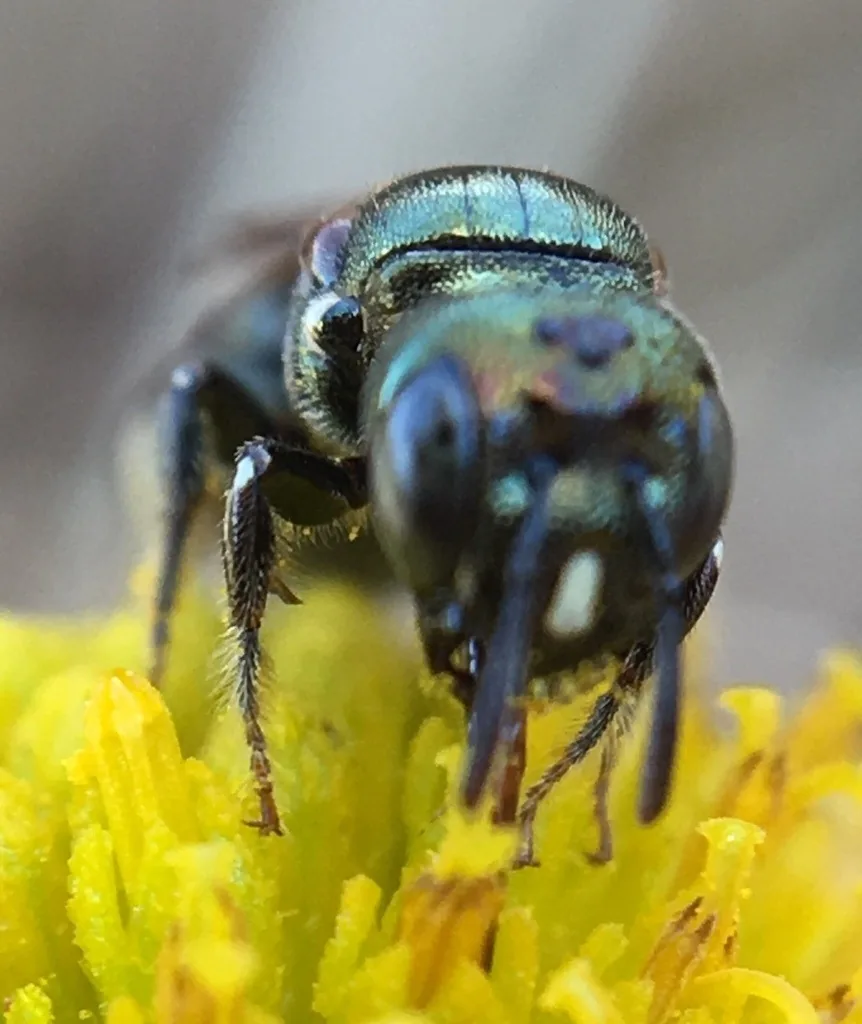
How to identify it
Look-alikes
| Look-alike | How to tell them apart |
|---|---|
| Carpenter bees | The large Xylocopa carpenter bees bore into wooden beams and bare logs; small carpenter bees use plant stems.[1] |
| Rose stem girdler and cane borers | Other causes of dying rose and bramble canes.[2] |
Where it lives
Found across the eastern and central United States, including North Carolina and Minnesota.[1][2]
Biology and life cycle
A single female bores down into the pith of a stem, makes a series of cells and provisions each with a pollen-and-nectar ball and one egg; nests range from 1 1/4 to 12 inches deep.[1]
Adults are active from April through September and gather pollen from at least 25 plant families, including rose, blackberry and daisies.[1][2]
Damage and signs
Health risk
Not aggressive; they are pollinators.[1]
Control
Prevention
Avoid insecticides; these bees are sensitive to them and are useful pollinators.[1]
Keep them out
Seal freshly cut rose stems with tree wound paint so the bees nest elsewhere.[1]
Common questions
Sources
- NC State Extension, “Small Carpenter Bees (PDIC Factsheet).” content.ces.ncsu.edu/small-carpenter-bees (accessed 2026-10-16)
- University of Minnesota Extension (What insect is this? diagnostic pages), “Small carpenter bees.” apps.extension.umn.edu/garden/diagnose/insect/garden/flies/small/smallcarpenterbee.html (accessed 2026-10-16)
- iNaturalist, “Ceratina taxon page (order and family).” www.inaturalist.org/taxa/155108 (accessed 2026-10-06)