On this page
How to identify it
Look-alikes
| Look-alike | How to tell them apart |
|---|---|
| Beech blight aphid | Found only on the stems of American beech, where colonies wave their rear ends in unison when disturbed.[1] |
Where it lives
Native to Europe; found throughout the Northeast wherever European beech is grown, and also introduced to New Zealand, Australia, China and Korea.[1]
Biology and life cycle
Eggs spend the winter in bark crevices near buds and hatch around budbreak; several generations follow, with activity peaking around mid-June.[1]
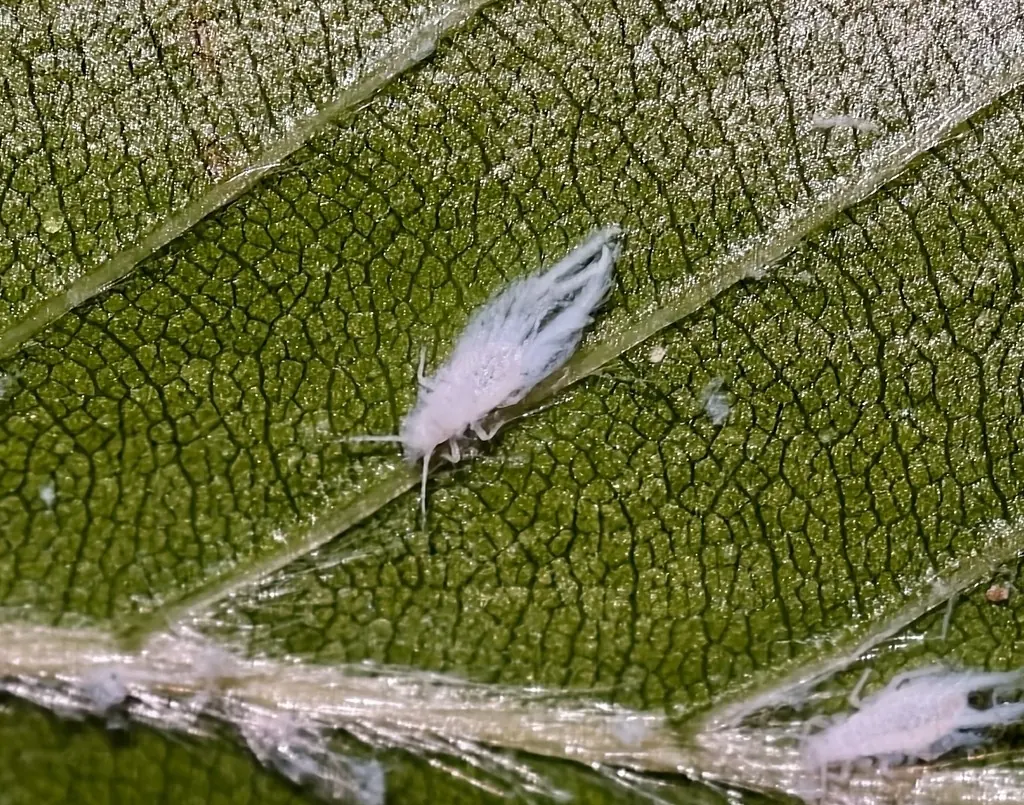
Feeding colonies excrete sticky honeydew, which grows black sooty mold and draws ants, bees and wasps.[1][2]
Damage and signs
Health risk
Control
Traps and physical control
A strong stream of water from a hose can wash colonies off the leaves without harming the natural enemies that keep them in check.[1]
Biological control
Lady beetles and other natural enemies likely feed on it in North America.[1]
Pesticides
Sprays are seldom warranted, and the wax and curled leaves make cover sprays less effective; Utah State lists a spring systemic insecticide where treatment is wanted.[1][2]
Common questions
Sources
- UMass Extension Landscape, Nursery and Urban Forestry Program (Landscape Insect & Mite Guide), “Phyllaphis fagi (Woolly Beech Leaf Aphid).” www.umass.edu/agriculture-food-environment/landscape/publications-resources/insect-mite-guide/phyllaphis-fagi (accessed 2026-10-16)
- Utah State University Extension (Integrated Pest Management), “Leafcurl Ash, Woolly Apple and Woolly Beech Aphids (Ornamental Pest Guide).” extension.usu.edu/planthealth/ipm/ornamental-pest-guide/arthopods/aphids-adelgids/leafcurl-ash-woolly-apple-woolly-beech-aphids.php (accessed 2026-10-16)
- iNaturalist, “Phyllaphis fagi taxon page (order and family).” www.inaturalist.org/taxa/142754 (accessed 2026-10-06)