The short answer
Hive pest profiles
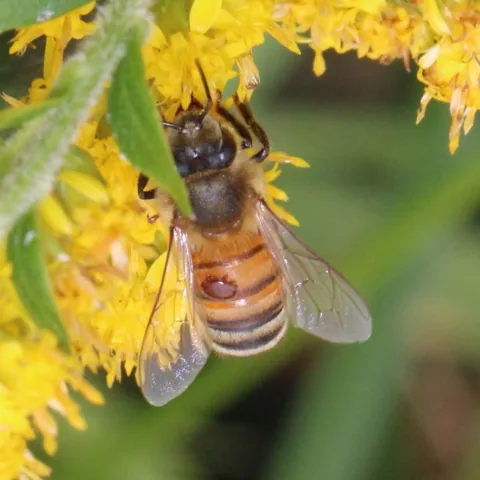 Varroa Mite
Varroa destructor
The Varroa mite is the most damaging pest of honey bees: it feeds on adult bees and developing brood, weakens the colony and spreads viruses, and an unmonitored infestation can kill the hive.
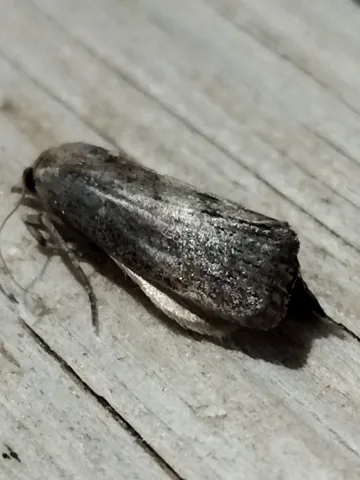 Wax Moths
Galleria mellonella (greater wax moth) and Achroia grisella (lesser wax moth)
Wax moths, the greater wax moth and the lesser wax moth, are pests of honey bee colonies whose caterpillars tunnel through beeswax comb, leaving silk webbing and droppings; they mostly ruin stored combs and weak colonies.
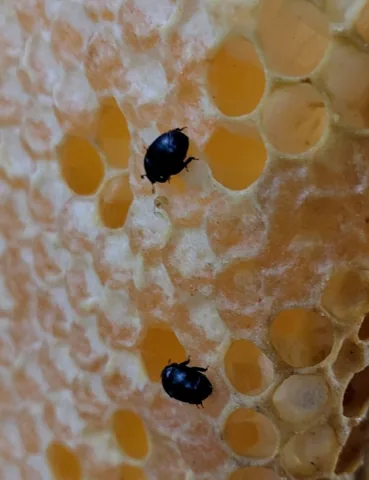 Small Hive Beetle
Aethina tumida
The small hive beetle is an invasive beetle from sub-Saharan Africa whose larvae damage honey bee colonies and stored combs.
Varroa mites, the most serious threat
Varroa mites are the most damaging pest of honey bees: they feed on adult bees and developing brood, weaken the colony and spread deformed wing virus.[1]
- By the time mites are easy to see on bees, levels are often already high, so check monthly with an alcohol wash using rubbing alcohol or soapy water.[1]
Wax moths and small hive beetles in the comb
Wax moth larvae tunnel through comb and leave silk webbing, mostly in weak colonies and stored frames; the greater wax moth does most of the damage to stored combs and woodenware.[2][3]
Prevention that covers all three
Strong, healthy, queenright colonies are the best defense against wax moths and small hive beetles.[3][4]
Common questions
- What is the most serious pest of honey bees?
- Varroa mites: they feed on bees and brood and spread viruses, and an unchecked infestation can kill the colony.[1]
- What are the worms in my stored bee frames?
- Silk webbing and tunnels point to wax moth larvae; small hive beetle larvae also damage stored comb, and the two are easy to confuse.[2][4]
Photo credits
- Varroa Mite: (c) Adrienne van den Beemt, some rights reserved (CC BY) — via iNaturalist, CC BY 4.0
- Wax Moths: (c) SteveM4560, some rights reserved (CC BY) — via iNaturalist, CC BY 4.0
- Small Hive Beetle: (c) Justine Anderson, some rights reserved (CC BY) — via iNaturalist, CC BY 4.0
Sources
- Delaware Department of Agriculture, “Varroa Mites (June 2023).” agriculture.delaware.gov/wp-content/uploads/sites/108/2023/06/Varroa-Mites_Final_6.12.23.pdf (accessed 2026-10-17)
- Mississippi State University Extension, “Wax Moths, Greater and Lesser (Publication 3195).” extension.msstate.edu/sites/default/files/publications/P3195_web.pdf (accessed 2026-10-17)
- UF/IFAS Extension (EDIS), “Wax Moth Control (AA141, C. J. Jack and J. D. Ellis, 2018).” edis.ifas.ufl.edu/publication/AA141 (accessed 2026-10-17)
- Oregon State University Extension, “The Small Hive Beetle: A Potential Pest in Honey Bee Colonies in Oregon (EM 9143).” extension.oregonstate.edu/catalog/em-9143-small-hive-beetle-potential-pest-honey-bee-colonies-oregon (accessed 2026-10-16)