DIY pest control isn't inherently less effective than professional service. The same active ingredients professionals use — bifenthrin, indoxacarb gel bait, CimeXa, fipronil — are available to homeowners. The difference is in application knowledge.
After years of running a pest control business in Florida, I can tell you that the failures I saw from prior DIY attempts almost always came down to the same handful of errors. These five mistakes account for the vast majority of DIY failures — and every one of them is avoidable once you understand the reasoning behind correct application.
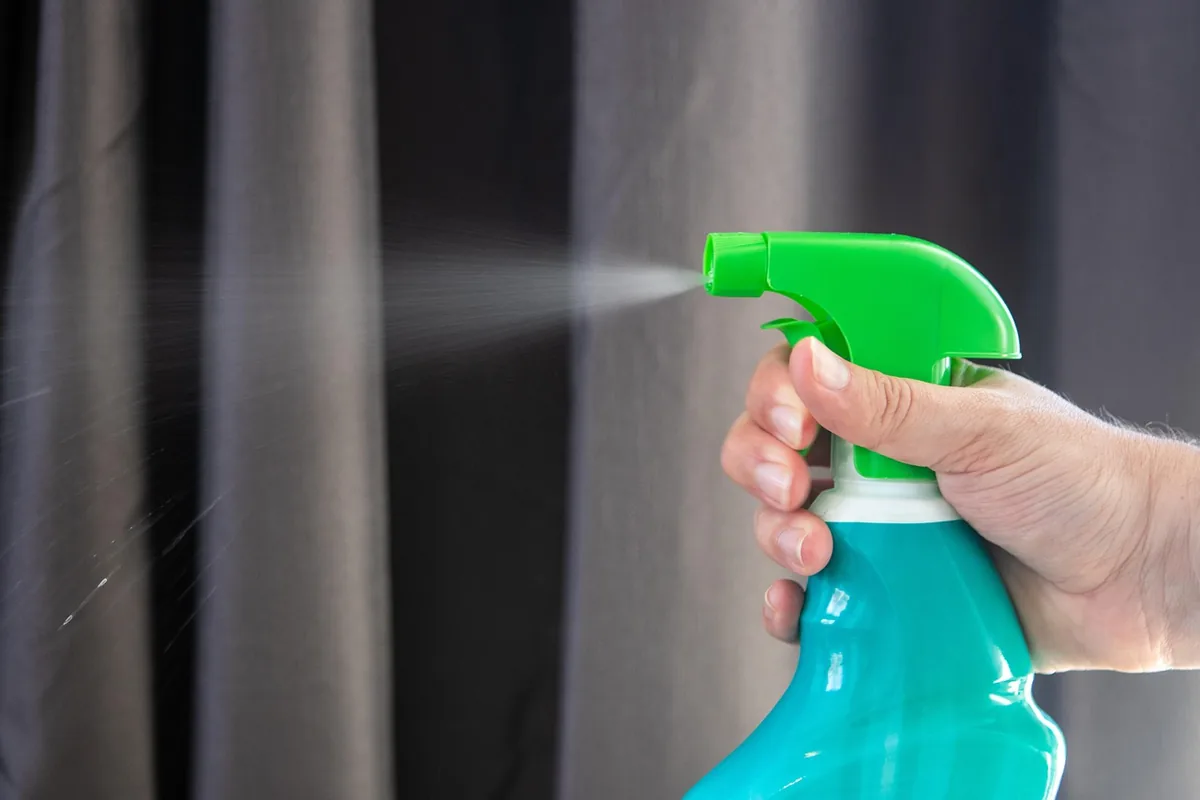
The instinct to grab a can of spray and blast the ants marching across the counter is universal — and universally counterproductive. You kill 50 ants; the colony has 50,000 more. Worse, with species like Argentine ants and pharaoh ants, contact spray triggers a survival response called colony budding — the colony splits into multiple satellite colonies, each with their own queen. You started with one ant problem; now you have three.
This same principle applies across pest types. Spraying a cockroach you see on the kitchen counter does nothing about the dozens hiding in wall voids, behind the refrigerator motor, and under the dishwasher. Killing a wasp at your door doesn't address the nest under your eaves.
The fix: Use bait, not spray, for colony-forming insects. Ant bait is carried back to the colony and shared with the queen through trophallaxis (mouth-to-mouth feeding). It takes 3–7 days but eliminates the source. For cockroaches, gel bait placed in cracks and crevices exploits secondary kill — cockroaches that eat dead bait-killed roaches also die, creating a cascade effect through the population.
The UC IPM program emphasizes that successful ant management requires locating and treating the colony, not killing individual foragers. This is the single most important concept in DIY pest control.
All insecticides are not interchangeable. A product labeled for ants may be useless against bed bugs. An outdoor perimeter spray won't help with drain flies breeding in your pipes. And using a pyrethroid spray for bed bugs in 2026 is almost pointless — University of Kentucky research has documented pyrethroid resistance rates exceeding 90% in many urban bed bug populations.
Another common mismatch: using repellent products when you need non-repellent ones. For termites, a repellent barrier spray pushes them to find gaps in your treatment — a non-repellent like fipronil lets them walk through it unknowingly and carry it back to the colony. For ants, placing repellent spray near bait stations defeats the purpose: the repellent keeps ants away from the bait you need them to eat.
The fix: Identify the pest to species level first, then select the product that targets it. Our AI Bug Identifier gives instant identification. Our Treatment Encyclopedia shows which methods work for each pest. The Compatibility Checker flags product conflicts before you apply. And always read our guide to reading product labels — the label tells you exactly which pests the product controls.
Homeowners consistently over-apply pesticides — piling heavy layers of diatomaceous earth that insects walk around, spraying baseboards until they're dripping, or doubling concentrate mixing ratios "for extra strength." This wastes product, creates health hazards, and often reduces effectiveness.
The science behind this is counterintuitive but well-established. Desiccant dusts like CimeXa and diatomaceous earth work by abrading the insect's waxy exoskeleton as it walks through a thin film. When applied in thick piles, insects simply avoid the visible deposit — they can see and feel it. The Penn State Extension bed bug guide specifically notes that dust applications should be "barely visible to the naked eye" for maximum effectiveness.
Over-applying liquid concentrates is equally counterproductive. Doubling the mixing ratio doesn't double the kill rate, but it does increase the chemical's repellent effect — pushing pests away from treated surfaces rather than killing them on contact. It also increases health risk to your family and pets, and violates federal law (the product label is a legally binding document under FIFRA).
The fix: Follow label directions exactly. The calibrated rate on the label represents extensive testing to find the optimal concentration for effectiveness, safety, and resistance management. Use our Mixing Calculator to get precise dilution ratios for any concentrate product.
Treatment without exclusion is pest management on a treadmill. You kill the current population, but new pests enter through the same gaps within weeks. The cycle repeats every season. This is actually the business model many pest control companies rely on — quarterly visits that treat symptoms without fixing the entry points.
The most common entry points are remarkably consistent across homes: gaps where utility pipes penetrate exterior walls, missing or damaged door sweeps, unscreened weep holes in brick veneer, unsealed gaps at the sill plate where framing meets the foundation, and deteriorating weatherstripping around garage doors. A mouse can squeeze through a gap the width of a pencil (about 6mm). An American cockroach needs even less.
The fix: Seal your home before or alongside treatment. Copper mesh stuffed into gaps around pipes (it won't rust and rodents can't chew through it), silicone caulk for cracks under 1/4 inch, expanding foam for larger voids, door sweeps on every exterior door, and hardware cloth over attic vents and crawl space openings. This one effort — costing under $30 in materials — prevents more pest problems than any chemical treatment. Our under-$100 pest-proofing guide covers every step with photos.
The EPA's IPM (Integrated Pest Management) guidelines list exclusion as the foundation of any sustainable pest management program, ahead of chemical treatment.
Pest control is rarely a single-application solution, and misunderstanding treatment timelines is one of the most common reasons homeowners abandon an approach that was actually working.
Bed bugs require 2–3 treatments over 6–8 weeks because eggs are immune to virtually all insecticides — you must wait for them to hatch and contact the residual treatment. Flea pupae survive in silk cocoons for weeks or even months, emerging well after you think the problem is solved. Ant colonies send out new foragers from a queen producing thousands of eggs per week that you haven't reached yet.
The fix: Understand the biology of your pest and plan for the full treatment timeline before you start:
| Pest | Minimum Treatment Window | Why It Takes This Long |
|---|---|---|
| Ants (bait) | 3–14 days | Bait must reach and kill the queen |
| Cockroaches (gel bait) | 2–4 weeks | Secondary kill cascade through colony |
| Bed bugs | 6–8 weeks | Eggs immune to treatment; must hatch first |
| Fleas | 3–4 weeks | Pupal cocoons protect developing fleas |
| Rodents (bait) | 1–3 weeks | Neophobia (fear of new objects) delays feeding |
Track your progress with our Treatment Journal — documenting what you applied, when, and the results helps you identify whether the treatment is working or needs adjustment.
Understanding what separates professional technique from common DIY approaches helps you close the gap:
They inspect before treating. A good technician spends 15–30 minutes inspecting before touching a single product. They identify the pest to species, locate harborage sites and entry points, assess infestation severity, and only then select the appropriate treatment. Most homeowners skip straight to treatment.
They use multiple methods simultaneously. A professional cockroach treatment might include gel bait in cracks, dust in wall voids, an IGR (insect growth regulator) to prevent reproduction, and glue board monitors to track progress — all in one visit. This multi-vector approach eliminates the population faster and reduces the chance of survivors.
They rotate chemical classes. To prevent resistance, professionals alternate between different classes of active ingredients across visits. Using the same product repeatedly selects for resistant individuals. Our IGR guide explains how growth regulators fit into rotation strategies.
They follow up. The follow-up visit is often more important than the initial treatment — it catches survivors, addresses new entry points, and adjusts the approach based on results. Build this into your DIY plan: schedule a re-inspection and re-treatment 2 weeks after initial application.
Every EPA-registered pesticide label includes critical safety information that homeowners frequently overlook:
Signal words indicate toxicity level: "Caution" (lowest), "Warning" (moderate), "Danger" (highest). Most consumer products carry "Caution." Products labeled "Danger" should be handled with extra care and full protective equipment.
REI (Restricted Entry Interval) tells you how long to keep people and pets away from treated surfaces. This is especially important for indoor applications and for homes with crawling babies or pets that contact treated floors.
"It is a violation of federal law to use this product in a manner inconsistent with its labeling" — this statement appears on every EPA-registered pesticide. The label is not a suggestion. Using more than the labeled rate, applying in locations not listed on the label, or using a product for pests not listed are all violations of FIFRA (Federal Insecticide, Fungicide, and Rodenticide Act).
For a complete walkthrough, see our guide to reading pest product labels and the EPA's safe pest control guidelines.
For many common pests — ants, cockroaches, spiders, and occasional invaders — DIY methods using the same active ingredients professionals use can be equally effective when applied correctly. The key differences are application knowledge and access to commercial-grade equipment like mist blowers or heat treatment rigs. For complex infestations (termites, widespread bed bugs, wildlife), professional treatment is typically more reliable.
Spraying visible pests instead of treating the source. Contact-kill sprays address the symptom (the bugs you see) without eliminating the colony, nest, or breeding site producing them. Baiting systems that target the colony are more effective for ants, cockroaches, and other social or gregarious insects.
It depends on the pest. Ant baits need 3–7 days to eliminate a colony. Cockroach gel bait requires 2–4 weeks for full colony knockdown. Bed bug treatment with desiccant dusts takes 6–8 weeks. Flea treatments need at least 3–4 weeks due to the pupal stage. If you see no improvement after the expected timeline, reassess your approach or consult a professional.
Many professional-grade active ingredients are available to homeowners, including bifenthrin, fipronil, indoxacarb, and CimeXa silica gel. Some products — like Termidor for termite treatment — are restricted to licensed applicators. The EPA regulates which products require professional licensing based on toxicity and application complexity.
DIY pest control is safe when you follow product label directions exactly. The most common safety mistakes are over-applying products, using outdoor products indoors, and failing to keep children and pets away during the specified reentry interval. The EPA provides safety guidelines for homeowners applying pest control products.
Pest control content on the internet has grown dramatically in volume but not in average quality, and the signals that distinguish reliable sources from unreliable ones are worth knowing. Reliable content typically cites specific products by active ingredient rather than only by brand, references regional variation in pest pressure and treatment efficacy, acknowledges treatment failures and the conditions under which they occur, and avoids absolute claims about results. Unreliable content tends to make universal claims, recommend specific brand products without identifying alternatives, omit the conditions under which advice applies or fails, and write in a tone optimized for affiliate conversion rather than reader understanding. The other useful signal is whether the source discusses cost-benefit and threshold thinking — at what point does treatment become worth doing — versus only providing how-to instructions with the assumption that treatment is the right answer. Sources that engage with the decision dimension are usually more reliable than sources that skip past it. None of these signals are perfect, but applied consistently they filter out a meaningful portion of the lower-quality content that dominates search results for many pest topics.
Renovation work is one of the highest-value moments for pest intervention, and it's also one of the most consistently missed. When walls are open, when slabs are exposed, when crawlspaces are accessible, when sill plates are visible — these are the windows during which exclusion work, soil treatment, perimeter sealing, and harborage elimination can be done at a fraction of their normal cost and with dramatically better completeness. The same caulk-and-foam exclusion job that takes hours of awkward work after the fact can be done in minutes when the wall cavity is open. A pre-construction termite soil treatment is dramatically more effective than any post-construction equivalent, but it has to happen before the slab is poured. Even non-structural renovations like flooring replacement, kitchen rework, or basement finishing create windows during which the home's pest-relevant geometry can be improved. The cost of pulling in a pest professional during the renovation envelope, even just for an inspection and recommendations, is almost always recovered in reduced future treatment costs and avoided structural damage. The conversation to have with general contractors is whether they're willing to coordinate with a pest specialist during the open-wall phase, and most reputable contractors are, particularly on larger jobs where the small additional scheduling complexity is offset by the value-add for the homeowner.
Some pests are house-scale problems and some are neighborhood-scale problems, and treating a neighborhood-scale problem as if it were house-scale leads to a familiar frustration: treatment works, then activity returns within weeks because the source was never inside your property. German cockroach problems in multi-unit buildings are the canonical example — treating one unit while the rest of the building is untreated produces temporary relief at best. Rodent infestations frequently span multiple adjacent properties, especially row houses, condo complexes, and dense suburban developments with shared boundary fencing or shared utility easements. Mosquito problems are obviously neighborhood-scale because adult mosquitoes don't respect property lines. The practical implication is that for these pests, isolated treatment is not just incomplete but in some cases economically wasteful. Coordinating with neighbors, talking to HOA or property management about whole-building or whole-block treatment, and identifying the actual sources rather than the symptom locations is what produces durable results. This is uncomfortable work in some neighborhoods, but no amount of treatment intensity in a single unit substitutes for it.