On this page
How to identify it
- The caterpillar has a light brown head capsule and a greenish, somewhat translucent body with two pale stripes running along a darker line down the middle of the back; it wiggles violently when disturbed.[1][2]
- Leaves (or cotton bracts) webbed together with silk into a feeding shelter, with skeletonized leaf tissue inside, are the sign of the larva.[1][2]
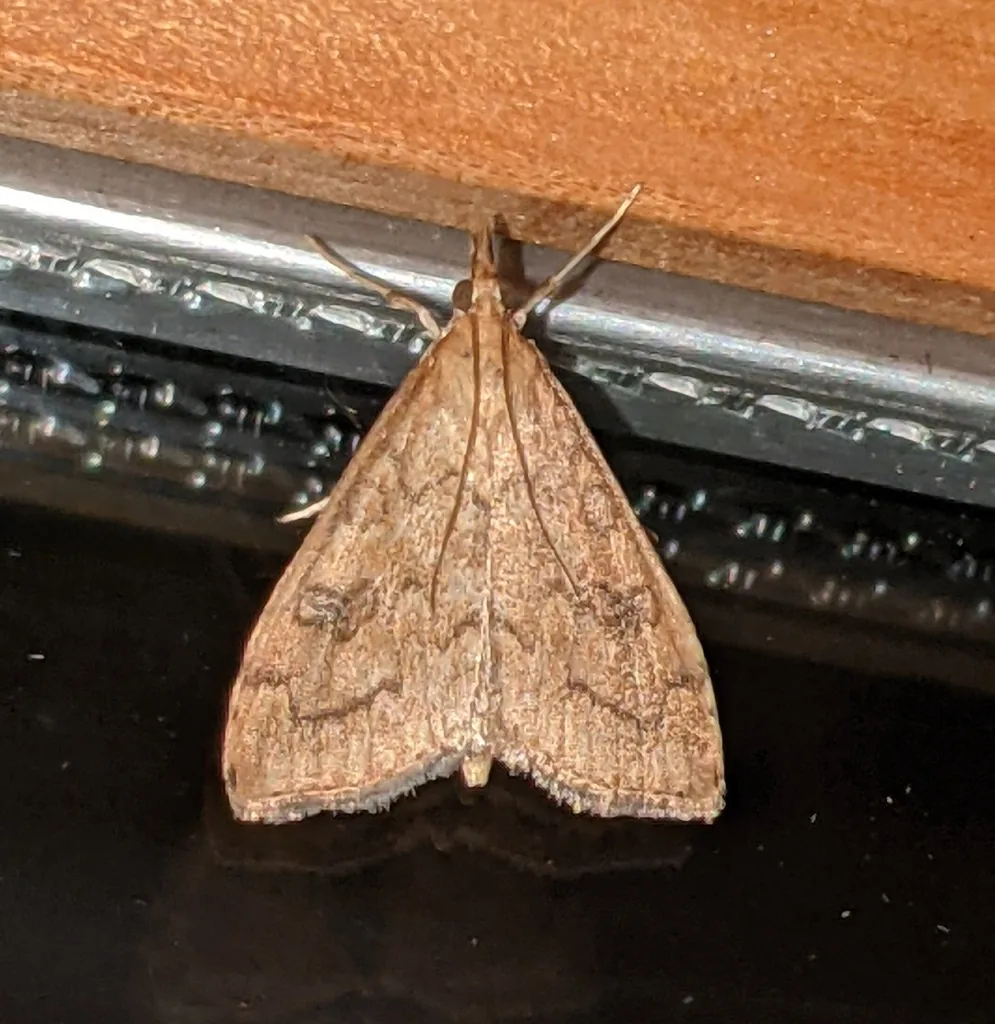
- The adult moth is tan to orange-brown with several dark wavy lines across the wings and mouthparts that stick forward like a snout; it rests on beet foliage or weeds and flies readily when disturbed.[1]
Look-alikes
| Look-alike | How to tell them apart |
|---|---|
| Omnivorous leafroller | Shares the UC IPM cotton page and the same leaf-webbing, wiggling habit; the two are treated together there because their damage and management are the same.[2] |
| Omnivorous leaftier | A different leaf-tying moth with its own profile; the false celery leaftier is recognized by the tan to orange-brown, snout-nosed adult with dark wavy lines and the translucent green larva with two pale stripes along a darker midline.[1] |
Where it lives
A late-season pest of sugar beet in the Pacific Northwest and an occasional pest of cotton in California and Arizona.[1][2]
Biology and life cycle
The larva ties leaves together with silk to form a shelter and feeds within it; the moths rest on the foliage of beets or nearby weeds.[1][2]
Larvae may become abundant in sugar beet fields during the late season.[1]
Damage and signs
- The caterpillars skeletonize leaves inside their silk shelters; in sugar beets they can become abundant late in the season.[1]
- In cotton the larvae feed on leaves, small squares and the surface of green bolls, and injured bolls may open prematurely, but the injury is sporadic, localized and seldom of economic importance.[2]
Health risk
Neither source mentions any effect on people; the moth is a crop pest only.[1][2]
Control
Prevention
No economic threshold exists for sugar beet. In cotton, Arizona suggests treating when 25 percent of plants have an active larva, while California has not set a threshold; look for webbed leaves and the wiggling green larvae inside.[1][2]
Biological control
Infestations in cotton are usually reduced by natural enemies, so avoid treatments that would disrupt them.[2]
Pesticides
No conventional insecticide is registered against the false celery leaftier in sugar beet; the Pacific Northwest handbook notes that several biological or reduced-risk insecticides are available after emergence.[1]
Common questions
- What is tying my beet leaves together and eating them from inside?
- A translucent green caterpillar with two pale stripes and a light brown head that wiggles hard when disturbed is the false celery leaftier; it webs leaves into a shelter and skeletonizes them.[1][2]
- Is the false celery leaftier worth treating?
- Usually not: in cotton the injury is sporadic and seldom economically important and natural enemies keep it down, and in sugar beet there is no threshold and no conventional insecticide registered for it.[2][1]
- What does the adult look like?
- A tan to orange-brown moth with dark wavy lines across the wings and a snout-like projection in front, resting on beet leaves or weeds and flying up readily when disturbed.[1]
Sources
- Pacific Northwest Pest Management Handbooks (Oregon State University, Washington State University and University of Idaho), “Sugar beet-False celery leaftier, Pacific Northwest Insect Management Handbook.” pnwhandbooks.org/insect/agronomic/sugar-beet/sugar-beet-false-celery-leaftier (accessed 2026-11-10)
- University of California Statewide IPM Program, “Omnivorous Leafroller and False Celery Leaftier, UC Pest Management Guidelines: Cotton.” ipm.ucanr.edu/agriculture/cotton/omnivorous-leafroller-and-false-celery-leaftier/ (accessed 2026-11-10)
- iNaturalist, “Udea profundalis taxon page (order and family).” www.inaturalist.org/taxa/335030 (accessed 2026-11-10)