Certain pest infestations produce distinctive odors long before you see a single bug. Pest control professionals learn to identify these smells, and you can too. A musty, oily smell in the kitchen means something different than a sweet, rotting smell in the wall. Matching the odor to the pest speeds up identification and treatment.
According to the NPMA, odor detection is one of the most underused diagnostic tools available to homeowners. Many people notice an unusual smell weeks before they see a pest — that early warning is valuable if you know how to interpret it. The UC IPM program trains pest management professionals to use odor identification as part of their inspection protocol, particularly for hidden infestations in wall voids and attics where visual evidence may not be accessible.
| Odor Description | Most Likely Source | Where to Check | Urgency |
| Musty, oily, greasy | Cockroaches (German) | Kitchen cabinets, behind appliances | High — treat immediately |
| Sweet, sickeningly rotting | Dead animal in wall | Walls, ceiling, HVAC ducts | Medium — locate source |
| Sharp ammonia, urine | Rodents (mice/rats) | Closets, cabinets, attic, crawl space | High — active infestation |
| Musty ammonia (attic) | Bat colony | Attic, eaves, soffits | High — health hazard |
| Cilantro, coriander | Stink bugs / bed bugs (heavy) | Wall voids, bedroom | Medium to high |
| Sweet, vinegar-like | Carpenter ants (disturbed) | Damp wood, window frames, deck posts | High — structural risk |
| Mildew, wet cardboard | Moisture problem (pest attractant) | Basement, crawl space, bathroom | Medium — fix moisture source |
Large German cockroach populations produce a distinctive musty, oily odor from aggregation pheromones and fecal material. If you smell something "off" when you open kitchen cabinets — greasy and unpleasant — check behind appliances and inside cabinet hinges for cockroach evidence. The smell intensifies with population size. Heavy infestations also produce visible dark staining from fecal smears.
The UC IPM program notes that the cockroach aggregation pheromone is produced in feces and serves to attract other cockroaches to harborage sites. This means the smell itself indicates an established, reproducing population — not just a few stray insects. If you can detect the odor, the population is almost certainly in the hundreds.
Pull the stove and refrigerator away from the wall and inspect behind them. Check inside the motor housing of the refrigerator (accessible from the back). Open all kitchen cabinets and check hinge areas, corners, and under shelf paper. If you find evidence, see our cockroach treatment guide. Gel bait in cracks and crevices is the standard treatment — not spray, which scatters cockroaches and worsens the problem.
A sickeningly sweet, decaying odor that seems to come from inside a wall or ceiling almost always indicates a dead animal — usually a mouse or rat that died in the wall void from poisoning, dehydration, or a snap trap that was forgotten. The smell peaks at 3–5 days and can last 2–8 weeks depending on the animal's size and ambient temperature.
Walk along the wall where the smell is strongest, holding your nose close to the surface. The odor will be most intense directly over or near the carcass. Feel for warm spots on the drywall — decomposition generates heat. A thermal camera (available as smartphone attachments) or an infrared thermometer can help pinpoint the location.
For a single dead mouse, the odor typically resolves in 1–3 weeks. Waiting is often the most practical option. For larger animals (rats, squirrels, raccoons), the odor lasts longer and may justify cutting drywall. Activated charcoal bags, odor absorbers, and air circulation reduce the smell during the waiting period. The Penn State Extension recommends focusing on finding and sealing the entry point that allowed the animal in — preventing the next carcass is more important than removing the current one.
Mouse urine has a sharp, ammonia-like odor that's particularly noticeable in enclosed spaces — closets, cabinets, attics, and crawl spaces. Rat urine is even stronger. If you smell ammonia in a storage area, check for rodent droppings and gnaw marks.
The odor persists in contaminated insulation and wood even after the rodents are removed — cleanup requires removing affected insulation and, in severe cases, replacing contaminated building materials. The CDC provides guidelines for safe rodent cleanup, including wearing an N95 respirator, wetting droppings with disinfectant before sweeping, and avoiding vacuuming dry droppings (which can aerosolize hantavirus particles).
Rodent urine fluoresces under ultraviolet (UV) light. A UV blacklight inspection can reveal urine trails invisible to the naked eye, helping you identify high-traffic areas, nesting locations, and entry points. This is one of the most useful diagnostic tools for confirming and mapping a rodent infestation.
Bat colonies produce accumulations of guano (droppings) that develop a strong, musty, ammonia-like odor as they decompose. Large colonies create a smell detectable from living spaces below the attic. According to the CDC, bat guano also supports Histoplasma capsulatum fungal growth — never disturb large guano deposits without proper PPE (N95 respirator, gloves, protective clothing) and professional cleanup.
Besides the odor, bat colonies produce audible squeaking or rustling sounds (especially at dusk as bats exit to feed), dark brown staining around entry points (from body oils), and visible guano accumulation below roosting areas. Bats are protected wildlife in most states — removal requires professional exclusion (one-way exits that let bats leave but not return), typically performed during specific seasons when flightless pups are not present.
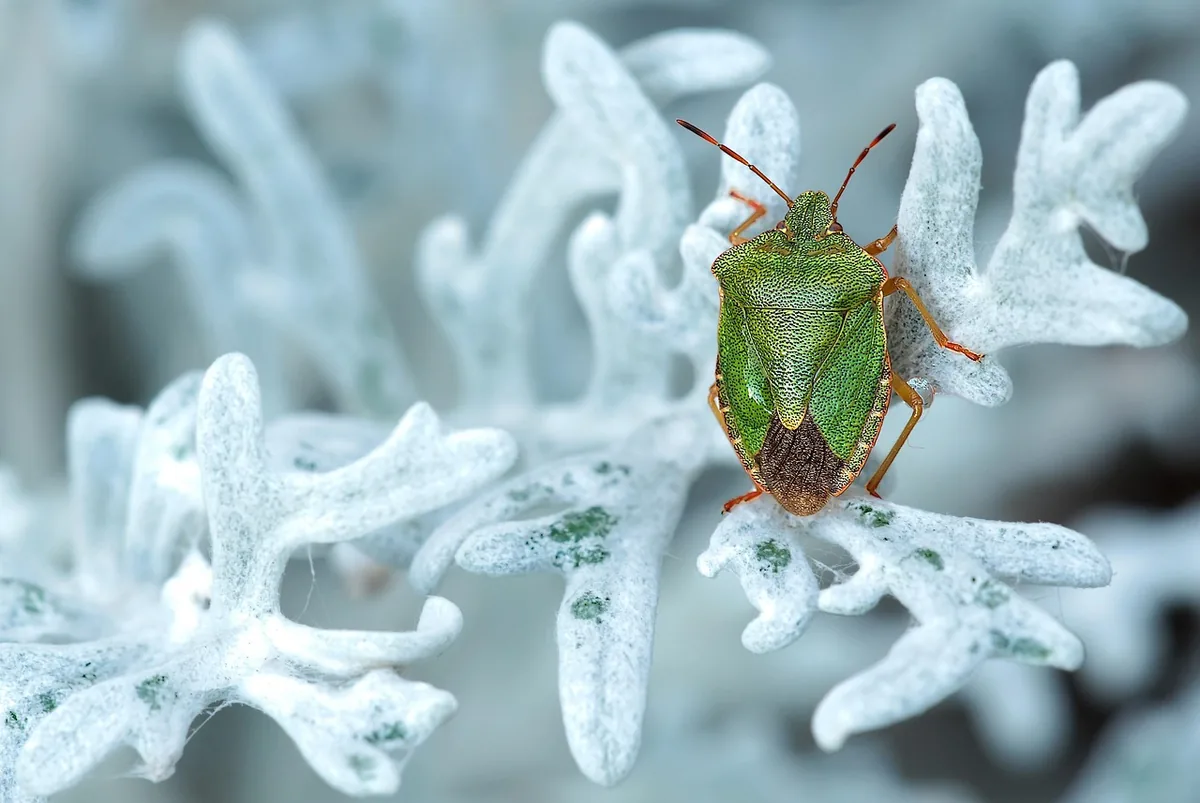
Brown marmorated stink bugs release a pungent, cilantro-like odor when disturbed or crushed. If you smell this in a room with no crushed bugs visible, they may be inside wall voids in large numbers — stink bugs aggregate in groups of hundreds or thousands to overwinter inside homes.
Bed bugs in large infestations produce a sweet, musty odor sometimes compared to overripe berries or coriander. This odor is only detectable in heavy infestations — if you can smell bed bugs, the population is significant and likely numbers in the hundreds. Most bed bug infestations are detected through visual inspection or bite reactions long before they produce a detectable odor.
Location is the key differentiator. Stink bug odor is typically strongest near windows, door frames, and attic access points where the bugs enter and congregate. Bed bug odor is concentrated around sleeping areas — the mattress, headboard, and bed frame. If you detect a coriander-like smell in the bedroom, inspect the mattress seams with a flashlight before assuming stink bugs.
Disturbed carpenter ants release formic acid as a defense chemical, producing a smell sometimes described as sweet or vinegar-like. If you notice this odor when tapping on wood or disturbing wall areas, carpenter ants may be nesting inside. The Texas A&M AgriLife Extension notes that the formic acid odor is most noticeable when you break open an active carpenter ant gallery — the concentrated smell is unmistakable.
Tap along baseboards, window frames, and exterior door frames with the handle of a screwdriver. Carpenter ant galleries produce a hollow sound compared to solid wood. Look for small piles of fine wood shavings (frass) — carpenter ants excavate wood but don't eat it. Follow ant trails at night (carpenter ants are most active after dark) to locate the nest entrance. Carpenter ant nests always require moisture-damaged wood — fixing the moisture source is essential alongside treatment.
This isn't from a specific pest, but a moisture-related odor in a basement, crawl space, or wall void predicts pest problems. The musty smell of mold and moisture means conditions are perfect for silverfish, centipedes, earwigs, springtails, and potentially termites.
According to the EPA, indoor humidity above 60% creates conditions conducive to both mold growth and pest activity. The fix addresses both problems simultaneously: identify and repair the moisture source (leaking pipe, poor drainage, inadequate ventilation), then reduce humidity with a dehumidifier to below 50% RH. Once the moisture issue resolves, the pest attraction — and the odor — resolves with it.
Odor alone gives you a strong hypothesis, but visual confirmation tells you exactly what you're dealing with and how severe it is.
A musty, oily, greasy odor — especially noticeable in kitchen cabinets and behind appliances. The smell comes from aggregation pheromones and fecal material. If you can detect it, the population is likely in the hundreds. See our cockroach guide.
Almost always a dead animal — usually a mouse or rat. The odor peaks at 3–5 days and can last 2–8 weeks. For a single mouse, waiting is usually more practical than cutting drywall.
Either a bat colony (guano accumulation) or rodent urine in insulation. Check for droppings to differentiate. Bat guano carries Histoplasma risk — use N95 PPE if inspecting.
Only in heavy infestations (hundreds or more). Bed bugs produce a sweet, musty odor compared to coriander. Most infestations are detected visually long before they produce a noticeable smell.
Brown marmorated stink bugs are the most common source. They release this odor from defensive glands when disturbed. If the smell is in a bedroom, also consider heavy bed bug infestation.
Localize the smell along the wall surface. Feel for warm spots (decomposition generates heat). For mice, the odor usually resolves in 1–3 weeks. Seal the entry point to prevent recurrence.
Pest control content on the internet has grown dramatically in volume but not in average quality, and the signals that distinguish reliable sources from unreliable ones are worth knowing. Reliable content typically cites specific products by active ingredient rather than only by brand, references regional variation in pest pressure and treatment efficacy, acknowledges treatment failures and the conditions under which they occur, and avoids absolute claims about results. Unreliable content tends to make universal claims, recommend specific brand products without identifying alternatives, omit the conditions under which advice applies or fails, and write in a tone optimized for affiliate conversion rather than reader understanding. The other useful signal is whether the source discusses cost-benefit and threshold thinking — at what point does treatment become worth doing — versus only providing how-to instructions with the assumption that treatment is the right answer. Sources that engage with the decision dimension are usually more reliable than sources that skip past it. None of these signals are perfect, but applied consistently they filter out a meaningful portion of the lower-quality content that dominates search results for many pest topics.
Some pests are house-scale problems and some are neighborhood-scale problems, and treating a neighborhood-scale problem as if it were house-scale leads to a familiar frustration: treatment works, then activity returns within weeks because the source was never inside your property. German cockroach problems in multi-unit buildings are the canonical example — treating one unit while the rest of the building is untreated produces temporary relief at best. Rodent infestations frequently span multiple adjacent properties, especially row houses, condo complexes, and dense suburban developments with shared boundary fencing or shared utility easements. Mosquito problems are obviously neighborhood-scale because adult mosquitoes don't respect property lines. The practical implication is that for these pests, isolated treatment is not just incomplete but in some cases economically wasteful. Coordinating with neighbors, talking to HOA or property management about whole-building or whole-block treatment, and identifying the actual sources rather than the symptom locations is what produces durable results. This is uncomfortable work in some neighborhoods, but no amount of treatment intensity in a single unit substitutes for it.
Pesticide labels are legal documents written to satisfy regulatory requirements, not field guides written to maximize success in a specific home. The instructions cover the broadest reasonable use case, which means they're rarely tuned for the specific construction type, climate, or pest pressure you're dealing with. A label might call for application every six weeks because that's what the registration data supports across a wide range of conditions, but the actual reapplication interval that matches the residual life of the active ingredient in your specific application context could be shorter or longer. This is not an invitation to ignore label directions — doing so is illegal and frequently dangerous — but it does mean that following the label is the floor, not the ceiling, of good practice. Knowledgeable users overlay the label with conditions-aware judgment: shorter re-treatment intervals during heavy rain or high humidity, denser application in known harborage, and supplementary monitoring after treatment to verify that the work actually performed as expected. The label tells you what's permitted; experience tells you what's optimal within that envelope.