The internet's default answer to "I found one bug" is always panic. But pest biology tells a more nuanced story. Some pests are solitary — seeing one means you saw one. Others are colonial — seeing one means hundreds or thousands are hidden nearby. Knowing the difference prevents both underreaction and overreaction.
According to the UC IPM program, the first step in any pest situation is identification — not treatment. The species tells you everything about whether one sighting is a random occurrence or a warning sign. The NPMA estimates that misidentification leads to unnecessary treatment spending in roughly 30% of DIY pest control attempts. Identifying first and assessing urgency second saves both money and anxiety.
| What You Found | Likely More? | Urgency | Action |
| German cockroach (daytime) | Yes — hundreds | Emergency | Gel bait immediately |
| Bed bug | Yes — inspect now | High | Full inspection + encasements |
| Termite swarmer (indoors) | Yes — mature colony | High | Professional inspection |
| Mouse droppings | Yes — 50+ droppings/day | High | Traps + exclusion |
| Pantry moth (adult) | Yes — larvae in food | Medium | Inspect all dry goods |
| Stink bug (September) | Yes — scout for hundreds | Medium | Seal home immediately |
| American cockroach (palmetto) | Usually no | Low | Seal entry, fill P-traps |
| Wolf spider | No — solitary | Low | Relocate or glue board |
| House centipede | No — solitary predator | Low | Address prey insects |
| Earwig, cricket, beetle | Usually no | Low | Seal entry point if repeated |
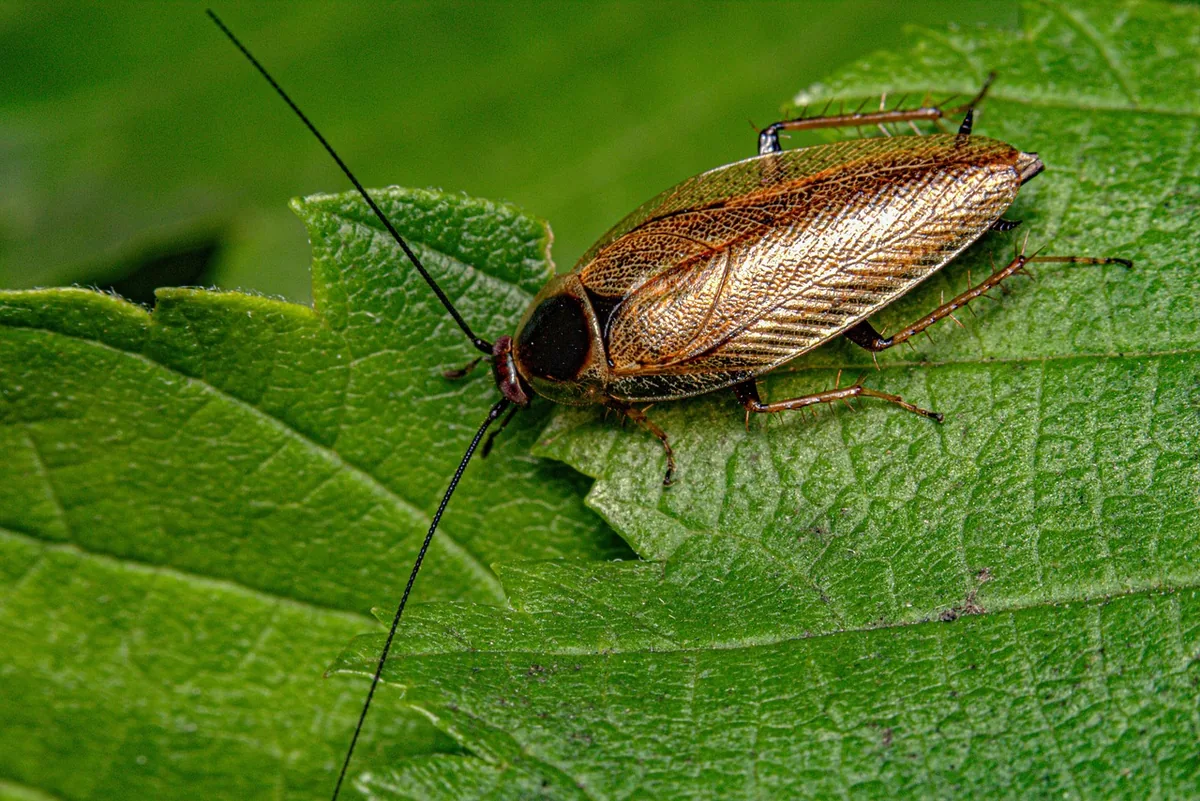
German cockroach seen during the day: German cockroaches are nocturnal. Seeing one during daylight means the population has exceeded available harborage — there are likely hundreds in the walls. The UC IPM program notes that daytime German cockroach sightings indicate populations of 500 or more. This is the single most urgent "one bug" sighting. Begin gel bait treatment immediately.
One bed bug: Bed bugs don't travel alone. A single bed bug means either an early infestation or a hitchhiker that's about to start one. Inspect immediately — if you find fecal spots or shed skins, the population is already established. Even without additional evidence, install mattress encasements and interceptor traps as a precaution.
Termite swarmers indoors: Even one swarmer emerging inside means a mature colony (3–5 years old, thousands of workers) is nesting in or under your structure. According to the Texas A&M AgriLife Extension, indoor termite swarmers always indicate an active colony requiring professional treatment. See our swarmer response protocol.
Multiple mouse droppings: One dropping is never one dropping — if you found some, there are more. A single mouse produces 50–75 droppings per day. Set traps and begin exclusion immediately.
One pantry moth flying in the kitchen: The adult moth you see is the end of a lifecycle that started as a larva feeding inside stored food. Check every opened dry good — cereal, flour, rice, spices, pet food — for webbing, small worms, or clumping. The food source must be found and discarded.
One wolf spider: Wolf spiders are solitary hunters. Finding one in the living room means one spider wandered in — not an infestation. Place a glue board if you want to monitor, but don't treat. The Penn State Extension notes that wolf spiders are beneficial predators that actively reduce pest populations.
One American cockroach (palmetto bug): Unlike German cockroaches, American cockroaches are outdoor species that wander inside individually from sewers or from under the house. One in the bathroom likely came up through the drain. Ensure P-traps are full of water and seal pipe penetrations.
One house centipede: They're solitary predators. One centipede means one centipede. But its presence tells you other prey pests (cockroaches, spiders, silverfish) are also present — address the food web, not the centipede.
One earwig, cricket, or beetle: Individual specimens of these common arthropods enter homes regularly through gaps. A single sighting is normal. Multiple sightings over days suggest an entry point to seal.
Unlike most spiders, brown recluse spiders can establish reproducing populations inside homes. Multiple brown recluse sightings — or even one confirmed identification in an area where they are established — warrants professional inspection. Brown recluses are reclusive and rarely seen; if you see one, dozens or hundreds may be present in undisturbed areas like closets, storage boxes, and attic spaces.
One stink bug in September: An advance scout — seal your home immediately. Hundreds are about to follow as they seek overwintering sites. One stink bug in February was overwintering inside and emerged on a warm day — vacuum it up and move on.
One cluster fly on a window in winter: Hundreds are in your walls. They entered last fall through gaps in the siding and attic, and are emerging individually on warm days. Nothing can be done now — the flies are inaccessible in wall voids. Plan to seal the entry points next August before the next generation arrives.
One ant in spring: Scout ants explore during warm weather. If you see a line of ants, there's a colony with a trail. If you see a single wandering ant, it's exploring — seal the entry point it used and clean the area to remove pheromone trails.
"I found one mouse — do I have more?" is one of the most common pest questions. The answer requires investigation:
Check for droppings. A single mouse produces 50–75 droppings per day. If you find droppings in multiple rooms, multiple mice are likely. Fresh droppings are soft and dark; old droppings are hard and gray.
Listen at night. Scratching, scurrying, or gnawing sounds from walls, ceiling, or under the floor — especially after midnight — indicates activity. Sounds from multiple locations suggest multiple mice.
Set traps strategically. Place 6–12 snap traps simultaneously along walls in the kitchen, bathroom, and basement. If you catch more than 2–3 mice in the first few days, the population is significant and exclusion of all entry points becomes critical.
The exclusion test: According to the NPMA, mice can fit through a gap the diameter of a pencil (about 1/4 inch). If there are unsealed gaps around pipes, dryer vents, or the garage door, assume more mice can enter even if you catch the current ones. Trapping without exclusion is a treadmill — you'll keep catching new mice indefinitely.
Depends on the species. One German cockroach during daytime means hundreds in the walls — treat immediately. One American cockroach (palmetto bug) usually means one wandered in from outside — seal the entry point.
One bed bug means either an early infestation or a hitchhiker about to start one. Inspect immediately. Install encasements and interceptors as a precaution regardless.
Usually no — most spiders are solitary. One wolf spider or cellar spider is normal. Exception: multiple brown recluse sightings warrant professional inspection.
Yes — indoor termite swarmers indicate a mature colony (3–5 years old, thousands of workers) in or under the structure. This requires professional treatment.
Colonial pests where one = many: German cockroaches (daytime), bed bugs, termite swarmers, ants (foragers), pantry moths. Solitary pests where one = one: wolf spiders, American cockroaches, centipedes, earwigs, crickets.
Check droppings (50–75/day per mouse), listen at night for sounds in multiple locations, and set 6–12 traps simultaneously. Catching 2–3+ in a few days indicates a population. Seal all gaps — mice fit through 1/4-inch openings.
Lifestyle and home-improvement publications routinely cover pest control topics, but the quality of advice varies dramatically and the most popular tips often perform worse than less-publicized alternatives. Specific examples of commonly-published advice that doesn't hold up: cinnamon, peppermint oil, and other natural deterrents for ants (work briefly in laboratory conditions but don't produce meaningful field control); bleach in drains for fly elimination (doesn't address the biofilm where flies actually breed); ultrasonic pest repellers (extensive peer-reviewed testing shows minimal to no efficacy); diatomaceous earth applied broadly to carpets and floors (works in dry voids but loses efficacy when wet or vacuumed, and creates inhalation concerns when applied broadly); and dryer sheets stuffed in vents as rodent deterrents (no peer-reviewed evidence of efficacy). The pattern: most universal-home-tip pest advice prioritizes appeal and shareability over efficacy. Better sources for residential pest decisions include cooperative extension publications, peer-reviewed entomology literature (often accessible through extension publications that summarize it), and pest management association educational materials, which represent professional consensus on actual evidence.
Generic seasonal pest calendars list typical activity windows by region, but every property has its own micro-calendar shaped by orientation, vegetation, drainage, neighbor properties, and structural features. After one or two years of observation, most homeowners can map their property's specific patterns: when wasps start scouting (typically early to mid spring as queens emerge), when ants first appear indoors (often after a specific rain pattern), when stored-product pests show up in pantries (often late spring through fall), when rodent activity increases (typically late fall as outdoor food declines and indoor warmth attracts them), when mosquito pressure peaks (varies enormously by local conditions), and when seasonal nuisances like cluster flies or boxelder bugs arrive (usually first hard cooling in fall). A personal calendar drives preventive timing — exterior perimeter treatment shortly before ant pressure builds is dramatically more effective than treatment after they're inside, exclusion work for rodents in early fall beats trapping in late fall, and wasp prevention in early spring beats removal in summer. Two years of observation produces a calendar more useful than any published guide for the specific property.
Most homeowners frame pest control as elimination — zero individuals seen — but professional programs operate on threshold concepts that better match what's actually achievable and economically reasonable. A treatment threshold is the population level at which intervention is justified; below it, the cost and disruption of treatment outweigh the damage prevented. For aesthetic pests like the occasional ant or spider, the threshold is essentially zero only because tolerance is low, not because zero is biologically realistic. For pests with health implications (cockroaches, rodents) or property damage potential (termites, carpenter ants), thresholds are set well below visible damage to allow time for response. The implication for self-evaluation: a program that drops a cockroach population by 95% without reaching zero may be functioning correctly, and pushing for the last 5% may require disproportionate effort or treatment intensity that creates other problems. Reframing 'success' as durable reduction below threshold rather than absolute zero produces saner program design, more reasonable expectations of paid services, and less wasted DIY effort chasing the long tail of a population that's already controlled in any practical sense.
Pest control content on the internet has grown dramatically in volume but not in average quality, and the signals that distinguish reliable sources from unreliable ones are worth knowing. Reliable content typically cites specific products by active ingredient rather than only by brand, references regional variation in pest pressure and treatment efficacy, acknowledges treatment failures and the conditions under which they occur, and avoids absolute claims about results. Unreliable content tends to make universal claims, recommend specific brand products without identifying alternatives, omit the conditions under which advice applies or fails, and write in a tone optimized for affiliate conversion rather than reader understanding. The other useful signal is whether the source discusses cost-benefit and threshold thinking — at what point does treatment become worth doing — versus only providing how-to instructions with the assumption that treatment is the right answer. Sources that engage with the decision dimension are usually more reliable than sources that skip past it. None of these signals are perfect, but applied consistently they filter out a meaningful portion of the lower-quality content that dominates search results for many pest topics.
Pest control warranties are not standardized, and the differences between contracts that look superficially similar can be enormous. Termite warranties in particular vary across at least three significant dimensions: whether they cover retreatment only or also include damage repair, whether the damage coverage is capped or unlimited, and whether the warranty is transferable to subsequent owners. A retreatment-only warranty on a property with significant termite pressure is much weaker than a damage-inclusive warranty, and the difference matters most precisely in the situations where the warranty is most likely to be needed. General pest control service agreements often have similar gradations — some include unlimited callbacks during the service period, some include a fixed number, and some charge for any visit outside the regular schedule. Before signing, the question to ask is not whether the contract has a warranty, but exactly what the warranty covers, what triggers a callback at no charge, and what the renewal terms are. Companies rarely volunteer this clearly; reading the document carefully and asking specific questions is on the homeowner.
The retail pest control aisle is largely undifferentiated by region, but pest pressure is enormously regional, and the disconnect leads to predictable purchasing mistakes. A homeowner in the Gulf Coast facing year-round subterranean termite pressure and large peridomestic cockroach populations has dramatically different needs from a homeowner in the upper Midwest facing rodent invasion in October and bed bugs in apartments. The product mix that makes sense for each is different, the level of investment that's justified is different, and the cadence of application is different. Generic shopping advice and product reviews tend to wash out these regional patterns by averaging across users. The better approach is to identify the two or three pests that actually drive pressure in your specific area, then build a product and treatment plan around those rather than around the broad category. Local cooperative extension publications, state agricultural department pest fact sheets, and regional pest control company blog content tend to be more useful sources of guidance than national review sites, precisely because they're calibrated to the conditions you're actually treating.