On this page
How to identify it
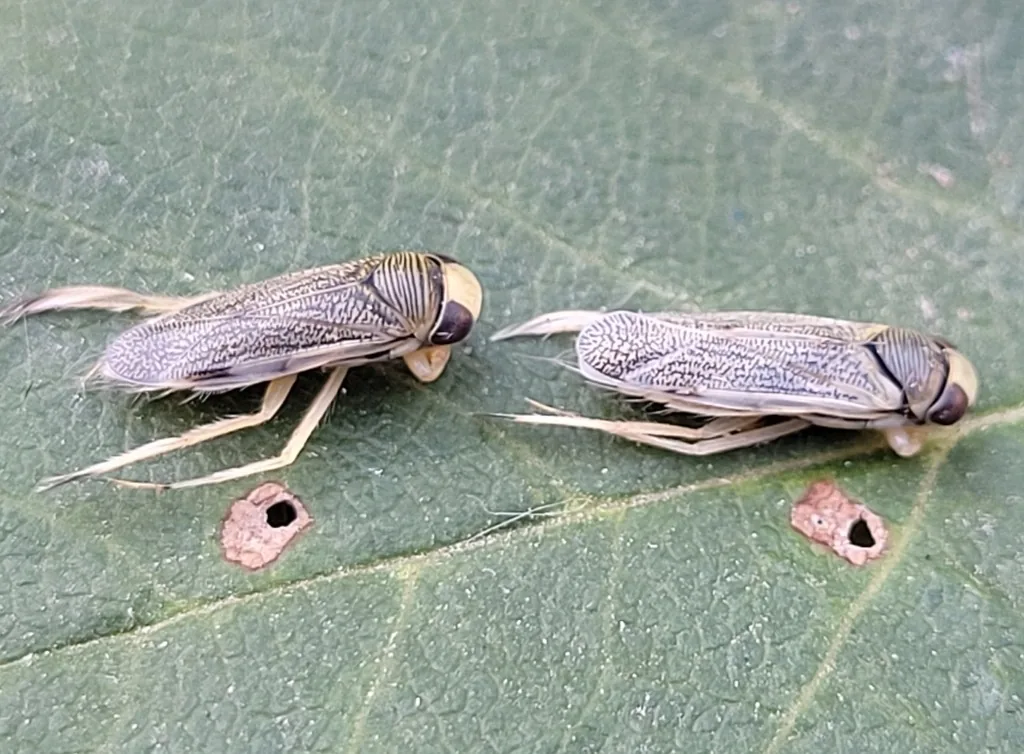
- Slender, oval, streamlined bugs usually under half an inch long (3 to 12 mm), with long oar-like hind legs fringed with fine hairs that they use to swim.[1][2]
- The back is flattened and crossed by several narrow, dark, parallel lines; the Utah key describes dark brown or black striations on the wings.[1][2]
- The 'foot' of each short front leg is a single scoop-shaped segment, which the bug hooks around a plant or object to stay submerged.[1][2]
- They swim right side up, carrying a thin silvery bubble of air against the body like a diving bell.[1]
Look-alikes
| Look-alike | How to tell them apart |
|---|---|
| Backswimmers | Backswimmers swim upside down, have a keeled back that is often light colored and lacks the crosslines, and their front feet are not scoop shaped. They are predators and can deliver a painful bite; water boatmen cannot.[1][2] |
| Giant water bugs | Giant water bugs are much larger predatory bugs with grasping forelegs; water boatmen are under half an inch and feed on algae and detritus.[1] |
Where it lives
About 125 species occur in North America; Missouri records them statewide and the Utah key lists them in still and slow-moving fresh water.[1][2]
Biology and life cycle
Water boatmen are most common in ponds and quiet parts of lakes and streams, where vegetation gives them something to cling to and to eat. They are excellent swimmers.[1][2]
Almost all true bugs have tube-like mouthparts, but water boatmen are among the few aquatic ones that are not predaceous: they suck juices from algae, other plants and detritus. Only a few species eat small aquatic animals such as mosquito larvae.[1]
They are strong fliers and are attracted to artificial lights at night, which is how strays end up in birdbaths and swimming pools; out of water they are clumsy.[1]
Eggs are glued to underwater objects. The young look like miniature wingless adults and gain their wings at the final molt. Fish, other insects and amphibians eat water boatmen in large numbers, and fly-fishers tie lures that imitate their jerky swimming.[1]
Damage and signs
- Water boatmen do no damage. In a pool they are harmless strays that arrived by flying to lights; in a pond they turn algae and detritus into food for fish and other animals.[1]
Health risk
Water boatmen do not bite people. The similar-looking backswimmers are predaceous and can deliver a painful bite, so check which one you have before handling it.[1]
Control
Prevention
No control is needed. A stray water boatman in a pool or birdbath flew in overnight toward lights and can simply be netted out; it is harmless and does not bite.[1]
Common questions
- There are little swimming bugs in my pool. Will they bite?
- If they swim right side up with a flattened, cross-lined back, they are water boatmen, which do not bite. If they hang upside down under the surface with a pale keeled back, they are backswimmers, which can bite painfully.[1][2]
- How did they get into the pool?
- Water boatmen are strong fliers that are attracted to artificial lights at night and end up as strays in birdbaths and swimming pools after a night's flight.[1]
- What do they eat?
- Mostly the juices of algae, other plants and detritus; only a few species eat small aquatic animals such as mosquito larvae.[1]
Sources
- Missouri Department of Conservation, “Water Boatmen (field guide).” mdc.mo.gov/discover-nature/field-guide/water-boatmen (accessed 2026-11-10)
- Utah State University Extension Water Quality Program, “Water Beetles and Bugs: Utah aquatic macroinvertebrate key.” extension.usu.edu/waterquality/resources/macrokey/beetles-bugs.php (accessed 2026-11-10)
- iNaturalist, “Corixidae taxon page (order and family).” www.inaturalist.org/taxa/84735 (accessed 2026-11-10)