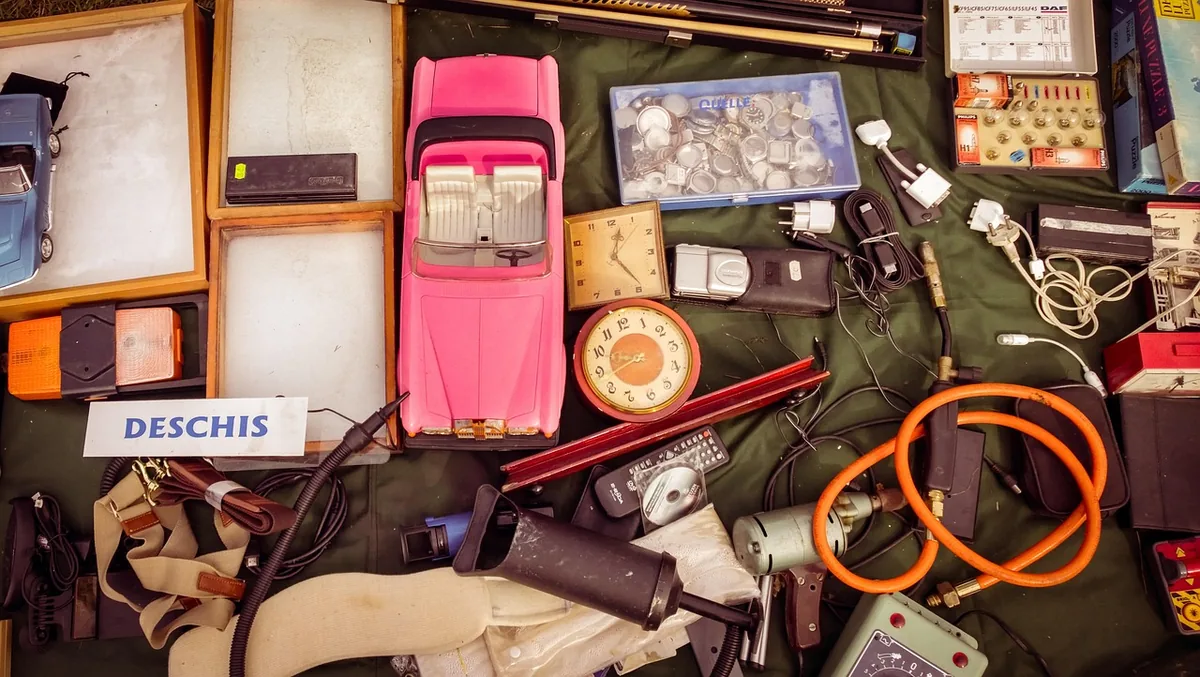
That beautiful vintage dresser from the estate sale? It could be harboring powderpost beetles that will emerge over years, leaving tiny round holes in every piece of wooden furniture in your home. The thrift store coat? Potential clothes moth larvae in the wool lining, ready to spread to every cashmere sweater in your closet. The curbside bookshelf? German cockroach egg cases glued into the hardware channels.
Used items from garage sales, thrift stores, estate sales, online marketplaces, and curbside finds are one of the primary ways pests enter homes — and the NPMA identifies secondhand furniture as the #1 introduction pathway for residential bed bug infestations. The irony is painful: a $50 couch from a yard sale can lead to a $2,000 bed bug treatment. A 2-minute inspection prevents most problems entirely.
Bed bugs are the biggest risk with used furniture — especially upholstered pieces, mattresses, box springs, bed frames, and couches. Inspect every seam, crevice, screw hole, staple line, and fabric fold with a flashlight. Look for dark fecal spots (tiny ink-like dots that smear when wet), translucent shed skins, tiny white eggs (1mm, grain-of-rice shaped), and live bugs hiding in protected crevices.
Never take a used mattress or box spring — the bed bug risk is simply too high and no amount of savings justifies a $1,500–3,000 treatment. Box springs are even riskier than mattresses because bed bugs harbor inside the frame, behind the dust cover, and in the corner braces where they're nearly impossible to detect during a visual inspection.
Wooden furniture should be checked for powderpost beetle exit holes — tiny round holes (1/16 to 1/8 inch) with fine flour-like powder beneath. Active infestations produce fresh, light-colored powder; old inactive holes have dark, compacted powder. Also check drawer tracks, corner joints, and screw channels for cockroach evidence — dark fecal spots and egg cases tucked into tight spaces.
Upholstered chairs and couches: Flip them over and inspect the underside fabric (cambric cloth). Pull back any loose fabric and check the frame joints underneath. Remove cushions and inspect the crevices where the seat meets the back and arms — these are prime bed bug harborage sites. If the piece has a pull-out mechanism (sleeper sofa), open it fully and inspect the metal frame.
Thrift store clothing can carry clothes moth eggs (invisible to the naked eye, laid directly into wool fibers), carpet beetle larvae (small, fuzzy, brown — they eat keratin fibers like wool, silk, and cashmere), and occasionally bed bugs or fleas from the previous owner's home.
Wash and dry everything on high heat before bringing it into your closet. 130°F in the dryer for 30 minutes kills all life stages of all textile pests — eggs, larvae, and adults. This is non-negotiable for any used clothing, regardless of how clean it appears. Items that can't be machine-washed (vintage coats, delicate fabrics, leather, structured garments) can be sealed in a plastic bag and frozen at 0°F for 72+ hours.
High-risk items: Wool coats, cashmere sweaters, silk scarves, fur items, and vintage textiles are prime clothes moth targets. Check seams, linings, and collar folds for small holes (moth damage), sandy-colored larvae, or silken webbing tubes. If you find evidence of active moth damage, the item is already compromised — decide whether restoration is worth the effort before risking your existing wardrobe.
Area rugs and tapestries: Used rugs from estate sales and online marketplaces carry significant carpet beetle risk. Larvae feed on wool fibers from the underside, where damage is invisible until severe. Have any used wool rug professionally cleaned before placing it in your home. Synthetic rugs pose minimal pest risk.
Used books can harbor silverfish (they consume the starch in paper and binding adhesive), booklice (they feed on microscopic mold that grows on paper in humid conditions), and carpet beetle larvae (they eat the protein-based adhesives used in older bookbindings).
Inspect the spine, between pages near the binding, and the back cover where the binding is glued. Musty-smelling books suggest moisture exposure that attracts silverfish and mold mites — these books should be dried thoroughly before shelving. Look for irregular holes or tunnels chewed through pages (silverfish) and fine, sandy frass in the spine (bookworm beetles).
For valuable book collections, isolate all new acquisitions on a separate shelf for at least 2 weeks before integrating with existing books. Place a glue board near the isolation shelf to catch any silverfish or booklice that emerge. Large used-book purchases from estate sales — especially boxes that have been stored in basements or attics — warrant extra caution, as entire lots may share a pest population.
German cockroaches notoriously infest electronics — game consoles (particularly PlayStation and Xbox consoles due to their warm power supplies), printers, cable boxes, routers, microwave ovens, and computers. The warmth from electronic components creates an ideal cockroach microhabitat with stable temperature, protection from light, and proximity to the kitchen where food sources exist.
Before bringing used electronics inside, take them to the driveway or garage and inspect vents, ports, and any openings with a flashlight. Shake the item firmly over a white sheet or white paper — cockroach frass (small dark specks), shed skins, egg cases, or live nymphs will fall out if the item is infested. Look for the distinctive musty, oily odor that accompanies active German cockroach populations.
A single used game console with a cockroach population can infest an entire apartment. German cockroaches reproduce rapidly — one female carrying an egg case with 30–40 nymphs can establish a breeding population within weeks. This is one of the most common German cockroach introduction pathways that pest control operators encounter, particularly in apartments and dorms.
If you suspect an electronic item is infested, seal it in a garbage bag with a DDVP pest strip for 48 hours before opening or using it. Do not use spray insecticides inside electronics — they can damage circuit boards and create electrical hazards.
Free furniture left on the curb carries the highest pest risk of any used item category because you have zero information about why it was discarded. In many cases, the reason is precisely the pest problem you're about to inherit — bed bugs, cockroaches, or wood-boring beetles prompted the owner to remove the item.
Curbside items also sit exposed to weather, which attracts additional pests. Wood furniture left in rain develops moisture that attracts carpenter ants and termites. Upholstered items exposed to humidity grow mold that attracts carpet beetles and booklice.
If you've purchased a used item and want to treat it before integration, here are the options by item type:
Clothing and washable textiles: Wash and dry on high heat (130°F+ for 30 minutes). This kills all life stages of all textile pests — bed bugs, clothes moths, carpet beetles, fleas. The most reliable treatment available.
Non-washable textiles (vintage coats, delicate fabrics, quilts): Seal in a plastic bag and freeze at 0°F for 72+ hours. The deep cold kills all pest life stages without damaging fabric. Alternatively, some dry cleaners offer heat treatment in commercial-grade dryers.
Wooden furniture: For powderpost beetle concerns, a residual insecticide containing bifenthrin or permethrin can be applied to raw wood surfaces (not finished surfaces). For cockroach concerns, inspect thoroughly and apply gel bait in hidden crevices. For bed bug concerns on wooden items, CimeXa dust applied to joints, screw holes, and crevices provides long-term protection.
Electronics: Place the item in a sealed plastic bag with a DDVP pest strip (Nuvan ProStrip) for 48 hours. The vapors penetrate the interior and kill all cockroach life stages. Alternatively, if temperatures allow, leave the item in a sealed car in direct sunlight — interior temperatures above 120°F for 2+ hours kill cockroaches and bed bugs.
Books: Freeze in a sealed bag for 72 hours. For valuable rare books, consult a conservator — fumigation and controlled atmosphere treatments are available through book conservation specialists.
Yes. Used furniture — especially upholstered pieces — is the #1 way bed bugs enter homes. Always inspect with a flashlight before purchase. Never take used mattresses or box springs.
Wash and dry on high heat (130°F for 30 minutes). This kills all life stages of all textile pests. Non-washable items can be frozen at 0°F for 72+ hours.
Yes. German cockroaches commonly infest warm electronics. Inspect vents and shake over a white surface before bringing used electronics inside.
Silverfish, booklice, and carpet beetle larvae. Musty books are highest risk. Isolate new acquisitions for 2 weeks before integrating with your collection.
High risk. Curbside furniture is often discarded because of pest problems. Treating a bed bug infestation from a free couch costs $1,000–3,000. If you take curbside items, inspect thoroughly outside before bringing them in.
Use a flashlight. Check every seam, crevice, joint, drawer, and hidden surface. The inspection takes 2 minutes and prevents most pest introductions. Always inspect outside or in a garage before bringing items into your living space.
Lifestyle and home-improvement publications routinely cover pest control topics, but the quality of advice varies dramatically and the most popular tips often perform worse than less-publicized alternatives. Specific examples of commonly-published advice that doesn't hold up: cinnamon, peppermint oil, and other natural deterrents for ants (work briefly in laboratory conditions but don't produce meaningful field control); bleach in drains for fly elimination (doesn't address the biofilm where flies actually breed); ultrasonic pest repellers (extensive peer-reviewed testing shows minimal to no efficacy); diatomaceous earth applied broadly to carpets and floors (works in dry voids but loses efficacy when wet or vacuumed, and creates inhalation concerns when applied broadly); and dryer sheets stuffed in vents as rodent deterrents (no peer-reviewed evidence of efficacy). The pattern: most universal-home-tip pest advice prioritizes appeal and shareability over efficacy. Better sources for residential pest decisions include cooperative extension publications, peer-reviewed entomology literature (often accessible through extension publications that summarize it), and pest management association educational materials, which represent professional consensus on actual evidence.
Professional pest control isn't always the right answer, but several specific situations genuinely justify the cost over DIY treatment. Severe bed bug infestations rarely yield to homeowner treatment because the required combination of vacuuming, encasements, structural treatment, and follow-up monitoring exceeds what most homeowners execute consistently. Subterranean termite treatment requires equipment (subslab injection) and product (commercial-grade termiticide quantities) not accessible to consumers, and inspection findings often dictate specific treatment that homeowners can't do safely. Roof and attic rodent problems benefit from professional exclusion that addresses access points consumers don't find. Mosquito reduction programs using barrier treatments and breeding-site management produce substantially better results than consumer foggers and yard sprays. Persistent cockroach problems in multi-unit buildings need coordination consumers can't provide. The pattern: professional treatment justifies itself when scale, access, regulatory product restrictions, or coordination requirements exceed what DIY can practically accomplish. Routine ant trails, occasional wasp nests, fruit fly outbreaks, and the like remain reasonable DIY targets where the cost-benefit math favors handling it yourself with the right products and information.
A surprising fraction of pest problems are downstream of moisture issues that go uncorrected because they don't produce obvious damage. Subterranean termites require moist soil contact; correcting drainage and downspouts often reduces termite pressure more than any chemical treatment. Carpenter ants nest in damp or previously-damp wood; the colony moves in only after moisture has softened the substrate. Drain flies, fungus gnats, and springtails are all moisture-driven and resolve when the moisture source resolves. Mold mites and booklice indicate humidity that exceeds about 70%, often in unventilated bathrooms or basements. Even rodent activity correlates with moisture: rodents need accessible water and follow water-supply intrusions to bring themselves into structures. The diagnostic question worth asking on any chronic pest problem: is something wet that shouldn't be? Common offenders are clogged gutters, downspouts that drain near the foundation rather than away from it, condensate lines from HVAC systems and water heaters, slow plumbing leaks under sinks, sweating cold-water pipes in unconditioned spaces, and crawlspaces without adequate vapor barriers. Fixing the underlying moisture issue typically yields permanent improvement that chemical treatment alone cannot match.