The short answer
- Look at night. Widows come out at dusk and hang in their webs, so search with a flashlight and kill them with a shoe or rolled-up newspaper, or vacuum them up. UC IPM says their soft bodies usually don't survive the vacuum.[1][2]
- Remove the egg sacs too. Vacuum them up along with the webs. A UC Riverside study found that most water-based sprays didn't stop spiderlings hatching from brown widow egg sacs.[10][1][14]
- Take away their hiding places: clear clutter, trash and leaf litter from the foundation, stack firewood away from the house, and keep gardening gloves and clothes in sealed bags.[1][13][10]
- Wear gloves and look before you reach into woodpiles, stacked materials, stored boxes and outdoor furniture. Bites mostly happen when a hidden spider gets trapped or pressed against skin.[13][5][6][1]
- Expect to repeat it. UC IPM says it isn't practical to eliminate widows completely, because spiderlings keep drifting in on silk threads.[1]
- If someone is bitten, call Poison Help at 1-800-222-1222 and get medical help right away.[12]
Widow spider profiles
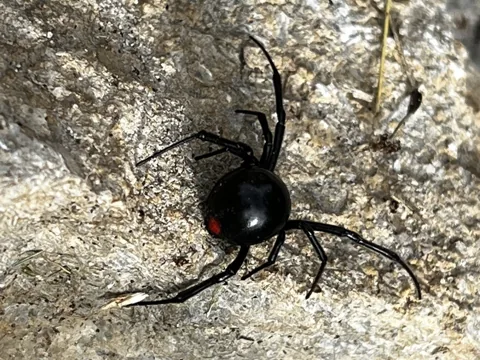 Southern Black Widow
Latrodectus mactans
Black widows are shy, web-building spiders with a neurotoxic venom; they live throughout North America and are most common in the southern and western United States. The southern black widow is found throughout states such as South Carolina.
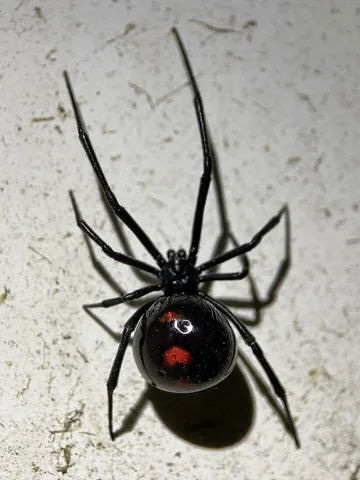 Northern Black Widow
Latrodectus variolus
The northern black widow is the most medically significant spider in the Northeast. It is timid and rarely bites, usually only when pressed against bare skin, but its venom is a neurotoxin and a bite calls for medical help right away.
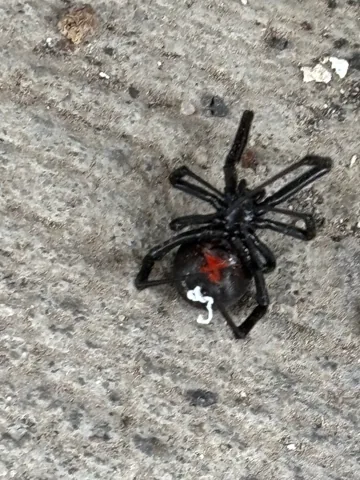 Western Black Widow
Latrodectus hesperus
The western black widow is the only black widow species in the western United States, ranging from British Columbia and Alberta to Mexico, and it is often very common around homes, barns, outbuildings and rock walls. Its bite is venomous, though NIOSH notes that spiders are usually not aggressive and most bites happen when one is trapped or touched.
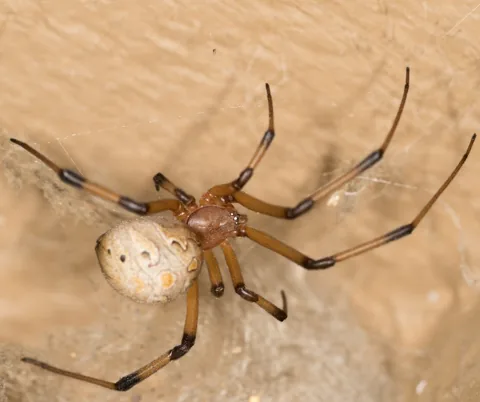 Brown Widow
Latrodectus geometricus
The brown widow is a non-native widow spider. It was found only in Florida for decades, then in the 2000s turned up from Texas along the Gulf Coast and up the Atlantic coast and became common around homes and parks in Southern California.
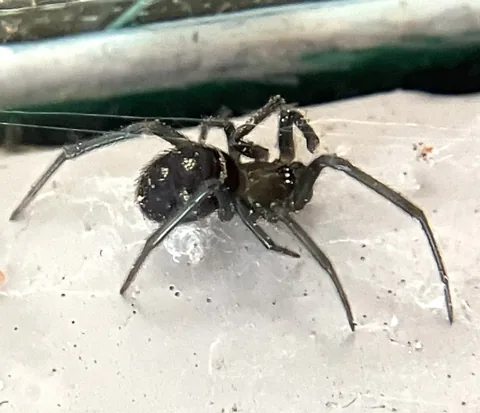 False Widow Spiders
Steatoda species (mainly S. grossa; also S. triangulosa)
False widows are Steatoda cobweb spiders, close relatives of black widows with the same round-bellied shape. The false black widow, Steatoda grossa, is common in homes and often mistaken for a black widow; its bite can hurt but is usually much milder.
Is it a widow spider?
The adult female is the one most people know: shiny black, with a round abdomen and a red or orange hourglass on the underside. The hourglass varies. UC IPM says it can be two separate triangles, a triangle and a bar, barely visible, or rarely missing altogether. Males and young spiders look very different, with white or tan stripes on a tan or olive-gray abdomen. Kentucky places widows in the cobweb spider family (Theridiidae), which builds irregular cobwebs and hangs upside down in them.[1][2][7][9]
Penn State lists five widow species in the United States: the southern, northern and western black widows, the brown widow and the red widow. The species profiles below have full descriptions; the points here are the quick checks.[3]
- Southern black widow (Latrodectus mactans): the two halves of the hourglass are joined. Penn State says the top of the abdomen is unmarked or has up to four red dots.[7][3][6]
- Northern black widow (Latrodectus variolus): the hourglass is broken in the middle, and there is usually a row of red spots down the top of the abdomen. Missouri says it builds its web in open woods, and Connecticut says it is found mainly in woodland settings.[7][6]
- Western black widow (Latrodectus hesperus): UC IPM says it is the only black widow in the western United States, ranging from British Columbia and Alberta to Mexico and east to the western Great Plains.[1]
- Brown widow (Latrodectus geometricus): mottled tan, brown and gray, smaller than a black widow, and easy to confuse with a young black widow. Its egg sac, covered in pointed bumps of silk, is the surest sign.[1][11]
- False widows (Steatoda) are relatives, not true widows. UC IPM says the false black widow is chocolate brown and never has red on its belly.[1][4]
- Size: sources give a female body length of about 1/2 inch (13 mm) for the western black widow (UC IPM), 8 to 13 mm for the southern (Penn State), and 9 to 11 mm for the northern against 8 to 10 mm for the southern (Connecticut). With legs spread, Connecticut gives about 1 1/2 inches and Penn State 25 to 35 mm. Males are much smaller.[1][3][6][5]
Where black widows live outdoors
Widows want dark, sheltered, undisturbed spots near the ground. UC IPM says the female usually builds her retreat near the ground and catches prey at night, usually within three feet of the ground, from an untidy cobweb with strong support threads above and below. The silk is tough enough that running a finger through a large widow's web makes an audible ripping sound.[1][2][7]
Around homes, the holes, cracks, trash and clutter people leave behind make ideal habitat. UC IPM says western black widows can be very common around homes, barns, outbuildings and rock walls, and that in good habitat mature females may be found every few feet.[1][2]
- Woodpiles, stone walls, rock piles, hollow stumps, vacant rodent burrows, culverts and the space under flat rocks and logs.[3][5][7][1]
- Garages, sheds, barns, greenhouses, crawl spaces and seldom-cleaned basements. In garages UC IPM says webs are usually by doors and vents, where insects pass.[5][6][1][3]
- Gas and electric meters, rain spouts, ventilators, outdoor furniture and shrubbery, per Texas A&M, and holes between bricks and gaps around pipes where they enter walls, per UC IPM.[8][1]
- Outdoor toilets and privies, where flies are plentiful.[13][3][8]
- Objects with a sheltered lip or hollow underside: plastic playhouses and toys, picnic tables, lawn chairs, trash can handles and plant pots with curled rims.[1][15]
- Brown widows add more exposed spots such as chain-link fences, and are extremely common under cheap plastic patio furniture. In a survey of urban southern California, they were common outside homes, in parks and under playground equipment.[1][15]
Are they living in the house?
Rarely. UC IPM says black and brown widows are almost never found in homes, because most living spaces don't have enough insects to feed them. In a UC Riverside survey of urban southern California, neither species was found in the living space of homes, and brown widows were very rare or absent in garages, while UC IPM says black widows are common in garages.[1][15]
Connecticut notes that in a home, widows would be in crawl spaces, basements, garages or sheds that aren't used or cleaned often, and that indoors their life cycle can continue year round. A shiny dark spider that is common inside the house is more often a false widow: UC IPM says false black widows thrive indoors in washrooms, cupboards and under appliances and furniture. The house spider guide covers those.[6][1]
Gloves and habits that prevent bites
Widows are timid. Connecticut says a disturbed widow flees and won't actively defend its web, and that bites usually happen when a spider is crushed against bare skin, such as when it's trapped in a boot or glove. CDC says spiders are usually not aggressive and most bites happen because a spider is trapped or touched.[5][13][7][8]
- Wear long sleeves, long pants and gloves when cleaning out basements, sheds or outbuildings, and when moving stacked or long-undisturbed materials.[6][13][1]
- Never pick up firewood or reach into woodpiles, stone piles or spaces under low decks without gloves.[1][5]
- Shake out or turn inside out gloves, boots, clothing and towels that have been stored a while before you use them.[13][5]
- Look before you reach into boxes, under objects and into the handles and rims of outdoor items.[6][15]
- Store gardening clothes and gloves in zipper-lock or tied bags, and tape storage boxes shut and keep them off the floor and away from walls.[1][2][13]
Removing the spiders and webs
Do the work after dark, when widows sit out in the web with the underside up. During the day they hide in the retreat and run back to it when the web is shaken hard.[1][6]
- Crush the spider with a shoe or rolled-up newspaper, or vacuum it up. UC IPM calls this just as easy as spraying and much less toxic.[1][2]
- If you'd rather not kill it, UC IPM suggests trapping it under a jar, sliding paper underneath, and releasing it about 100 feet from the house in a natural area. It notes brown widows are an invasive pest that doesn't belong in natural areas anyway.[1]
- Sweep, vacuum or hose webs off walls, eaves, furniture and decks, and keep doing it. Connecticut says regular removal with a vacuum or broom reduces populations and discourages more activity.[1][5][10]
- The Missouri Department of Conservation suggests killing widows where people and pets can easily contact them but leaving them alone in natural areas, since web-building spiders help control insects.[7]
Find and destroy the egg sacs
Depending on the species, each egg sac holds from about a hundred to several hundred eggs, so removing sacs matters as much as removing spiders. Look in and next to the web. NPIC says to vacuum up spiders, webs and egg cases you find inside.[10][6][1]
Sprays often don't reach the eggs. UC Riverside researchers tested six water-based sprays and four oil-based aerosols on brown widow egg sacs. All but one of the water-based sprays failed to cause significant egg mortality, while the oil-based aerosols prevented 94 to 100% of spiderlings from emerging. The authors suggested that perimeter treatments relying on water-based sprays may not control brown widow eggs.[14][1]
The female guards her eggs, and Penn State says she does so through the summer months, when most widow bites happen. Wear gloves and use the vacuum rather than your hand.[3][6][10]
- Western black widow: yellowish, teardrop-shaped, with well-defined edges and a very tough covering. UC IPM says about 300 eggs per sac, and a female can make more than 10 sacs from one mating.[1]
- Southern black widow: Penn State gives up to nine sacs about 0.5 inch across, each with 200 to 800 eggs. Connecticut describes the sac as more spherical, gray from the start, with a nipple on top.[3][6]
- Northern black widow: pear-shaped, white at first and turning gray and paper-like. Connecticut gives an average of 164 to 200 eggs per sac.[6]
- Brown widow: covered in pointed silk bumps, like a large pollen grain. UC IPM gives about 130 eggs per sac and 20 or more sacs in a lifetime; the Natural History Museum of Los Angeles County gives up to 150 spiderlings per sac.[1][11]
- False black widow: a fluffy, cotton-ball sac with no clear edge, according to UC IPM.[1]
Clean up the yard, garage and foundation
UC IPM calls removing hiding places such as clutter, woodpiles and heavy ground cover essential to reducing widow numbers.[1]
- Keep the strip along the foundation free of trash, leaf litter and piled materials, and trim tall grass around work and storage areas.[1][13]
- Stack woodpiles away from the house, and check firewood, plants and boxes so you don't carry spiders indoors.[1][10]
- Leave as few gaps as you can between stacked materials, and clear out debris and rubble.[13]
- Keep shrubs and other items far enough from the house to let sun and air reach the space between them, and trim plants that touch the house.[10]
- Point outdoor lights away from the house, windows and doors, or use yellow or sodium vapor bulbs, so fewer insects gather to feed the spiders.[1][10]
- Seal cracks and gaps around the foundation, doors and windows.[10]
- Reduce moisture and clutter in dark storage areas. Connecticut says spiders prefer darkness, higher humidity and undisturbed corners.[5][10]
Why they keep coming back
Young widows balloon. Penn State says spiderlings disperse by traveling on thin silk threads, and UC IPM describes them climbing to a high point and letting out silk until the wind carries them off, sometimes a few feet and sometimes miles. UC IPM says spiderlings will keep dropping onto your property, so removal is a job to repeat through the year, and that both widow species reinfest treated areas.[3][1]
In southern California, brown widows appear to be pushing out western black widows around homes. UC IPM and the UC Riverside survey both suggest that because the brown widow's bite is milder, the overall bite risk may be lower than before.[1][15]
Do you need insecticides? Sources differ
Most sources treat sprays as a minor tool at best for widows.[1][2][5][6][10]
- UC IPM says insecticides don't provide long-term control and generally shouldn't be used against spiders outdoors, that spraying works only if you hit the spider, and that control by spraying is temporary unless paired with cleanup.[2][1]
- One Connecticut Agricultural Experiment Station fact sheet says controlling black widows in structures doesn't require pesticides at all. Another from the same station says indoor and outdoor insect sprays can reduce spider numbers, with no guarantee of complete control.[5][6]
- NPIC says residual pesticides indoors may help control the insects spiders eat but may not give long-term spider control.[10]
- Products labeled for spiders include pyrethrins and pyrethroids. If you use one, spray the spider or egg sac directly and follow the label; see the egg sac section for why water-based sprays often fail on sacs.[1][2][14]
If someone is bitten
MedlinePlus calls black widow bites very toxic: seek medical help right away and call Poison Control for guidance. The national Poison Help line is 1-800-222-1222, free, confidential and open around the clock. You can also call 911 or your local emergency number.[12]
Until help arrives, MedlinePlus says to clean the bite with soap and water, put ice wrapped in a cloth on it for 10 minutes on and 10 minutes off, keep the bitten area still, and loosen clothing and remove rings and other tight jewelry. CDC adds: stay calm, raise the area if possible, and don't try to remove the venom.[12][13]
Bring the spider if you can do it safely, in a secure container; it helps with treatment.[12][13]
- What it feels like: MedlinePlus says the bite usually feels like a pinprick, and some people don't feel it. After 15 minutes to an hour, dull muscle pain spreads from the bite, mostly into the chest for upper-body bites and the abdomen for lower-body bites.[12]
- Other symptoms MedlinePlus lists include severe muscle cramps, sweating, nausea and vomiting, headache, high blood pressure and difficulty breathing. CDC describes the venom as a neurotoxin whose pain can spread to the chest, abdomen or whole body.[12][13]
- Hospital care can include an antivenin, which MedlinePlus says can cause serious allergic reactions and must be used carefully; children, pregnant women and older people may need it.[12]
- Outlook: MedlinePlus says severe symptoms usually start to improve in 2 to 3 days, milder ones may last for weeks, and death in a healthy person is very rare, but young children, people who are very ill and older people may not survive a bite.[12]
- CDC also recommends keeping tetanus boosters current, every 10 years, because spider bites can become infected with tetanus spores.[13]
- For bites from other spiders and insects, see the bug bite identification guide.[13]
Where to go next
Widows are one small part of the spider picture. If what you have doesn't match, these pages help.[2][10]
- Not sure it's a widow: the types of spiders in homes guide, plus the southern, northern, western, brown and false widow profiles.[1][7]
- Spiders inside the house: the house spider guide covers sealing, lighting, sticky traps and vacuuming.[10][2]
- A bite you can't explain: the bug bite identification guide.[13]
Common questions
- Are black widows aggressive?
- No. CDC says spiders are usually not aggressive and most bites happen when one is trapped or touched, and Missouri says black widows are timid and usually flee but will bite if provoked.[13][7]
- Do male black widows bite?
- UC IPM says the male has venom but its fangs are too small to break human skin, and Penn State says bites come almost entirely from adult females, especially females guarding an egg sac.[2][3]
- Will spraying kill black widow egg sacs?
- Often not. In a UC Riverside study on brown widow egg sacs, all but one of six water-based sprays failed to cause significant egg mortality, while oil-based aerosols stopped 94 to 100% of spiderlings from emerging. Removing and destroying the sac is more certain.[14][10]
- Are brown widows as dangerous as black widows?
- UC IPM says the brown widow's bite is much milder. Its venom is at least as potent drop for drop, but the spider is smaller and likely injects much less, and when disturbed it usually curls up, drops and plays dead.[1]
- How often are people bitten?
- UC IPM's widow fact sheet says bites are quite rare even where the spiders are very common, though its general spider page calls black widow bites fairly common in California.[1][2]
- Can I get rid of black widows for good?
- Not completely. UC IPM says both widow species keep reinfesting treated areas and spiderlings balloon in on the wind, so cleanup, gloves and regular web removal are ongoing.[1]
Photo credits
- Southern Black Widow: Carol Spence, public domain (CC0), via iNaturalist
- Northern Black Widow: Samuel Paul Galick, public domain (CC0), via iNaturalist
- Western Black Widow: (c) Chris Stahl, some rights reserved (CC BY) — via iNaturalist, CC BY 4.0
- Brown Widow: Jesse Rorabaugh, public domain (CC0), via iNaturalist
- False Widow Spiders: Ken Kneidel, public domain (CC0), via iNaturalist
Sources
- University of California Statewide IPM Program, “Pest Notes: Widow Spiders and Their Relatives (R. S. Vetter).” ipm.ucanr.edu/home-and-landscape/widow-spiders-and-their-relatives/ (accessed 2026-11-10)
- University of California Statewide IPM Program, “Pest Notes: Spiders.” ipm.ucanr.edu/home-and-landscape/spiders/ (accessed 2026-11-10)
- Penn State Extension, “Southern Black Widow Spider (S. Jacobs).” extension.psu.edu/southern-black-widow-spider (accessed 2026-11-10)
- Penn State Extension, “False Black Widow Spider.” extension.psu.edu/false-black-widow-spider (accessed 2026-11-10)
- Connecticut Agricultural Experiment Station, “Northern Black Widow Spider (K. Dugas).” portal.ct.gov/-/media/caes/documents/publications/fact_sheets/entomology/northern_black_widow_latrodectus.pdf (accessed 2026-11-10)
- Connecticut Agricultural Experiment Station, “Northern Black Widow, Southern Black Widow Spider (R. Hiskes).” portal.ct.gov/-/media/caes/documents/publications/fact_sheets/entomology/black-widow-spider_northern-and-southern_fact-sheet.pdf (accessed 2026-11-10)
- Missouri Department of Conservation, “Black Widow Spiders.” mdc.mo.gov/discover-nature/field-guide/black-widow-spiders (accessed 2026-11-10)
- Texas A&M AgriLife Urban and Structural Entomology Program, “Black Widow Spider.” urbanentomology.tamu.edu/urban-pests/spiders/black-widow-spider/ (accessed 2026-11-10)
- University of Kentucky Entomology, “ENTFact-622: Common Spiders Found Around Homes and Buildings.” entomology.mgcafe.uky.edu/ef622 (accessed 2026-11-10)
- National Pesticide Information Center, “Spiders.” npic.orst.edu/pest/spiders.html (accessed 2026-11-10)
- Natural History Museum of Los Angeles County, “Q: What are those miniature spiky puffballs? A: Brown widow egg sacs.” nhm.org/stories/q-what-are-those-miniature-spiky-puffballs-brown-widow-egg-sacs (accessed 2026-11-10)
- MedlinePlus, U.S. National Library of Medicine, “Black widow spider (Medical Encyclopedia).” medlineplus.gov/ency/article/002858.htm (accessed 2026-11-10)
- CDC National Institute for Occupational Safety and Health, “Venomous Spiders at Work.” www.cdc.gov/niosh/outdoor-workers/about/venomous-spiders.html (accessed 2026-11-10)
- Journal of Economic Entomology, abstract via PubMed, “Vetter and others 2016, Efficacy of several pesticide products on brown widow spider egg sacs and their penetration through the egg sac silk.” pubmed.ncbi.nlm.nih.gov/26530954/ (accessed 2026-11-10)
- Journal of Medical Entomology, abstract via PubMed, “Vetter and others 2012, The prevalence of brown widow and black widow spiders in urban southern California.” pubmed.ncbi.nlm.nih.gov/22897057/ (accessed 2026-11-10)