The short answer
- A tangled cobweb in a room corner or window with a small, round-bodied brown spider: common house spider (a cobweb spider). Very long, thin legs and a small body hanging under a loose web: cellar spider. Both are harmless.[1][6]
- A fast, hairy brown or gray spider running across the floor with no web: usually a wolf spider. A sheet web with a funnel retreat in grass, or a brown spider with stripes and two long spinnerets at the rear: grass or funnel-web spider.[6][5][1]
- A small, pale yellow spider on a wall or ceiling at night, or in a silk sac in a ceiling corner: yellow sac spider, whose bite can be painful but is not medically significant.[1][6][8]
- Shiny black with a red hourglass under a round abdomen: black widow; get medical advice after a bite. Tan to dark brown with no stripes or bands on the legs or abdomen, a violin mark pointing back, and six eyes in three pairs: possibly a brown recluse, which lives in the south-central and Midwestern states.[3][6][7][2]
- Many brown spiders people suspect of being recluses are wolf, grass, house, cellar, sac or other harmless spiders. In a nationwide study of 1,773 suspected recluses, states outside the recluse range sent in almost none.[6][2][15]
Spider profiles
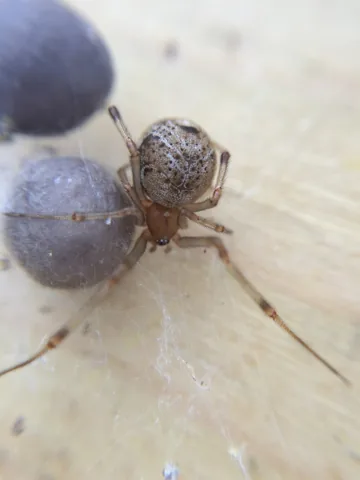 Common House Spider
Parasteatoda tepidariorum
The common house spider is a cobweb weaver found through most of the world. It builds its tangled webs in the corners of walls and windows, along floor joists and in basements, barns and crawl spaces.
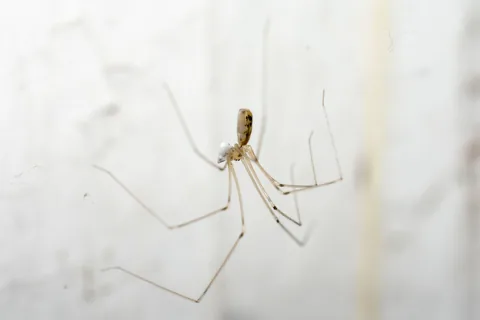 Longbodied Cellar Spider
Pholcus phalangioides
The longbodied cellar spider is the most common cellar spider in the United States: a small, pale spider with extremely long legs that lives in buildings all year. Penn State says it isn't known to be harmful in any way; its main offense is messy webbing.
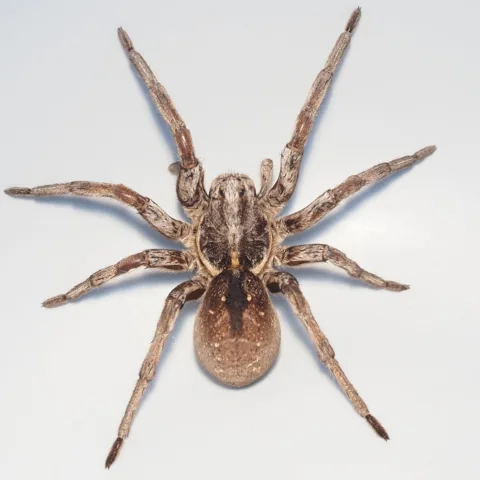 Carolina Wolf Spider
Hogna carolinensis
Wolf spiders are large hunting spiders that don't use webs; they wander into homes by accident, especially males searching for mates, and they don't persist indoors.
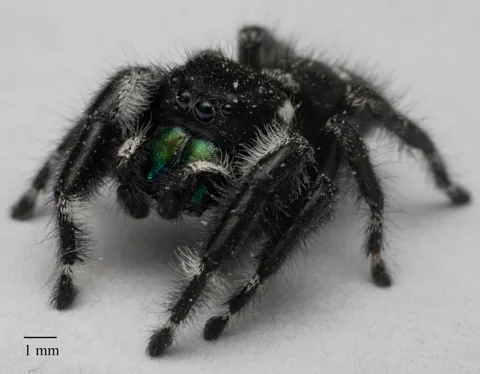 Bold Jumping Spider
Phidippus audax
Jumping spiders are compact, day-active hunters that build no web; they stalk prey by sight and pounce from a short distance. They live on plants, bark and walls and only occasionally wander indoors.
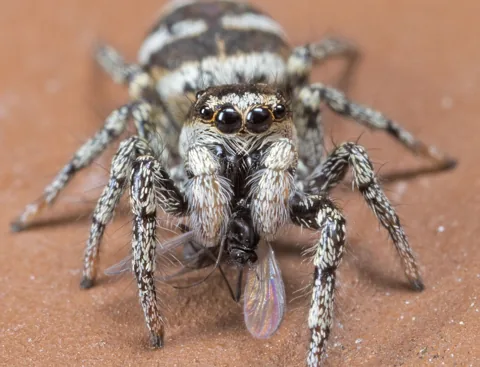 Zebra Jumping Spider
Salticus scenicus
The zebra jumping spider is a small black-and-white striped jumping spider that hunts by day on walls, fences and windows and often comes indoors. It was introduced from Europe and western Asia, and Penn State calls it harmless and beneficial to have around.
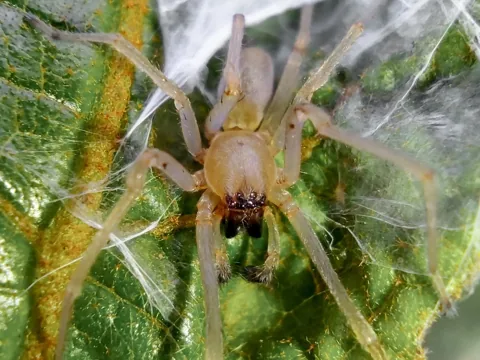 Yellow Sac Spider
Cheiracanthium species (shown: C. inclusum)
Yellow sac spiders are small, pale hunting spiders that rest by day in silk sacs in the corners of walls and ceilings, under siding or among leaves, and come out at night to hunt instead of building a web.
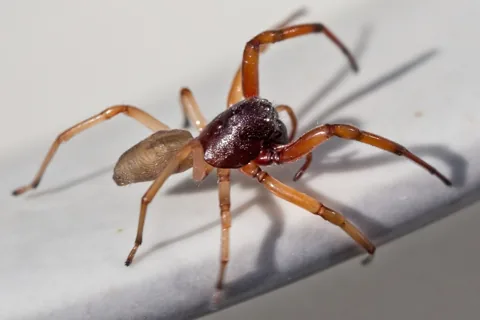 Broad-Faced Sac Spider
Trachelas tranquillus
The broad-faced sac spider is a small hunting spider that wanders into homes as temperatures fall in autumn; its bite can be painful.
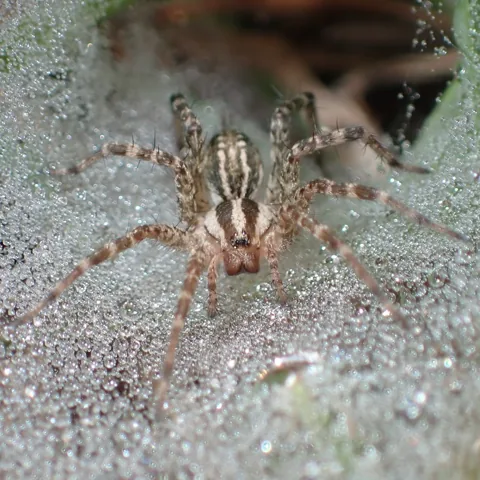 Grass Spiders (Funnel Weavers)
Agelenopsis species
Grass spiders are common funnel weavers whose flat, sheet-like webs with a funnel off to one side show up in lawns, ground covers and shrubs. They are fast and shy, often wander indoors in fall, and are considered beneficial.
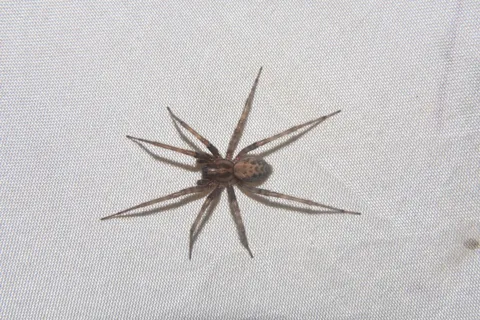 Barn Funnel Weaver
Tegenaria domestica
The barn funnel weaver is a fast, shy funnel-web spider of sheds, barns and door crevices, found in buildings at any time of year.
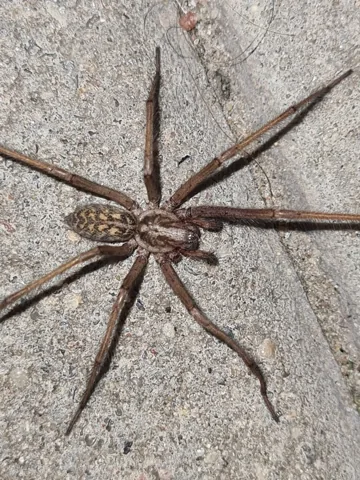 Giant House Spider
Eratigena atrica (formerly Tegenaria gigantea and T. duellica)
The giant house spider is one of the largest spiders in the Pacific Northwest, with a leg span that can reach 4 inches. It is common in and around homes west of the Cascades and is often mistaken for the hobo spider, but its bite is not known to threaten people.
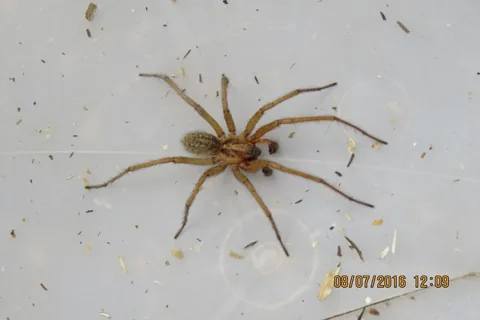 Hobo Spider
Eratigena agrestis
The hobo spider is a European funnel weaver that was labeled potentially toxic in the 1980s. Later research questioned that, and UC IPM says it is no longer considered of probable medical importance.
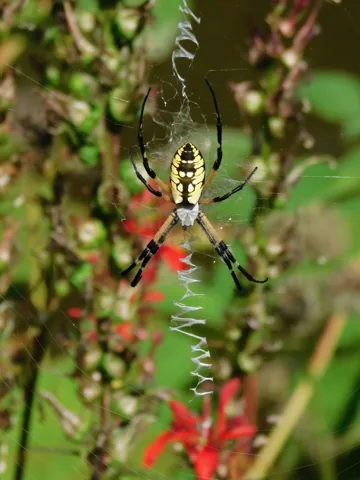 Orb Weaver Spiders (yellow garden spider)
Argiope aurantia
Orb weavers are the spiders that spin classic wheel-shaped webs in gardens and around porches. The best known is the yellow garden spider, a large black-and-yellow spider whose web has a white zigzag down the middle. They eat insects and aren't considered dangerous.
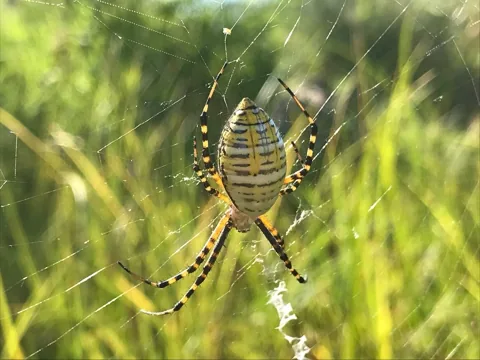 Banded Garden Spider
Argiope trifasciata
The banded garden spider is a large orb weaver with a silvery-yellow abdomen crossed by many thin black bands. Adults hang in big wheel-shaped webs in open, sunny spots from midsummer until the first freeze, catching grasshoppers and other insects.
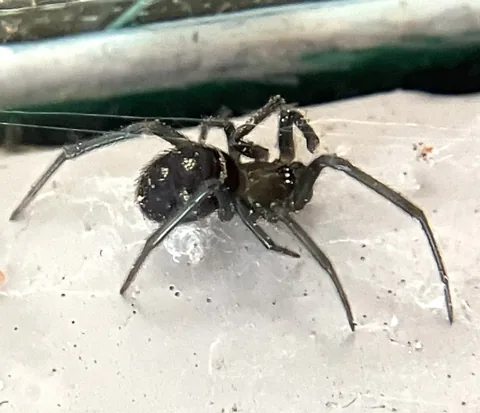 False Widow Spiders
Steatoda species (mainly S. grossa; also S. triangulosa)
False widows are Steatoda cobweb spiders, close relatives of black widows with the same round-bellied shape. The false black widow, Steatoda grossa, is common in homes and often mistaken for a black widow; its bite can hurt but is usually much milder.
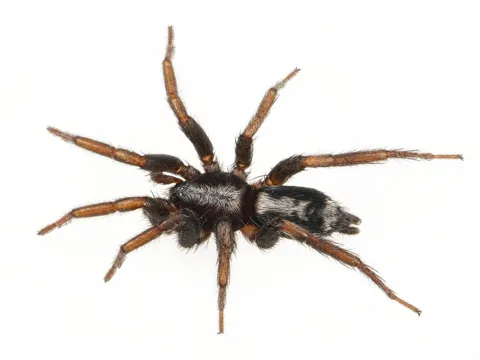 Parson Spider
Herpyllus ecclesiasticus
The parson spider is the most commonly encountered ground spider in the United States. It hunts at night without a web, hides in a silken retreat by day, and enters buildings in fall looking for a place to spend the winter.
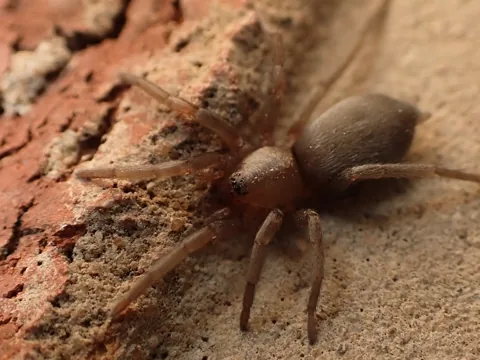 Mouse Spider
Scotophaeus blackwalli
The mouse spider is a European ground spider, named for its gray, furry-looking abdomen, that was introduced to North America. Along the Pacific coast it often lives in and around houses, where it hunts at night instead of building a web.
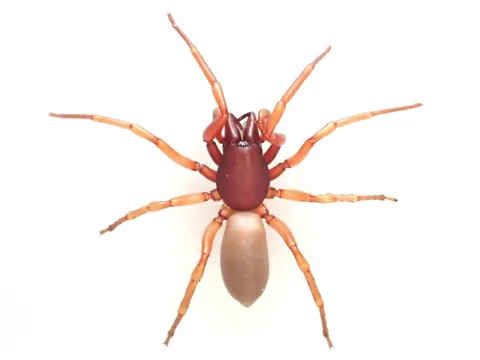 Woodlouse Spider
Dysdera crocata
The woodlouse spider, or woodlouse hunter, is a Mediterranean spider now found around homes across much of North America. It hunts sowbugs and pill bugs in damp places and looks fierce because of its large fangs, but Utah State calls it beneficial.
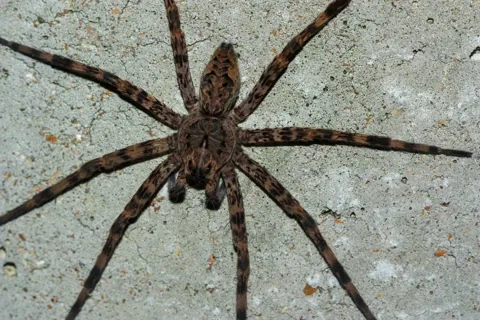 Fishing Spiders
Dolomedes species (e.g., D. tenebrosus, the dark fishing spider)
Fishing spiders, genus Dolomedes, are large brown hunting spiders that can run across water and even dive. The dark fishing spider, the species most often found around homes, lives mainly in wooded areas and is harmless despite its size.
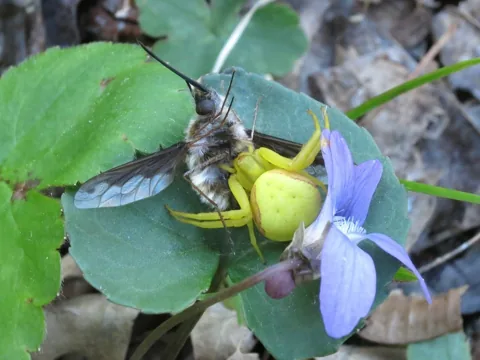 Crab Spiders (e.g., goldenrod crab spider)
Family Thomisidae (e.g., Misumena vatia)
Crab spiders are small hunters that sit still on flowers, leaves or the ground and grab insects that come within reach. They spin no webs, they rarely bite people, and flower crab spiders are some of the most familiar spiders in gardens.
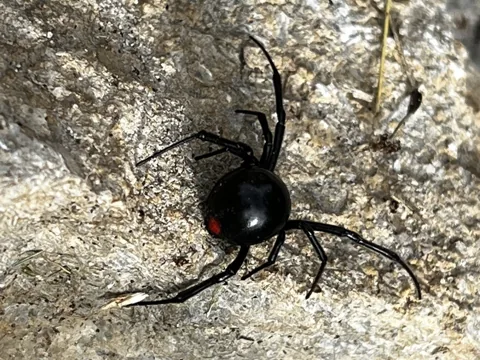 Southern Black Widow
Latrodectus mactans
Black widows are shy, web-building spiders with a neurotoxic venom; they live throughout North America and are most common in the southern and western United States. The southern black widow is found throughout states such as South Carolina.
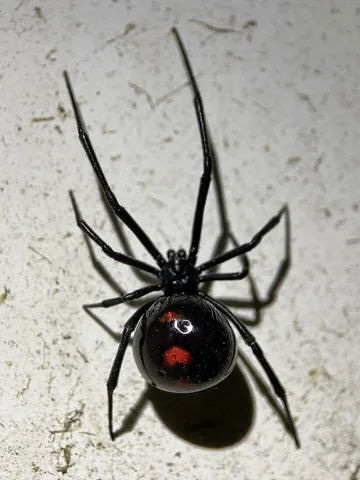 Northern Black Widow
Latrodectus variolus
The northern black widow is the most medically significant spider in the Northeast. It is timid and rarely bites, usually only when pressed against bare skin, but its venom is a neurotoxin and a bite calls for medical help right away.
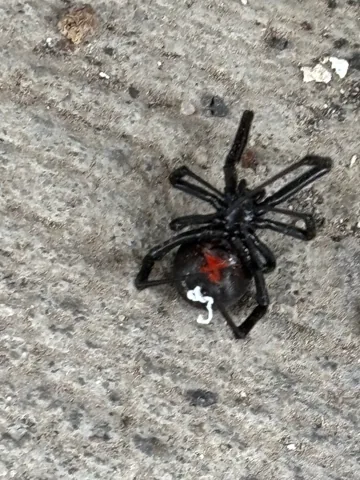 Western Black Widow
Latrodectus hesperus
The western black widow is the only black widow species in the western United States, ranging from British Columbia and Alberta to Mexico, and it is often very common around homes, barns, outbuildings and rock walls. Its bite is venomous, though NIOSH notes that spiders are usually not aggressive and most bites happen when one is trapped or touched.
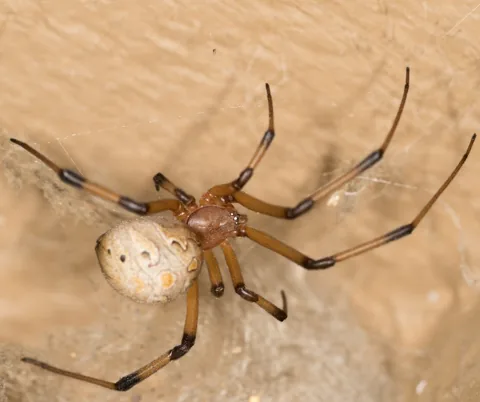 Brown Widow
Latrodectus geometricus
The brown widow is a non-native widow spider. It was found only in Florida for decades, then in the 2000s turned up from Texas along the Gulf Coast and up the Atlantic coast and became common around homes and parks in Southern California.
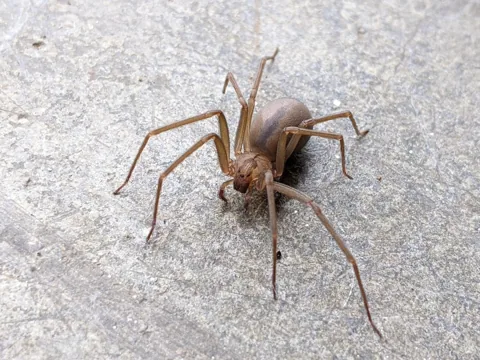 Brown Recluse
Loxosceles reclusa
The brown recluse is a secretive spider of the south-central and Midwestern United States whose bite can occasionally cause serious wounds; it is widely over-reported outside its range. The Illinois Department of Public Health says it occurs in roughly the southeastern quarter of the country and that bites are uncommon even where the spider is common.
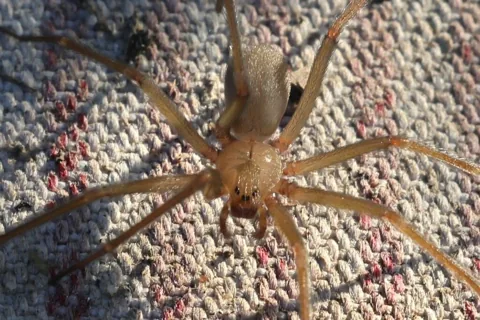 Desert Recluse
Loxosceles deserta
The desert recluse is the most common recluse spider in California and the one most likely behind a true recluse find there. It is native to the desert Southwest, lives mainly outdoors in native vegetation and is seldom found indoors.
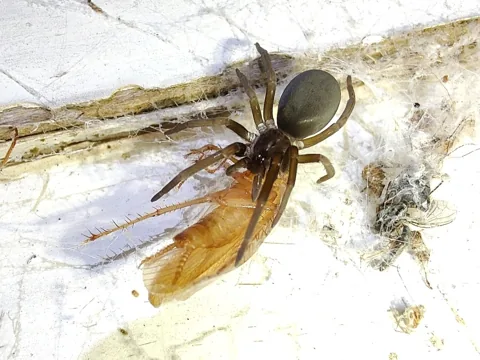 Southern House Spider
Kukulcania hibernalis
The southern house spider, also called a crevice weaver, is a spider of buildings in the southern United States. It worries people mainly because its males are mistaken for brown recluses, but verified bites have been minor.
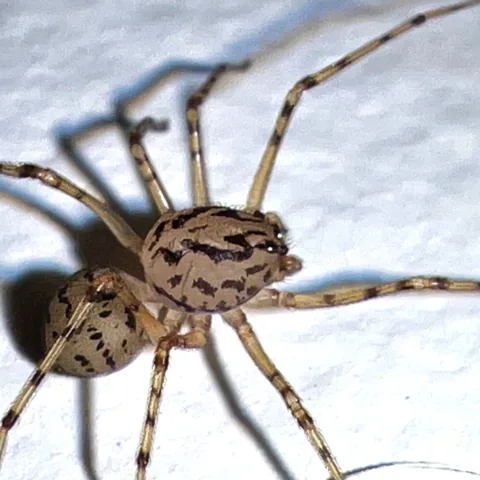 Spitting Spider
Scytodes thoracica
The spitting spider is a slow-moving, spotted spider found in and around buildings. It builds no web; instead it spits a zigzag of silk, glue and venom that pins insects in place.
Harmless house spiders and the two groups to know
Virtually all spiders have venom, which they use to kill prey. Kentucky says only a few species, such as the black widow and the brown recluse, have venom that is very toxic or harmful to people, and that many spiders have fangs that cannot pierce skin. When others do bite, the result is usually like a bee or wasp sting.[5]
Most spiders found indoors are accidental invaders that came in around doors, windows and other openings. Homes in wooded areas or with heavily planted foundations get more of them.[5]
Spiders don't seek people out. UC IPM says a spider generally bites only when it is squeezed, lain on or otherwise provoked, and that people and their doctors often blame spiders for skin lesions with no proof a spider was involved.[1]
Connecticut's Agricultural Experiment Station adds that unless the spider is caught at the time of the bite, a spider bite diagnosis has to remain inconclusive.[9]
Common house spider (Parasteatoda tepidariorum)
A cobweb spider that frequently lives in buildings, also called the American house spider.[5][6][1]
- Looks: about the size of a U.S. nickel with legs outstretched, brown and tan with darker brown patterns, and a round (spherical) abdomen.[6][5]
- Where: a messy cobweb in corners of rooms, in windows and in similar spots. It hangs upside down in the web and is almost never found away from it.[1][5][6]
- Bite risk: UC IPM says house and cellar spiders are only marginally capable of biting because their fangs are too short to pierce skin in most cases; their main problem is messy cobwebs. Kentucky calls house spider bites harmless except to allergic people.[1][6]
- Mistaken for: the brown recluse, because it is brown. A recluse does not hunt from a web.[6][7]
Cellar spiders (Pholcidae)
Often called daddy-long-legs, though they are not closely related to harvestmen, which share the name but are not true spiders.[6][8]
- Looks: a small, oval, pale cream to grayish body and very long, thin legs. Colorado State gives a body of around 1/3 inch; with legs out, Kentucky compares it to a U.S. half-dollar.[9][8][6]
- Where: undisturbed dark corners of rooms, basements and cellars, in loose, irregular webs. They often hang upside down under the web.[9][5][8]
- Species: in California the marbled cellar spider, introduced in the 1970s, has displaced the once-common longbodied cellar spider.[1]
- Bite risk: the story that cellar spiders are highly venomous is an urban legend. Connecticut says their mouthparts are too small to puncture human skin and bites are extremely rare.[9][1]
- Mistaken for: the brown recluse, but cellar spiders have much longer, thinner legs. Some have dark markings on the head region that people read as a violin.[6][2]
Wolf spiders (Lycosidae)
Big, fast, hairy hunters that live on the ground and don't build webs to catch prey. Kentucky says they are among the most common spiders in the state and often wander into homes.[6][1][8]
- Looks: usually brown to tan or gray, often with darker spots or stripes. Colorado State gives 1/2 to 2 inches when fully grown; Connecticut says bodies are usually up to 1 inch but look bigger with the legs spread.[1][6][8][9]
- Eyes: a row of 4 small eyes in front, a larger middle pair and a widely spaced rear pair on top of the head. At night their eyes reflect green in a flashlight beam.[1]
- Behavior: the female carries her egg sac at the rear of her body, and the young ride on her back for a time after hatching.[5][9][8]
- Why indoors: wandering males searching for females, wolf spiders displaced by new construction, and spiders moving into warmer buildings as fall temperatures drop. Kentucky says they do not persist indoors.[1][9][5]
- Bite risk: they may raise their front legs as a bluff when cornered but rarely bite and prefer to run. Their venom is not considered medically significant.[9][8][6]
- Mistaken for: the brown recluse. Banding on a wolf spider's legs is one sign it is not a recluse, whose legs are uniformly colored.[6][7]
Jumping spiders (Salticidae)
Compact, day-active hunters with a flat face and two very large front eyes. They stalk prey and pounce instead of using a web.[1][5][6]
- Looks: about 1/6 to 1/2 inch long (Colorado State), often black, gray or brown with patches of iridescence; some are brightly colored. The bold jumping spider, Phidippus audax, is a common one.[8][9][6][1]
- Eyes: three rows, with four in front including the two large middle eyes.[1]
- Where: common on the outsides of homes and buildings. They wander indoors and occasionally overwinter there.[6][5]
- Bite risk: Connecticut says most have mouthparts too small to penetrate skin and they are not known to bite people. UC IPM notes a red and black California species, Phidippus johnsoni, may bite if disturbed, but the bites are usually not serious.[9][1]
Yellow sac spiders (Cheiracanthium)
Small, pale hunters that live and breed in homes, and the spider most likely to be behind a real bite indoors. Colorado State says they are thought to cause most in-home spider bites in that state.[8][9]
- Looks: light yellow to greenish yellow, with a slightly darker stripe on top of the abdomen and 8 eyes of about equal size in 2 rows. Size: about 1/4 inch (Colorado State) to 1/4 to 3/4 inch (Connecticut).[1][9][8]
- Where: a silk sac in the corners of ceilings and walls, behind shelves and pictures, and outdoors in shrubbery. They run on walls and ceilings at night and drop to the floor when disturbed.[1][8][9]
- Bite risk: bites usually happen when the spider is trapped against skin in clothing or bedding. Typical symptoms are pain like a bee sting, redness and sometimes swelling; Connecticut says the injury usually resolves in a few days and severe reactions are rare.[1][9]
- Mistaken for: the brown recluse, which has a similar shape. A sac spider lacks the violin mark and has eight eyes instead of six.[6]
Grass spiders and other funnel weavers (Agelenidae)
The spiders behind the flat sheet webs with a funnel-shaped retreat that show up on lawns and shrubs, most noticeable when dew covers them in the morning.[1][5][6]
- Looks: brown with prominent lengthwise gray or tan stripes, and two finger-like spinnerets sticking out from the rear of the abdomen. Kentucky puts grass spiders at about the size of a U.S. quarter with legs out; Colorado State gives 1/3 to 2/3 inch for funnel weavers.[6][5][8]
- Where: Kentucky says they live in shrubbery, grass, under rocks and in debris and seldom come indoors. Colorado State, by contrast, calls funnel weavers the most common spiders in Colorado homes, typically in early fall as temperatures cool.[5][8]
- Bite risk: harmless to people (Colorado State); Kentucky calls grass spider bites harmless except to allergic people.[8][6]
- Mistaken for: wolf spiders and the brown recluse, which are similar in size and color.[5][8][6]
Giant house spider and hobo spider (Eratigena)
Two European funnel weavers of the Pacific Northwest that are easy to confuse. In the Puget Sound region giant house spiders outnumber hobo spiders, and in Seattle the giant house spider has displaced the once-common hobo.[11][4]
- Giant house spider (Eratigena atrica): brown to grayish brown, somewhat hairy and not shiny, with a body of about 1/2 to 1 inch and a leg span up to 4 inches on large adults. Color and markings vary too much to use for ID.[11]
- Where and when: garages, basements, firewood and gaps between bricks or stones; in Washington it lives west of the Cascades. Males wander most from mid-summer to early fall, and indoors they are often found on the floor or trapped in sinks and bathtubs.[11]
- Hobo spider (Eratigena agrestis): a light brown spider with pale markings, about 1/2 to 5/8 inch in body length (1 to 1 3/4 inches including legs), that builds its web in dark, moist places such as basements. UC IPM says its webs are usually hidden under objects and not noticeably funnel-like.[4][12]
- Range of the hobo: the Pacific Northwest from British Columbia east to Montana, Wyoming and Colorado and south through Oregon and northern Utah.[4]
- Bite risk: the giant house spider's bite is not known to threaten people. The hobo was labeled potentially toxic in the 1980s, but later research questioned that, and UC IPM says it is no longer considered of probable medical importance.[11][4][12]
- Telling them apart: UC IPM says identifying a hobo reliably takes an arachnologist examining its reproductive structures, so most homeowner IDs are guesses. The barn funnel weaver (Tegenaria domestica), a smaller look-alike common in homes worldwide, is not considered toxic either.[4]
Orb weavers on porches and gardens (Araneidae)
The builders of round, wheel-shaped webs. Kentucky says no other common spiders there make an organized, circular web, and orb weavers are almost always found sitting in theirs.[6][1][8]
- Looks: from pencil-eraser size to a little bigger than a silver dollar with legs out. Some are plain tan or brown; others, like the yellow-and-black garden spider (Argiope), are boldly patterned.[6][5]
- Where: porches, outer walls and gardens, especially in late summer. They rarely live indoors, though one occasionally builds a web in a doorway or windowsill.[6][5]
- Colorado example: Araneus gemmoides, light brown with a large dimpled abdomen, is the largest and most often seen orb weaver in Colorado; the banded garden spider turns up in late summer and early fall.[8]
- Bite risk: harmless to people (Colorado State); Kentucky says even the very large ones are harmless except to allergic people.[8][6]
False widows (Steatoda)
Cobweb spiders in the same family as the widows, with the same round abdomen and irregular web. Many people mistake them for black widows.[3][10]
- Looks: the false black widow (Steatoda grossa) has a body about 6 to 10.5 mm long (Penn State), slightly smaller than a mature western black widow. It is chocolate to purplish brown or black, sometimes with faint pale markings, and never has a red hourglass.[10][3]
- Where: Penn State says Steatoda grossa is a common spider in homes in the southern and western states and along the Atlantic, Gulf and Pacific coasts, and that the similar S. borealis is more common in northern states. UC IPM says false black widows thrive indoors in washrooms, cupboards and under appliances and furniture.[10][3]
- Egg sac: looks like a cotton ball with fuzzy edges, unlike a widow's tough sac with well-defined edges.[3]
- Bite risk: because they live indoors, they are involved in more bites than true widows. UC IPM compares the bite to a yellowjacket sting, burning pain then minor local swelling; Penn State says symptoms are much less severe than a black widow bite and have lasted from one to 60 hours.[3][10]
- Another European species, Steatoda nobilis, is spreading in coastal California. It is larger and usually has a light tan pattern on top of the abdomen; its bites are not considered medically significant.[3]
Ground spiders and other wanderers
- Ground spiders (Gnaphosidae): small, typically under 1/2 inch, living under logs and rocks and in soil. They can come indoors when temperatures drop and are completely harmless to people, Colorado State says. UC IPM lists them among the tan or brown spiders often turned in as suspected recluses.[8][2]
- Woodlouse spider (Dysdera crocata): smooth body, red to orange legs and front body, gray abdomen and very large fangs used on pillbugs and sowbugs. It wanders into homes from under rocks and logs; its bite can be painful but is not medically significant.[8][9][6]
- Fishing spiders (Dolomedes): very large brown spiders, about 1 to 1 1/2 inches in body length, that live near water and in woods and sometimes wander into basements and homes nearby. They are not considered dangerous.[9][6][5]
- Crab spiders: low and flat with long front legs, usually found hunting on flowers. They rarely come indoors and do not persist there.[5][6]
Black widows (Latrodectus)
The widow spiders are the main spiders in the US whose venom can cause serious illness. Bites are rare even where the spiders are common, and almost all medically important bites come from adult females.[3][13][6]
- Looks: the adult female is shiny black with a red or orange hourglass on the underside of a large, round abdomen. The red mark can be split into two parts, reduced or, rarely, missing. Kentucky describes females with red markings on top of the abdomen as well as underneath.[1][3][6]
- Size: about 1/2 inch body length for a mature western black widow female (UC IPM); Colorado State gives 1/4 to 1/3 inch.[3][8]
- Males and young: tan with white stripes and look nothing like the female. The male's fangs are too small to break human skin.[1][3]
- Web and egg sac: an irregular, tough, sticky cobweb, with the spider hanging belly-up at night. The egg sac is yellowish to light tan, papery and very tough.[1][3]
- Where: dark, dry, undisturbed places, mostly outdoors or in garages: woodpiles, rock walls, holes between bricks, clutter, under eaves and around fences. CDC says they occur throughout North America but are most common in the southern and western United States.[3][6][13]
- Bite: the venom is a neurotoxin. Pain may start at the bite and spread to the chest, abdomen or whole body, with muscle cramps and rigid stomach muscles; there is little swelling and no tissue death at the bite. Seek medical care promptly; an antivenom exists.[13][3][1]
Brown widow (Latrodectus geometricus)
- Looks: smaller than a black widow (about 3/8 inch body), mottled tan, brown and gray with an orange hourglass underneath, though color varies from nearly white to nearly black.[3][14]
- Egg sac: the surest sign. It is pale yellow and covered with spiky silk points, like a large pollen grain, with about 130 eggs (UC IPM) or up to 150 spiderlings (Natural History Museum of Los Angeles County).[3][14]
- Where: long established in Florida, now along the Gulf Coast, up the Atlantic coast into South Carolina, and in southern California. It favors exposed spots such as chain-link fences and the undersides of plastic patio furniture and is almost never found in homes.[3]
- Bite risk: much milder than a black widow bite, because the spider is small, likely injects less venom and tends to drop and play dead when disturbed.[3]
Brown recluse and other recluse spiders (Loxosceles)
The brown recluse lives in the south-central and Midwestern United States, from southeastern Nebraska to southwestern Ohio and south through Texas to north Georgia. Related recluse species live in the Southwest and southern California. Outside that range, recluses are rare and seldom establish even when carried in with furniture or boxes.[2][7][13]
- Size and color: about the size of a U.S. quarter with legs outstretched, tan to dark brown, with long, thin legs that lack obvious spines.[6][7]
- No pattern: the abdomen and legs are one uniform color, with no stripes, bands or mottling. A spider with striped or banded legs or a patterned abdomen is not a recluse.[2][7]
- Violin mark: a dark violin shape on top of the front body section, with the neck pointing back toward the abdomen. It is fairly consistent in adult brown recluses but fainter in young ones and nearly absent in some southwestern species, so UC IPM says not to rely on it.[7][2]
- Eyes: the best feature. Recluses have six eyes in three pairs arranged in a semicircle; most spiders have eight. You need a good hand lens to see them.[2][7][13]
- Where: hidden spots indoors and out: cardboard boxes, stacked paper, firewood, wall voids, closets, shoes, attics, basements and behind clutter. It hunts at night and does not use a web to catch prey.[6][7][13]
- Bite risk: bites are rare even in heavily infested homes and usually happen when a spider is trapped against skin in bed, clothing or shoes. Most bites stay local and heal; UC IPM says about 10% cause moderate or worse tissue damage. Anyone who thinks they were bitten should seek medical attention.[7][2]
- Signs of infestation: where recluses live there are usually many of them. Their shed skins have a distinctive outstretched look, and flat glue traps along baseboards are a good way to check.[2][7]
Spiders often mistaken for a brown recluse
Almost any tan or brown spider gets reported as a recluse. Kentucky's spider chart lists grass, wolf, house, cellar, sac, jumping, woodlouse, crab and fishing spiders among those people confuse with it, and UC IPM adds ground spiders, orb weavers and male widows and false widows.[6][2]
In a nationwide study in which people sent in spiders they thought were brown recluses, 1,773 arachnids came from 49 states. From 25 of 29 states completely or almost completely outside the recluse range, no recluses were submitted at all.[15]
- Check the eyes: any brown spider with eight eyes is not a recluse.[2][6]
- Check the legs and abdomen: stripes, bands, rings, spots, spines or a patterned abdomen rule out a recluse.[2][7]
- Check the web: a spider sitting in a web in an open corner or along a wall is almost always another kind. Cobweb and cellar spiders make those webs.[7][6]
- Check where you live: bites diagnosed outside the recluse range are unlikely to be recluse bites, and a necrotic sore can have many other causes, including MRSA and other bacterial infections.[7][2][15]
- Get it confirmed: even a crushed spider can usually be identified. Bring it to your county extension office.[7][1]
Keeping spiders out
- Seal cracks in the foundation and gaps around windows, doors, pipes and wiring, and keep screens tight. Fewer insects getting in also means fewer spiders.[1][11][9]
- Vacuum or sweep webs and spiders from corners, windows and storage areas. Spiders' soft bodies usually don't survive a vacuum.[1][3]
- Clear clutter, firewood, leaf litter and heavy vegetation from against the foundation, and store boxes off the floor and taped shut. Wear gloves when cleaning garages and sheds.[1][3][8]
- Outdoor lights draw insects and then spiders. Keep fixtures away from doors and windows where you can.[1][3]
- Use sticky traps along baseboards and in garage corners to catch wandering spiders and to find out what you have.[8][11][7]
- Sprays alone give only temporary control and don't replace housekeeping and sealing. A suspected recluse infestation is best handled by a professional.[1][11][7]
Common questions
- What is the most common spider in houses?
- It depends on the region. Kentucky lists the American house spider and cellar spiders among the spiders most often found in homes; Colorado State says funnel weavers are the most common spiders in Colorado homes.[6][8]
- What spider is most often mistaken for a brown recluse?
- Many common brown spiders. Kentucky names grass spiders, wolf spiders, house spiders, cellar spiders and yellow sac spiders, and UC IPM adds ground spiders and orb weavers. All of these have eight eyes; a recluse has six.[6][2]
- Are house spiders poisonous?
- Spiders have venom, but common house spiders and cellar spiders are only marginally able to bite people because their fangs are too short in most cases. Kentucky calls their bites harmless except to allergic people.[1][6]
- Is a false widow dangerous?
- Not usually. Its bite has been compared to a yellowjacket sting, and symptoms are much less severe than a black widow's. False widows have no red hourglass.[3][10]
- Which spiders in the US are dangerous?
- CDC names the black widow and the brown recluse as the venomous spiders of concern. Both are usually not aggressive and bite when trapped or touched.[13][5]
Photo credits
- Common House Spider: (c) Erin Lalime, some rights reserved (CC BY) — via iNaturalist, CC BY 4.0
- Longbodied Cellar Spider: (c) Kyle Elshoff, some rights reserved (CC BY) — via iNaturalist, CC BY 4.0
- Carolina Wolf Spider: (c) Russell Pfau, some rights reserved (CC BY) — via iNaturalist, CC BY 4.0
- Bold Jumping Spider: Jesse Rorabaugh, public domain (CC0), via iNaturalist
- Zebra Jumping Spider: Mardon Erbland, public domain (CC0), via iNaturalist
- Yellow Sac Spider: (c) Jhonatan Matheus, some rights reserved (CC BY) — via iNaturalist, CC BY 4.0
- Broad-Faced Sac Spider: (c) Bill Keim, some rights reserved (CC BY) — via iNaturalist, CC BY 4.0
- Grass Spiders (Funnel Weavers): (c) dhasdf, some rights reserved (CC BY) — via iNaturalist, CC BY 4.0
- Barn Funnel Weaver: (c) Sebastian Serna Muñoz, some rights reserved (CC BY) — via iNaturalist, CC BY 4.0
- Giant House Spider: (c) Marcin Jasiński, some rights reserved (CC BY) — via iNaturalist, CC BY 4.0
- Hobo Spider: Steve Wells, public domain (CC0), via iNaturalist
- Orb Weaver Spiders (yellow garden spider): (c) Michael J. Papay, some rights reserved (CC BY) — via iNaturalist, CC BY 4.0
- Banded Garden Spider: (c) Shalana Gray, some rights reserved (CC BY) — via iNaturalist, CC BY 4.0
- False Widow Spiders: Ken Kneidel, public domain (CC0), via iNaturalist
- Parson Spider: (c) Christian Back, some rights reserved (CC BY) — via iNaturalist, CC BY 4.0
- Mouse Spider: (c) Jordon-Jack Williams, some rights reserved (CC BY) — via iNaturalist, CC BY 4.0
- Woodlouse Spider: (c) Joss Carr, some rights reserved (CC BY) — via iNaturalist, CC BY 4.0
- Fishing Spiders: (c) Andrew Meeds, some rights reserved (CC BY) — via iNaturalist, CC BY 4.0
- Crab Spiders (e.g., goldenrod crab spider): (c) Evan M. Raskin, some rights reserved (CC BY) — via iNaturalist, CC BY 4.0
- Southern Black Widow: Carol Spence, public domain (CC0), via iNaturalist
- Northern Black Widow: Samuel Paul Galick, public domain (CC0), via iNaturalist
- Western Black Widow: (c) Chris Stahl, some rights reserved (CC BY) — via iNaturalist, CC BY 4.0
- Brown Widow: Jesse Rorabaugh, public domain (CC0), via iNaturalist
- Brown Recluse: iamfindingplants, public domain (CC0), via iNaturalist
- Desert Recluse: (c) nmoorhatch, some rights reserved (CC BY) — via iNaturalist, CC BY 4.0
- Southern House Spider: Bruno R. Giozza, public domain (CC0), via iNaturalist
- Spitting Spider: (c) Healthy Yards, some rights reserved (CC BY) — via iNaturalist, CC BY 4.0
Sources
- University of California Statewide IPM Program, “Pest Notes: Spiders, UC ANR Publication 7442.” ipm.ucanr.edu/home-and-landscape/spiders/ (accessed 2026-11-10)
- University of California Statewide IPM Program, “Pest Notes: Brown Recluse and Other Recluse Spiders, UC ANR Publication 7468.” ipm.ucanr.edu/home-and-landscape/brown-recluse-and-other-recluse-spiders/ (accessed 2026-11-10)
- University of California Statewide IPM Program, “Pest Notes: Widow Spiders and Their Relatives, UC ANR Publication 74149.” ipm.ucanr.edu/home-and-landscape/widow-spiders-and-their-relatives/ (accessed 2026-11-10)
- University of California Statewide IPM Program, “Pest Notes: Hobo Spider, UC ANR Publication 7488.” ipm.ucanr.edu/home-and-landscape/hobo-spider/ (accessed 2026-11-10)
- University of Kentucky Entomology, “ENTFACT-622: Common Spiders Found Around Homes and Buildings.” entomology.mgcafe.uky.edu/ef622 (accessed 2026-11-10)
- University of Kentucky Entomology, “Urban Spider Chart (B. Newton and L. Townsend).” entomology.mgcafe.uky.edu/spider-chart (accessed 2026-11-10)
- University of Kentucky Entomology, “ENTFACT-631: Brown Recluse Spider.” entomology.mgcafe.uky.edu/ef631 (accessed 2026-11-10)
- Colorado State University Agricultural Biology, “Spiders in the Home.” agsci.colostate.edu/agbio/ipm-pests/spiders-in-the-home (accessed 2026-11-10)
- The Connecticut Agricultural Experiment Station, “Spiders Found in the House (G. E. Ridge and K. Dugas).” portal.ct.gov/-/media/caes/documents/publications/fact_sheets/entomology/spiders_in_the_house.pdf (accessed 2026-11-10)
- Penn State Extension, “False Black Widow Spider.” extension.psu.edu/false-black-widow-spider (accessed 2026-11-10)
- Washington State University Pestsense, “Giant House Spider.” pestsense.cahnrs.wsu.edu/fact-sheet/giant-house-spider/ (accessed 2026-11-10)
- Washington State University Pestsense, “Hobo Spider.” pestsense.cahnrs.wsu.edu/fact-sheet/hobo-spider/ (accessed 2026-11-10)
- CDC National Institute for Occupational Safety and Health (NIOSH), “Venomous Spiders at Work.” www.cdc.gov/niosh/outdoor-workers/about/venomous-spiders.html (accessed 2026-11-10)
- Natural History Museum of Los Angeles County, “Q: What are those miniature spiky puffballs? A: Brown widow egg sacs.” nhm.org/stories/q-what-are-those-miniature-spiky-puffballs-brown-widow-egg-sacs (accessed 2026-11-10)
- Journal of Medical Entomology, abstract via PubMed, “Vetter 2005, Arachnids submitted as suspected brown recluse spiders: Loxosceles spiders are virtually restricted to their known distributions.” pubmed.ncbi.nlm.nih.gov/16119538/ (accessed 2026-11-10)