The short answer
- Cockroaches: set sticky traps tight against walls where they meet the floor, in cabinets, behind large appliances and in room corners, number them and keep a record of each one's catch. UC IPM says to check them daily for several days to find the hot spots; the New York State IPM Program says to check them weekly.[1][8][7][9]
- Bed bugs: sticky traps aren't for bed bugs. Use interceptors under every leg of the bed and other furniture; in research they caught six times more bed bugs than visual searches alone.[5][2][10][11]
- Brown recluse: use flat glue traps without a raised edge, dozens of them, in corners and along baseboards, especially behind furniture and clutter. Set them before any insecticide treatment.[6][13]
- Fungus gnats: yellow sticky traps catch the adults, and small squares on sticks in the pots may reduce a nuisance problem. Traps alone won't end it, because the larvae stay in the soil.[4][16][17][18]
- Carpet beetles: plain sticky traps on windowsills catch adults that fly to windows.[3][19]
- Keep glue traps along baseboards and under furniture where children and pets can't reach them.[14][13]
Pests these traps monitor
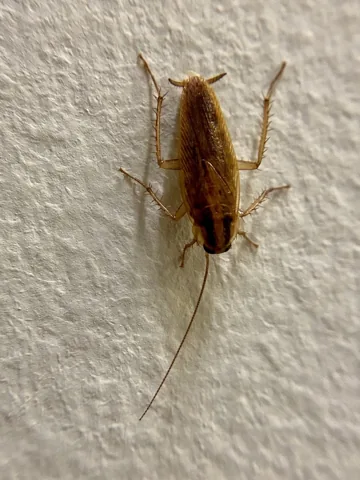 German Cockroach
Blattella germanica
The German cockroach is the most common cockroach living indoors in California and perhaps worldwide, especially in apartment buildings, and it has the fastest reproductive cycle of the common pest cockroaches. Penn State and Kentucky call it the most common cockroach in homes, apartments and other buildings, and Kentucky says it does not live outdoors.
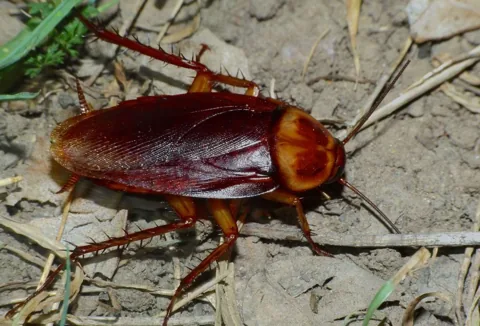 American Cockroach
Periplaneta americana
The American cockroach is the largest of the common pest cockroaches. It prefers warm, humid places and readily lives outdoors, in sewers, storm drains and water meter boxes, coming indoors to forage. Kentucky, Penn State and Minnesota all describe it as the largest cockroach commonly found in buildings.
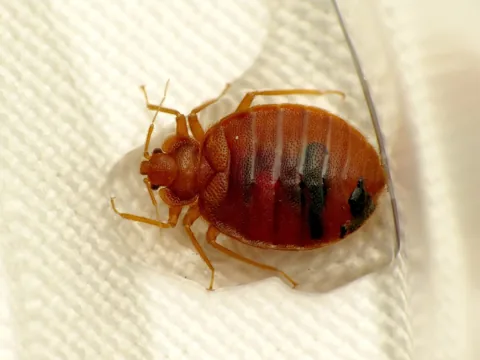 Bed Bug
Cimex lectularius
Bed bugs are wingless, blood-feeding insects that feed on sleeping or resting people, mostly at night; they have resurged worldwide and now turn up even in the finest hotels. CDC says they turn up in five-star hotels and resorts, and how clean a place is does not determine whether bed bugs are present.
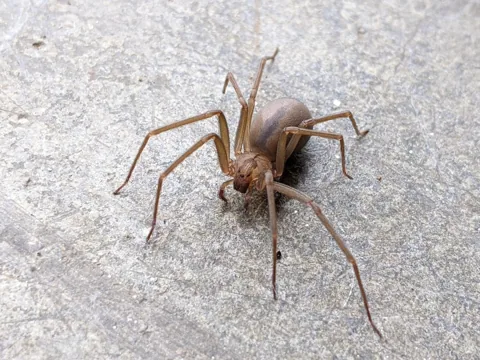 Brown Recluse
Loxosceles reclusa
The brown recluse is a secretive spider of the south-central and Midwestern United States whose bite can occasionally cause serious wounds; it is widely over-reported outside its range. The Illinois Department of Public Health says it occurs in roughly the southeastern quarter of the country and that bites are uncommon even where the spider is common.
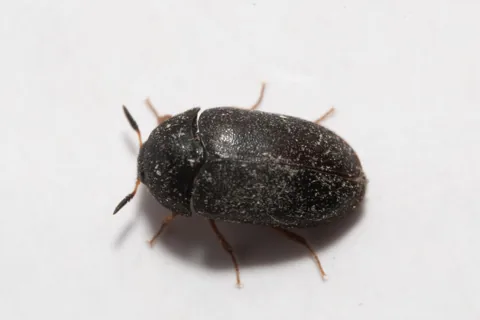 Black Carpet Beetle
Attagenus unicolor
The black carpet beetle is a shiny black carpet beetle whose larvae feed on wool, fur, feathers and other animal products, plus grains and other stored foods. In dry areas such as California, it is more often a pantry pest than a fabric pest. Colorado State Extension calls it one of the most common dermestid beetles.
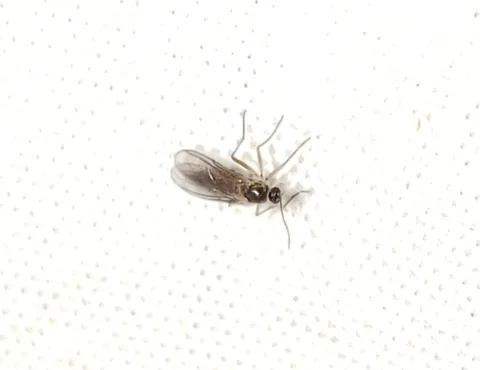 Fungus Gnat
Bradysia and related species
Fungus gnats are small flies whose larvae live in moist potting mix and organic matter. Indoors the adults emerge from houseplants and become a nuisance; they don't bite, and Colorado State calls the larvae minor pests of houseplants.
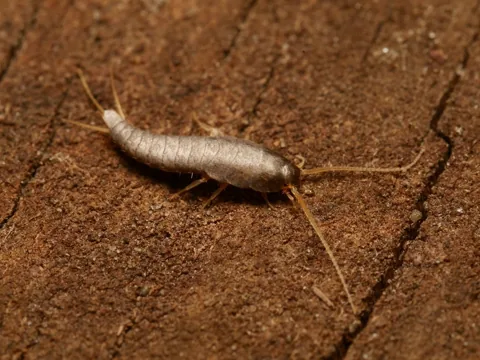 Silverfish
Lepisma saccharinum
Silverfish are nocturnal, wingless insects that hide by day and graze at night on paper, book bindings, starch in clothing and dry foods, preferring damp, warm places such as laundry rooms.
What indoor traps are good for
Sticky traps are useful for catching insects so you can identify them, and UC IPM calls sticky traps or glue boards the best way to detect and monitor cockroach populations. Penn State says a trapping survey is sometimes needed because even a thorough inspection won't reveal every place cockroaches hide or feed.[1][7][9]
Counts are how you judge treatment. Keep records of what each trap catches before and after you start control; for brown recluse, ongoing efforts can be judged by the number of new spiders caught, and for silverfish and firebrats, NC State says traps in infested areas help identify the hot spots.[1][6][9][22]
Traps have to be where the pest travels. Cockroach traps and baits don't attract roaches over long distances, so they must sit where roaches will run into them while foraging; Minnesota adds that traps should sit tight against walls or objects so roaches can't go around them.[1][8]
Trapping is rarely the whole answer. Colorado State says yellow sticky traps can reduce flying houseplant pests, but trapping alone won't eliminate them, because much of the population, including the younger stages, stays on or around the plants.[17][6]
Cockroaches
- Most cockroach sticky traps sold at home and garden stores work well for monitoring. They're open at both ends and lined inside with sticky material, and Penn State notes most come with bait to encourage roaches to enter.[1][7]
- Place them at the junctions of floors and walls and close to where you suspect roaches. Good sites show droppings (dark spots or smears), cast skins, egg cases, or live or dead cockroaches.[1][8][9]
- Put traps in all corners of a room to see where cockroaches are coming in. In the kitchen, set them against walls behind large appliances and in cabinets; Minnesota lists cupboards and the areas around refrigerators, stoves and sinks, and Penn State adds shelves, drawers and the space under equipment and counters.[1][8][7]
- Number the traps and keep records for each one. The New York State IPM Program suggests drawing a simple diagram of each room, marking each trap on it and writing the date on the trap, then recording the date, location, species and number caught.[1][9]
- How long to trap differs by source. UC IPM says to check traps daily for several days until it's clear where the most roaches are being caught, and that roaches often turn up within the first 24 hours. Penn State says one week of trapping at ten or more sites usually gives enough information, and the New York State IPM Program says to check traps weekly.[1][7][9]
- Use the catches to aim treatment: Minnesota says to put insecticide near the traps with the largest catches, and the New York program says to set more traps later to judge whether your efforts are working.[8][9]
- Throw used traps away in a sealed plastic bag in the trash.[1]
Bed bugs: interceptors, not sticky traps
EPA notes that sticky traps aren't for bed bugs, though they may catch spiders, cockroaches and other insects. A Tennessee study in high-rise apartments for elderly and disabled residents found the same thing: two pitfall-style interceptor monitors caught bed bugs in 88% and 79% of apartments, but a sticky monitor caught them in only 39% and took longer to detect them.[5][12]
Bed bug monitors come in a few kinds. Active monitors use heat, carbon dioxide, host odors, pheromones or a combination to lure bed bugs out of hiding into a pitfall or sticky trap. Passive monitors rely on bed bugs' liking for dark crevices or on chance encounters. Interceptors are a hybrid: a sleeping person is the lure, and the trap catches hungry bugs on their way to the meal. Research found interceptors trapped six times more bed bugs than visual searches alone.[2]
Kentucky Entomology says the dish-shaped interceptors are the most popular monitors: wandering bed bugs crawl or fall in and can't escape the slippery inner surface. Checked regularly, they can reveal bed bugs early in an infestation and show whether an infestation has been eliminated, and a trap under each bed leg also helps reduce bites.[10][11]
- Interceptors can be bought or homemade. EPA's version uses two clean plastic containers with sturdy sides more than an inch tall, one fitting inside the other, with the small one big enough for a bed or couch leg to stand in. Glue or tape them together.[5][11]
- Put masking tape around the outside of the larger container so bed bugs can climb in, and sprinkle a little talcum powder in the bottom of both containers; the talc is slippery and keeps them inside.[5]
- Make enough for every leg of the infested bed, couch or chairs. If needed, move the furniture a few inches from the walls and keep linens off the floor so only the legs touch it; Kentucky adds that dust ruffles and blankets shouldn't form a bridge to the floor.[5][10][11]
- In the Tennessee study, adding monitors beyond one per apartment didn't significantly raise detection, and the authors say it's especially important to include a bed placement when using only a few.[12]
- Check and clean the interceptors every week, reapply the talc, and dispose of captured bed bugs in a sealable plastic bag. Keep inspecting, including the interceptors, at least every 7 days in case eggs remain.[5]
Brown recluse and other spiders
- Glue traps are an excellent way to survey for brown recluse. The best are flat, like thin pieces of sticky cardboard, without a raised edge around them.[6]
- Use plenty: dozens placed throughout a home will show where spiders are most abundant. Put them in corners and along baseboards and wall-floor junctions, especially behind furniture and clutter, where spiders tend to travel. UC IPM notes one Tennessee home where sticky traps caught 44 brown recluse spiders in a single day.[6][13]
- Besides detecting spiders, glue traps can catch and kill large numbers of them, especially males, which wander more and are more likely to end up where people get bitten. Adult females stay better hidden, and some won't be caught.[6]
- Set the traps before any insecticide treatment. Some products make spiders active, so they wander into the traps.[6]
- For other house spiders, NPIC says cardboard sticky traps can trap and monitor them indoors, placed along baseboards and under furniture. Colorado State says traps sold for cockroaches and rodents can work when set along baseboards and other routes spiders travel.[14][15][13]
Fungus gnats in houseplants
- Looking for the adults is usually enough to tell whether there's a problem, and yellow sticky traps catch them.[4][16]
- Where adults are a nuisance indoors, sticky traps from nurseries and garden centers may help reduce the problem. Cut yellow traps into small squares, attach them to wooden skewers or sticks, and set them in the pots. Colorado State suggests placing yellow cards under the plant canopy or on the edge of containers, where they may help by catching egg-laying females.[4][16][18]
- Replace the traps regularly so they keep working, NC State's Beaufort County center says.[18]
- To check for larvae, set chunks of raw potato cut side down (not the peel) in the pots. Colorado State uses 1/4-inch slices or wedges pushed into the potting mix and says larvae start feeding within a few days; turn the slices over to look underneath. UC IPM says to replace infested chunks with fresh ones after a few days.[4][16]
Carpet beetles
Adult carpet beetles are drawn to light, so indoors they're usually found near windows, on sills, drapes or panes, and Ohio State says adults flying around windows may help you locate an infestation. Plain sticky traps without a lure are sold in stores; set them on windowsills to catch adults that fly to windows.[3][19][20]
UC IPM says sticky traps can also be used in homes with serious infestations: traps placed throughout a building show where beetles are coming from and whether control is working, and should be checked once or twice a week. Traps baited with a pheromone attract adult males and are sold by pest control operators, pesticide supply distributors and online; they're species-specific, so you need one for the species you have.[3]
Silverfish and firebrats
Silverfish and firebrats come out at night, so you usually won't see them. UC IPM suggests cockroach sticky traps, or small glass jars wrapped on the outside with masking tape that the insects climb up and fall into, placed in corners and along edges where they forage. They can travel long distances looking for food, which can make the source hard to pinpoint.[21]
NC State says sticky traps placed in infested areas help identify the hot spots and may give some control of small populations.[22]
Common questions
- Do sticky traps catch bed bugs?
- Not reliably; EPA says sticky traps aren't for bed bugs, and in one apartment study a sticky monitor found bed bugs in 39% of apartments, against 79% to 88% for interceptor-style monitors. Use interceptors under the furniture legs instead, which in research caught six times more bed bugs than visual searches alone.[5][12][2]
- Where should I put cockroach traps?
- Along the junctions of floors and walls, tight against the wall, in room corners, in cabinets and behind large appliances, close to droppings, cast skins or egg cases. Number them and record what each one catches.[1][8][9]
- How many glue traps do I need for brown recluse spiders?
- The more the better. Kentucky Entomology says dozens placed throughout a home will reveal where spiders are most abundant.[6]
- Do yellow sticky traps help with fungus gnats?
- They catch adults, and UC IPM says sticky traps may reduce the problem where adults are a nuisance indoors. For houseplants, UC IPM suggests cutting yellow traps into small squares on sticks and setting them in the pots.[4]
- How long should I leave cockroach traps out?
- UC IPM says to check them daily for several days, and roaches are often caught in the first 24 hours. Penn State says a week of trapping at ten or more sites usually gives enough information. After treatment, set traps again to see whether catches drop.[1][7][9]
- Are glue traps safe around kids and pets?
- Place them where children and pets can't reach them, such as along baseboards and under furniture; NPIC and UC IPM both give that advice for spider traps.[14][13]
Photo credits
- German Cockroach: (c) Sandra H Statner, some rights reserved (CC BY) — via iNaturalist, CC BY 4.0
- American Cockroach: (c) Steve Kerr, some rights reserved (CC BY) — via iNaturalist, CC BY 4.0
- Bed Bug: (c) Katja Schulz, some rights reserved (CC BY) — via iNaturalist, CC BY 4.0
- Brown Recluse: iamfindingplants, public domain (CC0), via iNaturalist
- Black Carpet Beetle: (c) Поляков Александр, some rights reserved (CC BY) — via iNaturalist, CC BY 4.0
- Fungus Gnat: (c) aispinsects, some rights reserved (CC BY) — via iNaturalist, CC BY 4.0
- Silverfish: (c) Alexis Tinker-Tsavalas, some rights reserved (CC BY) — via iNaturalist, CC BY 4.0
Sources
- University of California Statewide IPM Program, “Pest Notes: Cockroaches, UC ANR Publication 7467 (Home and Landscape).” ipm.ucanr.edu/home-and-landscape/cockroaches/ (accessed 2026-11-10)
- University of California Statewide IPM Program, “Pest Notes: Bed Bugs, UC ANR Publication 7454 (Home and Landscape).” ipm.ucanr.edu/home-and-landscape/bed-bugs/ (accessed 2026-11-10)
- University of California Statewide IPM Program, “Pest Notes: Carpet Beetles, UC ANR Publication 7436 (Home and Landscape).” ipm.ucanr.edu/home-and-landscape/carpet-beetles/ (accessed 2026-11-10)
- University of California Statewide IPM Program, “Pest Notes: Fungus Gnats (Home and Landscape).” ipm.ucanr.edu/home-and-landscape/fungus-gnats/ (accessed 2026-11-10)
- U.S. Environmental Protection Agency, “Do-It-Yourself Bed Bug Control.” www.epa.gov/bedbugs/do-it-yourself-bed-bug-control (accessed 2026-11-10)
- University of Kentucky Entomology, “ENTFACT-631: Brown Recluse Spider.” entomology.mgcafe.uky.edu/ef631 (accessed 2026-11-10)
- Penn State Extension, “German Cockroaches.” extension.psu.edu/german-cockroaches (accessed 2026-11-10)
- University of Minnesota Extension, “Cockroaches.” extension.umn.edu/garden-and-home/home-maintenance/household-insects/cockroaches (accessed 2026-11-10)
- New York State IPM Program, Cornell Cooperative Extension, “Found a Cockroach? (Saw a GAZILLION?) IPM No. 602.” ecommons.cornell.edu/server/api/core/bitstreams/8994c68c-161a-4979-8fdc-75151b569cec/content (accessed 2026-11-10)
- University of Kentucky Entomology, “ENTFACT-636: Bed Bugs.” entomology.mgcafe.uky.edu/ef636 (accessed 2026-11-10)
- National Pesticide Information Center, “Bed Bugs.” npic.orst.edu/pest/bedbug.html (accessed 2026-11-10)
- Journal of Economic Entomology, via PubMed, “Vail and Chandler (2017), Bed bug detection in low-income, high-rise apartments using four or fewer passive monitors, J. Econ. Entomol. 110(3):1187-1194.” pubmed.ncbi.nlm.nih.gov/28369372/ (accessed 2026-11-10)
- University of California Statewide IPM Program, “Pest Notes: Brown Recluse and Other Recluse Spiders, Publication 7468 (revised November 2018).” ipm.ucanr.edu/legacy_assets/PDF/PESTNOTES/pnbrownrecluse.pdf (accessed 2026-11-10)
- National Pesticide Information Center, “Spiders.” npic.orst.edu/pest/spiders.html (accessed 2026-11-10)
- Colorado State University Agricultural Biology, “Spiders in the Home.” agsci.colostate.edu/agbio/ipm-pests/spiders-in-the-home (accessed 2026-11-10)
- Colorado State University Extension, “Fungus Gnats as Houseplant and Indoor Pests, Fact Sheet 5.584.” extension.colostate.edu/topic-areas/insects/fungus-gnats-as-houseplant-and-indoor-pests-5-584/ (accessed 2026-11-10)
- Colorado State University Extension, “Managing Houseplant Pests.” extension.colostate.edu/resource/managing-houseplant-pests/ (accessed 2026-11-10)
- N.C. Cooperative Extension, Beaufort County Center, “Fungus Gnats: Tiny Pests in Houseplants and How to Control Them (2025).” beaufort.ces.ncsu.edu/2025/04/fungus-gnats-tiny-pests-in-houseplants-and-how-to-control-them (accessed 2026-11-10)
- Ohio State University Extension, “Carpet Beetles, HYG-2103-10.” ohioline.osu.edu/factsheet/HYG-2103-10 (accessed 2026-11-10)
- Clemson Cooperative Extension Home & Garden Information Center, “Fabric Pest Control.” hgic.clemson.edu/factsheet/controlling-fabric-pests/ (accessed 2026-11-10)
- University of California Statewide IPM Program, “Pest Notes: Silverfish and Firebrats (Home and Landscape).” ipm.ucanr.edu/home-and-landscape/silverfish-and-firebrats/ (accessed 2026-11-10)
- NC State Extension, “Silverfish and Firebrats.” content.ces.ncsu.edu/silverfish-and-firebrats (accessed 2026-11-10)