The short answer
- Encase both the mattress and the box spring. If you can afford only one, Kentucky's entomologists suggest covering the box spring, which is harder to inspect later.[2][6]
- Choose a white or light-colored encasement in the right size, with a zipper that closes completely and has a protective feature, a snug fit without loose folds, and fabric sturdy enough to last a year.[1][5][8]
- Leave it on. Opening an encasement to remove and wash it can lead to reinfestation, and adult bed bugs in apartment buildings have survived at least 4.5 months without a blood meal.[1][5]
- Make the bed an island: an interceptor under each leg, the bed pulled a few inches from the walls, and no bed skirt or blanket touching the floor.[2][6][5][7]
- Patch any tear right away with duct tape. Any tear makes an encasement ineffective.[1]
Bed bugs and their relatives
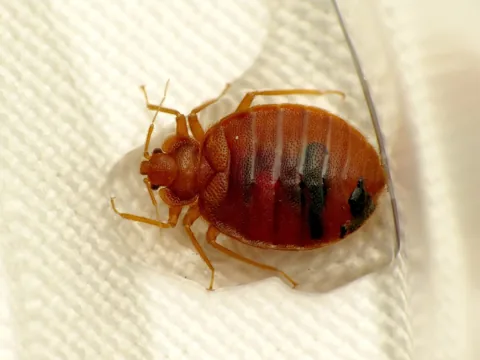 Bed Bug
Cimex lectularius
Bed bugs are wingless, blood-feeding insects that feed on sleeping or resting people, mostly at night; they have resurged worldwide and now turn up even in the finest hotels. CDC says they turn up in five-star hotels and resorts, and how clean a place is does not determine whether bed bugs are present.
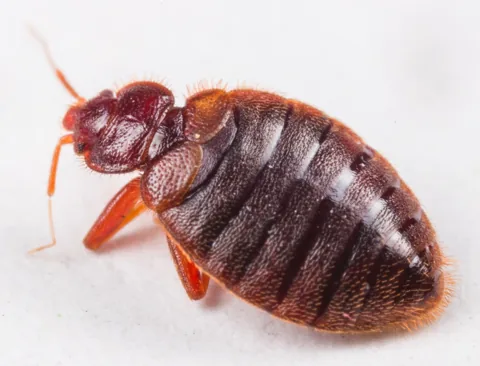 Tropical Bed Bug
Cimex hemipterus
The tropical bed bug is one of two bed bug species that feed on people. UC IPM says it is the dominant species in the tropics, and a 2021 study describes it spreading to new areas, including the United States, northern Australia, the Middle East, Russia and Central Europe.
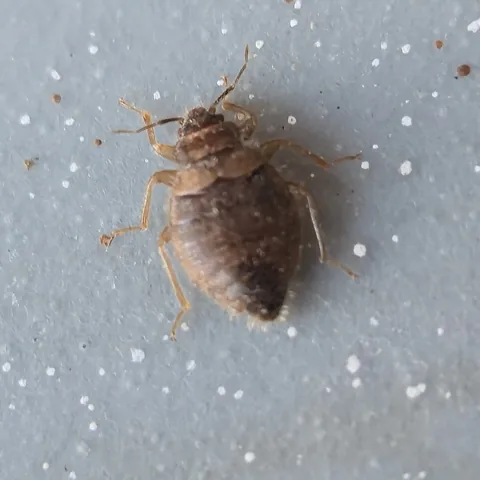 Swallow Bug
Oeciacus vicarius
Swallow bugs are close relatives of bed bugs that feed on the blood of swallows, mainly cliff swallows and sometimes barn swallows. They live in and around mud nests on buildings and bite people mainly when their birds are away.
How isolation kills bed bugs
Cut off from a host, bed bugs starve and dehydrate. Every life stage except the egg can dry out, and newly hatched nymphs, which lack the thick waxy skin of adults and may not have fed yet, are believed to be the most vulnerable.[1]
NPIC says it is usually drying out, rather than starving, that kills isolated bed bugs, and that they dry out much faster when the air is dry.[6]
It takes patience. In the laboratory, bed bugs survived 3 to 10 months at about 70°F. In apartment buildings, adults survived at least 4.5 months after their last blood meal, and unfed nymphs may survive as long. Bed bugs die faster in warm, dry places than in cool, damp ones.[1]
Other sources give different survival times. NPIC says a bed bug can go up to three months without feeding at room temperature and much longer in the cold. UC IPM puts the range at 20 to 400 days depending on temperature and humidity, with adults surviving more than 400 days in the laboratory at low temperatures. EPA says several months to a year.[6][3][8]
Isolation methods include encasements on mattresses and box springs, airtight zippered plastic bags or sealable plastic bins for belongings, and pitfall traps, also called interceptors, under furniture legs.[1][7]
What encasements do, and what they can't
- Seal bugs in: once a cover is installed and zipped shut, bed bugs inside can't feed on a sleeping person and eventually die, so the mattress and box spring don't have to be replaced.[2][1][3][5][7]
- Remove hiding places: encasements cover the seams, piping and other features of mattresses and box springs where bed bugs hide. UC IPM says encasements designed for this have been shown effective in laboratory research.[1][3][6][8]
- Make inspection easier: fecal stains and live bugs stand out on a white encasement. Cast skins and nymphs are translucent yellow and the eggs are white, so they're harder to see; use a bright flashlight.[1][8][6]
- Save the bed: throwing out a lightly infested mattress or box spring can be an expensive mistake. Discarding a bed doesn't get rid of bed bugs, and hastily moving to another bed or room can spread them through the home.[1][2][6]
- Contain an infested mattress that can't be thrown out, or when steam or insecticide treatment isn't available or wanted.[3]
- Protect a new bed: encasements help keep newly purchased beds from becoming infested.[2][6]
- Early on, encasing the mattress and box spring can remove a substantial part of the population, since most bed bugs tend to gather around the bed when an infestation is new.[2]
- What they can't do: encasements won't keep bed bugs from crawling onto the bed and biting a sleeping person.[2]
Choosing an encasement
Many brands are sold, and they differ in quality and effectiveness. Higher-quality encasements tend to be more durable and more comfortable to sleep on. They're sold by retailers and pest control firms.[1][2]
- Color: white or light, so bed bugs and their fecal stains are easy to see.[1][8]
- Size: the right size for the mattress, box spring and pillows. Measure the depth of the bare mattress, without bedding or pads, before you buy.[1]
- Fit: snug but not so tight it could rip. Loose fabric forms folds where bed bugs cluster and hide.[1]
- Zipper: one with a protective feature that eliminates seams or folds and keeps bugs from getting in or out; EPA adds that the zipper should close completely.[1][5]
- Strength: tear-resistant material, sturdy enough to last a year. Stretchy fabric is less likely to rip than vinyl and more comfortable to sleep on; vinyl will rip eventually but can be a cheaper first line of defense.[1][5][8]
- Escape-proof: no openings large enough for a bed bug to get in or out.[1]
- Bite-proof: some encasements have been tested and shown to be bite-proof, meaning bed bugs can't feed through the fabric. That doesn't matter for a box spring and probably isn't a concern for most mattress encasements, since sheets add thickness.[1]
- Insecticide-treated: some encasements are pretreated with permethrin. EPA lists a cover pretreated with pesticide as one option. Cornell says such a cover can't be relied on alone and, because some bed bugs resist permethrin, isn't always effective.[1][8]
- Other items: encasements are also made for pillows, luggage, sofas and loveseats.[1][2][4]
Installing one without tearing it
Follow the directions on the package; Cornell's general steps are below. It recommends two people for the job, to avoid injury or damage.[1]
- Vacuum the mattress and box spring first to remove bed bugs and reduce allergens.[1]
- With one person on each side, slide the mattress off the box spring until its foot touches the floor, then stand it on end against the wall.[1]
- Starting at the top, fit the encasement over one corner, then the other, check that the seams line up, and pull it down the length of the mattress slowly and evenly. With the mattress encasement still open, do the same with the box spring.[1]
- Set the box spring back on the frame without dragging it across the floor, which can tear the fabric or damage the zipper. Zip it closed and seal the zipper as the product directions say; most have a zipper feature, such as a hook, that protects it. Then put the mattress on the box spring and close its zipper.[1]
- Pad the contact points. Felt strips or duct tape where the mattress or box spring rests on the frame help prevent rips, and Kentucky warns to take care, especially over metal bed frames.[1][2]
Keeping it working
- Leave the encasements on. It's tempting to remove and wash them, but opening one can let bed bugs back out.[1]
- Inspect the outside regularly with a flashlight. Bugs on the outer surface are easier to spot and destroy on an encasement.[2][1][8]
- Seal any rip with duct tape, which is sticky enough to last and comes in white. A torn encasement no longer works.[1]
Make the bed an island
Encasements protect the mattress, but bed bugs living elsewhere in the room can still climb up. Kentucky's entomologists suggest a trap under each bed leg as a barrier between bed and floor, with the encased bed pulled a few inches away from the walls and no dust ruffle or blanket bridging to the floor, so the sleeping surface becomes a bug-free island.[2][6][7]
- Pitfall traps were first made to protect beds and furniture from wandering bed bugs. The bugs climb the rough outer wall and fall into a smooth well they can't climb out of. Research has shown that traps under furniture legs and along walls can eliminate small populations in multifamily housing and, with other steps, can prevent bites during sleep.[1]
- They're also monitors: they're always in place, need no bait or pheromone and can be reused. EPA recommends monitoring devices such as interceptors to make sure bed bugs have truly been eliminated.[1][4][3]
- UC IPM says research found interceptors under bed legs caught six times more bed bugs than people found by looking. EPA's preparation guide says to put one under each leg of the bed, check them daily at first and plan on using them for at least a year, because they're important for checking afterward that treatment worked.[3][5]
- Keep them clean. Dust, debris and other insects in the well let bed bugs climb out, so check and clean traps regularly, and recoat talc-lined wells with talc powder, not insecticide dust, using a talc-filled sock or a cotton ball. Heavy furniture can crack some traps, so look for heavy-duty ones if you need them.[1]
- How often to check differs by source: Cornell says regularly, EPA's do-it-yourself guide says to check and clean them every week and reapply talcum powder, and EPA's preparation guide says to inspect them daily at the start.[1][7][5]
- You can make interceptors at home. EPA's do-it-yourself guide uses two clean plastic containers, the smaller one big enough to hold a bed or couch leg and glued or taped inside the larger one, with rough-textured masking or painter's tape around the outside so bugs can climb in and a little talcum powder in both to keep them from climbing out. Make one for every leg of the infested furniture.[7]
- Carpet tape is another barrier. Bed bugs avoid crossing sticky surfaces, so strong two-sided carpet tape around bed legs, or a crib's legs, can stop them, as long as blankets don't touch the floor. Check often that it's still sticky and not coated with dust or hair.[1]
Bags and bins for belongings
- To isolate an infested item, put it in a large airtight plastic bag or a plastic bin with a lid and keep it somewhere warm and dry. Warmth speeds starvation and drying; Cornell says killing bed bugs this way usually takes an average of five months.[1]
- EPA's do-it-yourself guide is more cautious: items that can't be treated should go in a sealed plastic bag or storage container and stay there for up to a year so any active bugs are dead.[7]
- The seal has to be tight. First-stage nymphs are about the size of a poppy seed and very flat, so seal around a bin's lid with duct tape if it isn't airtight. Clear bags and bins let you see bugs gathering in the corners as they try to escape.[1]
- After a month or so, inspect the bags, bins and stored items thoroughly for bed bugs that have crawled into corners.[1]
- The drawback is time: things you use every day can't stay sealed for five months or more, so inspect them and keep them away from infested areas.[1]
- Bags also prevent spread. People who visit homes for work, or work where bed bugs may be brought in, can keep coats, bags, laptops and other items sealed when they aren't in use.[1]
One part of getting rid of bed bugs
- Bed bug eradication is difficult, and Kentucky says that when resources allow, hiring a professional is prudent. UC IPM notes that the most effective bed bug pesticides are available only to commercial applicators, who also have the equipment and expertise to apply them precisely.[2][3]
- If you're tackling it yourself, encasing the bed is one step you can take. Reducing clutter, especially around beds, makes bugs easier to find, and those you spot can be removed with a vacuum or a wad of duct tape, or killed with an over-the-counter insecticide approved for that use.[2][6][8]
- Expect it to take a while. EPA says treating bed bugs can take weeks to months depending on the infestation, and to keep checking for at least a year afterward to make sure they're all gone.[7]
- Before a professional treatment, EPA's preparation steps include removing bed bugs and eggs from the bed, frame and headboard and putting bed-bug-proof covers on the mattress and box spring.[5]
- EPA lists mattress, box spring and pillow encasements among the methods for trapping bed bugs and detecting infestations.[4]
Common questions
- Do I need to throw out my mattress?
- Usually not. An encasement seals bed bugs inside until they die, and throwing out a bed doesn't get rid of bed bugs; hasty moves can spread them to other rooms.[1][2][3][6]
- How long should an encasement stay on?
- Leave it on rather than taking it off to wash. Adult bed bugs have survived at least 4.5 months without feeding in apartment buildings, EPA says some survive up to a year, and EPA advises choosing covers sturdy enough to last a year.[1][8][5]
- Will an encasement stop the bites?
- Not by itself. It keeps bugs sealed inside from feeding, but bugs elsewhere in the room can still climb onto the bed; interceptors under the legs, a bed pulled away from the wall and bedding kept off the floor help.[2][6]
- Are insecticide-treated encasements better?
- Not necessarily. EPA lists pretreated covers as an option, but Cornell says some bed bugs resist permethrin and a treated encasement can't be relied on alone.[1][8]
Photo credits
- Bed Bug: (c) Katja Schulz, some rights reserved (CC BY) — via iNaturalist, CC BY 4.0
- Tropical Bed Bug: (c) portioid, some rights reserved (CC BY) — via iNaturalist, CC BY 4.0
- Swallow Bug: (c) John Clonce, some rights reserved (CC BY) — via iNaturalist, CC BY 4.0
Sources
- New York State Integrated Pest Management Program, Cornell University, “How to Get Bed Bugs Out of Your Belongings, NYS IPM Publication No. 620 (February 2018).” ecommons.cornell.edu/server/api/core/bitstreams/c774cabf-16af-4c52-8aab-b20acf2807c2/content (accessed 2026-11-10)
- University of Kentucky Entomology, “ENTFACT-636: Bed Bugs (revised March 2026).” entomology.mgcafe.uky.edu/ef636 (accessed 2026-11-10)
- University of California Statewide IPM Program, “Pest Notes: Bed Bugs, UC ANR Publication 7454 (Home and Landscape).” ipm.ucanr.edu/home-and-landscape/bed-bugs/ (accessed 2026-11-10)
- U.S. Environmental Protection Agency, “Controlling Bed Bugs Using Integrated Pest Management (IPM).” www.epa.gov/bedbugs/controlling-bed-bugs-using-integrated-pest-management-ipm (accessed 2026-11-10)
- U.S. Environmental Protection Agency, “Preparing for Treatment Against Bed Bugs.” www.epa.gov/bedbugs/preparing-treatment-against-bed-bugs (accessed 2026-11-10)
- National Pesticide Information Center (Oregon State University and U.S. EPA), “Bed Bugs.” npic.orst.edu/pest/bedbug.html (accessed 2026-11-10)
- U.S. Environmental Protection Agency, “Do-it-yourself Bed Bug Control.” www.epa.gov/bedbugs/do-it-yourself-bed-bug-control (accessed 2026-11-10)
- U.S. Environmental Protection Agency, “Protecting Your Home from Bed Bugs.” www.epa.gov/bedbugs/protecting-your-home-bed-bugs (accessed 2026-11-10)