The short answer
- Get the company's preparation list before you start. Some firms want beds stripped and furniture moved before they arrive; others prefer to inspect first and do those jobs themselves.[5]
- Don't move belongings to another room, home, car or workplace before or during treatment unless you know they're free of bed bugs.[4][1]
- Wash or dry bedding and clothing on high heat, then keep them sealed in plastic bags, away from infested rooms, until the bed bugs are gone.[4][1][9]
- Clear clutter, especially under and around beds, and make sure the technician can reach walls, closets and the areas around furniture.[5][4][9]
- Expect to see some bed bugs for a day or two afterward, and expect follow-up visits about two weeks apart, because many insecticides don't kill eggs and the treatment has to be repeated after they hatch. Keep sleeping in your own bed and keep checking for bugs.[6][7][10][9]
Bed bugs
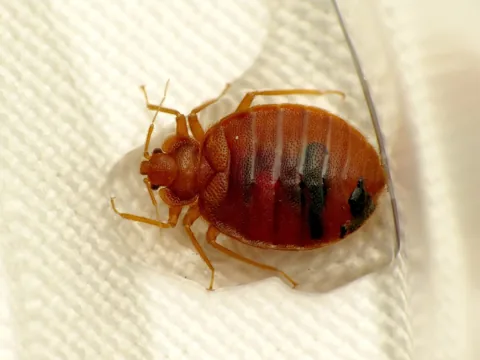 Bed Bug
Cimex lectularius
Bed bugs are wingless, blood-feeding insects that feed on sleeping or resting people, mostly at night; they have resurged worldwide and now turn up even in the finest hotels. CDC says they turn up in five-star hotels and resorts, and how clean a place is does not determine whether bed bugs are present.
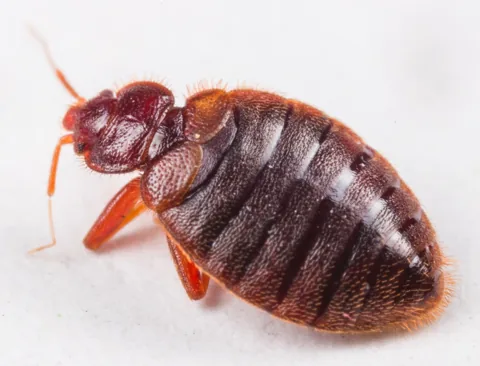 Tropical Bed Bug
Cimex hemipterus
The tropical bed bug is one of two bed bug species that feed on people. UC IPM says it is the dominant species in the tropics, and a 2021 study describes it spreading to new areas, including the United States, northern Australia, the Middle East, Russia and Central Europe.
How much preparation you need
EPA calls preparation an essential first step, whether you hire a professional or treat the home yourself. It speeds up the work, cuts control costs, and makes it easier to monitor for bed bugs that survive. EPA also lists poor preparation, such as failing to remove clutter or seal cracks and crevices, among the reasons treatments fail.[1][2][10]
Large infestations that have spread through a home may need extensive preparation. Light ones, where the bugs are mostly confined to beds and sofas, may need little or none.[5]
Pest management companies set their own preparation rules, often depending on how they treat. Some want beds stripped and furniture moved before they arrive. Others, increasingly, would rather inspect first and handle those tasks themselves, so ask before you start pulling the house apart.[5]
Virginia Tech's bed bug plan for apartments describes a lighter approach: pick up and bag clothes that aren't already in drawers or closets, and remove items from under the bed without moving them into a room that isn't infested. The technician then sees the infestation as it is, instead of bugs that were scattered around the unit right before treatment.[6]
Whole-home heat treatments often need less decluttering, and bedding and clothing don't have to be laundered because they're heated along with everything else. Heat-sensitive items such as aerosol cans, indoor plants and medications have to come out. The company may want books, electronics and similar items left in place so the heat reaches them. Cornell's NYS IPM Program adds that clutter can still get in the way of a heat treatment by blocking the flow of hot air.[5][4][13]
Don't spread bed bugs while you get ready
- Don't move belongings to another home before or during treatment unless you know they aren't infested. Bugs carried in a backpack or box can start a new infestation in another home, a car or a workplace, then come back to your home after it's treated. Move as few things as possible, and have them checked, or heat them, first.[4]
- Don't move items from an infested room into one that isn't infested.[1]
- Put trash and infested items straight into plastic trash bags, and carry full bags immediately to an outdoor bin.[1][6]
- Use sealed plastic bags to carry anything from one place to another, such as clothes headed for the dryer, so bugs don't drop off along the way.[1][5]
- Don't haul the bed out or start sleeping somewhere else. Cornell's NYS IPM Program says hasty moves to remove furniture, sleep in a different spot or replace furniture can spread bed bugs to other parts of the home, and throwing out a bed doesn't eliminate them. The National Pesticide Information Center gives the same advice: if you find bed bugs near your bed or bites on your skin, don't move to another part of the house, because the bugs can follow you and spread the infestation.[7][9]
Bedding, clothing and other washables
Bedding and clothes need heat rather than insecticide, because companies don't spray bedding or clothing. Kentucky says laundering should be at 120 degrees Fahrenheit or hotter.[5]
- Wash sheets, blankets, pillowcases and other bedding in hot water, then dry them on the highest setting that won't damage them. Put them in trash bags and keep them apart from anything that may be infested.[4]
- Wash clothing in hot water and dry it on the highest setting the fabric allows. Coats, jackets and other things you can't launder can be dry-cleaned or carefully inspected.[4]
- A hot dryer does most of the work, though sources give different times. EPA says 30 minutes on high heat kills bed bugs and eggs and that washing alone might not; Kentucky says 10 to 20 minutes at medium to high heat kills all life stages, and works faster if items go in dry; Cornell's NYS IPM Program says 20 minutes in a hot (125 degrees Fahrenheit) dryer for sheets, pillows and blankets, and 30 minutes elsewhere on the same page.[1][5][13]
- Kentucky notes that textile experts say most dry-clean-only garments, such as cotton, wool, silk, linen, rayon and nylon, aren't harmed by a dryer at a moderate setting if they're dry first. Dry cleaning kills bed bugs too, but infested items can spread them at the cleaner's while they're tagged and sorted.[5]
- Put curtains, pillows, towels and stuffed animals in the dryer on the highest safe setting for at least 30 minutes, and double-bag them right away. EPA also suggests cleaning the curtain hardware.[4][1]
- Keep cleaned clothing and bedding in sealed plastic bags until the home has been treated and the bed bugs are gone, and don't put clothing back in infested rooms before then.[4][1]
- Inspect things that can't be washed, such as books, electronics, picture frames and plastic toys. If insecticides will be used, put children's toys that are free of bed bugs into plastic bags or bins.[4]
Clutter, furniture and access
- Clutter, especially under and around beds, often has to go. It gives bed bugs extra hiding places and gets in the way of inspection and treatment.[5][4][9]
- Throw away items you don't need, after making sure they're free of bed bugs. EPA singles out old magazines and newspapers and suggests replacing cardboard boxes, which bugs can hide in, with plastic ones.[4][1]
- Pick up and double-bag loose items in bedrooms, such as things on a closet floor, and in other rooms being treated. Have them treated or inspected before they go back, so you don't return bed bugs to a treated room.[4]
- Leave clear access to walls, closets and the areas around furniture so the technician can inspect and treat thoroughly.[4][5]
- Vacuuming helps but isn't the main job. NC State and EPA suggest vacuuming the mattress, box spring, upholstered furniture and floors, then sealing the vacuum bag in a plastic bag and putting it in an outdoor trash can right away. Kentucky notes that household vacuuming seldom reaches where bed bugs hide, so many firms consider it less important than other preparation. Cornell's NYS IPM Program adds that vacuuming may not pick up every bed bug and usually won't remove eggs, which are glued in place.[4][1][5][13]
- EPA's preparation list also includes pulling the bed at least 6 inches from the wall, putting bed bug encasements on the mattress and box spring, keeping bedding from touching the floor, and setting interceptors under each bed leg.[1]
- EPA's list also suggests caulking cracks around baseboards, repairing damaged wallboard and loose wallpaper, and taping or caulking around outlet and switch plates so bugs can't get behind them.[1][13]
During the treatment
Most professionals use insecticides along with non-chemical methods, treating every place bed bugs are found or likely to hide. They often treat the seams, folds and crevices of beds, chairs and sofas but usually don't spray the sleeping surface or seat, because of the risk to people.[5][8]
Virginia Tech's apartment plan calls for two pest control professionals working together on an intensive first treatment that combines non-chemical methods with insecticides, followed by inspections and treatments at two-week intervals.[6]
Pesticide labels say how to avoid overexposure, such as how long to stay out of a treated area. Stay out as long as the label requires and follow the technician's instructions.[3][6]
After the treatment: what to expect
- The first treatment should greatly reduce the bed bugs, but they won't be gone yet. You may see more of them in the first 24 hours, because poisoned bugs wander into the open. Don't spray them; they should start dying in large numbers within two days.[6]
- Follow-up visits are usually needed. Virginia Tech says they should come within two weeks, even if the bugs seem gone after a week, to kill nymphs that hatched in the meantime.[6][5][10]
- At a follow-up, the technician checks monitors, encasements and the spots that were infested, and may ask whether you've seen bugs or been bitten. Answer honestly; reports of bugs or bites keep the visits going every two weeks.[6]
- If you've seen no bed bugs and had no bites after the treatment and two follow-ups, the infestation can be considered controlled. No one can guarantee every bug is gone, so keep watching.[6]
- Keep checking at least every 7 days, including any interceptor traps, in case eggs survived. EPA advises keeping interceptors under the bed legs for at least a year. Its preparation page says to inspect them daily at first; its do-it-yourself page says to check and clean them every week.[2][1]
- Don't add your own sprays. Kentucky says bleach, alcohol, cigarette lighters and foggers shouldn't be used on bed bugs because they don't work and can cause fires. UC IPM says foggers can harm your health, and EPA warns never to use an outdoor pesticide indoors.[5][8][3][9]
- Heat treatments leave no residue, so put habits in place to avoid bringing bed bugs back in.[3]
- Large infestations may need many follow-ups, and nobody can predict how many. In a cluttered home where bugs have been established for a year or more, Virginia Tech says they may never be eliminated without fumigation, and keeping bites down may be the realistic goal.[6]
Why a treatment can fail
EPA says resistance to insecticides is only one of many possible causes when a bed bug treatment doesn't work. Several of the others are things residents can help with.[10]
- Preparation was skipped or rushed: clutter left in place, cracks and crevices not sealed.[10]
- Bugs were missed. EPA notes they can live in a crack the width of a credit card and may hide in hampers, bed frames and furniture as well as the bed.[10]
- Nearby areas weren't treated, such as adjacent rooms or other apartments in the building. NPIC adds that large infestations and disturbances such as pesticide applications can push bed bugs into other parts of the home or next door.[10][9]
- Follow-up came too late or not at all. Many pesticides don't kill eggs, so treatment has to be repeated after the eggs hatch.[10][6]
- Not enough time passed. EPA says some products, such as drying agents and growth regulators, work but take a while to kill the population.[10]
Apartments and rentals
- If you rent, tell your landlord or property owner. EPA says the units near yours should be inspected and landlords may have a responsibility to take part in treatment; UC IPM points out that tenants have rights.[2][8][9]
- Bed bugs can spread through a building, so neighboring rooms and apartments often need inspecting too. Virginia Tech calls inspecting the units on either side, above and below an infested apartment essential, since a small infestation next door can be too small to see. NPIC suggests talking with neighbors and the landlord about a coordinated effort if you share walls.[5][6][9]
- EPA says success depends partly on whether all the residents of a house or building take part, so everyone in the home needs to do their part.[2]
- Local rules vary. In New York City, for example, the housing agency says tenants should report bed bugs to the property owner, owners must address infestations promptly and hire only state-licensed pest control professionals, and owners are expected to make follow-up visits.[12]
Keeping them from coming back
- Don't bring home discarded mattresses or sofas, and look secondhand items over closely for fecal spots and other signs of bed bugs.[5][11]
- Run secondhand clothing and fabrics through the washer or dryer before you put them away.[5]
- Keep encasements on the mattress and box spring; any bed bugs sealed inside eventually starve, and new ones can't hide there.[1][9]
Common questions
- Can I sleep somewhere else until the bed bugs are gone?
- It's better not to. Cornell's NYS IPM Program says moving to sleep in a different spot can spread bed bugs to other parts of the home; they tend to stay close to wherever people sleep and sit.[7][9]
- Why am I seeing more bed bugs right after treatment?
- Bugs that have been poisoned often wander into the open during the first 24 hours. Leave them alone; they should start dying in large numbers within two days. Tell the technician if you're still seeing bugs at the follow-up.[6]
- How many treatments will it take?
- Follow-ups are usually needed. Virginia Tech's plan calls for a first treatment and two follow-ups two weeks apart, with more if bugs or bites continue; large or long-established infestations can need many more, and no one can predict how many.[6][5][10]
- Do I have to vacuum before the company comes?
- Follow the company's list. NC State and EPA suggest vacuuming and sealing the bag, but Kentucky notes many firms consider vacuuming by residents less important than clearing clutter and bagging belongings.[4][1][5]
- Why didn't the first treatment get rid of them?
- A single treatment rarely does. Virginia Tech says the first visit should greatly reduce the bugs but not eliminate them, and EPA explains that many pesticides don't kill eggs, so treatment must be repeated after they hatch. Missed hiding spots, untreated neighboring units and poor preparation are other common reasons.[6][10]
Photo credits
- Bed Bug: (c) Katja Schulz, some rights reserved (CC BY) — via iNaturalist, CC BY 4.0
- Tropical Bed Bug: (c) portioid, some rights reserved (CC BY) — via iNaturalist, CC BY 4.0
Sources
- U.S. Environmental Protection Agency, “Preparing for Treatment Against Bed Bugs.” www.epa.gov/bedbugs/preparing-treatment-against-bed-bugs (accessed 2026-11-11)
- U.S. Environmental Protection Agency, “Do-it-yourself Bed Bug Control.” www.epa.gov/bedbugs/do-it-yourself-bed-bug-control (accessed 2026-11-11)
- U.S. Environmental Protection Agency, “Safety Issues in Controlling Bed Bugs.” www.epa.gov/bedbugs/safety-issues-controlling-bed-bugs (accessed 2026-11-11)
- NC State Extension, “Preparing Your House for Bedbug Treatments (Michael Waldvogel, June 1, 2018).” content.ces.ncsu.edu/preparing-your-house-for-bedbug-treatment (accessed 2026-11-11)
- University of Kentucky Entomology, “ENTFACT-636: Bed Bugs (revised March 2026).” entomology.mgcafe.uky.edu/ef636 (accessed 2026-11-11)
- Virginia Cooperative Extension, Virginia Tech, “Bed Bug Action Plan for Apartments (Dini M. Miller and Jeffrey Rogers, 2015).” vtechworks.lib.vt.edu/bitstreams/cb6b60e9-2ad8-4a75-b2b6-da57ce6e8a08/download (accessed 2026-11-11)
- New York State Integrated Pest Management Program, Cornell University, “How to Get Bed Bugs Out of Your Belongings, NYS IPM Publication No. 620 (February 2018).” ecommons.cornell.edu/server/api/core/bitstreams/c774cabf-16af-4c52-8aab-b20acf2807c2/content (accessed 2026-11-11)
- University of California Statewide IPM Program, “Pest Notes: Bed Bugs, UC ANR Publication 7454 (Home and Landscape).” ipm.ucanr.edu/home-and-landscape/bed-bugs/ (accessed 2026-11-11)
- National Pesticide Information Center, “Bed Bugs.” npic.orst.edu/pest/bedbug.html (accessed 2026-11-11)
- U.S. Environmental Protection Agency, “When Treatments Don't Work (updated October 8, 2026).” www.epa.gov/bedbugs/when-treatments-dont-work (accessed 2026-11-11)
- U.S. Environmental Protection Agency, “Protecting Your Home from Bed Bugs (updated July 6, 2026).” www.epa.gov/bedbugs/protecting-your-home-bed-bugs (accessed 2026-11-11)
- NYC Department of Housing Preservation and Development, “Bedbugs - HPD.” www.nyc.gov/site/hpd/services-and-information/bedbugs.page (accessed 2026-11-11)
- Cornell University, New York State IPM Program, “Managing Bed Bugs.” cals.cornell.edu/integrated-pest-management/outreach-education/whats-bugging-you/bed-bugs/managing-bed-bugs (accessed 2026-11-11)