The short answer
- For clothes, bedding, shoes and other things that can take it, use a clothes dryer; EPA's guidance is high heat for 30 minutes. NPIC gives the same figure and says it kills all bed bugs, eggs included.[2][8][12]
- Rooms and whole homes need professional equipment. UC IPM's recommendation for commercial heat is at least 140°F for two hours or 130°F for three hours. EPA's target for rooms and whole houses is at least 120°F for 90 minutes.[1][2][7]
- Don't try to heat bed bugs out with the thermostat, a space heater, a propane heater or the fireplace. It doesn't reach lethal temperatures where bugs hide, and it's dangerous.[3][7][6]
- Heat has no lasting effect, so bed bugs carried back in afterward can start over. Keep inspecting after any treatment.[4][8][1]
Pests this method is used on
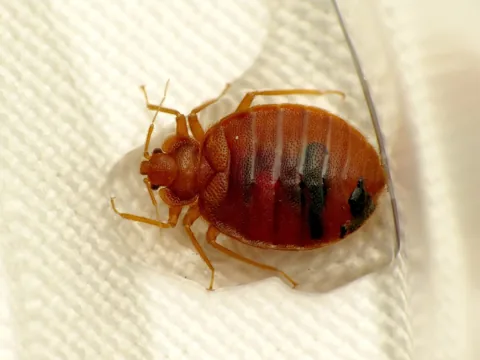
How heat kills bed bugs
Killing bed bugs with heat depends on temperature and time together: the hotter it is, the less time it takes.[7][2][8]
Eggs hold out longer than adults. In a University of Minnesota study that warmed bed bugs slowly, the way a room heats up, the temperature that killed 99% of adults was about 119°F (48.3°C), and for eggs it was about 131°F (54.8°C). Held at 118°F (48°C), eggs needed 71.5 minutes. Cornell's guide likewise says the eggs are slightly more resilient than adults.[9][7]
The researchers concluded that a whole-room treatment should hold 118°F (48°C) for at least 71.5 minutes, or reach 122°F (50°C) in every place bed bugs may hide. Purdue researchers writing in 2019 repeat those two targets.[9][10]
Published figures vary with how the bugs were heated. Cornell's NYS IPM Program lists 113°F for 90 minutes for adults and 8 hours for eggs, 118°F for 2 minutes for adults and 90 minutes for eggs, and 122°F as immediately lethal to both, and it advises aiming for 125°F to be safe. Virginia's guide, by Virginia Tech entomologist Dini Miller, agrees on 90 minutes at 113°F for adults and 90 minutes at 118°F for eggs, but says adults die within 20 minutes at 118°F rather than 2.[7][9][8]
Anything covering the bugs slows the heat down. In a Paris study of field-collected bed bugs, bugs exposed directly to 50°C (122°F) died within 60 minutes. Bugs under fabric, furniture or a mattress all died at 60°C (140°F) within 60 minutes, but bugs under a blanket took 120 minutes, and the inside of the blanket reached a lethal temperature 60 minutes later than an uncovered thermometer did.[20]
Bed bugs show little ability to evolve heat resistance in lab selection tests. Bugs found after a heat treatment were more likely never heated enough, escaped to cooler spots, or were brought back in.[10][7]
Clothes, bedding and other washables
- Washing alone generally won't kill bed bugs; the dryer does the work. Kentucky Entomology says 10 to 20 minutes at medium to high heat kills all stages and can replace washing, and items reach lethal temperatures faster if they go in dry.[2][6]
- Sources differ on dryer time. UC IPM says at least 10 to 15 minutes on the hottest setting and Kentucky 10 to 20 minutes at medium to high heat, while EPA, NPIC and Virginia's guide all say 30 minutes on high. A British lab study found a hot tumble-dry cycle (over 40°C, or 104°F) killed every life stage when it ran for at least 30 minutes. Thirty minutes on high meets all of them.[1][6][2][12][8][15]
- If you do wash, UC IPM's advice is hot water (120°F) followed by the dryer's hottest setting. Cornell's guide prefers putting dry items straight into the dryer, because wet items take longer to heat and washing first may even spread bugs.[1][7]
- Wash temperatures differ as well. UC IPM and Kentucky give 120°F as the minimum, while Cornell says hot washing kills all stages only if the cycle holds 140°F for 90 minutes and that U.S. washing machines may not get that hot. In the British study, a 60°C (140°F) wash killed all stages. The dryer remains the surer step.[1][6][7][15]
- Test your dryer the way Cornell describes: run three dry towels on high for 20 minutes, put a meat thermometer in the center of the towels, close the door and read it after five minutes. Over 125°F is good. If it's lower, add heat or time; two hours at 115°F kills bugs and eggs. If your dryer can't reach 115°F, use another dryer or a laundromat.[7]
- Load the dryer loosely so things tumble; every item has to reach the target temperature. Shoes and other things that shouldn't tumble can hang in a mesh laundry bag shut in the dryer door. Virginia's guide also specifies a loosely filled dryer on high.[7][8]
- Move infested items to the laundry in sealed plastic bags so bugs don't drop off on the way. At a shared laundry, EPA suggests taking items straight from the dryer into a bag and folding them at home.[5][6][13]
- Most dry-clean-only garments (cotton, wool, silk, linen, rayon, nylon) aren't harmed if they're dry before going into a dryer at a moderate setting, according to textile experts cited by Kentucky. Still, think about whether heat will damage a fabric before you use this method.[6][1]
- For clothing you don't want to tumble, Cornell suggests laying a towel over it and running an iron on its highest steam setting along the seams; test a small spot first.[7]
Heat chambers, hair dryers and other small-scale heat
Besides the clothes dryer, EPA names portable heat chambers as a way residents can kill bed bugs themselves. Units sold for luggage and household items heat things such as backpacks, clothing, books, shoes and pillows above 120°F. Virginia's guide notes they take several hours, much longer than a dryer, but can treat things a dryer can't, such as a packed suitcase, and says to check the owner's manual for the heat tolerance of any electronics first. EPA's home-protection page also suggests one for items you think may carry bed bugs.[4][8][13]
Success depends on every item reaching the lethal temperature, not on how long the unit runs. Crowding a dryer or chamber blocks the hot air and causes failures.[8][7]
Put thermometer probes inside or under the items, in the hard-to-reach places bugs hide, not out in the open air.[7]
University of Florida researchers built a do-it-yourself chamber for beds and furniture from six 8-by-4-foot sheets of 2-inch polystyrene foam, two oil-filled space heaters, box fans and remote thermometers. Cornell's guide describes the setup and says to heat until both thermometers read 125°F, which can take several hours. Virginia's guide, describing the same chamber, sets the bar slightly lower: all monitors should read 120°F before it comes apart. It adds that the room itself still needs treatment by a certified applicator.[7][8]
Space heaters in a confined space are a fire risk; use heaters that shut off automatically if tipped over. High heat can also damage wood, hard plastic and electronics, so check with an item's maker if you're unsure. Both Cornell and Virginia list oil-filled heaters for the chamber because of the lower fire risk.[7][8]
A hair dryer, never a heat gun, can treat cracks in luggage, headboards and other hard items. Cornell says to hold a meat thermometer 2 inches from the nozzle on the high-heat, low-speed setting and look for more than 140°F after a minute, then move slowly along cracks and seams. Work over a dry bathtub or a white sheet so bugs that fall off are easy to see.[7]
Brief heat works on the outside of luggage, not the inside. In a University of California, Irvine study, air at 70 to 75°C (158 to 167°F) killed every bed bug on the outside of soft-sided suitcases within 6 minutes, even those tucked under zipper flaps or piping. The author notes the treatment won't kill bed bugs inside the luggage.[16]
Hot cars and black plastic bags
EPA says you can try black plastic bags in a hot, closed car in the sun, but success depends on your climate and other factors, and do-it-yourself heat treatments might not work.[3]
If you try it, Kentucky's advice is to pack items loosely in black trash bags, raise them off the ground, leave them in a hot, sunny spot for at least a day and use a thermometer to confirm at least 120°F wherever bugs may be.[6]
Mattresses wrapped in black plastic in the sun don't get hot enough. In an Australian test, the sunny side reached 185°F (85°C) while the underside of a thick mattress never went above 95°F (35°C); bed bugs survive by moving to a cool spot.[11][7]
Professional room and whole-home heat
Companies use portable heaters and fans to raise the air temperature gradually, with sensors placed around the room to track the temperature in hiding spots.[6][8]
Targets differ by source. UC IPM gives at least 140°F for two hours or 130°F for three hours; EPA gives at least 120°F for 90 minutes for rooms, whole houses and items that won't fit in a dryer. Purdue researchers describe whole-home treatments that circulate air at 131 to 149°F (55 to 65°C) for six to eight hours to bring infested objects above 122°F (50°C). Kentucky describes heating the air to about 120 to 130°F, and Virginia's guide describes systems that heat room air to about 135°F and keep going for 60 minutes or more after every sensor reaches about 113°F.[1][2][10][6][8]
A heat treatment can often clear an infestation in a day and needs less decluttering than other approaches. Bedding and clothing don't have to be laundered, because they are heated with everything else. Virginia's guide says most infestations can be cured in a single treatment, though the job takes 6 to 8 hours from setup to takedown.[6][8]
Cool spots are the weak point. Insulated places such as cracks in walls and furniture can be hard to heat, and bed bugs move away from rising heat into wall voids, deep into furniture or into neighboring units; in one case they escaped from a heat-treated apartment into an unheated one next door. Some buildings, usually older remodeled ones, have construction features that create heat sinks.[10][8]
Bed bugs start moving well before the heat kills them. In a Purdue lab study, bed bugs began leaving a heated hiding place as its surface neared 40 to 43°C (about 104 to 109°F), and 4 to 12% of insects escaped the heated area and survived. A 2024 follow-up found that heated bed bugs release an alarm pheromone that sets nearby bed bugs moving.[18][19]
To keep bugs from escaping, researchers recommend monitoring temperatures throughout the heated area, trapping escaping bugs, sealing wall cracks and outlets or laying down dusts as barriers, and spot-treating any area that doesn't reach 122°F (50°C) with insecticide afterward. Some companies also apply insecticide at the same time, because heat leaves no lasting protection.[10][6][8]
Getting ready for a professional heat treatment
- Remove heat-sensitive things such as aerosol cans, indoor plants and medications. Televisions, computers and other electronics usually can stay.[6]
- Ask the company which of your belongings could melt or be damaged, and have those treated another way.[4][7]
- Take as few belongings as possible with you while the house is being heated, so you don't carry bugs out and back in.[6]
- Ask when it's safe to go back in, and make sure the home can cool down. A Houston forensic report describes an elderly woman who died of hyperthermia about 8 hours after returning to a heat-treated home where the air conditioning wasn't working afterward. The authors recommend clear re-entry times and temperature limits for vulnerable residents.[21]
Choosing a company and checking the results
- Choose a company with strong references and a history of successful bed bug treatments. EPA's hiring advice adds: pick a company experienced with bed bugs and check its credentials.[4][14]
- Monitoring temperatures throughout the heated space is critical to complete control, so ask where the company places its sensors and what it does about spots that stay cool.[10][8]
- In California, companies that provide heat treatments must be licensed and bonded by the Structural Pest Control Board.[1]
- Plan for follow-up. Kentucky says heat can often clear an infestation in one day, but EPA's advice for any professional bed bug job is to prepare for more than one visit, since very few infestations are controlled with a single treatment, and to expect monitoring for bugs that were missed.[6][14]
- Inspect after treatment. If you're bitten soon after a heat treatment, bugs brought back in are the likelier explanation, because bed bugs that survive heat feed less for up to two weeks.[10][1]
Common questions
- Will turning up the thermostat kill bed bugs?
- No. Home heating can't get hiding places hot enough, and trying with space heaters, a propane heater, the oven or a fireplace is dangerous. Only specialized equipment can heat a room enough.[3][7][6]
- Does steam count as a heat treatment?
- Steam kills bugs and eggs it reaches, but it penetrates fabric only so far. EPA says it must be at least 130°F without a forceful airflow that scatters bugs; Cornell's guide says the surface must reach 160 to 180°F, because the moisture evaporates quickly. Virginia's guide gives the same 160 to 180°F target and a pace of about 12 inches every 30 seconds. In a Texas A&M lab study, steam killed all eggs and 88 to 94% of nymphs and adults.[3][7][6][8][17]
- Can I heat-treat a mattress myself?
- Not easily. Wrapping it in black plastic in the sun leaves the underside too cool. Steam worked slowly along seams and tufts, a bed bug encasement, or professional heat are the usual options.[11][1][8]
- Is a professional heat treatment safe for the people who live there?
- Heat leaves no pesticide residue, but the heat itself can be a hazard. Remove aerosol cans, plants and medications first, ask the company when you can go back in, and keep an eye on older or medically vulnerable residents: a forensic report from Houston describes a hyperthermia death after a resident returned to a heat-treated home with broken air conditioning.[8][6][21]
Photo credits
- Bed Bug: (c) Katja Schulz, some rights reserved (CC BY) — via iNaturalist, CC BY 4.0
Sources
- University of California Statewide IPM Program, “Pest Notes: Bed Bugs, UC ANR Publication 7454 (Home and Landscape).” ipm.ucanr.edu/home-and-landscape/bed-bugs/ (accessed 2026-11-11)
- U.S. Environmental Protection Agency, “Controlling Bed Bugs Using Integrated Pest Management (IPM).” www.epa.gov/bedbugs/controlling-bed-bugs-using-integrated-pest-management-ipm (accessed 2026-11-11)
- U.S. Environmental Protection Agency, “Do-it-yourself Bed Bug Control.” www.epa.gov/bedbugs/do-it-yourself-bed-bug-control (accessed 2026-11-11)
- U.S. Environmental Protection Agency, “Safety Issues in Controlling Bed Bugs.” www.epa.gov/bedbugs/safety-issues-controlling-bed-bugs (accessed 2026-11-11)
- U.S. Environmental Protection Agency, “Preparing for Treatment Against Bed Bugs.” www.epa.gov/bedbugs/preparing-treatment-against-bed-bugs (accessed 2026-11-11)
- University of Kentucky Entomology, “ENTFACT-636: Bed Bugs (revised March 2026).” entomology.mgcafe.uky.edu/ef636 (accessed 2026-11-11)
- New York State Integrated Pest Management Program, Cornell University, “How to Get Bed Bugs Out of Your Belongings, NYS IPM Publication No. 620 (February 2018).” ecommons.cornell.edu/server/api/core/bitstreams/c774cabf-16af-4c52-8aab-b20acf2807c2/content (accessed 2026-11-11)
- Virginia Department of Agriculture and Consumer Services, “Using Heat to Kill Bed Bugs (Dini M. Miller, Department of Entomology, Virginia Tech).” www.vdacs.virginia.gov/pdf/bb-heat1.pdf (accessed 2026-11-11). Linked from EPA's Safety Issues in Controlling Bed Bugs page.
- Insects (MDPI), via PubMed Central, “Kells and Goblirsch (2011), Temperature and Time Requirements for Controlling Bed Bugs (Cimex lectularius) under Commercial Heat Treatment Conditions, Insects 2(3):412-422.” pmc.ncbi.nlm.nih.gov/articles/PMC4553552/ (accessed 2026-11-11)
- PLoS ONE, via PubMed Central, “Ashbrook et al. (2019), Bed bugs (Cimex lectularius L.) exhibit limited ability to develop heat resistance, PLoS ONE 14(2):e0211677.” pmc.ncbi.nlm.nih.gov/articles/PMC6366730/ (accessed 2026-11-11)
- Journal of Economic Entomology, via PubMed, “Doggett, Geary and Russell (2006), Encasing mattresses in black plastic will not provide thermal control of bed bugs, Cimex spp. (Hemiptera: Cimicidae), Journal of Economic Entomology 99(6):2132-2135.” pubmed.ncbi.nlm.nih.gov/17195683/ (accessed 2026-11-11). Cited from the PubMed abstract (re-fetched via NCBI E-utilities).
- National Pesticide Information Center, “Bed Bugs.” npic.orst.edu/pest/bedbug.html (accessed 2026-11-11)
- U.S. Environmental Protection Agency, “Protecting Your Home from Bed Bugs.” www.epa.gov/bedbugs/protecting-your-home-bed-bugs (accessed 2026-11-11)
- U.S. Environmental Protection Agency, “Hiring a Pest Management Professional for Bed Bugs.” www.epa.gov/bedbugs/hiring-pest-management-professional-bed-bugs (accessed 2026-11-11)
- Journal of Economic Entomology, via PubMed, “Naylor and Boase (2010), Practical solutions for treating laundry infested with Cimex lectularius (Hemiptera: Cimicidae), Journal of Economic Entomology 103(1):136-139.” pubmed.ncbi.nlm.nih.gov/20214378/ (accessed 2026-11-11)
- Pest Management Science, via PubMed, “Loudon (2017), Rapid killing of bed bugs (Cimex lectularius L.) on surfaces using heat: application to luggage, Pest Management Science 73(1):64-70.” pubmed.ncbi.nlm.nih.gov/27477121/ (accessed 2026-11-11)
- Pest Management Science, via PubMed, “Puckett, McDonald and Gold (2013), Comparison of multiple steam treatment durations for control of bed bugs (Cimex lectularius L.), Pest Management Science 69(9):1061-1065.” pubmed.ncbi.nlm.nih.gov/23371878/ (accessed 2026-11-11)
- Pest Management Science, via PubMed, “Ashbrook et al. (2022), Characterization of heat exposure-associated escape behaviors and HSP gene expression in bed bugs (Cimex lectularius L.), Pest Management Science 78(1):205-216.” pubmed.ncbi.nlm.nih.gov/34468070/ (accessed 2026-11-11)
- Scientific Reports, via PubMed, “Ashbrook et al. (2024), Lethal and sublethal heat-exposure of bed bugs (Cimex lectularius L.) causes alarm pheromone emission and elicits a movement response in nearby recipients, Scientific Reports 14:8555.” pubmed.ncbi.nlm.nih.gov/38609415/ (accessed 2026-11-11)
- International Journal of Environmental Health Research, via PubMed, “Chebbah et al. (2024), Effectiveness of heat treatment in rapid control of bed bugs in environmental conditions resembling their natural habitats, International Journal of Environmental Health Research 34(2):1147-1155.” pubmed.ncbi.nlm.nih.gov/37115096/ (accessed 2026-11-11)
- Journal of Forensic Sciences, via PubMed, “Sanford, Torres and Ross (2019), Unexpected Human Fatality Associated with Bed Bug (Hemiptera: Cimicidae) Heat Treatment, Journal of Forensic Sciences 64(2):622-624.” pubmed.ncbi.nlm.nih.gov/30080943/ (accessed 2026-11-11)