The short answer
- 1. Confirm it is a bed bug. Bites alone can't tell you; you need the bug, its shed skins, eggs or dark fecal spots.[13][10][6]
- 2. Inspect the bed first, then nearby furniture. In UC IPM's figures, 85% of bed bugs are in or near the bed.[13][12]
- 3. Dry bedding, clothes and other washables on high heat, vacuum seams and edges, and bag everything you move.[1][12][11]
- 4. Encase the mattress and box spring, put interceptors under the bed legs, and pull the bed away from the wall.[11][12][2]
- 5. Treat hiding places with heat, steam and products labeled for bed bugs, and expect follow-ups. Don't use foggers, outdoor pesticides, rubbing alcohol or unregistered diatomaceous earth.[1][7][9][12]
- 6. A professional is the best choice when you can afford one, and essential for large or spreading infestations and apartments. Keep checking interceptors for at least a year.[13][12][2][11]
Bed bugs and their relatives
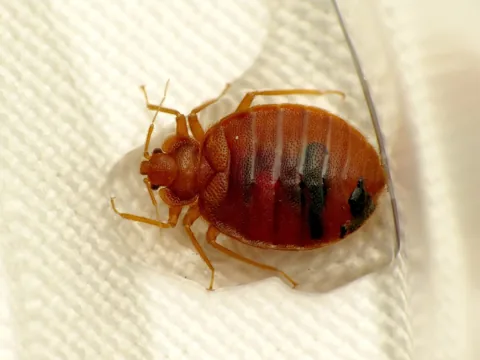 Bed Bug
Cimex lectularius
Bed bugs are wingless, blood-feeding insects that feed on sleeping or resting people, mostly at night; they have resurged worldwide and now turn up even in the finest hotels. CDC says they turn up in five-star hotels and resorts, and how clean a place is does not determine whether bed bugs are present.
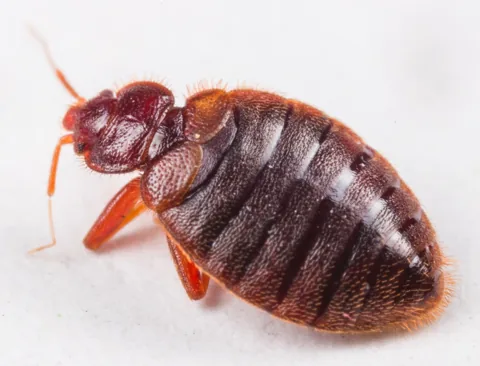 Tropical Bed Bug
Cimex hemipterus
The tropical bed bug is one of two bed bug species that feed on people. UC IPM says it is the dominant species in the tropics, and a 2021 study describes it spreading to new areas, including the United States, northern Australia, the Middle East, Russia and Central Europe.
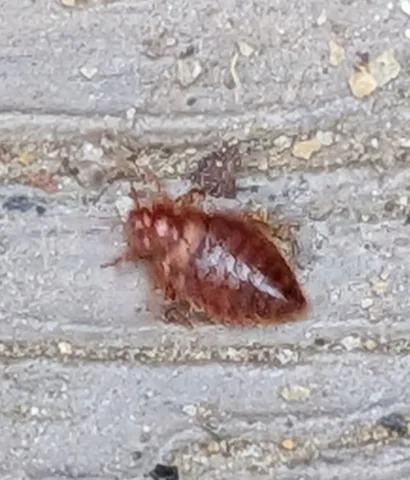 Bat Bugs
Cimex adjunctus (eastern bat bug) and Cimex pilosellus (western bat bug)
Bat bugs are close relatives of bed bugs that feed on the blood of roosting bats. They turn up in homes that have bats in the attic or walls, and they may bite people when the bats leave or are shut out.
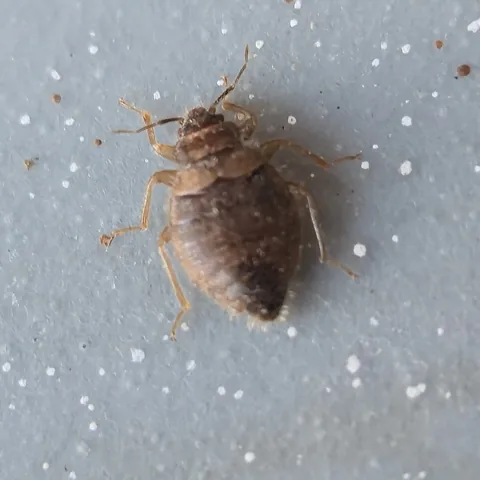 Swallow Bug
Oeciacus vicarius
Swallow bugs are close relatives of bed bugs that feed on the blood of swallows, mainly cliff swallows and sometimes barn swallows. They live in and around mud nests on buildings and bite people mainly when their birds are away.
Why it takes a plan, not a spray
Bed bugs reproduce quickly, and EPA notes that their eggs resist many chemical and non-chemical methods. They also hide in cracks about as thin as a credit card, so anything that has to touch the bug misses most of them. EPA's position is that pesticides should be only one part of an integrated pest management (IPM) plan, and UC IPM says insecticides alone won't control an infestation.[1][8][10][13]
EPA also says that controlling bed bugs by non-chemical means alone is possible but often very difficult, less effective and more work. Field research backs a flexible middle ground: in a Rutgers study in 32 infested apartments, non-chemical methods alone eliminated light infestations (1 to 12 bugs counted) about as fast as insecticide alone, and heavier infestations treated with both took no longer than chemical-only treatment while using much less spray.[1][16]
- Start early. A small infestation is far cheaper and easier to treat than the same one after it spreads, and the longer bed bugs go unnoticed, the more they move beyond beds and sofas.[10][12]
- Keep records. EPA suggests noting the dates and exact places you find bugs so you can track progress and target your work.[2]
- Don't throw everything out. EPA says most belongings can be treated and saved, and discarding them costs money and can spread bed bugs to other homes.[6][12]
Step 1: Confirm it really is bed bugs
Bites are a poor clue. Bed bug bites can look like mosquito or chigger bites, eczema or hives, and Kentucky cites studies in infested apartments where about 30 percent of people didn't react even when bitten repeatedly. UC IPM says skin reactions should never be used for diagnosis; an infestation is confirmed only by finding the bugs or their signs.[10][12][13]
Other insects, especially carpet beetles, are easily mistaken for bed bugs, and misidentifying them gives a real infestation time to spread. Bat bugs and swallow bugs look very similar but need treatment aimed at the roost or nest. See our bed bug look-alikes guide before you spend money, or take a sample to your county extension office, which EPA notes can identify it at no cost.[10][12][2][6]
Step 2: Inspect to find out how far it has spread
Inspection tells you where to treat. UC IPM reports that 85% of bed bugs are found in or near the bed, so start with the mattress, box spring, bed frame and headboard, using a flashlight and a small mirror. Most of the rest are in upholstered furniture, bedroom cabinets, along baseboards, under wallpaper and in carpets and wall hangings.[13]
A thorough inspection usually means taking the bed apart and standing the pieces on edge. Kentucky says it can take several hours.[12]
- Bed: seams, piping and tags of the mattress and box spring; underneath the box spring where it rests on the frame (remove the dust cover if needed); screw holes and crevices in the frame, especially wooden frames; and behind a wall-mounted headboard.[12][10]
- Furniture: seams, skirts and cushions of sofas and recliners, which can be major hotspots when used for sleeping. Empty nightstands and dressers and tip them over to check underneath.[12]
- Room: along and under carpet edges behind beds and sofas, cracks in molding, ceiling-wall junctions, behind pictures, outlets and switch plates, under loose wallpaper, and in closet clutter.[12][10]
- Bed bugs prefer wood and fabric over metal or plastic, and EPA notes they will travel 5 to 20 feet from their hiding places to feed.[12][13][10]
- Detection dogs are an option, but field accuracy varies. In a Rutgers test of 11 canine teams in infested apartments, dogs found infestations 44% of the time on average and gave false alerts 15% of the time; UC IPM advises confirming any dog alert with a detailed inspection.[19][13]
Step 3: Prepare without spreading them
EPA calls preparation an essential first step whether you treat it yourself or hire a professional. Kentucky notes that light infestations may need little prep, while large, spread-out ones need more, and that pest control companies have their own rules on what they want done before they arrive. Our guide to preparing for bed bug treatment has the full room-by-room checklist.[11][12]
- Don't move things from an infested room to a clean one. Carry items in sealed plastic bags, take bagged trash straight to an outside bin, and swap cardboard boxes for plastic bins.[11]
- Cut clutter, especially under and around beds. It hides bugs and gets in the way of inspection and treatment.[12][6]
- Seal cracks and crevices with caulk, repair damaged wallboard and loose wallpaper, and tape or caulk around outlet and switch plates.[2][11]
Step 4: Launder and dry-heat everything you can
Bedding and clothes can't be treated with insecticides, so heat is how you clean them. EPA's guidance is a dryer on high heat for 30 minutes. Kentucky says 10 to 20 minutes at medium-to-high heat kills all life stages, and works faster if items go in dry. Washing alone generally won't kill them; if you wash, Kentucky gives 120°F as the minimum water temperature.[1][11][12]
- Shoes, backpacks, toys and other dryer-safe items can go in too. Kentucky cites textile experts that most 'dry-clean only' garments are not harmed if dry and run at a moderate setting.[12]
- Bag items before carrying them to the laundry and store clean items in sealed bags so they stay bug-free. Clean out laundry hampers too.[11][6][12]
- For things that can't go in a dryer, see our heat treatment guide (heat chambers, hot cars, and why space heaters and thermostats don't work) and our guide to freezing infested items. Freezing needs a 0°F freezer for days: EPA's do-it-yourself page says three days, its IPM page says at least four, and Kentucky says one to two weeks below 32°F.[2][1][12][4]
Step 5: Vacuum and steam the hiding places
- Vacuum to remove bugs before other treatment, not as a cure. Ordinary floor vacuuming seldom reaches where bed bugs hide. Instead, slowly scrape the end of the crevice tool along mattress and box spring seams, furniture folds, baseboards and carpet edges. Eggs are hard to dislodge, and UC IPM says one pass rarely gets them all, so repeat.[12][13][6]
- Bed bugs can survive being vacuumed. Seal the bag or contents in a plastic bag right away and put it in an outside trash bin. Kentucky's trick: push a knee-high nylon stocking into the wand and hold it with a rubber band so the bugs are trapped in it.[12][6][2]
- Steam kills all life stages on contact if it gets into the hiding spot. EPA says steam must be at least 130°F at the surface and should not blow hard enough to scatter the bugs; use a diffuser. It works on seams, baseboards, bed frames and furniture.[2][13][12]
- Neither vacuuming nor steam leaves any residual protection, and steam penetrates fabric poorly, so Kentucky says both are used along with other measures.[12]
Step 6: Encase the bed and set interceptors
These two steps work together: encasements trap bugs inside the mattress and box spring and remove their best hiding places, and interceptors catch the ones coming from elsewhere. Our encasement guide covers choosing and installing them.[11][12][13]
- Encasements: zip the mattress and box spring into bed-bug-proof covers and leave them on for a year. Bugs trapped inside eventually starve. Pick one tested for bed bugs and sturdy enough to last the year, and take care not to tear it on metal frames. If you can afford only one, Kentucky says to encase the box spring, which is harder to inspect.[6][11][13][12]
- Encasements won't stop bed bugs from crawling onto the bed and biting, which is why the interceptors matter.[12]
- Interceptors: these double-cup pitfall traps go under each bed leg. UC IPM cites research where they trapped six times more bed bugs than visual searches found. EPA describes a homemade version: two clean plastic containers, the smaller one glued inside the larger, masking tape on the outside so bugs can climb in, and a dusting of talcum powder inside so they can't climb out.[13][2][11]
- Make the bed an island: pull it a few inches from the wall and keep bedding, dust ruffles and blankets from touching the floor, so the only way up is through the interceptors.[12][2][11]
- Check interceptors daily at first, then at least weekly. EPA says to keep using them for at least a year as your monitoring tool.[11][2]
Step 7: Whole-room heat
Professional heat treatment raises a room or whole home to lethal temperatures with heaters and fans while sensors track the heat. EPA's target is at least 120°F for 90 minutes to make sure eggs die; Kentucky describes air heated to about 120-130°F. Bed bugs die when their body temperature reaches 113°F, so the room has to run hotter than that to reach every hiding place.[1][12][6]
- Advantages: Kentucky says infestations can often be eliminated in one day, bedding and clothes don't need separate laundering, and less de-cluttering is needed.[12]
- Limits: heat leaves no residual effect if bed bugs come back in, so some firms also apply insecticides. Heat-sensitive things like aerosol cans, plants and medications must come out, and Kentucky says it may cost more than conventional treatment.[12][4]
- Never try to do this with your thermostat, a propane space heater or a fireplace. EPA says it doesn't work, and such attempts have burned homes down. Our heat treatment guide covers what pros do and how to get ready.[2][9][6]
- Fumigation with sulfuryl fluoride is a separate, specialized whole-structure treatment that requires vacating the building for days. It has no residual effect, and it is not the same as a fogger.[12][13]
Step 8: Insecticides, and the pyrethroid resistance problem
EPA has registered more than 300 products for bed bugs, in seven chemical classes: pyrethrins, pyrethroids, desiccants, biochemicals (cold-pressed neem oil), pyrroles (chlorfenapyr), neonicotinoids and insect growth regulators. Use only EPA-registered products with bed bugs on the label, and follow the label on where they can go: Kentucky notes professionals treat seams and crevices of beds and furniture but usually not the sleep surface, bedding or clothing.[3][9][4][12]
Resistance is the big catch. A 2007 University of Kentucky study found extremely high resistance to deltamethrin and lambda-cyhalothrin in bed bugs from homes in Kentucky and Ohio, and concluded pyrethroid resistance was already widespread in the US. UC IPM says some populations can no longer be controlled with pyrethroids, and EPA notes that resistant bed bugs may simply move to a new hiding place when sprayed.[15][13][3]
- Rotate chemistry. EPA suggests combination products or switching to a different chemical class; neonicotinoids, for example, act on a different target, so bugs resistant to other classes stay susceptible to them. UC IPM adds that some studies suggest pyrethroid mixtures keep driving resistance, and that chlorfenapyr and hydroprene may take many days to kill.[3][13]
- Most consumer sprays do little once dry, so Kentucky says to hit as many bugs as you can with the spray itself. UC IPM notes few over-the-counter products have been shown to work in the field, and the most effective ones are sold to licensed applicators only.[12][13]
- Repeat on schedule. Many pesticides don't kill eggs, so treatment must be repeated after they hatch. Under-dosing may not kill the bugs and can speed resistance, and EPA warns that spraying over and over whenever you see a bug is unlikely to work.[8][9]
- Baits don't work. Bed bugs feed only on blood, so the baits used for ants and cockroaches have nothing to offer them.[12]
- Never use outdoor products indoors, apply pesticides or repellents to your skin, or put products on beds, furniture or clothing unless the label allows it. Rubbing alcohol, kerosene and gasoline are fire hazards.[4][9][2]
Desiccant dusts: silica gel vs. diatomaceous earth
Desiccant dusts destroy the bed bug's waxy outer coating so it dries out and dies. EPA notes that because they work physically, bed bugs can't become resistant to them, and they keep working for a long time without disturbing the bugs. The catch is speed: EPA says they may take several months.[3][2]
- Silica gel (sold as CimeXa) is the one Kentucky calls very effective if applied correctly: brush barely visible amounts into seams, tufts, folds and crevices with a paintbrush, wearing eye protection and gloves.[12]
- Diatomaceous earth is often touted, but Kentucky says it is messy and will seldom help much. Use only EPA-registered, bed-bug-labeled products: pool or food-grade diatomaceous earth can harm you when breathed in, and EPA lists using unregistered diatomaceous earth among the things people do that are not legal.[12][3][2][9]
- Put dusts only in cracks, crevices and out-of-the-way dry places such as under baseboards or in wall voids, where they can last; EPA limits desiccant use to cracks and crevices to cut inhalation risk.[3][13]
Why bug bombs fail against bed bugs
Total-release foggers are the most tempting shortcut and one of the least useful. The pesticide has to touch the bug, and bed bugs spend the day hidden in cracks where fog doesn't reach. EPA says foggers should never be your only method, and UC IPM and Kentucky don't recommend them at all.[7][2][13][12]
Research shows why. In an Ohio State study, field-collected bed bugs showed little, if any, harm after two hours of direct exposure to three over-the-counter foggers, and even susceptible lab bugs were unaffected when covered by a thin layer of cloth. The authors concluded foggers fail because many bed bugs are resistant to pyrethroids and because the mist barely penetrates hiding places.[14]
DIY or professional?
UC IPM recommends trained professionals for confirmed infestations, and Kentucky says hiring one is prudent when resources allow, and EPA says an experienced professional can increase your chance of success. Kentucky notes treatment often costs several hundred dollars, and that people who can't pay can still make real progress: with persistence, a flashlight, encasements and interceptors, householders can become good at finding and killing bed bugs.[13][12][5][6]
- Call a professional early if you can. EPA warns that spending time on DIY treatment can let the infestation spread. Professionals know where to look and have tools and products homeowners can't buy.[5][12][13]
- Hire for experience and IPM. Expect an inspection, furniture taken apart, and some mix of vacuums, heat and pesticides, and expect several visits. EPA says very few infestations are controlled with one treatment.[5][9]
- Avoid applicators who don't follow IPM, have little bed bug experience, or don't provide follow-up inspections and repeat treatments. Your state pesticide agency can help you check a company.[9][6]
- Size matters for DIY. In a Rutgers program in low-income apartments, a reduced-risk IPM approach cut bed bug numbers by about 97% on average, but eliminated them only in the three lightly infested units that started with fewer than 30 bugs.[20]
Apartments and shared buildings
Multi-unit buildings are among the hardest places to get rid of bed bugs. Kentucky points out that bed bugs wander between units through cracks and openings in walls, floors and ceilings, so units on each side, above, below and across the hall should be inspected. A Rutgers mark-and-recapture study found marked bed bugs in neighboring apartments next to five of six study units.[12][17]
If an extension agent or expert confirms bed bugs, EPA says to notify your landlord, who may have a responsibility to take part. Kentucky stresses honesty and cooperation among tenants, managers and the pest control company; our guide for landlords and property managers covers the building side.[2][1][12]
- Many infestations are hidden. In a Rutgers community-wide program, management was unaware of 71% of the infested apartments found in the first inspection. Building-wide inspection and monitoring, with biweekly treatments until no bugs were found on three visits in a row, cut infestation rates from 15% to 2.2% in a year.[18]
- Leaving a unit empty doesn't starve them. Kentucky says bed bugs typically survive 1 to 4 months without feeding in temperature-controlled buildings, and longer when it's cool; in a vacant Rutgers study apartment, adults were still found 155 days after the last host left. In empty units bed bugs often spread to neighbors instead.[12][17]
How to know they're gone
There is no single all-clear test. EPA's guidance is to keep looking for at least a year, checking every few days after the first round of treatment and checking interceptors at least every 7 days in case eggs remain. If bugs turn up, either some were missed or eggs hatched, and retreatment may be needed.[2]
Bed bugs can go a long time between meals, so a quiet few weeks doesn't prove much. Kentucky gives a year or longer at 55°F or below.[12][17]
- Use interceptors as your scorecard and keep them in place for at least a year, as EPA advises. They rely on a sleeping person to draw hungry bugs out, so keep sleeping in the bed and keep checking them.[11][1][13]
- Watch for fresh signs: new fecal spots, shed skins or eggs on encasements, seams and furniture. Encasements make bugs on the outside surface easier to spot.[12][10]
- Keep the encasements on and the clutter down, and keep vacuuming the areas that were infested.[6][13]
- Bed bugs often come back on luggage, clothing and secondhand beds and furniture. Our travel guide covers checking hotel rooms and handling luggage when you get home.[12][13]
Common questions
- What kills bed bugs instantly?
- Direct heat and steam kill all life stages on contact: a dryer on high heat, or steam of at least 130°F worked slowly into seams and cracks. A registered contact spray kills the bugs it actually hits. None of these reach bugs hidden elsewhere, which is why a full plan is needed.[2][13][12]
- Can I get rid of bed bugs myself?
- Small, early infestations can be eliminated with encasements, interceptors, laundering, vacuuming, steam and careful use of labeled products, and research shows non-chemical methods alone can clear light infestations. Large or spreading infestations, and apartments, usually need a professional.[12][16][20][13]
- How long does it take to get rid of bed bugs?
- EPA says weeks to months, depending on the infestation's size, clutter, neighbors and cooperation. A professional heat treatment can often finish in a day, but you should keep monitoring for at least a year.[2][12]
- Should I throw out my mattress?
- Usually not. Encasing the mattress and box spring is cheaper and traps any bugs inside. If you do discard furniture, bag or wrap it and slash or mark it so no one takes it home.[12][6][2]
- Does a bug bomb work on bed bugs?
- No. Over-the-counter foggers had little effect on field-collected bed bugs in research tests, the fog doesn't reach their hiding places, and too many foggers can cause a fire or explosion.[14][7][13]
- Why do bed bugs keep coming back after spraying?
- Common reasons: missed hiding places or nearby rooms and units, too little preparation, no follow-up after eggs hatch, too little time for slow products, and pyrethroid resistance. EPA notes resistance is only one of many possible causes.[8]
Photo credits
- Bed Bug: (c) Katja Schulz, some rights reserved (CC BY) — via iNaturalist, CC BY 4.0
- Tropical Bed Bug: (c) portioid, some rights reserved (CC BY) — via iNaturalist, CC BY 4.0
- Bat Bugs: (c) Jason Hill, some rights reserved (CC BY) — via iNaturalist, CC BY 4.0
- Swallow Bug: (c) John Clonce, some rights reserved (CC BY) — via iNaturalist, CC BY 4.0
Sources
- U.S. Environmental Protection Agency, “Controlling Bed Bugs Using Integrated Pest Management (IPM).” www.epa.gov/bedbugs/controlling-bed-bugs-using-integrated-pest-management-ipm (accessed 2026-11-10)
- U.S. Environmental Protection Agency, “Do-it-yourself Bed Bug Control.” www.epa.gov/bedbugs/do-it-yourself-bed-bug-control (accessed 2026-11-10)
- U.S. Environmental Protection Agency, “Pesticides to Control Bed Bugs.” www.epa.gov/bedbugs/pesticides-control-bed-bugs (accessed 2026-11-10)
- U.S. Environmental Protection Agency, “Safety Issues in Controlling Bed Bugs.” www.epa.gov/bedbugs/safety-issues-controlling-bed-bugs (accessed 2026-11-10)
- U.S. Environmental Protection Agency, “Hiring a Pest Management Professional for Bed Bugs.” www.epa.gov/bedbugs/hiring-pest-management-professional-bed-bugs (accessed 2026-11-10)
- U.S. Environmental Protection Agency, “Top Ten Tips to Prevent or Control Bed Bugs.” www.epa.gov/bedbugs/top-ten-tips-prevent-or-control-bed-bugs (accessed 2026-11-10)
- U.S. Environmental Protection Agency, “Should I Use a Fogger?.” www.epa.gov/bedbugs/should-i-use-fogger (accessed 2026-11-10)
- U.S. Environmental Protection Agency, “When Treatments Don't Work.” www.epa.gov/bedbugs/when-treatments-dont-work (accessed 2026-11-10)
- U.S. Environmental Protection Agency, “Stay Legal and Safe in Treating for Bed Bugs.” www.epa.gov/bedbugs/stay-legal-and-safe-treating-bed-bugs (accessed 2026-11-10)
- U.S. Environmental Protection Agency, “How to Find Bed Bugs.” www.epa.gov/bedbugs/how-find-bed-bugs (accessed 2026-11-10)
- U.S. Environmental Protection Agency, “Preparing for Treatment Against Bed Bugs.” www.epa.gov/bedbugs/preparing-treatment-against-bed-bugs (accessed 2026-11-10)
- University of Kentucky Entomology, “ENTFACT-636: Bed Bugs (M. F. Potter).” entomology.mgcafe.uky.edu/ef636 (accessed 2026-11-10)
- UC Statewide Integrated Pest Management Program, “Pest Notes: Bed Bugs.” ipm.ucanr.edu/home-and-landscape/bed-bugs/ (accessed 2026-11-10)
- Journal of Economic Entomology, via PubMed, “Jones and Bryant (2012), Ineffectiveness of over-the-counter total-release foggers against the bed bug, J. Econ. Entomol. 105(3):957-963.” pubmed.ncbi.nlm.nih.gov/22812136/ (accessed 2026-11-10)
- Journal of Medical Entomology, via PubMed, “Romero, Potter, Potter and Haynes (2007), Insecticide resistance in the bed bug: a factor in the pest's sudden resurgence?, J. Med. Entomol. 44(2):175-178.” pubmed.ncbi.nlm.nih.gov/17427684/ (accessed 2026-11-10)
- Insects (MDPI), via PubMed, “Singh, Wang, Zha, Cooper and Robson (2017), Testing a threshold-based bed bug management approach in apartment buildings, Insects 8(3):76.” pubmed.ncbi.nlm.nih.gov/28933720/ (accessed 2026-11-10)
- PLoS One, via PubMed, “Cooper, Wang and Singh (2015), Mark-release-recapture reveals extensive movement of bed bugs within and between apartments, PLoS One 10(9):e0136462.” pubmed.ncbi.nlm.nih.gov/26352145/ (accessed 2026-11-10)
- Pest Management Science, via PubMed, “Cooper, Wang and Singh (2016), Evaluation of a model community-wide bed bug management program in affordable housing, Pest Manag. Sci. 72(1):45-56.” pubmed.ncbi.nlm.nih.gov/25644070/ (accessed 2026-11-10)
- Journal of Economic Entomology, via PubMed, “Cooper, Wang and Singh (2014), Accuracy of trained canines for detecting bed bugs, J. Econ. Entomol. 107(6):2171-2181.” pubmed.ncbi.nlm.nih.gov/26470083/ (accessed 2026-11-10)
- Insects (MDPI), via PubMed, “Singh, Wang and Cooper (2013), Effectiveness of a reduced-risk insecticide based bed bug management program in low-income housing, Insects 4(4):731-742.” pubmed.ncbi.nlm.nih.gov/26462533/ (accessed 2026-11-10)