The short answer
- Remove the ones inside: vacuum them up or catch them on sticky traps set where you see them. Camel crickets in particular are drawn to sticky traps.[1][3][4][8][7]
- Turn down the lights: field and house crickets are strongly attracted to light, so turn off unneeded outdoor lights or switch to yellow bulbs. This won't help with camel crickets, which aren't drawn to light.[1][4][7]
- Dry out damp areas with a fan or dehumidifier, and ventilate basements and crawl spaces, where camel crickets gather.[1][2][8]
- Seal the way in: caulk cracks in the foundation and gaps around doors, ground-level windows, vents and pipes, and add weather stripping to the bottom of house and garage doors.[1][2][4][8][7]
- Clear the hiding places next to the house: tall grass and weeds, heavy mulch, firewood, boards, bricks, rocks and clutter.[1][3][4][8][7]
- Only if crickets keep coming after that, use a product labeled for crickets: baits or a perimeter treatment outside, and crack-and-crevice treatment or baits indoors. Spraying rooms is mostly ineffective.[4][2][1][7][8]
Cricket profiles
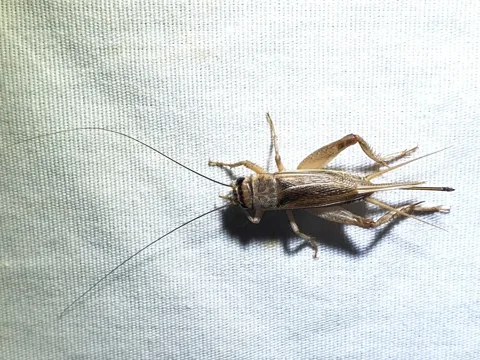 House Cricket
Acheta domesticus
The house cricket is a light brown cricket that is common outdoors, strongly attracted to light and often found inside houses, especially in late summer and fall.
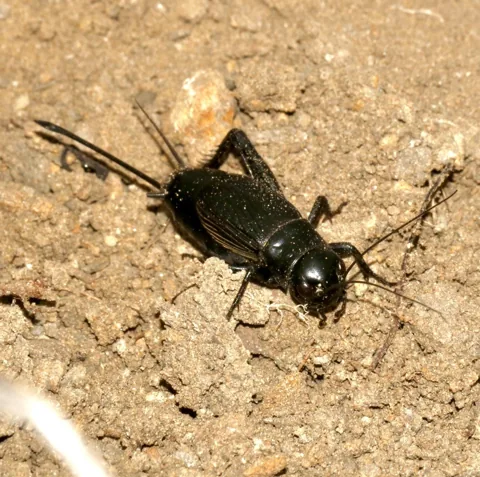 Field Crickets
Gryllus species (e.g., G. pennsylvanicus)
Field crickets are several species in the genus Gryllus that live outdoors in fields, pastures, roadsides and yards. They come into homes most often in late summer and fall, when cooler nights and outdoor lights draw them toward buildings.
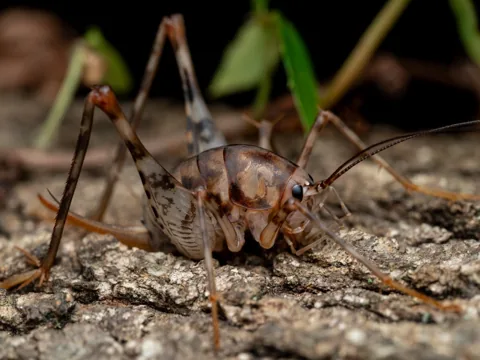 Camel Cricket
Rhaphidophoridae (shown: Tachycines asynamorus)
Camel crickets, also called cave crickets, are humpbacked, wingless crickets that live in cool, damp, dark places and often turn up in basements, crawl spaces and garages. They are a nuisance, not a danger.
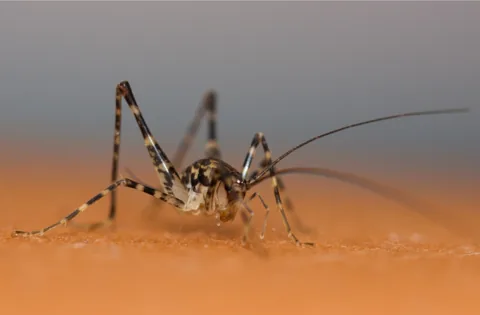 Japanese camel cricket
Diestrammena japanica
The Japanese camel cricket, Diestrammena japanica, is an Asian camel cricket that a 2014 citizen-science study reported from houses in the northeastern United States. Like other camel crickets it is a wingless, humpbacked insect of damp, dark places, and it is harmless.
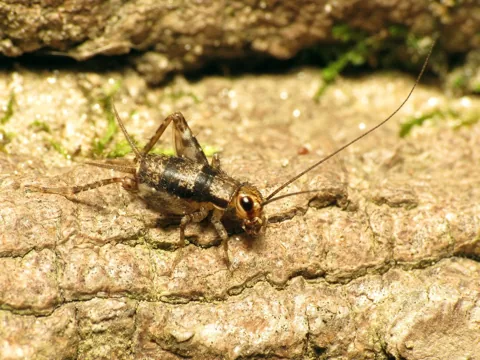 Ground crickets
Nemobiinae (Allonemobius, Eunemobius, Neonemobius and others)
Every autumn someone asks why the pavement under the store lights is covered in baby crickets. They are not babies. Ground crickets, sometimes called pygmy field crickets, are a separate group from the big black field crickets, and the ones under the lights are full-grown adults with wings, less than half an inch long. They scavenge plants and other insects, are generally not pests of crops, gardens or landscapes, and are among the last insects still singing in late fall.
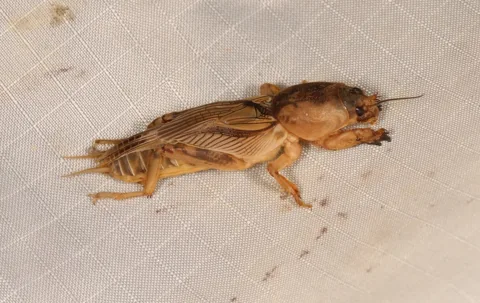 Mole Crickets
Neoscapteriscus species (tawny, southern and shortwinged mole crickets; N. vicinus shown)
Tawny and southern mole crickets are introduced species, thought to have arrived from South America in ships' ballast and first found in Southeastern port towns in the late 1800s and early 1900s. They are now serious turf pests in the sandy coastal Southeast: both tunnel just under the lawn, uprooting and drying out grass, and the tawny mole cricket also feeds on grass roots and shoots.
Which cricket is it?
Crickets are related to grasshoppers and katydids. They have long antennae, as long as the body or longer, and big hind legs for jumping. Adult females have a long, sword-like egg-laying tube at the tip of the abdomen. Young crickets look like small, wingless adults.[1][4][3][7]
The crickets most often found in homes are field crickets, camel crickets and house crickets. Missouri Extension also lists ground crickets and mole crickets among the crickets that invade homes there.[1][4]
- House cricket (Acheta domesticus): light yellowish-brown with three dark bands across the head and long wings held flat over the back. Minnesota gives about 3/4 inch, Missouri 0.75 to 1 inch, and Clemson one inch or less.[1][4][3]
- Field crickets (Gryllus species): usually black, though some are shades of brown, with wings that almost cover the body. Size varies: Minnesota gives 1/2 to 3/4 inch, Missouri 0.5 to 1.25 inches, and Clemson 1/2 inch to over an inch. The Arkansas Extension pest manual gives 3/5 to 1 inch and colors from dark brown to gray to black, with thread-like antennae reaching up to 1/2 inch past the tip of the abdomen.[1][4][3][7]
- Ground crickets (Nemobius species): small, dark reddish-brown to black, 0.3 to 0.5 inch long. Their small size lets them get in more easily than other crickets, and they can invade in large numbers.[4]
- Camel or cave crickets (family Rhaphidophoridae): tan to brown, humpbacked when seen from the side, with the head bent down between the front legs, very long legs and antennae, and no wings. Minnesota gives about 3/4 inch, the Missouri Department of Conservation up to about 1 inch, and Missouri Extension and Clemson 1/2 to 1 1/2 inches. Their long legs give them a spider-like look, which is why some people call them spider crickets, though the Arkansas manual says the resemblance is only superficial and that they're more closely related to katydids than to true crickets.[1][5][4][2][8][7]
- Mole crickets: about 1.5 inches long, light brown, with short, shovel-like front legs for digging. They live underground and may wander into homes when their tunnels flood, but they aren't known to damage anything indoors.[4]
Camel crickets in the basement
The Missouri Department of Conservation counts about 150 species of camel and cave crickets in North America north of Mexico; Clemson says over 100 kinds live in the United States and Canada. They are almost entirely nocturnal and live in cool, moist places such as caves, basements, cellars, crawl spaces, hollow trees, wood and stone piles and under logs and stones, where they feed on organic debris and small insects. The Missouri Department of Conservation calls them completely harmless.[5][4][8]
The camel cricket in your basement may not be a native one. In a citizen-science survey of camel crickets in North American homes, researchers at NC State found that the Asian camel cricket Diestrammena asynamora had become common in eastern houses and turned up there far more often than native camel crickets. Pitfall traps in 10 urban yards in Raleigh caught as many as 52 in a single yard over two days, and more were caught in traps closer to the house. The survey also reported a second Asian species, probably Diestrammena japanica, established in the northeastern United States.[6]
NC State says most camel cricket species are unimportant as pests, but one, the greenhouse stone cricket (Tachycines asynamorus), frequently becomes a nuisance indoors. Camel crickets overwinter as nymphs or adults, and females start laying eggs in the soil in early spring. Clemson says the eggs hatch in a few weeks, that camel crickets may breed year-round in greenhouses and other warm places, and that very little is known about their biology.[2][8]
Problems tend to follow extreme weather, either heavy rain or long hot, dry spells. A sign of a heavy infestation is dark fecal smears on surfaces such as floor joists. In dry spells they may wander out of basements and crawl spaces into living areas looking for moisture, Clemson says, especially laundry rooms and bathrooms.[2][8]
Lots of camel crickets in a basement can mean a moisture problem that needs fixing. They are unlikely to breed indoors unless conditions are just right, dark and damp enough.[5]
Why crickets come inside
Most crickets come in by accident through open or poorly fitted doors and windows and cracks in the foundation, doors, windows or siding. The exact entry point can be hard to find.[1][4]
Cooler nights in fall push field and house crickets indoors, and lights at night draw field crickets close to buildings. Camel crickets also come in during fall looking for a place to spend the winter, and once inside they look for the same cool, damp, dark conditions they live in outdoors, which leads them to basements and crawl spaces.[4][1][3][7]
Field crickets cause the most trouble as adults. The Arkansas manual says massive numbers can mature in late summer, fly out of lawns and fields and gather at lights on homes, gas stations, stores and other lit buildings, sometimes in numbers big enough to make the ground under streetlights slippery.[7]
Crickets in general are attracted to places where moisture stays high and steady, and outdoors they gather in mulch, tall grass, weeds and rock, brick and wood piles.[3][8]
Will they breed in the house?
Usually not. Minnesota Extension says crickets rarely reproduce indoors and that those that come in normally die by autumn or early winter. Missouri says crickets only rarely reproduce in homes, and field crickets are less likely to build up indoors because they lay their eggs in soil.[1][4][3]
House crickets are the exception. Clemson says they can spend their whole lives inside buildings and lay many eggs there, usually in warm spots near fireplaces, kitchens, water heaters and furnaces, and Missouri says all stages can live in buildings year-round.[3][4]
Outdoors, Minnesota says crickets have only one generation a year there. In Arkansas, field crickets spend the winter as nymphs and take 9 to 14 weeks to develop in summer.[1][7]
Chirping at night: which crickets make the noise
Only adult males chirp. They rub their wings together, using one as a comb and the other as a file, to attract females, court them, warn off rivals, or sound an alarm when disturbed.[4][3][1]
Camel crickets have no wings, so they can't chirp. If you hear chirping indoors, NC State says you most likely have field crickets, which are controlled the same way. Ground crickets have a shriller, higher-pitched chirp than field crickets. Clemson confirms camel crickets have no sound-producing organs.[2][5][4][8]
Missouri Extension notes the snowy tree cricket's chirps track outdoor temperature (Dolbear's law): count the chirps in 15 seconds and add 40.[4]
Can crickets damage clothes and fabric?
They can. Crickets have chewing mouthparts, and indoors field and house crickets feed on cotton, linen, wool, silk and fur; Clemson adds leather. They go for items soiled by food, drinks or perspiration, and feed on the surface of the fabric, leaving roughened areas where they picked and pulled the fibers loose.[3][4][1][7]
Minnesota says house crickets can cause severe damage to silk and wool when there are many of them. The Arkansas manual adds paper and rubber products to the list, and says even nylon, wood, plastic and leather goods can be damaged.[1][7]
Camel crickets rarely eat fabric, though they sometimes feed on paper products, and Missouri says they seldom damage anything in the home. NC State warns that if a camel cricket problem goes on long enough and they can't find food, they can damage garments and linens packed in boxes in a garage or basement. Clemson's camel cricket sheet is less reassuring: it says large numbers can damage fine fabrics and houseplants indoors, and outdoors plants and lawn furniture fabric.[1][4][2][8]
Otherwise crickets don't cause major damage to property and aren't considered a serious household pest.[1]
Fix the lighting
Field and house crickets are strongly attracted to light, so outdoor lighting pulls them toward your doors and windows. Turn off lights you don't need at night, or use yellow or sodium vapor bulbs instead of white, neon or mercury vapor lights. Mole crickets are less attracted to light, and camel crickets aren't attracted at all.[1][4][3][7]
Where you can, the Arkansas manual suggests mounting the light away from the building and aiming it back toward it, since crickets move toward the light source rather than the wall.[7]
Dry it out and clear hiding places
Crickets like dark, protected spots behind or under objects and in cracks, and generally prefer cool, damp places. Large numbers can build up around a building that offers them. Clemson calls removing these moist habitats the most important step for successful control.[4][3][8]
- Indoors, run a fan or dehumidifier in damp areas. Minnesota says this works especially well against camel crickets. NC State also points to crawl spaces and moist rooms such as bathrooms and laundry rooms. Clemson's camel cricket sheet adds properly ventilating crawl spaces and basements.[1][2][8]
- Clear clutter such as boxes and papers, and in garages, basements and storage areas stack boxes on pallets, off the ground and away from the walls, to improve airflow and make crickets easier to spot.[1][2][8]
- Outside, mow tall grass and weed beds near the house, paying attention to the ground by doors, under windows and near vents.[3][1][8][7]
- Keep mulch and ground cover at least 12 inches from the foundation, and use gravel next to the foundation where you can. Keep ivy and other dense ground covers and shrubs away from the siding.[2][3][8]
- Move firewood, lumber, bricks, rocks and debris away from the house, including clutter under decks, and set garbage cans up off the ground, for example on wood blocks. The Arkansas manual says to keep garbage in containers with tight lids.[1][3][2][4][7]
Seal entry points
Sealing small openings greatly reduces the risk of cricket invasions. Caulk or repair cracks and gaps in the foundation and around door and window frames, ground-level windows, clothes dryer vents, crawl space access doors, soffits, and where heating, air-conditioning and plumbing lines pass through the foundation.[4][2][1][8][7]
Fit weather stripping along the bottom of house and garage doors so it seals tightly against the threshold, and keep window and door screens in good repair.[2][3][8]
Indoors, the Arkansas manual also suggests caulking cracks and crevices that give crickets places to hide.[7]
Vacuum and sticky traps
Crickets are big enough to catch or kill by hand indoors, and a vacuum works well for live and dead ones; Clemson says to throw the vacuum bag away outside afterward. Remove dead crickets so they don't become food for ants or beetles. The Arkansas manual suggests a strong vacuum for crickets behind or under heavy furniture and appliances.[4][3][8][7]
- Sticky traps, the kind used for cockroaches and mice, catch crickets well, and Minnesota and Missouri both single out camel crickets as especially easy to trap.[1][4][2][8]
- Put them where you have seen crickets, in corners, behind appliances and around entry points such as doors. Clemson's camel cricket sheet singles out doorways.[1][2][3][8]
Baits and insecticides
Sources agree insecticides come after habitat changes and sealing, and that they give only temporary control. NC State says they aren't a long-term solution for camel crickets, and Missouri says treatments may need repeating if crickets keep coming once the barrier wears off. The Arkansas manual says to use insecticides only when sealing and cleanup can't stop the damage quickly enough, and because cricket invasions are usually seasonal, long-residual insecticides usually aren't needed indoors.[2][4][7]
Pick a product that lists crickets and the site you're treating on its label, and follow the label. Most over-the-counter products for use in and around homes are pyrethrins or pyrethroids. Don't use outdoor-only products indoors. The Arkansas manual makes the same point: outdoor spray materials don't go indoors unless the label allows it.[4][3][1][7]
- Perimeter spray: Minnesota suggests an outdoor-labeled insecticide such as permethrin, beta-cyfluthrin or deltamethrin, sprayed in a band along the foundation and the ground. Missouri describes a treated zone that starts one foot out from the foundation and ends one foot up from the soil surface, plus basement window wells, crawl space vents and weep holes in brick. Clemson says to concentrate on the perimeter near doors, windows and vents.[1][4][8]
- Baits outside: Missouri says baits can be especially effective in a band on the soil between cricket habitat and the house, and work better than sprays on bare concrete, which absorbs liquid. Never put baits and liquid barriers in the same zone. NC State says perimeter sprays and baits can work well unless heavy rain washes them out. The Arkansas manual says granules suit lawns and other areas that get wet or are watered often, and warns against baits or granules anywhere children or pets can get to them.[4][2][7]
- Crawl spaces: NC State says baits placed in corners or along the sill plate work best there, and granular baits are a better choice than spraying in a confined space, though they aren't easy for the public to buy. Spraying a crawl space takes caution and the right safety equipment, and NC State suggests contacting a licensed pest control company for help.[2][8]
- Indoors: Missouri says cricket baits are particularly effective indoors, and labeled sprays should go only into cracks and crevices where crickets hide; spraying the air or large open surfaces is mostly ineffective. Clemson saves indoor treatment for large infestations and also points to attics for house crickets. Minnesota says pesticides are generally neither effective nor necessary indoors. Clemson's camel cricket sheet reserves indoor treatment for large populations or when valuable items are at risk, and the Arkansas manual describes spot sprays into cracks and crevices.[4][3][1][8][7]
- Clean up afterward. The Arkansas manual reports documented poisonings of cats and birds that ate insecticide-killed crickets, and advises picking up large numbers of dead crickets, sealing them in a plastic bag and putting the bag in the trash.[7]
Common questions
- Why do I have crickets in my house?
- Most come in from outside by accident, often in late summer and fall as nights cool, through gaps around doors, windows and the foundation. Outdoor lights draw field and house crickets, and damp basements and crawl spaces draw camel crickets.[1][4][3]
- How do I get rid of a chirping cricket?
- Only adult male crickets chirp, and camel crickets can't chirp at all, so a chirper indoors is most likely a field cricket. Sticky traps in corners, behind appliances and near doors catch crickets, and a vacuum removes any you can see.[4][2][1]
- Are camel crickets dangerous?
- No. The Missouri Department of Conservation calls them completely harmless. They are a nuisance, can leave dark fecal smears, and in a long-running infestation can damage stored garments and linens.[5][2]
- Do crickets eat clothes?
- Field and house crickets can chew cotton, linen, wool, silk and fur, especially items soiled with food or sweat, and large numbers of house crickets can do severe damage. Camel crickets rarely eat fabric.[1][4][3]
- Will crickets lay eggs in my house?
- Most won't; crickets rarely reproduce indoors and those that wander in usually die by early winter. House crickets are the exception and can live and breed in warm parts of a building year-round.[1][3][4]
- What attracts crickets to a house?
- Light (for field and house crickets), moisture, and shelter near the foundation such as mulch, tall grass, weeds, and piles of wood, rock or brick.[1][3][4]
- Do peppermint oil or other essential oils keep crickets away?
- In a 2026 laboratory study, house crickets avoided containers treated with nearly half of 27 essential oils tested, and peppermint, rosemary, cinnamon and lemongrass repelled them more as the dose went up. The test was done in an open arena, not in homes, so it doesn't show how well an oil would keep crickets out of a house.[9]
- Can dead crickets hurt my pets?
- They can if the crickets were killed with insecticide. The Arkansas Extension pest manual reports documented poisonings of cats and birds that ate insecticide-killed crickets, so bag dead crickets and put them in the trash after a treatment.[7]
Photo credits
- House Cricket: (c) Bob Miller, some rights reserved (CC BY) — via iNaturalist, CC BY 4.0
- Field Crickets: (c) Dustin Snider, some rights reserved (CC BY) — via iNaturalist, CC BY 4.0
- Camel Cricket: (c) Zachary Dankowicz, some rights reserved (CC BY) — via iNaturalist, CC BY 4.0
- Japanese camel cricket: (c) Christopher Eliot, some rights reserved (CC BY) — via iNaturalist, CC BY 4.0
- Ground crickets: (c) Katja Schulz, some rights reserved (CC BY) — via iNaturalist, CC BY 4.0
- Mole Crickets: (c) Laura Gaudette, some rights reserved (CC BY) — via iNaturalist, CC BY 4.0
Sources
- University of Minnesota Extension, “Crickets.” extension.umn.edu/garden-and-home/home-maintenance/household-insects/crickets (accessed 2026-11-11)
- NC State Extension, “Camel Crickets (M. Waldvogel, P. Alder, C. Hayes).” content.ces.ncsu.edu/camel-crickets (accessed 2026-11-11)
- Clemson Cooperative Extension Home & Garden Information Center, “House and Field Crickets (HGIC 2425).” hgic.clemson.edu/factsheet/house-and-field-crickets/ (accessed 2026-11-11)
- University of Missouri Extension, “House-Invading Crickets (G7366).” extension.missouri.edu/publications/g7366 (accessed 2026-11-11)
- Missouri Department of Conservation, “Camel Crickets (Cave Crickets).” mdc.mo.gov/discover-nature/field-guide/camel-crickets-cave-crickets (accessed 2026-11-11)
- PeerJ, via PubMed, “Epps et al. (2014), Too big to be noticed: cryptic invasion of Asian camel crickets in North American houses, PeerJ 2:e523.” pubmed.ncbi.nlm.nih.gov/25210654/ (accessed 2026-11-11)
- University of Arkansas Cooperative Extension Service, “Household Pest and Rodent Control, Classification 2 Training Manual (AG1156).” uaex.uada.edu/farm-ranch/pest-management/docs/training-manuals/AG1156.pdf (accessed 2026-11-11)
- Clemson Cooperative Extension Home & Garden Information Center, “Camel Crickets (HGIC 2405).” hgic.clemson.edu/factsheet/camel-crickets/ (accessed 2026-11-11)
- Insects (MDPI), via PubMed, “Heinbockel et al. (2026), Selected Essential Oils Act as Repellents Against the House Cricket, Acheta domesticus, Insects 17(1):106.” pubmed.ncbi.nlm.nih.gov/41598960/ (accessed 2026-11-11)