The short answer
- Kitchen or pantry: reddish-brown beetles about 1/8 inch long near flour, cereal, spices or pet food are pantry beetles (flour, sawtoothed grain, drugstore or cigarette beetles). A line of very small ants heading to food is usually pharaoh, thief, odorous house or little black ants.[4][3][25][29]
- Bathroom, basement or other damp spots: tiny jumping bugs that are gray, black or whitish are springtails. Pale, soft, wingless bugs 1 to 2 mm long are booklice. Both point to a moisture problem.[11][13][8][9]
- Bed or bedroom: a flat, oval, reddish-brown bug (or a pale, see-through young one) may be a bed bug. A hard, narrow bug that jumps is a flea. A fuzzy brown larva near wool, closets or under furniture is a carpet beetle.[20][18][16][17][1][2]
- Windowsill: small round beetles, black or mottled, are carpet beetles. Red or greenish specks with long front legs that crawl in on sunny walls in spring or fall are clover mites.[1][2][14][15]
- Houseplants: small black flies near the pot are fungus gnats, jumpers on wet soil are springtails, and slender specks on the leaves may be thrips.[23][24][13][21][22]
Profiles of tiny household bugs
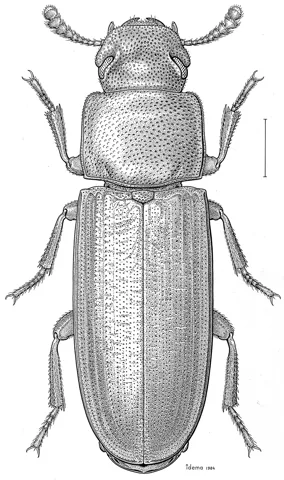 Confused Flour Beetle
Tribolium confusum
The confused flour beetle is a common pantry pest that feeds on flour, cereals, broken grain, nuts, dried fruit and many other dry foods.
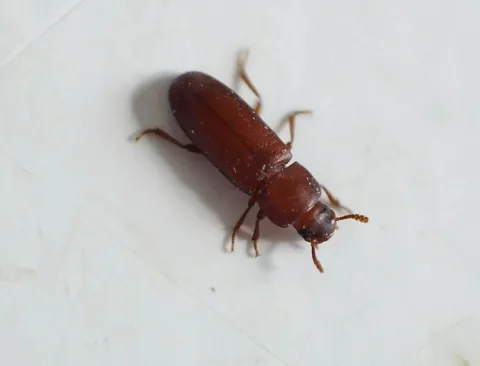 Red Flour Beetle
Tribolium castaneum
The red flour beetle is a shiny reddish-brown beetle that lives in flour, mixes and other processed or broken grain products; it can't chew into whole, sound kernels. Researchers call it a major storage pest.
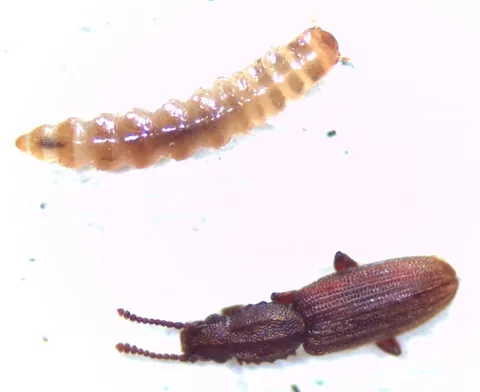 Sawtoothed Grain Beetle
Oryzaephilus surinamensis
The sawtoothed grain beetle is one of the most common beetles in home pantries; Georgia Extension rates it nearly as common as the Indianmeal moth. Both adults and larvae feed in dry foods of plant origin, and the first thing most people notice is small beetles crawling over shelves and counters.
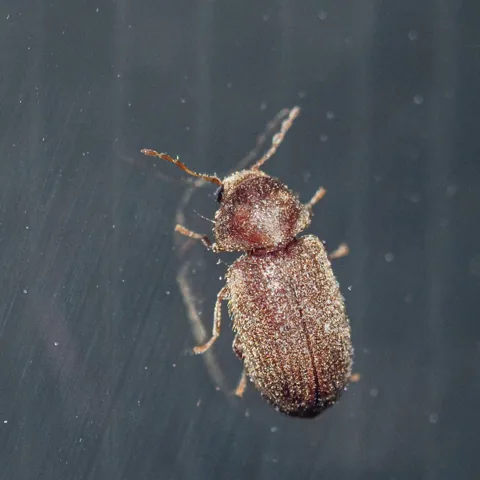 Drugstore Beetle
Stegobium paniceum
The drugstore beetle is a very general feeder said to "eat anything except cast iron"; in homes it most often infests pet food, drugs, cereals and spices.
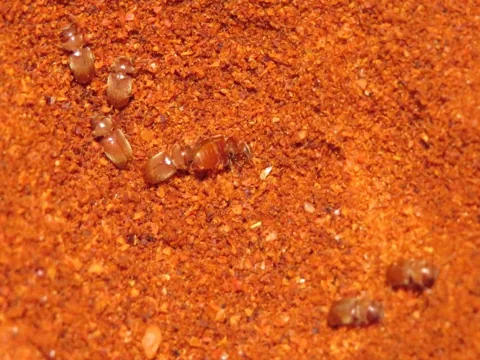 Cigarette Beetle
Lasioderma serricorne
The cigarette beetle is the most important insect pest of stored tobacco, and Texas A&M calls it the most common pantry pest in Texas. In homes its larvae feed in spices, pet food, flour, cereals and dried plant decorations.
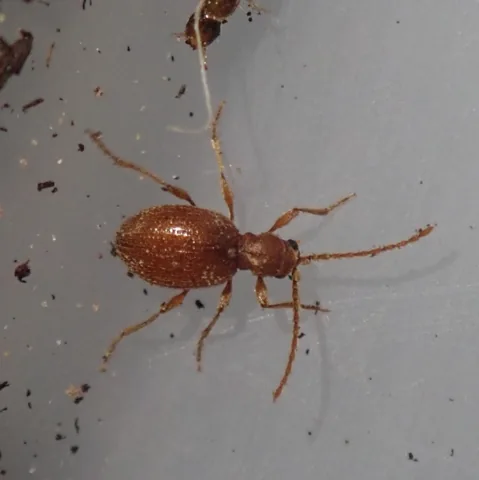 Spider Beetles
Ptinus fur
Spider beetles are small scavenging beetles in the family Ptinidae, named for their long legs and rounded, spider-like bodies; the whitemarked spider beetle is shown here. USDA's stored-grain handbook says several species turn up in grain and cereal products but are rarely abundant enough in the U.S. to cause serious damage, and Washington State University says they are usually a problem only where sanitation is very poor.
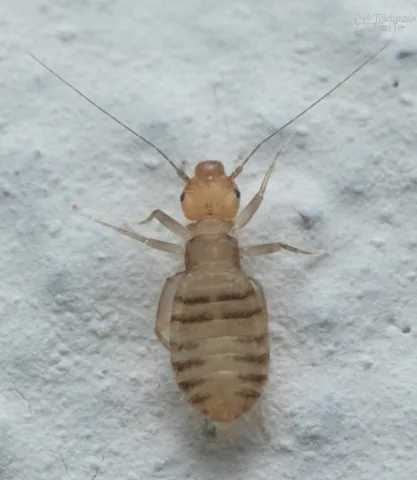 Booklice
Liposcelis species and other psocids (family Liposcelididae)
Booklice, also called psocids, are tiny insects that feed on mold and fungi. Finding them indoors usually means high humidity or a moisture problem, and drying things out is the most effective control.
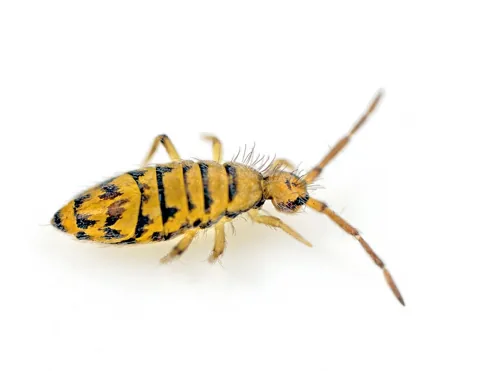 Springtail
Collembola (shown: Entomobrya sp.)
Springtails are tiny jumping creatures that sometimes appear in large numbers in moist spots indoors. They don't bite or sting and don't damage furniture or food; their presence indoors points to a moisture problem.
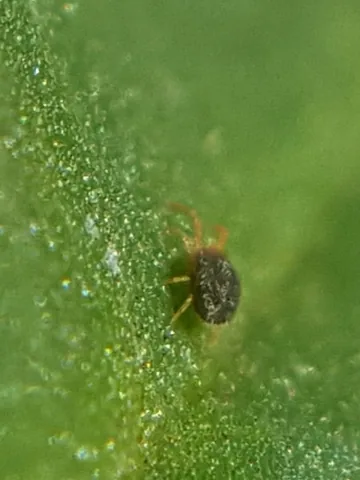 Clover Mite
Bryobia praetiosa
Clover mites are tiny plant feeders that invade homes in early spring and sometimes fall; they don't bite people or pets, don't breed indoors and soon die inside.
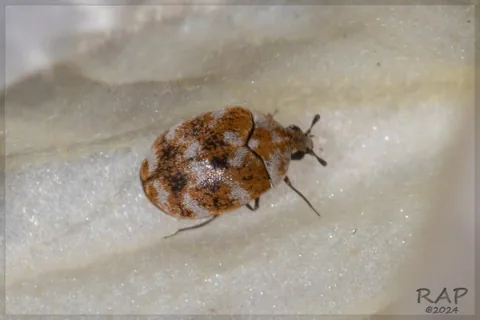 Varied Carpet Beetle
Anthrenus verbasci
Carpet beetles are small beetles whose larvae damage wool, silk, fur, feathers, leather and other animal products; the adults feed on pollen outdoors and often fly in through windows.
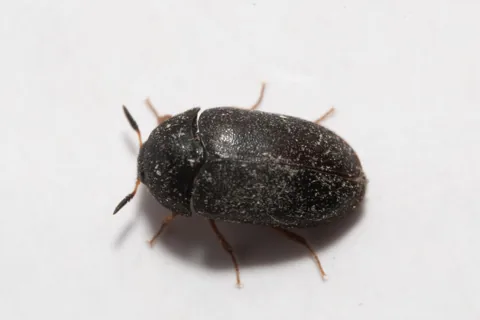 Black Carpet Beetle
Attagenus unicolor
The black carpet beetle is a shiny black carpet beetle whose larvae feed on wool, fur, feathers and other animal products, plus grains and other stored foods. In dry areas such as California, it is more often a pantry pest than a fabric pest. Colorado State Extension calls it one of the most common dermestid beetles.
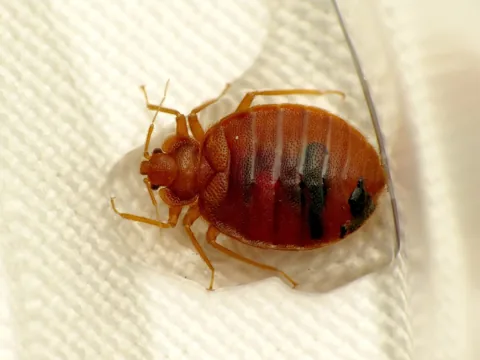 Bed Bug
Cimex lectularius
Bed bugs are wingless, blood-feeding insects that feed on sleeping or resting people, mostly at night; they have resurged worldwide and now turn up even in the finest hotels. CDC says they turn up in five-star hotels and resorts, and how clean a place is does not determine whether bed bugs are present.
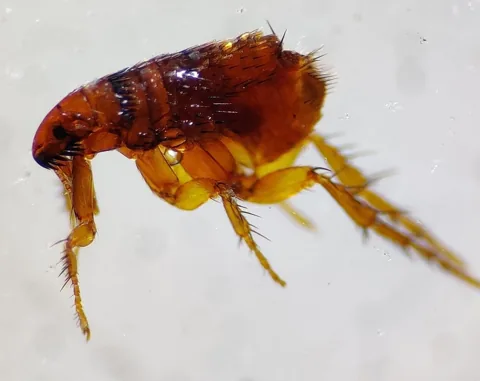 Cat Flea
Ctenocephalides felis
The cat flea is the most common external parasite of domestic cats and dogs, and the flea most often found on both. Adults spend most of their time on the pet, while eggs, larvae and pupae build up wherever the pet rests.
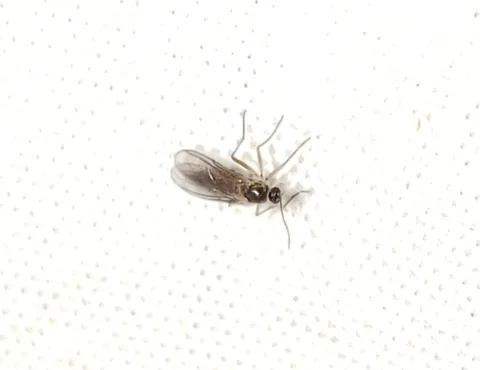 Fungus Gnat
Bradysia and related species
Fungus gnats are small flies whose larvae live in moist potting mix and organic matter. Indoors the adults emerge from houseplants and become a nuisance; they don't bite, and Colorado State calls the larvae minor pests of houseplants.
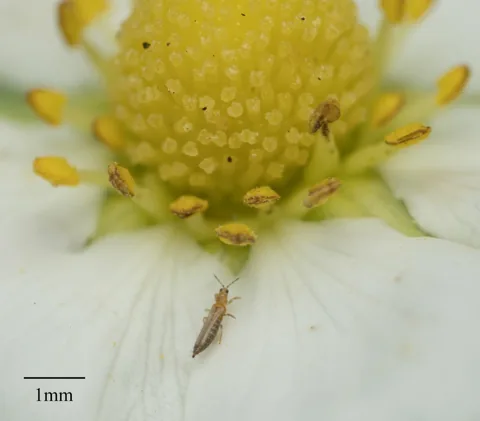 Western Flower Thrips
Frankliniella occidentalis
Western flower thrips are slender yellow to dark brown insects, about 1/16 inch long or smaller, that feed in flowers and buds and on fruit and leaves. Their feeding leaves silvery or pale scars and distorted growth, and they spread tospoviruses such as tomato spotted wilt and impatiens necrotic spot.
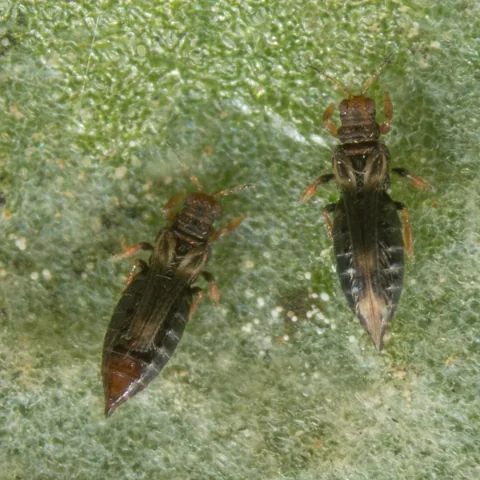 Banded greenhouse thrips
Hercinothrips femoralis
The banded greenhouse thrips, Hercinothrips femoralis, is a tiny thrips that lives outdoors on shrubs, flowers, vegetables and weeds and sometimes gets indoors onto house plants. Colonies of its pale larvae feed on the undersides of leaves and leave them scarred and discolored. It is also called the sugar beet thrips, because it is thought to have reached the United States on sugar beets.
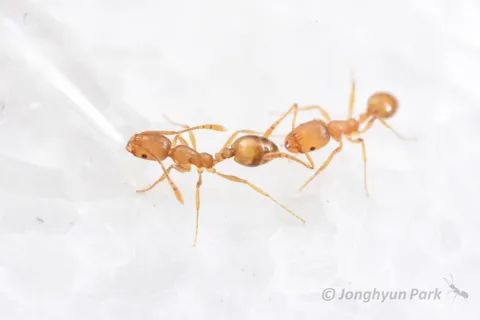 Pharaoh Ant
Monomorium pharaonis
The Pharaoh ant is a tiny, yellowish ant that nests inside heated buildings and is a serious pest in hospitals, apartments, hotels and food businesses. Texas A&M says it occurs throughout the United States but generally only in heated buildings, because it usually can't survive outdoors all year; it does nest outside in subtropical areas such as Hawaii, Florida and southern Texas.
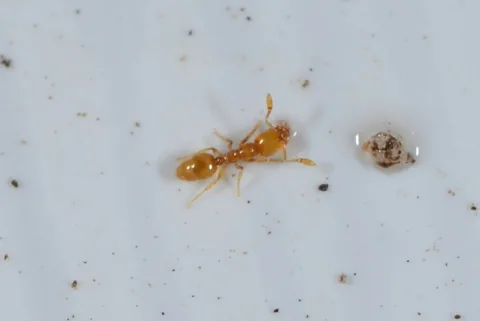 Thief Ant
Solenopsis molesta
The thief ant is a tiny native ant named for nesting near larger ants and stealing their food, larvae and pupae. Also called the grease ant, it trails indoors to greasy and protein-rich foods and is small enough to get into packaged food.
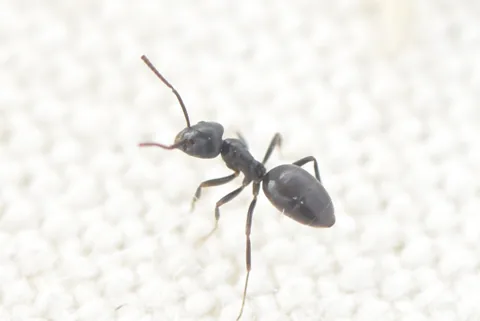 Odorous House Ant
Tapinoma sessile
The odorous house ant is a small native ant found across most of the United States that trails into homes for sweets and gives off a strong, rotten odor when crushed. Texas A&M says it ranges from Canada to Mexico but is rarely found in the southwestern deserts.
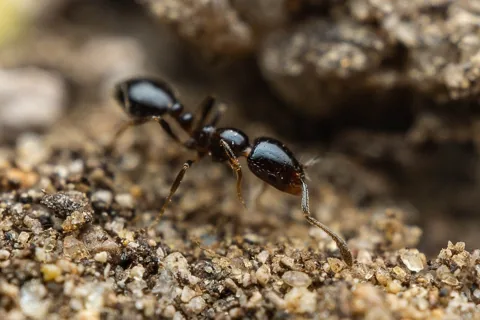 Little Black Ant
Monomorium minimum (iNaturalist files it under Monomorium carbonarium)
The little black ant is a tiny native ant that nests outdoors in lawns and under stones, and indoors in woodwork, wall voids and masonry. It is most noticeable when long foraging trails reach food cabinets and pantries.
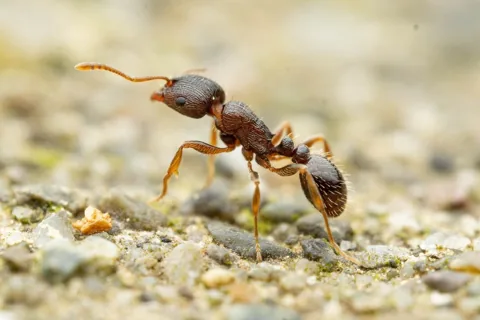 Pavement Ant
Tetramorium immigrans
The pavement ant is an introduced, soil-nesting ant that lives under sidewalks, slabs and stones. Penn State calls it one of the most commonly encountered house-infesting ants in Pennsylvania and says its range runs from New England to the Midwest and south through the Mid-Atlantic states to Tennessee, with populations in parts of California and Washington.
Quick checks before you look it up
- Does it jump? Fleas and springtails both jump. Fleas are hard and flattened side to side, so they are hard to crush; springtails have a rounder, soft body and crush easily.[13][16]
- Look at the legs. Clover mites, the tiny red mites of windowsills, have an unusually long front pair of legs.[14][15]
- Does it fly? Fungus gnats are tiny, dark, mosquito-like flies with long legs and antennae. Confused flour beetles, drugstore beetles and cigarette beetles can also fly and are drawn to light.[24][23][4]
- Look for a pinched waist. Ants have a petiole with one or two nodes, and Minnesota's key uses the node count to sort the household species.[25]
- Note where you found it. Pantry pests come from infested food that has to be found, and springtails gather where moisture is high.[4][13][8]
Kitchen and pantry
Small beetles crawling on counters, or moths flying across the room, are usually the first sign of a stored-food infestation. The insects are breeding in a food package somewhere nearby, often a forgotten, partly used box or bag at the back of a shelf.[4]
The pantry pests guide covers moths, weevils and grain mites in more depth. Use this list to put a name on the beetle.[4][3]
- Flour beetles (red and confused): shiny reddish brown, flattened and oval, about 1/7 inch long. They live in flour, meal, cereal, dried fruits, beans and other starchy foods. Confused flour beetles fly and come to lights; red flour beetles crawl toward light but apparently do not fly.[3][5][4]
- Sawtoothed grain beetle: slender, flat and brown, about 1/10 inch long, with six tooth-like points on each side of the thorax behind the head. It gets into packaged foods and can be brought home in groceries. It does not fly and is not attracted to light.[3][5][4]
- Drugstore and cigarette beetles: about 1/8 inch long, light brown and humpbacked, with the head bent down. The drugstore beetle has lengthwise grooves on its wing covers; the cigarette beetle's wing covers are smooth. Both fly and are attracted to light.[3][6][7][4]
- Where those two turn up: Kentucky finds cigarette beetles most often in dry dog food and paprika, and drugstore beetles in bread, flour, breakfast foods and spices such as red pepper. Penn State adds dried herbs, spices and dried flower arrangements for the cigarette beetle.[4][7]
- Spider beetles: small, rounded beetles with long legs that look like tiny spiders. Washington State lists them among the most common beetles in moldy, old food, and they also feed on feathers and rodent droppings.[5][10]
- Booklice (psocids) in food: tiny, pale gray or yellowish-white, wingless insects about the size of a pinhead, found in food stored under moist conditions.[5][9]
- Grain mites and meal moths are covered in the pantry pests guide.[4][5]
Tiny ants on counters and in bathrooms
Several household ants are 1/16 inch long or smaller. Color and size give you a first guess; the ant identification guide has the full key.[25][27]
- Pharaoh ant: about 1/16 inch, light yellow to reddish with a darker thorax. In the north central states it nests only indoors, in wall voids and behind baseboards and countertops. It feeds on grease, sweets and even toothpaste and soap, and seeks water in kitchens and bathrooms.[25][26]
- Thief ant: yellow to light brown, about 1/32 inch long. Minnesota calls it the smallest household ant in the north central states. It is so like the pharaoh ant that a microscope is often needed to tell them apart.[25][27]
- Odorous house ant: brown to dark brown, about 1/10 to 1/8 inch long. Crushed workers give off a smell some people compare to rotten coconut or blue cheese.[25][28]
- Little black ant: shiny black, about 1/16 inch long.[29]
- Pavement ant: reddish brown to black, about 1/8 inch, with a pair of small spines on the back of the thorax.[25]
- Why the name matters: for pharaoh ants, sprays and dusts can make the colony split into new nests (budding), so baits are the main tool and a professional is recommended.[25][26]
Bathrooms, basements and other damp spots
Tiny bugs that show up in sinks, tubs, showers and basements are usually there for the moisture or for the mold that grows with it.[11][12][8]
- Springtails: wingless, about 1/16 inch, whitish, bluish, gray or black, and they jump several inches when disturbed using a forked tail tucked under the body. UC IPM notes they can appear in large numbers in kitchen sinks and bathtubs.[11][13]
- What springtails mean: high moisture. They feed on mold, fungi and decaying plant matter, don't bite people or pets, and don't damage food or furniture. Minnesota says they are usually a temporary problem that ends when the moisture is reduced.[11][13][12]
- Booklice: soft-bodied, about 1 to 2 mm long, tan, grayish, brown or nearly clear (Washington State also lists white and cream). They live in humid, dark places on moldy paper, books, wallpaper and stored grain, and feed on mold.[8][9]
- What booklice mean: humidity. Penn State says booklice do not bite and do not carry disease, and keeping relative humidity below 50% prevents both mold and booklouse development.[8]
- Pharaoh ants also come to bathrooms looking for water (see the ant section above).[25]
Bed and bedroom
Tiny bugs on bedding call for a careful look, because one of the possibilities is the bed bug. The bed bug look-alikes guide goes deeper on telling them apart.[20][18]
- Bed bug adults: about 3/16 inch, reddish brown, flat and oval, close to an apple seed in color and a lentil in size. They don't fly or jump.[20]
- Bed bug nymphs: smaller and lighter than adults, translucent or whitish yellow, from about 1.5 mm at first to 4.5 mm in the last stage before adulthood.[18][20]
- Bed bug signs: dark spots of excrement on sheets and mattress seams that may bleed into the fabric like a marker, plus shed skins.[19][18]
- Fleas: reddish-brown, wingless, no larger than 1/8 inch and flattened side to side, so they look as if they walk on edge. They jump onto pets and people.[16][17]
- Flea signs: dark, pepper-like specks of flea feces in a pet's fur. Flea larvae are hairy and wormlike, no larger than 3/16 inch, and live in carpet and furniture.[17][16]
- Carpet beetle larvae: about 1/8 to 1/4 inch, tan to brown, hairy and slow-moving. Look for them, their bristly shed skins and damage on wool, fur, silk, feathers or leather.[2][1]
- Booklice can be mistaken for bed bugs too. Penn State notes they are sometimes confused for bed bugs because they are flattened, but an adult bed bug is about three times as long.[8]
Windowsills
Several small insects that get indoors are drawn to light, so windowsills collect them.[1][11][4]
- Carpet beetle adults: small, round beetles about 1/16 to 1/8 inch with short antennae, black or mottled with white, brown, yellow and orange. Adults feed on pollen outdoors and fly in through open windows and doors. Finding them on a sill is a reason to check wool and other animal-fiber items for larvae.[2][1]
- Clover mites: smaller than a pinhead (Penn State gives 0.75 mm), reddish or greenish, with a very long front pair of legs. Colorado State says they are often described as walking dust specks and that they almost always come in on the sun-exposed south and west sides of a house.[14][15]
- What clover mites mean: a nuisance, not a danger. They don't bite people or feed on furnishings and don't reproduce indoors. Colorado State says spring invasions end on their own by late May or early June. Vacuum them instead of crushing them, since crushed mites leave rusty red stains.[14][15]
- Other sill visitors: fungus gnats are drawn to light and often get noticed at windows first. Drugstore, cigarette and confused flour beetles are also attracted to light, so beetles on a kitchen windowsill can point back to the pantry.[23][4]
Houseplants and potting soil
Most tiny bugs around houseplants come from soil that stays wet.[23][24][13]
- Fungus gnats: delicate black flies about 1/8 inch long with long legs and antennae, resting on soil, leaves, windows and walls. The larvae are translucent with a black head and live in the top 2 to 3 inches of potting mix. Adults don't bite and are mainly a nuisance; large numbers of larvae can damage the roots of seedlings and young plants.[24][23]
- Springtails: tiny jumpers in the soil of overwatered houseplants, especially soil that stays very damp or has a lot of peat. They rarely harm plants.[13][11]
- Thrips: slender insects less than 1/20 inch long, from translucent white or yellowish to dark brown or black. Feeding leaves tiny pale spots (stippling) and papery, distorted leaves. NC State says the banded greenhouse thrips, which gets indoors onto houseplants, also bites people, causing minor itching.[21][22]
- The fix for gnats and springtails is the same: let the top 1 to 2 inches of soil dry between waterings and don't overwater. A 1/4 inch slice of raw potato pressed into the soil draws fungus gnat larvae within a few days, which tells you whether the pot is the source.[24][23][13]
Tiny bugs by color
Color varies with age, species and lighting, so use it with the place you found the bug, not alone.[1][21]
- Black or dark: little black ants, fungus gnats, black carpet beetle adults, many springtails, and dark adult thrips. Odorous house ants are brown to dark brown, and pavement ants reddish brown to black.[29][24][2][13][21][25]
- Brown or reddish brown: the pantry beetles (flour, sawtoothed grain, drugstore and cigarette beetles), fleas, bed bug adults, carpet beetle larvae, and tan booklice.[4][16][20][2][8]
- Red: clover mites, which leave a rusty red smear when crushed. Pharaoh ants are yellowish to reddish, and red flour beetles are reddish brown.[14][15][25][3]
- White, cream or see-through: booklice, young springtails, young bed bugs, and fungus gnat larvae in potting soil. Pantry beetle larvae are pale too but usually stay inside the food.[9][5][11][18][23][4]
- Yellow: thief ants and pharaoh ants are yellow to light brown, and banded greenhouse thrips females start out mostly yellow before darkening to brown or black.[25][27][22]
What to do next
- Pantry beetles or spider beetles: find and throw out every infested package, vacuum the shelves top and bottom and their cracks, and keep dry foods in containers that seal tightly. UC IPM does not recommend insecticides for pantry pests.[4][3][10]
- Springtails or booklice: dry things out. Use a dehumidifier or air conditioning, fix leaks, remove mold and mildew, and let houseplant soil dry between waterings.[12][13][8]
- Clover mites: vacuum, then keep a plant-free strip about three feet wide along sun-facing foundations and seal cracks around windows.[15]
- Possible bed bugs: check mattress seams and bed frames for live bugs, dark spots and shed skins. EPA says your state cooperative extension office may be able to help identify it.[19][18]
- Fleas: treat the pet, then wash pet bedding and vacuum carpets, especially under furniture.[17][16]
- Carpet beetles: track down the food source (an old wool item, stored rug, or a bird or rodent nest), then clean, launder or discard it and vacuum lint and hair.[2][1]
- Ants: match the ant first. Pharaoh ants need baits rather than sprays; for the others, the ant guide gives bait and nest advice.[25][26]
Common questions
- What are the tiny black bugs in my house?
- Near houseplants, they are most likely fungus gnats (if they fly) or springtails (if they jump). Tiny, shiny black ants may be little black ants. On windowsills, black carpet beetles. Check where you found them and whether they fly, jump or crawl.[24][13][29][2]
- What are the tiny brown bugs in my kitchen?
- Most often pantry beetles: flour, sawtoothed grain, drugstore or cigarette beetles, all about 1/8 inch and reddish brown. Find the infested package; killing the beetles you see doesn't solve it.[4][3]
- What are the tiny red bugs on my windowsill?
- Usually clover mites, which come in from lawns on sunny sides of the house in spring and fall. They don't bite and don't breed indoors. Vacuum them up, because crushing leaves a red stain.[15][14]
- What are the tiny white bugs in my bathroom?
- Booklice or young springtails. Booklice are soft and pale and crawl; springtails jump. Both feed on mold and point to high humidity.[8][9][11]
- What tiny bugs jump?
- Fleas and springtails. Fleas are hard, narrow and found on pets; springtails are soft, live in damp spots and don't bite.[13][16]
Photo credits
- Confused Flour Beetle: Bousquet et al. 2018, Catalogue of Tenebrionidae of North America, ZooKeys 728, Figure 30 (CC BY 4.0) — via Wikimedia Commons, CC BY 4.0
- Red Flour Beetle: (c) Roman, some rights reserved (CC BY) — via iNaturalist, CC BY 4.0
- Sawtoothed Grain Beetle: (c) aubrey_moore, some rights reserved (CC BY) — via iNaturalist, CC BY 4.0
- Drugstore Beetle: (c) Arsen Vorobei, some rights reserved (CC BY) — via iNaturalist, CC BY 4.0
- Cigarette Beetle: (c) Ezequiel Vera, some rights reserved (CC BY) — via iNaturalist, CC BY 4.0
- Spider Beetles: (c) agujaceratops, some rights reserved (CC BY) — via iNaturalist, CC BY 4.0
- Booklice: (c) Luis Fernando Valdez Ojeda, some rights reserved (CC BY) — via iNaturalist, CC BY 4.0
- Springtail: AJ Cann, public domain (CC0), via iNaturalist
- Clover Mite: (c) Alexis Tinker-Tsavalas, some rights reserved (CC BY) — via iNaturalist, CC BY 4.0
- Varied Carpet Beetle: (c) RAP, some rights reserved (CC BY) — via iNaturalist, CC BY 4.0
- Black Carpet Beetle: (c) Поляков Александр, some rights reserved (CC BY) — via iNaturalist, CC BY 4.0
- Bed Bug: (c) Katja Schulz, some rights reserved (CC BY) — via iNaturalist, CC BY 4.0
- Cat Flea: (c) Thomas Gyselinck, some rights reserved (CC BY) — via iNaturalist, CC BY 4.0
- Fungus Gnat: (c) aispinsects, some rights reserved (CC BY) — via iNaturalist, CC BY 4.0
- Western Flower Thrips: Jesse Rorabaugh, public domain (CC0), via iNaturalist
- Banded greenhouse thrips: Jesse Rorabaugh, public domain (CC0), via iNaturalist
- Pharaoh Ant: (c) Jonghyun Park, some rights reserved (CC BY) — via iNaturalist, CC BY 4.0
- Thief Ant: (c) Elias Freyhof, some rights reserved (CC BY) — via iNaturalist, CC BY 4.0
- Odorous House Ant: Thompson Hyggen, public domain (CC0), via iNaturalist
- Little Black Ant: (c) Jake Nitta, some rights reserved (CC BY) — via iNaturalist, CC BY 4.0
- Pavement Ant: (c) Jake Nitta, some rights reserved (CC BY) — via iNaturalist, CC BY 4.0
Sources
- University of California Statewide IPM Program, “Pest Notes: Carpet Beetles (Home and Landscape).” ipm.ucanr.edu/home-and-landscape/carpet-beetles/ (accessed 2026-11-10)
- University of Kentucky Entomology, “ENTFACT-601: Carpet Beetles.” entomology.mgcafe.uky.edu/ef601 (accessed 2026-11-10)
- University of California Statewide IPM Program, “Pest Notes: Pantry Pests (Home and Landscape).” ipm.ucanr.edu/home-and-landscape/pantry-pests/ (accessed 2026-11-10)
- University of Kentucky Entomology, “ENTFACT-612: Stored Product Pests in the Pantry.” entomology.mgcafe.uky.edu/ef612 (accessed 2026-11-10)
- University of Missouri Extension, “G7370: Insect Pests of Stored Products.” extension.missouri.edu/publications/g7370 (accessed 2026-11-10)
- Penn State Extension, “Drugstore Beetle.” extension.psu.edu/drugstore-beetle (accessed 2026-11-10)
- Penn State Extension, “Cigarette Beetle.” extension.psu.edu/cigarette-beetle (accessed 2026-11-10)
- Penn State Extension, “Booklice.” extension.psu.edu/booklice (accessed 2026-11-10)
- Washington State University Pestsense, “Psocids (booklice or barklice).” pestsense.cahnrs.wsu.edu/fact-sheet/psocids-booklice-or-barklice/ (accessed 2026-11-10)
- Washington State University Pestsense, “Spider beetle.” pestsense.cahnrs.wsu.edu/fact-sheet/spider-beetle/ (accessed 2026-11-10)
- University of California Statewide IPM Program, “Pest Notes: Springtails (Home and Landscape).” ipm.ucanr.edu/home-and-landscape/springtails/ (accessed 2026-11-10)
- Penn State Extension, “Springtails.” extension.psu.edu/springtails (accessed 2026-11-10)
- University of Minnesota Extension, “Springtails.” extension.umn.edu/nuisance-insects/springtails (accessed 2026-11-10)
- Penn State Extension, “Clover Mites.” extension.psu.edu/clover-mites (accessed 2026-11-10)
- Colorado State University Extension, “Clover Mites and Other Mites of Turfgrass, Fact Sheet 5.505.” extension.colostate.edu/topic-areas/insects/clover-and-other-mites-of-turfgrass-5-505/ (accessed 2026-11-10)
- University of California Statewide IPM Program, “Pest Notes: Fleas (Home and Landscape).” ipm.ucanr.edu/home-and-landscape/fleas/ (accessed 2026-11-10)
- University of Kentucky Entomology, “ENTFACT-602: Flea Control and Prevention.” entomology.mgcafe.uky.edu/ef602 (accessed 2026-11-10)
- U.S. Environmental Protection Agency, “Bed Bugs Appearance and Life Cycle.” www.epa.gov/bedbugs/bed-bugs-appearance-and-life-cycle (accessed 2026-11-10)
- U.S. Environmental Protection Agency, “How to Find Bed Bugs.” www.epa.gov/bedbugs/how-find-bed-bugs (accessed 2026-11-10)
- University of Kentucky Entomology, “ENTFACT-636: Bed Bugs.” entomology.mgcafe.uky.edu/ef636 (accessed 2026-11-10)
- University of California Statewide IPM Program, “Pest Notes: Thrips (Home and Landscape).” ipm.ucanr.edu/home-and-landscape/thrips/ (accessed 2026-11-10)
- NC State Extension, “Banded Greenhouse Thrips.” content.ces.ncsu.edu/banded-greenhouse-thrips (accessed 2026-11-10)
- University of California Statewide IPM Program, “Pest Notes: Fungus Gnats (Home and Landscape).” ipm.ucanr.edu/home-and-landscape/fungus-gnats/ (accessed 2026-11-10)
- Colorado State University Extension, “Fungus Gnats as Houseplant and Indoor Pests, Fact Sheet 5.584.” extension.colostate.edu/topic-areas/insects/fungus-gnats-as-houseplant-and-indoor-pests-5-584/ (accessed 2026-11-10)
- University of Minnesota Extension, “Ants.” extension.umn.edu/insects-infest-homes/ants (accessed 2026-11-10)
- Texas A&M Urban and Structural Entomology Program, “Pharaoh Ant, Monomorium pharaonis.” urbanentomology.tamu.edu/urban-pests/ants/pharoah/ (accessed 2026-11-10)
- Texas A&M Urban and Structural Entomology Program, “Thief Ant, Solenopsis molesta.” urbanentomology.tamu.edu/urban-pests/ants/thief/ (accessed 2026-11-10)
- Texas A&M Urban and Structural Entomology Program, “Odorous House Ant, Tapinoma sessile.” urbanentomology.tamu.edu/urban-pests/ants/odorous-house-ant/ (accessed 2026-11-10)
- Texas A&M Urban and Structural Entomology Program, “Little Black Ant, Monomorium minimum.” urbanentomology.tamu.edu/ants/little_black/ (accessed 2026-11-10)