The short answer
- Name the pest first. Each one needs a different fix: ants need baits, German cockroaches need baits plus cleanup, pantry pests need the infested food found and thrown out, and small flies need their breeding spot removed.[5][2][8][12]
- Find the source rather than chasing the bugs you see. Kentucky says the answer to stored-food pests is finding and destroying every infested product, and Texas A&M says fly control works best when breeding sites are found and removed.[9][12]
- Seal up food. UC IPM, Minnesota Extension and CDC all say to keep food in containers with tight lids made of glass, metal or plastic; UC IPM specifies containers, not plastic bags.[8][5][4][14]
- Don't spray on or near food. UC IPM says insecticides aren't recommended for pantry pests and that spraying near food may cause more harm than the pests. For ants and cockroaches, extension sources recommend baits over sprays.[8][5][2]
Kitchen pest profiles
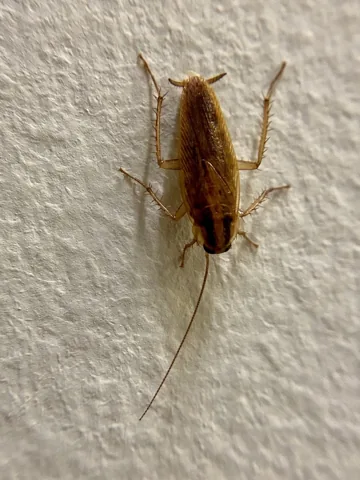 German Cockroach
Blattella germanica
The German cockroach is the most common cockroach living indoors in California and perhaps worldwide, especially in apartment buildings, and it has the fastest reproductive cycle of the common pest cockroaches. Penn State and Kentucky call it the most common cockroach in homes, apartments and other buildings, and Kentucky says it does not live outdoors.
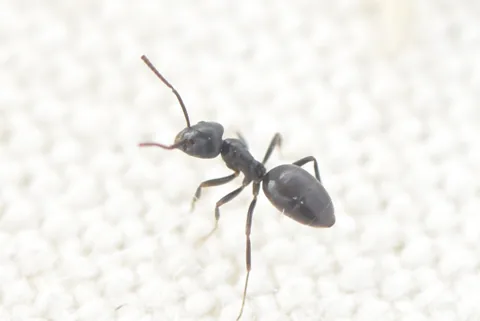 Odorous House Ant
Tapinoma sessile
The odorous house ant is a small native ant found across most of the United States that trails into homes for sweets and gives off a strong, rotten odor when crushed. Texas A&M says it ranges from Canada to Mexico but is rarely found in the southwestern deserts.
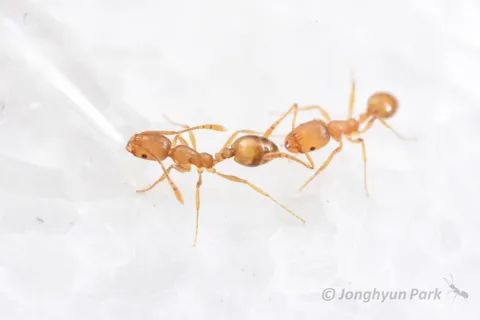 Pharaoh Ant
Monomorium pharaonis
The Pharaoh ant is a tiny, yellowish ant that nests inside heated buildings and is a serious pest in hospitals, apartments, hotels and food businesses. Texas A&M says it occurs throughout the United States but generally only in heated buildings, because it usually can't survive outdoors all year; it does nest outside in subtropical areas such as Hawaii, Florida and southern Texas.
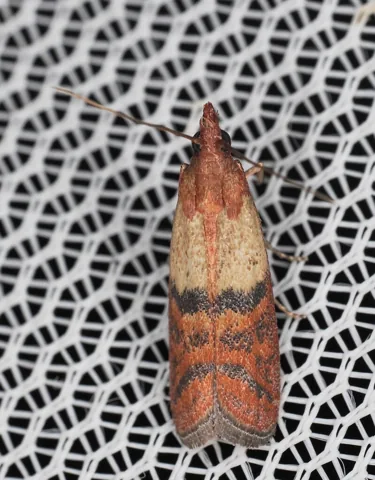 Indianmeal Moth
Plodia interpunctella
The Indianmeal moth is the most common moth infesting stored food in the home; all damage is done by the larvae, which feed in cereals, flour, nuts, dried fruit, chocolate and pet food.
 Sawtoothed Grain Beetle
Oryzaephilus surinamensis
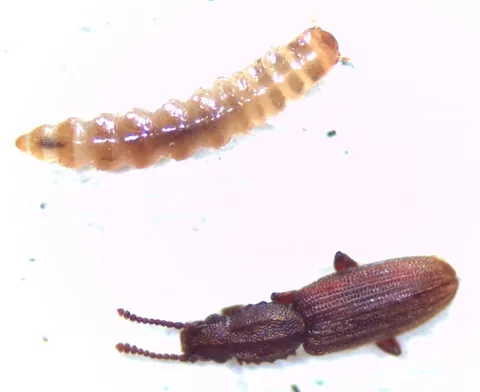
The sawtoothed grain beetle is one of the most common beetles in home pantries; Georgia Extension rates it nearly as common as the Indianmeal moth. Both adults and larvae feed in dry foods of plant origin, and the first thing most people notice is small beetles crawling over shelves and counters.
 Red Flour Beetle
Tribolium castaneum
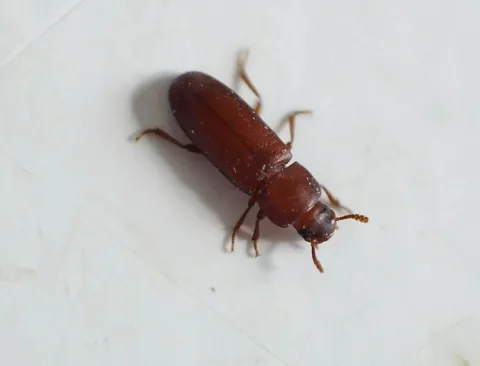
The red flour beetle is a shiny reddish-brown beetle that lives in flour, mixes and other processed or broken grain products; it can't chew into whole, sound kernels. Researchers call it a major storage pest.
 Drugstore Beetle
Stegobium paniceum
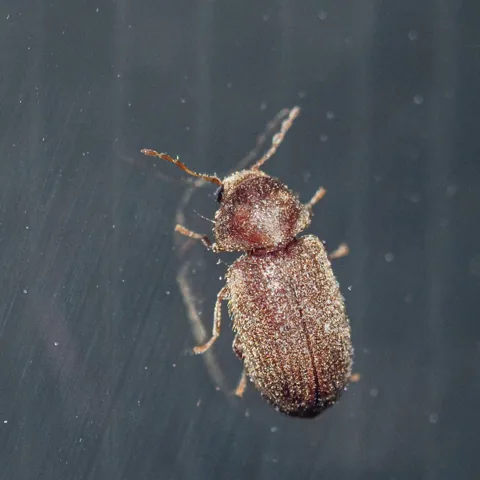
The drugstore beetle is a very general feeder said to "eat anything except cast iron"; in homes it most often infests pet food, drugs, cereals and spices.
 Fruit Fly
Drosophila melanogaster
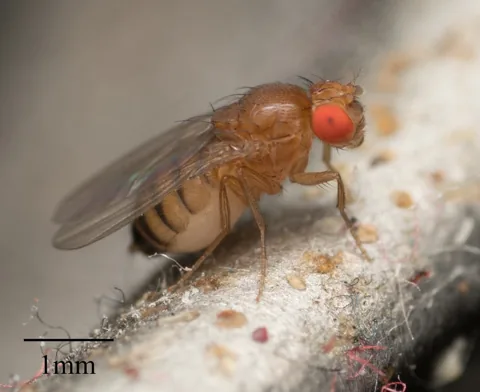
Fruit flies, also called vinegar or pomace flies, are tiny flies drawn to ripe and fermenting fruits and vegetables. They can show up any time of year, but they are most common from summer into fall.
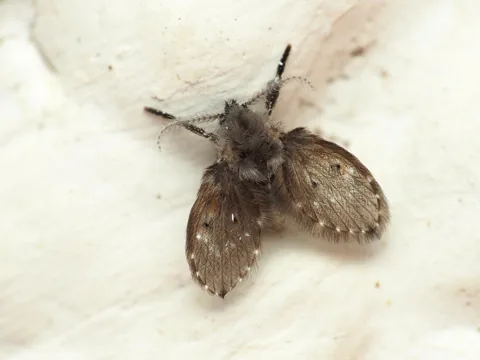 Drain Fly (Moth Fly)
Psychodidae (shown: Clogmia albipunctata)
Drain flies, also called moth flies or filter flies, are small, fuzzy, non-biting flies whose larvae live in the slimy film inside drains, toilets and other places where water stands.
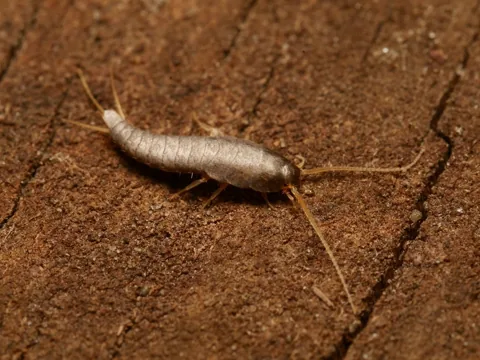 Silverfish
Lepisma saccharinum
Silverfish are nocturnal, wingless insects that hide by day and graze at night on paper, book bindings, starch in clothing and dry foods, preferring damp, warm places such as laundry rooms.
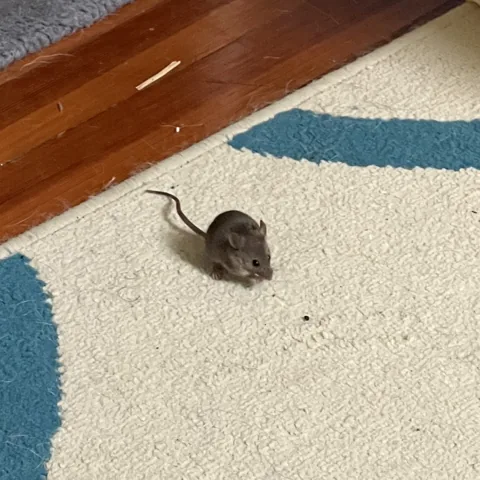 House Mouse
Mus musculus
The house mouse is a small, adaptable rodent that lives close to people in homes, schools and food businesses, eating and contaminating food, gnawing wiring and carrying disease.
Where did you see it?
Use the spot as a first guess, then confirm the identification on the pest's own guide. Several pests overlap, so check the next spot down too.[1][2]
- Trailing across the counter or along the backsplash: ants. Minnesota Extension says ants follow regular routes to and from the nest along a chemical trail, and some species nest indoors behind moldings, baseboards and countertops. See the ant section below.[6]
- Running for cover when the light goes on, near the sink, stove, dishwasher or refrigerator: most likely German cockroaches. Penn State says German cockroaches are usually found in kitchens near dishwashers, stoves and sinks. Kentucky lists cracks under sinks, the spaces behind refrigerators, dishwashers and stoves, near trash containers and inside cabinets and pantries.[3][2]
- Inside the toaster oven, coffee maker or other warm appliances: also German cockroaches. Kentucky says they gather in clocks, toaster ovens and other heat-producing electronic equipment.[2]
- Small beetles on the counter or pantry shelf, or moths flying around the kitchen: stored-food pests. UC IPM says you might not notice them until you see moths flying around the kitchen or beetles crawling in your food. See the pantry section below.[8][9]
- Caterpillars climbing walls or crossing the ceiling: usually Indian meal moth larvae leaving a food package to pupate. Kentucky lists caterpillars crawling up walls or across ceilings among the first signs of a pantry pest problem, and UC IPM says mature larvae can travel far from the food source.[9][8]
- Tiny flies around the fruit bowl, trash or recycling: fruit flies. Kentucky says small flies or gnats in the kitchen are probably fruit flies.[11]
- Fuzzy, moth-like little flies resting on the wall near the sink: drain flies. Texas A&M says they're dark gray to black, found near sinks and tubs, and usually fly only a few feet at a time.[12]
- Silvery, wingless insects in a cabinet at night: silverfish, or firebrats if it's near the stove or oven. UC IPM says both feed on dry foods such as cereals, flour, pasta and pet food; NC State says firebrats favor hot spots such as around stoves, furnaces and hot-water heaters.[17][18]
- Droppings in a drawer, chewed packages or nibbled food: mice. NPIC says chewing, nesting or droppings can help identify a mouse problem. See the mouse section below before you clean anything up.[16][15]
Ants on the counter
Which ant it is decides how you treat it. The ant identification guide covers all the common species; these are the ones most often tied to kitchens.[6][7]
- Odorous house ant: brown to dark brown, about 1/10 inch long, and gives off an unpleasant smell when crushed that some people compare to rotten coconut or blue cheese. Minnesota Extension says it prefers sweets, especially honeydew, and can forage indoors for sweets and other foods, including meats.[6]
- Pharaoh ant: about 1/16 inch long and light yellow to reddish brown. Ohio State says it prefers dark, warm places near hot water pipes in kitchens and bathrooms, and feeds on jellies, honey, shortening, peanut butter, fruit juices, baked goods, soft drinks and grease. It also says repellent sprays can cause the colony to split into new colonies elsewhere in the building, which is why baits are used.[7]
- Wipe trails as soon as ants show up. UC IPM says to use a sponge and soapy water to remove the scent trail; Minnesota Extension suggests a mild vinegar-and-water solution, which it says disrupts ant activity only temporarily.[5][6]
- Bait rather than spray. UC IPM says spraying ants indoors won't prevent more from entering and sprays only give temporary control. Minnesota Extension says baits are the best way to treat an indoor nest, because workers carry the bait back and share it with the colony.[5][6]
- Take away what they came for. UC IPM says to clean up crumbs, grease and spills and store food in clean, sealed containers. Minnesota Extension adds rinsing recyclable containers before storing them.[5][6]
Cockroaches behind the appliances
The German cockroach is the one that lives and breeds in kitchens. UC IPM says it prefers food preparation areas, kitchens and bathrooms, favoring warm (70° to 75°F), humid spots close to food, water and dark hiding places. Kentucky says it often arrives in infested grocery bags, beverage cartons or furniture.[1][2]
It's a health problem, not only a nuisance. Penn State says gastroenteritis appears to be the main illness German cockroaches spread, from organisms carried on their legs and bodies and left on food and utensils. UC IPM and Kentucky say cockroach allergens are linked to asthma, especially in children.[3][1][2]
Not every roach in the kitchen lives there. UC IPM says cockroaches hide by day around water heaters, in cupboard cracks, stoves, crawl spaces and outdoor vegetation, and invade kitchens at night. The cockroach identification guide sorts the indoor breeders from the outdoor species that wander in.[1]
- Check with sticky traps. UC IPM says to put traps against walls behind large appliances and in cabinets; Minnesota Extension adds around refrigerators, stoves and sinks.[1][4]
- Bait the hiding spots. Kentucky says to place bait stations flush against the corners and edges of cabinets and countertops, slide them behind stoves and refrigerators with a broom handle, and put a station behind or under an infested appliance so roaches come out to feed. It notes the cabinets under a kitchen sink alone may need more than a dozen placements.[2]
- Baits don't mean emptying the kitchen. Kentucky says it usually isn't necessary to empty cabinets or cover food preparation surfaces before baiting.[2]
- Clean behind and under appliances. UC IPM says even tiny crumbs or liquids caught in cracks provide a food source, and to clean behind kitchen appliances.[1]
- Leave nothing out overnight. Kentucky says unwashed dishes, utensils and pet food shouldn't sit overnight; Penn State says to empty garbage each evening into a sturdy container with a tight lid.[2][3]
- Cut the clutter. Minnesota Extension calls corrugated cardboard boxes a good source of cockroach infestations and advises removing boxes, newspapers and bags.[4][1]
Bugs in the flour, cereal or spices
Pantry pests live in the food itself. UC IPM says webbing in tight places of a package or tiny holes in a container are signs of infestation, and that infested food can be contaminated with insect hairs, droppings, webbing and secretions.[8]
Kentucky lists red and confused flour beetles, sawtoothed grain beetles, drugstore and cigarette beetles and the Indian meal moth as the common pests of flour, meal, dried fruit, dry dog food and spices. Clemson says household Indian meal moth infestations are often traced to birdseed and dry pet food, so check those first.[9][10]
- Go through every package of dry food, including pet food, birdseed and spices, and throw away anything with signs of insects (UC IPM, Clemson).[8][10]
- Freeze what you want to keep or suspect. Clemson suggests freezing at 0°F, and freezing grain products for 3 days after purchase as a habit. UC IPM suggests keeping infrequently used flours, spices and grains in the freezer.[10][8]
- Vacuum the shelves, corners and crevices. Here sources differ: UC IPM says to then wash shelves with soap and water, while Clemson says not to clean cabinets with water because it may leave a pasty residue the pests like.[8][10]
- Store dry food in sealed containers. Kentucky says to move products from cardboard, paper or plastic packages into jars or other tightly sealing containers. UC IPM says to wash old containers before refilling them.[9][8]
- Keep watching. UC IPM says pantry pests can live for many weeks without food, and recommends continuing pheromone traps after the source is gone.[8]
- Skip the spray. UC IPM doesn't recommend insecticides for pantry pests. Clemson says if you do use one, choose a product labeled for pantry pests, remove all food first, treat only cracks and crevices, never surfaces used for food storage or preparation or where appliances and utensils are kept, and let it dry before putting food back.[8][10]
Small flies over the fruit bowl or sink
Two small flies account for most kitchen fly problems, and they breed in different places. Texas A&M says identifying the fly should be the first step, since each prefers slightly different breeding sites.[12]
- Fruit flies: Kentucky says they're attracted to ripened or fermenting fruit and vegetables and to rotting bananas, potatoes and onions, and also breed in drains, garbage disposals, empty bottles and cans, trash containers, mops and cleaning rags. A female can lay about 500 eggs, and Texas A&M says the life cycle can be completed in as few as 8 days.[11][12]
- Fruit fly sources people miss: Kentucky says a single rotting potato or onion, fruit juice spilled under a refrigerator, or a recycling bin that's never emptied or cleaned can breed thousands of flies. Eat, refrigerate or throw out ripe produce.[11]
- Drain flies: Texas A&M says the larvae live in the thin microbial film inside drains and can also breed in refrigerator and air conditioner condensate pans, the bottoms of garbage cans and under broken tile.[12]
- Larger flies near the trash: Minnesota Extension says house flies lay eggs mostly in garbage, and recommends cans with tight lids, tied bags and cleaning cans regularly. Blow flies appearing suddenly indoors can mean a dead animal is hidden in a wall or ceiling.[13]
Mouse droppings in drawers or cabinets
Mice in a kitchen are after the same food as the insects. CDC says rodents are drawn to food and water and to places convenient for nests, and that a mouse can fit through a hole the width of a pencil (1/4 inch).[14]
Clean droppings the safe way. CDC says not to vacuum or sweep rodent urine, droppings or nesting material. Wear rubber or plastic gloves, spray the droppings with a bleach solution (1.5 cups of household bleach in 1 gallon of water) or an EPA-registered disinfectant until very wet, let it soak 5 minutes or as the label directs, then wipe up with paper towels.[15]
- Store food in thick plastic, metal or glass containers with tight lids, clean up spills right away, and put pet food away after use instead of leaving bowls out overnight (CDC).[14]
- NPIC says to store unrefrigerated food, pet food and birdseed in jars, tins or durable plastic, and to install door sweeps and weather stripping.[16]
- Trapping, exclusion and the risks of rodenticides around children and pets are covered in the guide to mice in the house.[14][16]
Kitchen habits that keep all of them down
The same short list of habits shows up in the cockroach, ant, pantry pest, fly and rodent advice from extension and CDC. None of it replaces treatment of an active infestation, but it takes away the food and shelter the pests came for.[1][5][8][11][14]
- Wipe counters, sinks and tables with soapy water and clean up spills and crumbs, including those on the floor (Minnesota Extension, Penn State).[4][3]
- Don't leave dishes, pet food or pet water out overnight (Kentucky, Minnesota Extension, CDC).[2][4][14]
- Use trash cans with tight-fitting lids and empty them daily or each evening (UC IPM, Penn State, Minnesota Extension).[1][3][4]
- Rinse recyclables before storing them, and empty and clean the recycling bin (Minnesota Extension, Kentucky).[6][11]
- Clean under and behind the refrigerator, stove and dishwasher now and then; it's where both crumbs and cockroaches collect (UC IPM, Kentucky).[1][2]
- Check groceries, beverage cartons and cardboard as they come in, since German cockroaches and pantry pests both arrive in them (Kentucky, UC IPM, Minnesota Extension).[2][8][4]
- Seal gaps where pipes come through walls and under the sink. Penn State says caulking holes where pipes pass through is necessary in the kitchen for German cockroach control; CDC gives the 1/4-inch figure for mice.[3][14]
Common questions
- What are the tiny bugs in my kitchen?
- It depends on where they are. Tiny ants trail on counters, small beetles crawl out of flour and cereal, small flies hover over fruit or the sink drain, and silverfish hide in cabinets. Kentucky says small flies in the kitchen are probably fruit flies, and that small beetles on counters or moths flying across rooms are usually the first sign of pantry pests.[11][9][6][17]
- Why do I suddenly have bugs in my kitchen?
- Many come in with groceries or packaged food. Kentucky says German cockroaches often arrive in grocery bags and beverage cartons, and fruit fly infestations can start from produce that was already infested. UC IPM says pantry pests are usually brought home in an infested package of food.[2][11][8]
- Is it safe to spray bug spray in the kitchen?
- Sprays are the wrong tool for most kitchen pests. UC IPM says spraying near food may cause more harm than pantry pests, and that ant sprays indoors only give temporary control. Ohio State says repellent sprays can split pharaoh ant colonies. Baits are preferred for ants and German cockroaches, and Kentucky says baiting usually doesn't require emptying cabinets.[8][5][7][2]
- Can I still eat food that had bugs in it?
- UC IPM says to throw away any food that shows signs of infestation. For fruit flies, Kentucky says the larvae feed near the surface, so damaged or overripe parts of fruit and vegetables can be cut away without throwing out the rest.[8][11]
- Do cockroaches in the kitchen make people sick?
- They can. Penn State says German cockroaches appear to mainly spread gastroenteritis by carrying organisms onto food and utensils, and UC IPM and Kentucky link cockroach allergens to asthma, especially in children.[3][1][2]
Photo credits
- German Cockroach: (c) Sandra H Statner, some rights reserved (CC BY) — via iNaturalist, CC BY 4.0
- Odorous House Ant: Thompson Hyggen, public domain (CC0), via iNaturalist
- Pharaoh Ant: (c) Jonghyun Park, some rights reserved (CC BY) — via iNaturalist, CC BY 4.0
- Indianmeal Moth: (c) Rosario Douglas, some rights reserved (CC BY) — via iNaturalist, CC BY 4.0
- Sawtoothed Grain Beetle: (c) aubrey_moore, some rights reserved (CC BY) — via iNaturalist, CC BY 4.0
- Red Flour Beetle: (c) Roman, some rights reserved (CC BY) — via iNaturalist, CC BY 4.0
- Drugstore Beetle: (c) Arsen Vorobei, some rights reserved (CC BY) — via iNaturalist, CC BY 4.0
- Fruit Fly: Jesse Rorabaugh, public domain (CC0), via iNaturalist
- Drain Fly (Moth Fly): (c) Katja Schulz, some rights reserved (CC BY) — via iNaturalist, CC BY 4.0
- Silverfish: (c) Alexis Tinker-Tsavalas, some rights reserved (CC BY) — via iNaturalist, CC BY 4.0
- House Mouse: (c) Carrie Seltzer, some rights reserved (CC BY) — via iNaturalist, CC BY 4.0
Sources
- UC Statewide Integrated Pest Management Program, “Cockroaches.” ipm.ucanr.edu/home-and-landscape/cockroaches/ (accessed 2026-11-10)
- University of Kentucky Entomology, “ENTFACT-614: Cockroach Elimination in Homes and Apartments.” entomology.mgcafe.uky.edu/ef614 (accessed 2026-11-10)
- Penn State Extension, “German Cockroaches.” extension.psu.edu/german-cockroaches (accessed 2026-11-10)
- University of Minnesota Extension, “Cockroaches.” extension.umn.edu/garden-and-home/home-maintenance/household-insects/cockroaches (accessed 2026-11-10)
- UC Statewide Integrated Pest Management Program, “Ants.” ipm.ucanr.edu/home-and-landscape/ants/ (accessed 2026-11-10)
- University of Minnesota Extension, “Ants.” extension.umn.edu/insects-infest-homes/ants (accessed 2026-11-10)
- Ohio State University Extension, “Pharaoh Ant, HYG-2136 (2011).” ohioline.osu.edu/factsheet/hyg-2136 (accessed 2026-11-10)
- UC Statewide Integrated Pest Management Program, “Pantry Pests.” ipm.ucanr.edu/home-and-landscape/pantry-pests/ (accessed 2026-11-10)
- University of Kentucky Entomology, “Stored Product Pests in the Pantry.” entomology.mgcafe.uky.edu/ef612 (accessed 2026-11-10)
- Clemson Cooperative Extension Home and Garden Information Center, “Indian Meal Moth.” hgic.clemson.edu/factsheet/indian-meal-moth/ (accessed 2026-11-10)
- University of Kentucky Entomology, “ENTFACT-621: Fruit Flies.” entomology.mgcafe.uky.edu/ef621 (accessed 2026-11-10)
- Texas A&M AgriLife Extension Service, “Indoor Flies and Their Control.” agrilifeextension.tamu.edu/library/insects/indoor-flies-and-their-control/ (accessed 2026-11-10)
- University of Minnesota Extension, “Flies.” extension.umn.edu/garden-and-home/home-maintenance/household-insects/flies (accessed 2026-11-10)
- Centers for Disease Control and Prevention, “Seal Up to Prevent Rodent Infestations.” www.cdc.gov/healthy-pets/rodent-control/seal-up.html (accessed 2026-11-10)
- Centers for Disease Control and Prevention, “Clean Up After Rodents.” www.cdc.gov/healthy-pets/rodent-control/clean-up.html (accessed 2026-11-10)
- National Pesticide Information Center, “Mice.” npic.orst.edu/pest/mice.html (accessed 2026-11-10)
- UC Statewide Integrated Pest Management Program, “Silverfish and Firebrats.” ipm.ucanr.edu/home-and-landscape/silverfish-and-firebrats/ (accessed 2026-11-10)
- NC State Extension, “Silverfish and Firebrats.” content.ces.ncsu.edu/silverfish-and-firebrats (accessed 2026-11-10)