On this page
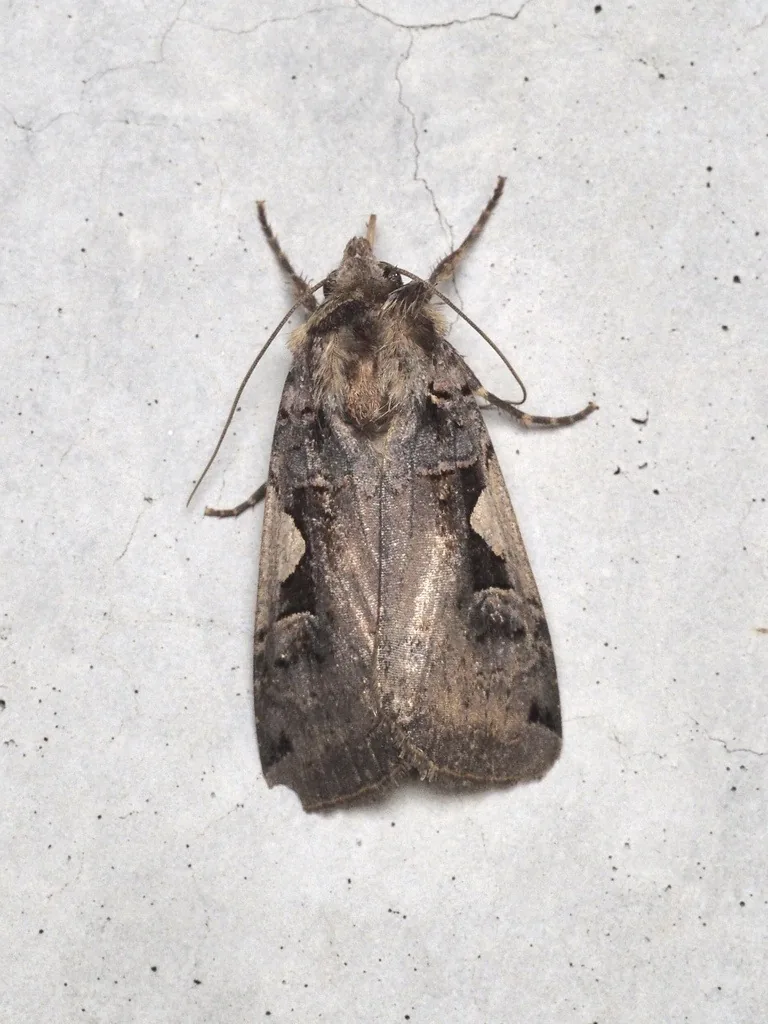
How to identify it
- Mature spotted cutworms are about 1.3 inches (3.5 cm) long and dull gray brown, with a row of dark or black triangular markings along each side of the top of the body. Most larvae are dark brown to black, though the color varies.[4][2]
- Cutworm and armyworm larvae in orchards range from dirty white to reddish, gray or black and reach up to 2 inches; the adults are large gray to brown moths with spots on the wings that are attracted to lights.[1]
- Like other cutworms and armyworms, the caterpillar has three pairs of true legs behind the head and five pairs of fleshy prolegs toward the rear, which separates it from loopers, which have only three pairs of prolegs and move in a looping, inchworm fashion.[3]
- During the day spotted cutworms stay under loose grapevine bark toward the base of the vine, or in the soil under fruit trees, so the first sign is usually damaged buds rather than the caterpillar itself.[4][1]
Look-alikes
| Look-alike | How to tell them apart |
|---|---|
| Variegated cutworm | Pale gray to dark mottled brown with red and yellow dots along the back and 1.5 to 2 inches long when mature; the spotted cutworm is shorter, dull gray brown, and marked with black triangles rather than dots.[4] |
| Bertha armyworm | Shares the orchard and potato habit and is listed with spotted cutworm on the same PNW pages; bertha armyworm larvae are highly variable, from uniform pale green to black with fine yellow lines, without the black triangles.[1][2] |
| Grape bud beetle, click beetles, branch and twig borers, orange tortrix | UC IPM notes that these insects cause similar injury to swelling grape buds, so return to damaged vines at night to confirm that cutworms are responsible.[4] |
| Black cutworm and other soil cutworms | The general cutworm page covers species that cut seedlings off at the soil line; the spotted cutworm is a climbing species that feeds on buds and leaves above ground at night.[1] |
Where it lives
A pest of pear, plum, prune, peach, mint, potato and hemp in the Pacific Northwest, where it is one of the two most serious cutworm pests of tree fruit, and of grapes in California, where it is the predominant cutworm species in the Central Coast counties and is found in all of the state's grape production areas.[1][2][3][4]
Biology and life cycle
Weeds are the preferred food of the larvae, and the eggs are typically laid on weeds in the ground cover around fruit trees. Depending on the species, climbing cutworms overwinter as pupae or as larvae in the soil.[1]
The larvae spend the day in the soil and climb the tree at night to feed, often following the same path up the trunk each night. In vineyards spotted cutworms routinely spend the day under grapevine bark in all production areas rather than returning to the ground.[1][4]
Feeding on grapevines runs from bud swell until the shoots are several inches long; once shoots are about 6 inches long, further feeding does not cause significant injury. In pears, UC IPM notes that later generations may attack fruit and foliage up to harvest.[4][5]
Natural enemies include parasitic wasps (the most important group), predaceous beetles often found under bark, tachinid flies, big-eyed bugs, damsel bugs, ground and rove beetles, birds, mammals, parasitic nematodes and pathogens.[4][3]
A commercially available pheromone lure (Z7-tetradecenyl acetate) attracts male spotted cutworm moths and can be used in traps to monitor adult flights.[3]
Damage and signs
- In orchards the caterpillars chew holes in swelling buds and ragged holes in new leaves, and also eat the growing tips, especially on small trees and in high-density plantings. On larger trees most feeding is on the lower branches and is often concentrated on a few stems while others are untouched.[1]
- In California pear districts with late bud development, spotted cutworms can appear in heavy numbers without warning and do extensive damage in a short time, destroying part or all of the blossom clusters and new leaves; the problem is usually confined to orchards where lush ground covers grow up into the trees, and it is not frequent.[5]
- On grapes, injured buds may fail to develop. Vines compensate partly through secondary buds, but in varieties such as Thompson Seedless and Chardonnay the secondary buds are unfruitful or much less fruitful, so destroyed primary buds mean proportionally fewer clusters. Infestations are normally spotty and localized.[4]
- In potatoes, damage to mature plants is usually minor and these caterpillars usually do not require control; in peppermint, larvae are scouted from late June because heavy feeding can reduce oil yield.[3][2]
Health risk
The sources describe the spotted cutworm only as a crop pest; none mentions any effect on people.[1][4]
Control
Prevention
Control weeds, grasses and debris around fruit trees and vines, since weeds are the larvae's preferred food and egg-laying site and overgrown ground covers give the caterpillars a ladder into the canopy. Removing weeds in late summer or fall can disrupt the life cycle, but do not plow or disc weeds just before or soon after bud swell where cutworms are a problem, because that drives them onto the vines.[1][5][4]
Keep them out
Trap climbing caterpillars by tying plastic wrap tightly around the trunk and lower branches and coating it with a sticky material such as Tanglefoot; remove the wraps in the fall.[1]
Traps and physical control
Scout from bud swell in early spring for chewed buds and ragged leaves, and go out at night with a flashlight to find and hand-pick the caterpillars; this also confirms that cutworms, and not beetles or leafrollers, are doing the damage. In vineyards UC IPM checks five buds on each of 20 vines, and if under 4 percent of buds are damaged treatment may be unnecessary.[1][4]
Biological control
Encourage birds, spiders and the many insect natural enemies of cutworms by avoiding broad-spectrum sprays; in vineyards, furrow or flood irrigation can bring larvae to the surface where weather and predators kill them.[1][4]
Pesticides
No chemicals are highly effective against cutworms, so treatments are often not economically justified and spot treatment of infested areas is usually enough. Home-orchard products listed for cutworms in the PNW handbook include Bacillus thuringiensis var. kurstaki, azadirachtin, spinosad and pyrethrins, with several pyrethroids and carbaryl noted as highly toxic to bees; in peppermint, however, Bt formulations have not worked against these cutworms.[4][1][2]
Common questions
- What is eating the buds on my fruit tree at night in early spring?
- Climbing cutworms such as the spotted cutworm hide in the soil by day and climb the trunk after dark to hollow out swelling buds and chew ragged holes in new leaves, often on the lower branches; look for them at night with a flashlight.[1]
- How do I tell a spotted cutworm from a variegated cutworm?
- A mature spotted cutworm is about 1.3 inches long, dull gray brown, with a row of black triangles along each side of its back; a variegated cutworm is larger, 1.5 to 2 inches, and mottled brown with red and yellow dots down its back.[4]
- Do spotted cutworms kill grapevines?
- No. They eat swelling buds and young shoots from bud swell until shoots are several inches long, which can cost clusters in varieties with unfruitful secondary buds, but once shoots reach about 6 inches further feeding is not significant.[4]
Sources
- Pacific Northwest Pest Management Handbooks (Oregon State University, Washington State University and University of Idaho), “Pear-Armyworm and cutworm, Pacific Northwest Insect Management Handbook.” pnwhandbooks.org/insect/tree-fruit/pear/pear-armyworm-cutworm (accessed 2026-11-10)
- Pacific Northwest Pest Management Handbooks (Oregon State University, Washington State University and University of Idaho), “Mint-Armyworm and cutworm, Pacific Northwest Insect Management Handbook.” pnwhandbooks.org/insect/agronomic/mint/mint-armyworm-cutworm (accessed 2026-11-10)
- Pacific Northwest Pest Management Handbooks (Oregon State University, Washington State University and University of Idaho), “Potato, Irish-Armyworm and cutworm, Pacific Northwest Insect Management Handbook.” pnwhandbooks.org/insect/vegetable/irish-potato/potato-irish-armyworm-cutworm (accessed 2026-11-10)
- University of California Statewide IPM Program, “Cutworms, UC Pest Management Guidelines: Grape.” ipm.ucanr.edu/agriculture/grape/cutworms/ (accessed 2026-11-10)
- University of California Statewide IPM Program, “Cutworms and Armyworms, UC Pest Management Guidelines: Pear (UC ANR Publication 3455).” ipm.ucanr.edu/agriculture/pear/cutworms-and-armyworms/ (accessed 2026-11-10)
- iNaturalist, “Xestia c-nigrum taxon page (order and family).” www.inaturalist.org/taxa/203342 (accessed 2026-11-10)