On this page
How to identify it
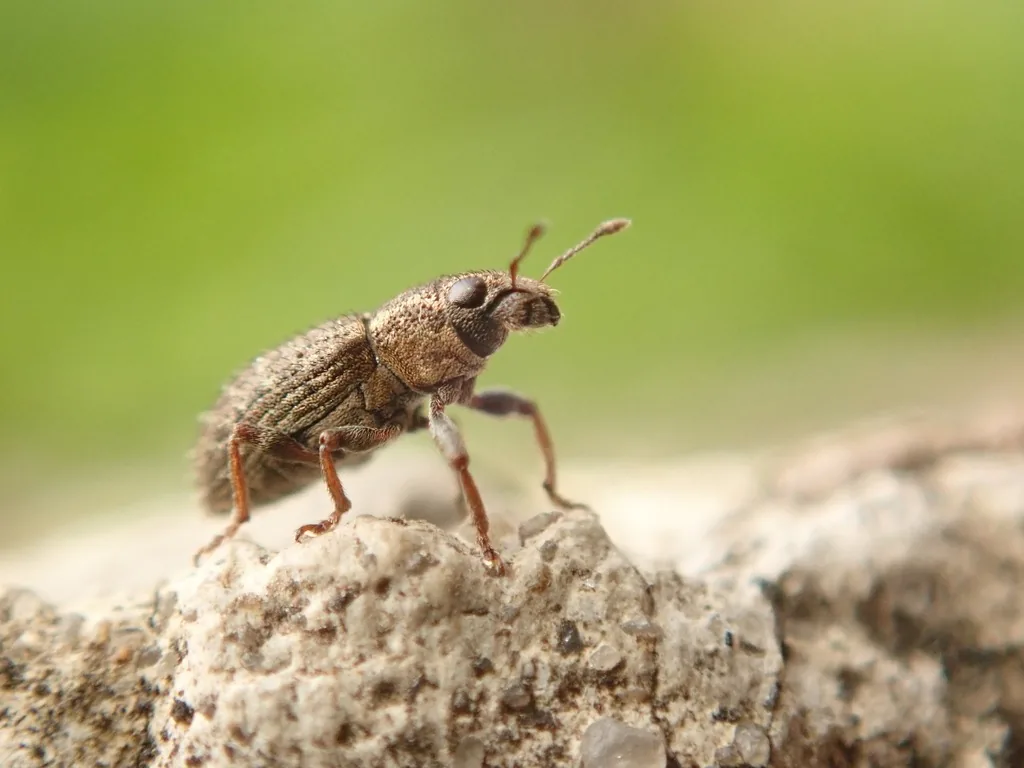
- Adults are narrow-bodied weevils about 0.2 inch long, a little smaller than alfalfa weevil adults. Kentucky describes them as dark brown to black, and UC IPM as mottled gray-brown with no distinct pattern.[1][2]
- Larvae are legless white grubs with a brown head. They live in the soil and, while small, are often inside root nodules, so they are hard to find.[1][2]
- Root injury shows as furrows and gouges chewed into the roots, sometimes girdling the taproot. Above ground, look for patches of poor growth or a declining stand.[1][2]
Look-alikes
| Look-alike | How to tell them apart |
|---|---|
| Alfalfa weevil | Alfalfa weevil adults are slightly larger. UC IPM notes the two have a similar life cycle, with adults leaving alfalfa fields to spend the summer in protected areas.[2] |
Where it lives
A recognized alfalfa pest in most U.S. growing areas. Damage has also been reported in California, where it appears to be more common in sandy soils than in heavier ones.[2]
Biology and life cycle
There is one generation a year.[1][2]
In Kentucky, adults emerge from the soil in late June and leave alfalfa and clover fields for protected areas until late August. From then through late October they crawl or fly back into nearby clover and alfalfa, lay some eggs in October and November, and go inactive for the winter.[1]
Adults become active again on the first warm days of spring. Each female lays 300 to 500 eggs, mostly from March through June, all on the soil surface and usually within about 4 inches of the center of the plant crown.[1]
Eggs begin hatching in late March or early April. The young larvae follow soil cracks down to roots or nodules and feed in the soil from April to early June, moving to larger roots as they grow and finally attacking the taproot. Most feeding happens in the top 4 inches of soil, and pupation takes place in earthen cells about 6 inches down.[1]
Adults feed on foliage, but the larvae do most of the damage. Besides alfalfa, the insect feeds on all common clovers, soybeans and some other legumes, and it prefers red and white clover.[1]
Damage and signs
- Damage is worst in young alfalfa stands planted after a legume, where large numbers of larvae are already in the soil. Established fields usually have little trouble, though heavily damaged clover and alfalfa may wilt and die in dry weather.[1]
- Kentucky research found that the injury happens in the stand's first year after both spring and fall seeding, but the stand loss does not show until the following summer. After that first round, the weevils seem to cause no more stand loss.[1]
- Larval feeding drains the plant's carbohydrate reserves during feeding and for about a month after it stops, which probably contributes to stand loss under stress such as drought or right after cutting. Kentucky puts seasonal yield loss at about 8 percent of dry weight, and stand loss can exceed 15 percent of seedlings.[1]
- The gouges in the roots give root rot diseases a way in, which can further weaken plants and stands.[1][2]
- Losses can be significant when a stand is under drought stress but do not occur when soil moisture is adequate. Damage is often heavy in parts of a field, such as the margins, and slight elsewhere.[1]
Health risk
A crop pest. Kentucky and UC IPM describe root damage to legumes only and mention no risk to people or pets.[1][2]
Control
Prevention
Rotate out of alfalfa and other legumes for at least a year. Rotating to grasses or to row crops other than soybeans removes the food for larvae left in the soil and the plants that draw adults in to lay eggs.[2][1]
Site new fields as far as practical from existing clover, alfalfa and other legumes, which supply migrating beetles. UC IPM adds that seedling roots are weaker and more easily damaged, so avoid planting alfalfa next to infested fields.[1][2]
Seed new alfalfa and red clover sites in spring rather than fall. The adults disperse into new fields during their late summer and fall flight, so spring seedings should be less susceptible.[1]
Keep stands vigorous with good irrigation and fertilization to avoid plant stress, and clean equipment when moving between fields.[2]
Pesticides
No insecticides are registered against clover root curculio larvae and there are no treatment thresholds, so cultural controls are the practical way to limit losses.[1][2]
Common questions
- Can I spray for clover root curculio?
- No insecticides are registered against the larvae. Kentucky and UC IPM both point to cultural controls, chiefly rotating out of legumes, instead.[1][2]
- Why did my new alfalfa stand thin out the summer after planting?
- Clover root curculio is one possible cause. Kentucky research found that larval damage happens in the stand's first year but the stand loss does not appear until the following summer, and it is worst in stands planted after a legume.[1]
- Does drought make the damage worse?
- Yes. Kentucky reports that losses can be significant when a stand is under drought stress but do not occur when soil moisture is adequate.[1]
Sources
- University of Kentucky Entomology Extension, “Clover Root Curculio in Alfalfa, ENTFACT-119 (L. Townsend; revised March 2026).” entomology.ca.uky.edu/ef119 (accessed 2026-11-08)
- University of California Statewide IPM Program, “Clover Root Curculio, UC IPM Pest Management Guidelines: Alfalfa.” ipm.ucanr.edu/agriculture/alfalfa/clover-root-curculio/ (accessed 2026-11-08)
- iNaturalist, “Sitona hispidulus taxon page (order and family).” www.inaturalist.org/taxa/231080 (accessed 2026-11-08)