The short answer
- EPA and CDC list no age limit for repellents with DEET, picaridin, IR3535 or 2-undecanone when used as the label directs. MedlinePlus, from the National Library of Medicine, is more cautious and says not to use repellent on infants under 2 months.[5][6][2][3][9]
- CDC says not to use products containing oil of lemon eucalyptus (OLE) or PMD on children under 3 years old. EPA notes that certain products with OLE as the only active ingredient at 30% or less have no under-3 restriction, so read the label.[1][2][5]
- An adult should put the repellent on: spray it onto your own hands, then spread it on the child. Keep it off the child's hands, eyes, mouth, cuts and irritated skin, and wash it off with soap and water once you're back inside.[1][5][2]
- For babies, CDC's first steps are clothing that covers arms and legs and mosquito netting over strollers and baby carriers.[1][3]
- Permethrin goes on clothing and gear, never on a child's skin. If you also use sunscreen, put the sunscreen on first and the repellent second.[1][3][2]
If someone may be poisoned
What the repellent is for
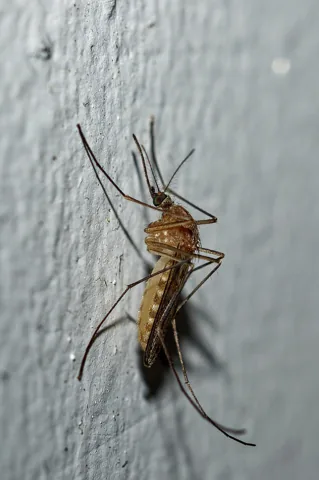 Mosquito
Culicidae (shown: Culex pipiens complex)
Mosquitoes are small, delicate flies whose females feed on blood and can pass on viruses such as West Nile; the control that works best goes after the larvae in standing water.
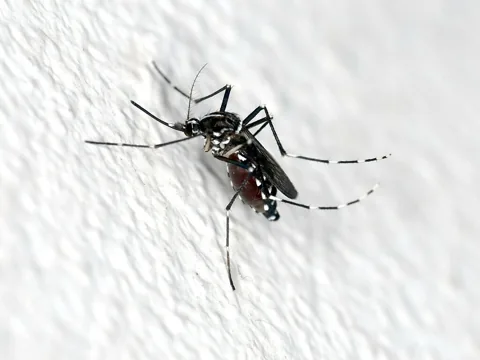 Asian Tiger Mosquito
Aedes albopictus
The Asian tiger mosquito is an invasive, aggressive mosquito that bites during the day and breeds in small water-holding containers around homes. First found at a tire dump near Houston in 1985, it spread rapidly through the southern United States and up the East Coast.
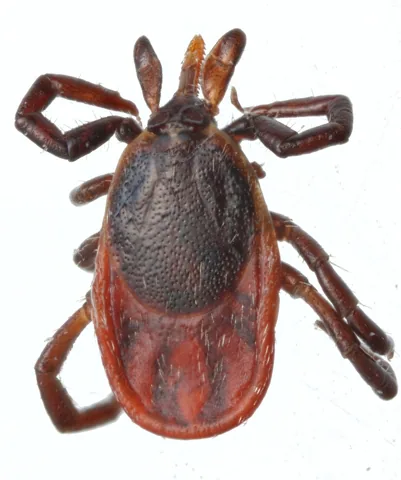 Blacklegged Tick
Ixodes scapularis
The blacklegged tick, often called the deer tick, is widely distributed across the eastern United States and transmits the bacteria that cause Lyme disease along with several other diseases.
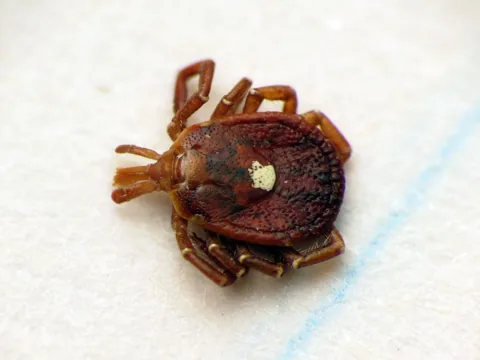 Lone Star Tick
Amblyomma americanum
The lone star tick is a very aggressive tick that readily bites people and pets across the Northeast, South and Midwest; its bite is linked to alpha-gal syndrome, a red meat allergy.
Which repellents at which age
CDC recommends EPA-registered repellents containing DEET, picaridin, IR3535, oil of lemon eucalyptus (OLE), PMD or 2-undecanone. The EPA registration number on the label means the company gave EPA data on the product's safety and effectiveness. For how these ingredients compare in general, see choosing an insect repellent.[1][2][7]
The age rules below are what the federal sources say. The product label is the final word for any one product, and EPA, CDC and MedlinePlus all tell you to follow it.[5][1][9]
- Under 2 months: EPA and CDC give no lower age limit for DEET, picaridin, IR3535 or 2-undecanone. MedlinePlus says not to use repellent on infants under 2 months of age, and its page on bug spray poisoning says DEET products probably should not be used on infants. CDC's tips for babies start with clothing and netting.[5][6][2][9][10][1]
- 2 months to 2 years: MedlinePlus says repellent should not go on the skin more than once in 24 hours at these ages. The CDC Yellow Book says to avoid applying repellent to the hands of children under 2.[9][3]
- Under 3 years: CDC says not to use products containing OLE or PMD, and the Yellow Book gives the reason as avoiding possible allergic skin reactions. EPA says some OLE product labels carry this restriction but certain products with OLE as the sole active ingredient at 30% or less do not; the CDC Yellow Book repeats that exception and tells parents to read the label.[1][2][5]
- 3 years and older: all six of CDC's recommended active ingredients can be used, following the label.[1][3]
How strong a DEET product for a child?
EPA approves DEET for children with no age restriction and no limit on the percentage. It says registration tests show no difference in effects between young and adult animals, and that it has no incident data suggesting DEET use should be restricted.[6][5]
Health sources lean toward lower strengths for young children. The CDC Yellow Book quotes the American Academy of Pediatrics as saying the lowest effective DEET concentrations, 20% to 30%, seem most prudent for infants and young children, applied sparingly. MedlinePlus says to use DEET under 30% on small children and to avoid high-concentration products on the skin unless the risk of disease is high.[3][9]
A lower percentage mostly means a shorter protection time, not a weaker repellent. The CDC Yellow Book says products under 10% may protect for only 1 to 2 hours. Its children's chapter says DEET's protection time begins to level off above 30% and that products over 50% add little protection but cause more skin irritation and other side effects; its arthropod chapter puts DEET's peak at about 50%. Pick a strength that covers the time your child will be outside and reapply as the label directs.[2][3][5]
EPA's repellent search tool lets you filter registered products by active ingredient, by mosquitoes or ticks, and by protection time.[7][1]
How to put repellent on a child
EPA asks that every repellent label carry two statements about children, because children often put their hands in their eyes and mouths: don't let children handle the product or put it on their hands, and wash the child's treated skin and clothes with soap and water, or give a bath, after coming back indoors.[5][2]
- Spray or squeeze the product onto your own hands, then spread it on the child's exposed skin. Never spray it straight onto a child's face.[1][2][5][6]
- Keep it off the child's hands, eyes, mouth, cuts and irritated skin, and use it only sparingly around the ears.[1][2][5]
- Put it only on skin that is showing or on clothing, as the label directs, not on skin under clothing.[5][1][2]
- Use just enough to cover. The Yellow Book says heavy application and saturation are generally unnecessary, and MedlinePlus says to apply it sparingly. If insects still bite through a thin film, add a little more.[2][9]
- Don't spray in enclosed areas or near food, and avoid breathing the spray.[5][6]
- MedlinePlus says to avoid putting repellent directly on sunburned skin.[9]
- Wash your own hands afterward, and wash the repellent off the child once the risk of bites is over.[2][9][5]
- Store repellents out of children's reach. EPA suggests a locked utility cabinet or garden shed.[5]
Babies: clothing, netting and shade first
For babies and children, CDC starts with clothing that covers arms and legs and mosquito netting over strollers and baby carriers. The CDC Yellow Book gives the same advice for infants traveling abroad.[1][3][2]
Where a baby sleeps matters too. The Yellow Book says children should sleep in rooms with air conditioning or screened windows, and under mosquito nets when neither is available. MedlinePlus also suggests netting around sleeping and eating areas.[3][9]
Young babies also need protection from the sun, and the two needs overlap. FDA recommends keeping babies younger than 6 months out of direct sunlight and in the shade, in clothing that covers their skin and a hat that shades the face, neck and ears. FDA says to check with your pediatrician before using sunscreen on a baby under 6 months.[11]
A stroller canopy or other shade covers the sun part; netting over the stroller or carrier covers the insects.[11][1]
Sunscreen and repellent together
Put sunscreen on first and repellent second. CDC, the CDC Yellow Book and MedlinePlus agree on the order. MedlinePlus adds a 30-minute wait before applying the repellent; CDC doesn't give a wait time.[1][3][2][9]
Skip combination sunscreen-and-repellent products. The Yellow Book says they are generally not recommended because sunscreen may need to be reapplied more often and in larger amounts than the repellent should be.[3][2]
DEET repellent can lower sunscreen protection. The Yellow Book says it can reduce the sun protection factor by as much as one-third, so children should also wear sun-protective clothing, have sunscreen reapplied, or spend less time in the sun.[3][2]
Permethrin-treated clothing for kids
Permethrin is an insecticide for clothing and gear, not skin. CDC says not to use permethrin products directly on skin, and the Yellow Book says it should be applied only to clothing, mosquito nets or other fabrics as the label directs.[1][2]
CDC suggests treating boots, clothing and camping gear with products containing 0.5% permethrin, or buying clothing that comes already treated. It stays protective through several washings. The Yellow Book says children's clothing and mosquito nets can be treated following the product instructions.[4][3][2]
EPA says the amount of permethrin allowed in factory-treated clothing is very low, that it is poorly absorbed through the skin, and that its review found no evidence of reproductive or developmental effects to mother or child.[8]
Only outer clothing is treated. EPA says permethrin products are not to be applied to items such as underwear, and labels say to wash treated clothing separately. Treated clothing protects only the skin it covers, so exposed skin still needs a skin repellent. How to treat clothing at home is covered in the permethrin clothing guide.[8]
Tick checks for children
Along with repellent, CDC suggests a full-body check after time in tick habitat, including your own backyard, and lists these places to check on a child:[4]
- under the arms, in and around the ears, inside the belly button and behind the knees[4]
- in and around the hair, between the legs and around the waist[4]
- A bath or shower soon after coming in helps too. CDC says showering within two hours of coming indoors has been shown to lower the risk of Lyme disease, and it is a good time to check for ticks.[4]
- Tumble dry outdoor clothes on high heat for 10 minutes to kill ticks on dry clothing; damp clothes need longer. If they need washing first, CDC recommends hot water.[4]
- If you find one attached, see what to do after a tick bite for removal and the symptoms to watch for.[4]
Fewer bites at home
Cutting down on mosquitoes where children play means less repellent overall. CDC suggests screens on windows and doors with holes repaired, air conditioning if you have it, and stopping mosquitoes from laying eggs in or near standing water. The yard mosquito guide has the details.[1]
Use mosquito coils with caution around children. The Yellow Book warns of burns and children swallowing them.[3]
Some products don't help. The Yellow Book says taking vitamin B or garlic and wearing sound-emitting devices or repellent-impregnated wristbands are ineffective, that the effectiveness of non-registered repellents is unknown, and that CDC doesn't recommend unformulated 'pure' oil of lemon eucalyptus essential oil, because it hasn't gone through validated safety and efficacy testing and isn't registered with EPA as a repellent.[2]
If a child reacts to repellent or swallows it
EPA says that if you suspect your child is having a reaction to a DEET product, stop using it, wash the treated skin, and call poison control or a doctor. Take the repellent container with you if you go to a doctor.[6]
MedlinePlus says DEET sprayed in the eyes, ears, nose or throat causes temporary burning and redness that usually goes away with washing, and that mild hives or redness on the skin usually clear when the product is washed off. For repellent on the skin or in the eyes, it says to flush with lots of water for at least 15 minutes.[10]
Don't make a child throw up unless poison control or a health care provider tells you to. MedlinePlus says DEET is especially dangerous for small children, that seizures may occur in small children who regularly have DEET on their skin for long periods, and that only products with smaller amounts of DEET should be used, for short periods.[10]
Poison Help, at 1-800-222-1222, answers 24 hours a day and you don't need to wait for an emergency to call. For non-emergency questions about using repellent on a child, EPA points to a health care provider or the National Pesticide Information Center at 1-800-858-7378.[10][5]
Common questions
- Can I put bug spray on my newborn?
- Sources differ. EPA and CDC set no age limit for repellents with DEET, picaridin, IR3535 or 2-undecanone used as the label directs, but MedlinePlus says not to use repellent on infants under 2 months. For a young baby, CDC's first choices are clothing over arms and legs and mosquito netting over the stroller or carrier.[5][2][9][1]
- Is DEET safe for toddlers?
- EPA approves DEET for children with no age restriction and no limit on percentage when used as the label directs. The CDC Yellow Book quotes the American Academy of Pediatrics as favoring the lowest effective concentrations, 20% to 30%, applied sparingly, for infants and young children; MedlinePlus says under 30% for small children.[6][3][9]
- Why can't kids under 3 use lemon eucalyptus repellent?
- CDC says not to use OLE or PMD products on children under 3, and the CDC Yellow Book says this is to avoid possible allergic skin reactions. EPA says certain products with OLE as the only active ingredient at 30% or less have no under-3 restriction, so check the label.[1][2][5]
- Can I use sunscreen and insect repellent on my child at the same time?
- Yes, as two separate products. Apply sunscreen first and repellent second; MedlinePlus suggests waiting 30 minutes between them. The CDC Yellow Book advises against combination products and says DEET can cut sunscreen protection by as much as one-third.[1][3][9]
- Can I spray permethrin on my child?
- Not on the skin. CDC says permethrin products should not be used directly on skin. Treat or buy treated outer clothing, shoes and gear instead, and use a skin repellent on the skin that shows.[1][2][8]
- Do repellent wristbands work for kids?
- The CDC Yellow Book lists repellent-impregnated wristbands, sound-emitting devices and taking vitamin B or garlic as ineffective.[2]
Photo credits
- Mosquito: (c) Donald Davesne, some rights reserved (CC BY) — via iNaturalist, CC BY 4.0
- Asian Tiger Mosquito: (c) Rafael Carbonell Font, some rights reserved (CC BY) — via iNaturalist, CC BY 4.0
- Blacklegged Tick: (c) Christian Back, some rights reserved (CC BY) — via iNaturalist, CC BY 4.0
- Lone Star Tick: (c) Katja Schulz, some rights reserved (CC BY) — via iNaturalist, CC BY 4.0
Sources
- Centers for Disease Control and Prevention, “Preventing Mosquito Bites (Aug. 28, 2024).” www.cdc.gov/mosquitoes/prevention/index.html (accessed 2026-11-10)
- Centers for Disease Control and Prevention, “CDC Yellow Book: Mosquitoes, Ticks, and Other Arthropods.” www.cdc.gov/yellow-book/hcp/environmental-hazards-risks/mosquitoes-ticks-and-other-arthropods.html (accessed 2026-11-10)
- Centers for Disease Control and Prevention, “CDC Yellow Book: Traveling Safely with Infants and Children (updated Dec. 8, 2025).” www.cdc.gov/yellow-book/hcp/family-travel/traveling-safely-with-infants-and-children.html (accessed 2026-11-10)
- Centers for Disease Control and Prevention, “Preventing Tick Bites.” www.cdc.gov/ticks/prevention/index.html (accessed 2026-11-10)
- U.S. Environmental Protection Agency, “Using Insect Repellents Safely and Effectively.” www.epa.gov/insect-repellents/using-insect-repellents-safely-and-effectively (accessed 2026-11-10)
- U.S. Environmental Protection Agency, “DEET.” www.epa.gov/insect-repellents/deet (accessed 2026-11-10)
- U.S. Environmental Protection Agency, “Find the Repellent that is Right for You.” www.epa.gov/insect-repellents/find-repellent-right-you (accessed 2026-11-10)
- U.S. Environmental Protection Agency, “Repellent-Treated Clothing.” www.epa.gov/insect-repellents/repellent-treated-clothing (accessed 2026-11-10)
- MedlinePlus, U.S. National Library of Medicine (NIH), “Bug repellent safety (Medical Encyclopedia, reviewed 4/5/2025).” medlineplus.gov/ency/article/001969.htm (accessed 2026-11-10)
- MedlinePlus, U.S. National Library of Medicine (NIH), “Bug spray poisoning (Medical Encyclopedia).” medlineplus.gov/ency/article/002763.htm (accessed 2026-11-10)
- U.S. Food and Drug Administration, “Should You Put Sunscreen on Infants? Not Usually (Consumer Update).” www.fda.gov/consumers/consumer-updates/should-you-put-sunscreen-infants-not-usually (accessed 2026-11-10)