The short answer
- Pick an EPA-registered skin repellent with DEET, picaridin, IR3535, oil of lemon eucalyptus, PMD or 2-undecanone. These are the six the CDC lists, and EPA's online search tool filters products by pest and protection time.[1][2][8][9]
- Higher concentrations generally protect longer, up to a point; products with less than 10% active ingredient may protect for only 1 to 2 hours.[4][10]
- Put repellent only on exposed skin or clothing, never under clothing or on cuts or irritated skin, and wash it off when you come back inside. If you also wear sunscreen, put the sunscreen on first and the repellent second.[3][8][10]
- For children, put repellent on your own hands and then on the child, never on the child's hands. EPA sets no age limit for DEET; some oil of lemon eucalyptus products aren't for children under 3. The CDC's advice is simpler: don't use OLE or PMD products on children under 3.[3][8][10]
- If someone swallows repellent or gets it in the eyes, call Poison Help at 1-800-222-1222. For skin or eye contact, MedlinePlus says to flush with lots of water for at least 15 minutes.[12]
Pests repellents protect against
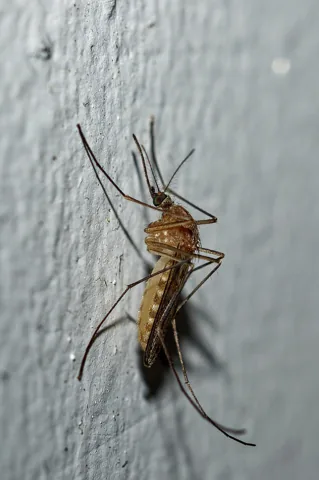 Mosquito
Culicidae (shown: Culex pipiens complex)
Mosquitoes are small, delicate flies whose females feed on blood and can pass on viruses such as West Nile; the control that works best goes after the larvae in standing water.
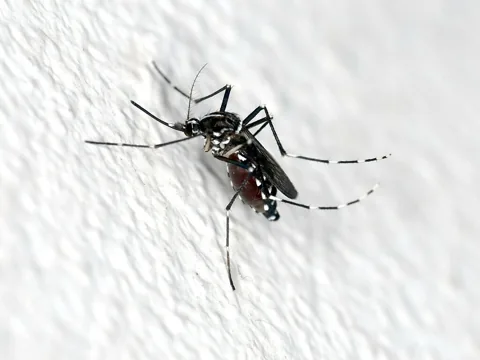 Asian Tiger Mosquito
Aedes albopictus
The Asian tiger mosquito is an invasive, aggressive mosquito that bites during the day and breeds in small water-holding containers around homes. First found at a tire dump near Houston in 1985, it spread rapidly through the southern United States and up the East Coast.
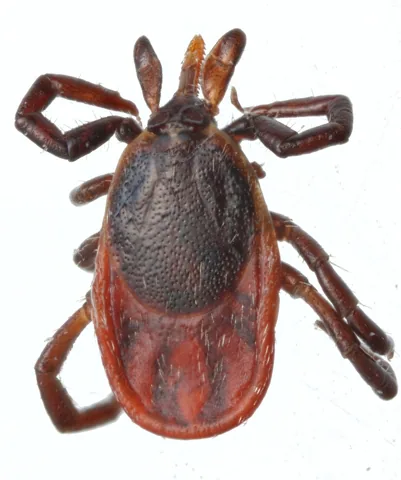 Blacklegged Tick
Ixodes scapularis
The blacklegged tick, often called the deer tick, is widely distributed across the eastern United States and transmits the bacteria that cause Lyme disease along with several other diseases.
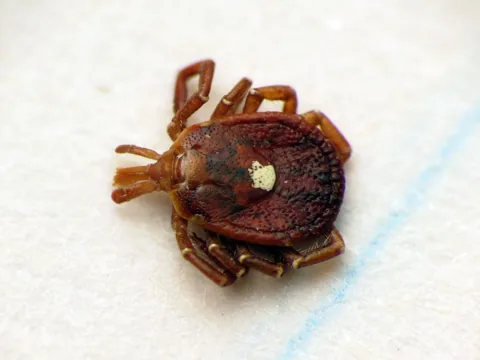 Lone Star Tick
Amblyomma americanum
The lone star tick is a very aggressive tick that readily bites people and pets across the Northeast, South and Midwest; its bite is linked to alpha-gal syndrome, a red meat allergy.
Active ingredients in EPA-registered skin repellents
- DEET is in more than 500 registered products. UC IPM calls it the most effective mosquito repellent when you'll be out for long periods where mosquitoes are abundant. Insects exposed to it can't detect and locate a person. EPA's own DEET page gives a smaller count, about 120 products from about 30 companies, so the totals depend on how they're counted. EPA says DEET works by making it hard for biting insects to smell us, and that products for skin contain 5 to 99% DEET; the Connecticut Agricultural Experiment Station gives a range of 4% to 100%.[1][4][5][11][7]
- Picaridin is in about 40 products and repels mosquitoes, biting flies, ticks, fleas and chiggers on skin or clothing. It seems to block mosquitoes from sensing their prey and doesn't kill insects. NPIC counts about two dozen picaridin products for sale in the United States. Outside the U.S. it's also called icaridin or KBR 3023.[1][6][8][10]
- IR3535 is in about 45 products; UC IPM lists it among the biopesticide repellents CDC recommends. It's also on the CDC's list of recommended active ingredients.[1][4][8][10]
- Oil of lemon eucalyptus (OLE) and PMD are in six products each. OLE contains PMD but is regulated separately, and only OLE formulated as a repellent counts: the pure oil is not registered by EPA as a repellent. The CDC doesn't recommend pure oil of lemon eucalyptus, the unformulated essential oil, as a repellent because it hasn't gone through validated safety and efficacy testing. PMD is the synthesized version of OLE.[1][4][10]
- 2-undecanone is in one registered product, and the CDC lists it as a plant-derived repellent ingredient. Catnip oil (4 products) and oil of citronella (3 registered products) are on EPA's list as well; citronella also turns up in unregistered products that qualify for an exemption.[1][8]
- EPA and the CDC sort these into two groups: DEET and picaridin are conventional repellents, while OLE, PMD, IR3535 and 2-undecanone are biopesticide repellents, meaning they come from natural materials or are synthetic versions of them.[10][4]
Choosing a product
- Decide whether you need protection from mosquitoes, ticks or both, and how long you'll be exposed, then pick a product whose protection time fits the activity.[2][10]
- EPA's search tool lists only EPA-registered skin repellents and lets you search by pest, protection time and active ingredient. One product may be sold under several names, so match the EPA registration number on the label. EPA notes that the database behind the tool was last updated in June 2019.[2][8]
- Some labels carry EPA's voluntary repellency awareness graphic, which shows how long the product protects against mosquitoes and ticks.[2]
- Protection times vary even among registered products, partly because testing conditions differ. The CDC's Yellow Book adds that how well a product works and for how long also varies a lot from one biting species to another.[2][10][4]
- If you'd rather avoid DEET, many EPA-approved alternatives work as well as or better than low concentrations of DEET for some people, especially for short outings of under 2 hours when mosquitoes aren't abundant.[4]
- Not every study agrees. In a 2002 laboratory test published in the New England Journal of Medicine, a 23.8% DEET product gave complete protection for an average of 301.5 minutes, a soybean-oil product 94.6 minutes, an IR3535 product 22.9 minutes, and the other botanical products less than 20 minutes. The authors concluded that the non-DEET products they tested couldn't be relied on for long protection where mosquito-borne disease is a real threat.[13]
Concentration and protection time
Higher concentrations of any active ingredient generally protect longer, but UC IPM says concentrations above 50% don't give a marked increase in protection time, and the CDC's Yellow Book says DEET's efficacy tends to peak at about 50%. For DEET, the Connecticut Agricultural Experiment Station puts the limit lower: above 30%, it adds no extra protection.[4][7][10]
Controlled-release or microencapsulated products can protect longer even at lower concentrations.[4][7][10]
For DEET, EPA says studies in its database show protection from ticks for about 2 to 10 hours and from mosquitoes for 2 to 12 hours, depending on the percentage in the product. The Connecticut Agricultural Experiment Station describes DEET as effective for one to several hours before it needs reapplying.[11][7]
Protection typically lasts 4 hours or less and drops with wind, heat, humidity and sweating, as well as swimming and rubbing; how attractive you are to mosquitoes matters too. If you start getting bitten, reapply as the label directs or leave the area. The CDC adds: reapply, but not more often than the label allows.[4][3][7][10]
Applying repellent safely
- Read the label and apply the amount it calls for. Overusing doesn't help, and if you don't follow the directions the product may not work as well as you expect. The CDC says just enough to cover exposed skin or clothing is enough; heavy application and saturation are generally unnecessary.[3][10][11]
- Apply it only to exposed skin and clothing, never under clothing, and never over cuts, wounds or irritated skin.[3][8][10][11]
- Keep it away from your eyes and mouth and use it sparingly around your ears. For your face, spray your hands first and rub it on.[3][4][11]
- Don't spray in enclosed areas, avoid breathing the spray, and don't use it near food. Check the label for flammability warnings.[3][11]
- When you come back indoors, wash treated skin and clothes with soap and water. EPA says DEET labels also tell you to wash treated clothing before wearing it again.[3][10][11]
- Don't use a human repellent on pets unless the label says it's for animals, and store repellents out of children's reach.[3]
- Most insect repellents don't work against lice or fleas.[3]
- Products that combine sunscreen with DEET may cause more DEET to be absorbed through the skin. The CDC advises separate products instead: sunscreen first, then repellent. Sunscreen may need reapplying more often and in larger amounts than the repellent, and limited data show DEET repellent applied over sunscreen lowers the SPF by about one-third.[5][8][10]
- DEET can damage some synthetic fabrics such as rayon and spandex, plastics such as watch crystals and eyeglass frames, and car and furniture finishes.[7][4]
- If you suspect a reaction to a repellent, stop using it, wash the treated skin and call a poison control center. Severe reactions are rare, the CDC says; if you see a doctor, bring the product container.[7][4][10][11]
Repellents and ticks
Repellents lower the chance of a tick bite but may not give total protection, and how well they work varies by tick species. A concentration that keeps a tick from attaching may not stop it from walking across treated skin to an untreated spot.[7][10]
For blacklegged ticks, DEET at about 20 to 30% applied to clothing is about 86 to 92% effective at preventing bites. Pay particular attention to shoe tops, socks and the lower legs of pants.[7]
Permethrin is a different tool: it is for clothing and other fabrics only, never for skin. The CDC recommends treating boots, clothing and camping gear with products containing 0.5% permethrin, which stays protective through several washings, or buying pretreated clothing. Clothing treated with a skin repellent such as DEET doesn't keep its protection through washing.[7][9][10][4]
Repellent is one step. After time outdoors, the CDC suggests checking clothing, gear and pets, tumble-drying dry clothes on high heat for 10 minutes to kill ticks, showering within two hours, and doing a full-body tick check.[9]
Repellents and children
- Don't let children handle repellent or put it on their hands. Apply it to your own hands, then to the child. Keep it off a child's eyes, mouth, cuts and irritated skin too.[3][8][10][11]
- After coming indoors, wash the child's treated skin and clothes with soap and water, or give a bath.[3][10]
- EPA approves DEET for children with no age restriction and no limit on percentage. NPIC notes that the American Academy of Pediatrics recommends no DEET on babies younger than 2 months, no more than one application a day for older children, and the lowest DEET concentration available. The Connecticut Agricultural Experiment Station cites AAP advice of no more than 30% DEET on children. MedlinePlus is more cautious than EPA: it says DEET products probably shouldn't be used on infants, that seizures may occur in small children who regularly have DEET on their skin for long periods, and that children should get lower-DEET products for short periods only.[3][5][11][7][12]
- Some oil of lemon eucalyptus products are labeled not for use on children under 3, though certain products with OLE as the only active ingredient at 30% or less carry no such restriction. UC IPM notes that PMD isn't recommended for children younger than 3. The CDC's general advice is not to use OLE or PMD products on children under 3, to avoid possible allergic skin reactions, while noting that certain OLE-only products at 30% or less can be used if the label allows.[3][4][8][10]
- For babies, the CDC suggests clothing that covers arms and legs and mosquito netting over strollers and baby carriers. Our guide to insect repellent for babies and kids goes into more detail.[8][10]
- With questions about repellents and a child, ask a health care provider or call the National Pesticide Information Center at 1-800-858-7378.[3]
What doesn't measure up
Many products with other active ingredients may be less effective and need reapplying often.[4]
Minimum-risk products exempt from EPA registration, such as some essential-oil products, don't go through EPA's review of efficacy data or label claims. The CDC says the effectiveness of non-registered repellents, including some natural ones, is unknown, and it recommends a registered product instead.[7][8][10]
Research on these exempt ingredients is mixed. In a 2020 laboratory study, cinnamon, peppermint, spearmint, lemongrass and garlic oils reduced how strongly mosquitoes were drawn to human odor, but only one of five commercial sprays made only from exempt ingredients did, and only for up to 30 minutes.[14]
Outdoor sprays and other repellent devices vary widely and reduce adult mosquitoes only temporarily. Bug zappers are counterproductive, because many of the insects they kill prey on mosquitoes. Citronella candles and mosquito coils burned outdoors work best when there's little air movement. The CDC notes that coils, vaporizing mats and other spatial repellents haven't been adequately tested for preventing disease, should be used alongside a skin or clothing repellent, and that you should avoid breathing their spray or smoke.[4][10]
Some products don't work at all. UC IPM lists repellent wristbands, ultrasonic emitters, electronic repellers, the so-called mosquito plant, vitamin B1, and brewer's yeast with garlic as ineffective; the CDC says the same of wristbands, sound-emitting devices and taking vitamin B or garlic, and the 2002 NEJM study found impregnated wristbands gave no protection.[4][10][13]
Clothing helps: long sleeves, long pants, socks and a hat cut down bites. Some mosquitoes bite through lightweight fabric, but covering most of your body still reduces the number of bites. The CDC also suggests loose-fitting clothes, tucking pants into socks, and closed shoes instead of sandals.[4][8][10]
If repellent is swallowed or causes a reaction
Most repellent problems are minor skin or eye irritation, but MedlinePlus warns that swallowing DEET or using large amounts of it over long periods can cause serious harm, and that the most serious complication of DEET poisoning is damage to the nervous system. These steps come from MedlinePlus, EPA and the CDC.[12][11][10]
- For any swallowed repellent or bad reaction, call Poison Help at 1-800-222-1222, which reaches your local poison control center from anywhere in the U.S., 24 hours a day; call 911 for an emergency.[12]
- If repellent is on the skin or in the eyes, flush with lots of water for at least 15 minutes. DEET sprayed into the eyes, nose or throat usually causes temporary burning and redness that washing clears up.[12]
- Don't make the person throw up unless poison control or a health care provider tells you to. If they swallowed it, give water or milk right away unless told otherwise, but nothing to drink if they're vomiting, having convulsions or less alert.[12]
- If someone breathed in a spray, move them to fresh air.[12]
- Have the person's age, weight and condition, the product name and strength, and the time and amount ready when you call. If you go to a doctor, take the container with you.[12][11][10]
- For a rash, itching or swelling after use, stop using the product and wash it off with mild soap and water.[10][4][11]
Common questions
- Is DEET safe?
- EPA reviewed DEET and concluded that normal use doesn't present a health concern to the general population when label directions are followed. Its 2014 interim review found no risks of concern to human health, and EPA says normal use isn't a health concern for children either. Toxic reactions are rare; the Connecticut Agricultural Experiment Station says reported cases often involved swallowing DEET, high concentrations or over-application. Use only what the label calls for and keep it off children's hands.[7][3][11]
- How often should I reapply repellent?
- As the label directs. Protection usually lasts 4 hours or less and drops with sweat, water, wind and heat; if you start getting bitten, reapply or leave the area.[4][3][10]
- Can I put my bug spray on my dog?
- Not unless the label clearly says the product is for animals.[3]
- Can I use insect repellent while pregnant or breastfeeding?
- Yes. The CDC says EPA-registered repellents used as directed are safe and effective even for pregnant and breastfeeding women, and EPA recommends no extra precautions for them beyond the usual safety tips.[8][9][10]
- Should I buy a sunscreen and bug spray combination?
- The CDC advises against it: use separate products, sunscreen first and repellent second, because sunscreen may need reapplying more often and in larger amounts than the repellent. NPIC notes that sunscreen products containing DEET may increase how much DEET goes through the skin.[10][8][5]
- What do I do if my child swallows bug spray?
- Call Poison Help at 1-800-222-1222, or 911 in an emergency. Don't make the child vomit unless poison control tells you to, and have the product container handy.[12]
Photo credits
- Mosquito: (c) Donald Davesne, some rights reserved (CC BY) — via iNaturalist, CC BY 4.0
- Asian Tiger Mosquito: (c) Rafael Carbonell Font, some rights reserved (CC BY) — via iNaturalist, CC BY 4.0
- Blacklegged Tick: (c) Christian Back, some rights reserved (CC BY) — via iNaturalist, CC BY 4.0
- Lone Star Tick: (c) Katja Schulz, some rights reserved (CC BY) — via iNaturalist, CC BY 4.0
Sources
- U.S. Environmental Protection Agency, “Skin-Applied Repellent Ingredients (last updated January 23, 2026).” www.epa.gov/insect-repellents/skin-applied-repellent-ingredients (accessed 2026-11-10)
- U.S. Environmental Protection Agency, “Find the Repellent that is Right for You (last updated September 8, 2026).” www.epa.gov/insect-repellents/find-repellent-right-you (accessed 2026-11-10)
- U.S. Environmental Protection Agency, “Using Insect Repellents Safely and Effectively.” www.epa.gov/insect-repellents/using-insect-repellents-safely-and-effectively (accessed 2026-11-10)
- University of California Statewide IPM Program, “Pest Notes: Mosquitoes (Home and Landscape).” ipm.ucanr.edu/home-and-landscape/mosquitoes/ (accessed 2026-11-10)
- National Pesticide Information Center, “DEET General Fact Sheet.” npic.orst.edu/factsheets/DEETgen.html (accessed 2026-11-10)
- National Pesticide Information Center, “Picaridin General Fact Sheet.” npic.orst.edu/factsheets/PicaridinGen.html (accessed 2026-11-10)
- Connecticut Agricultural Experiment Station, “Managing Exposure to Ticks on Your Property (Kirby C. Stafford III, 2014).” portal.ct.gov/-/media/caes/documents/publications/fact_sheets/entomology/tickcontrolfspdf.pdf (accessed 2026-11-10)
- Centers for Disease Control and Prevention, “Preventing Mosquito Bites (Aug. 28, 2024).” www.cdc.gov/mosquitoes/prevention/index.html (accessed 2026-11-10)
- Centers for Disease Control and Prevention, “Preventing Tick Bites (Aug. 28, 2024).” www.cdc.gov/ticks/prevention/index.html (accessed 2026-11-10)
- Centers for Disease Control and Prevention, “CDC Yellow Book: Mosquitoes, Ticks, and Other Arthropods.” www.cdc.gov/yellow-book/hcp/environmental-hazards-risks/mosquitoes-ticks-and-other-arthropods.html (accessed 2026-11-10)
- U.S. Environmental Protection Agency, “DEET (last updated May 27, 2026).” www.epa.gov/insect-repellents/deet (accessed 2026-11-10)
- MedlinePlus, U.S. National Library of Medicine, “Bug spray poisoning (Medical Encyclopedia).” medlineplus.gov/ency/article/002763.htm (accessed 2026-11-10)
- New England Journal of Medicine (PubMed 12097535), “Fradin MS, Day JF. Comparative efficacy of insect repellents against mosquito bites. N Engl J Med 2002;347(1):13-18.” pubmed.ncbi.nlm.nih.gov/12097535/ (accessed 2026-11-10)
- Journal of Medical Entomology (PubMed 31612914), “Mitra S et al. Efficacy of active ingredients from the EPA 25(B) list in reducing attraction of Aedes aegypti to humans. J Med Entomol 2020;57(2):477-484.” pubmed.ncbi.nlm.nih.gov/31612914/ (accessed 2026-11-10)