On this page
How to identify it
Look-alikes
| Look-alike | How to tell them apart |
|---|---|
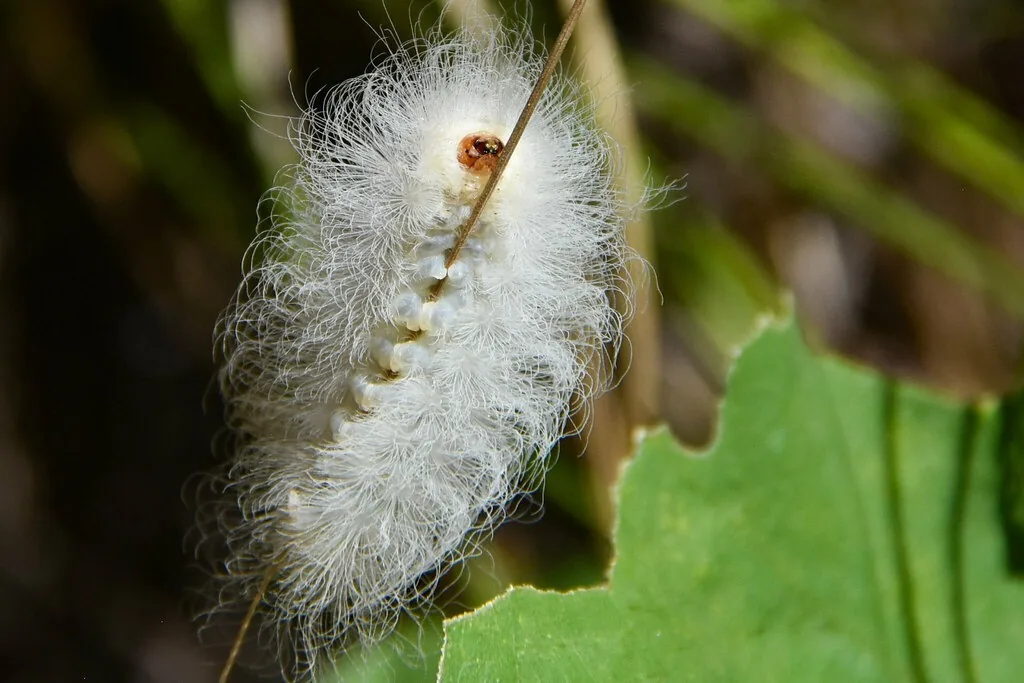
| Puss caterpillar | Mature larvae look very much like the puss caterpillar but lack its long tail, and their sting is usually less severe.[1] |
Where it lives
Found in the eastern United States, including Kentucky and Missouri; MU reports caterpillars in summer and fall.[1][2]
Biology and life cycle
MU Extension reports two generations a year in Missouri; UK notes caterpillars can be common in late summer.[1][2]
Damage and signs
Health risk
Stings can cause severe irritation. No really effective home first aid exists; pull out broken spines with tape, wash well with soap and water, and apply an ice pack or baking soda; antihistamines given for bee stings are reportedly ineffective, and anyone with a severe reaction should see a physician.[1][2]
Control
Traps and physical control
Stinging caterpillars are infrequent and preventive sprays aren't recommended; clip and move the leaf or stem a single caterpillar is on.[1]
Pesticides
Where they are numerous around homes, schools or play areas, UK suggests spraying infested plants with Bt or carbaryl, following the label.[1]
Common questions
- Can a fuzzy caterpillar sting?
- Yes; this one's soft hairs hide short venomous spines.[1][2]
- What should I do if I'm stung?
- Remove spines with tape, wash with soap and water, apply ice or baking soda, and see a doctor for severe reactions.[1]
- How is it different from a puss caterpillar?
- It lacks the puss caterpillar's long tail and usually stings less severely.[1]
Sources
- University of Kentucky Entomology (ENTFACT), “Stinging Caterpillars (ENTFACT-003).” entomology.mgcafe.uky.edu/ef003 (accessed 2026-10-15)
- University of Missouri Extension (Caterpillars in Your Yard and Garden, IPM1019), “Caterpillars in Your Yard and Garden, page 11: Crinkled flannel moth.” extension.missouri.edu/publications/ipm1019-11 (accessed 2026-10-15)
- iNaturalist, “Megalopyge crispata taxon page (order and family).” www.inaturalist.org/taxa/703873 (accessed 2026-10-06)