The short answer
- A small accumulation from a few birds or bats can be cleaned up with soap and water, according to the Illinois Department of Public Health. For large quantities, Illinois says to get advice from an environmental engineering consultant, and CDC and NIOSH say large amounts should be cleaned up by a professional company that specializes in hazardous waste.[1][8][11]
- Age matters. Wisconsin's health department says fresh droppings carry low risk because Histoplasma needs time to grow, while removing droppings that have built up for a year or more carries elevated risk. Illinois adds that fresh bat droppings, unlike fresh bird droppings, can contain the fungus. NIOSH agrees: fresh bird droppings on sidewalks and windowsills likely pose no histoplasmosis risk, but bats can be infected and may pass the fungus in their droppings.[2][1][10]
- For a real buildup, keep the droppings damp with a light mist of water (never sweep or shovel them dry), wear a NIOSH-approved respirator such as an N95 or better, eye protection, gloves and disposable or washable coveralls, and seal the waste in plastic bags.[1][2][12][13]
- The work should be done by healthy people. Anyone with a weakened immune system or lung problems should take extra precautions around old droppings or stay out of the area if possible.[1][2][8]
- Afterward, change the structure so the birds or bats can't re-establish the roost.[1][12]
If someone may be poisoned
- If a bat has bitten or scratched a person or pet, or is found in your home, capture it without touching it with your hands and without crushing its head. If the bat is dead, refrigerate it (don't freeze it) and contact your local health department right away for instructions.[1]
- If you were bitten or scratched, wash the wound with soap and water and get medical help right away. If you find a bat in your home, CDC says to have animal control or the health department capture it for rabies testing and not to release it until you've talked with a public health expert.[16]
Animals and parasites covered here
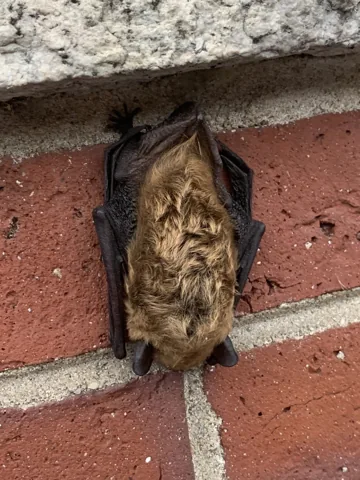 Bats (big brown bat and little brown bat)
Eptesicus fuscus and Myotis lucifugus (shown: big brown bat)
Bats are flying, insect-eating mammals that sometimes roost in attics, walls and other parts of buildings. They are valuable insect eaters, but colonies leave droppings and odor, and any bite or bare-hand contact is a potential rabies exposure.
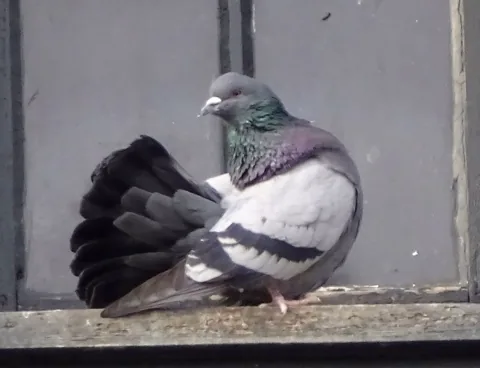 Pigeon (feral rock pigeon)
Columba livia
Feral pigeons are non-native birds that depend on people for food and nesting sites. Flocks on ledges, eaves and rooftops leave heavy, acidic droppings that deface buildings, clog gutters and can carry disease risks.
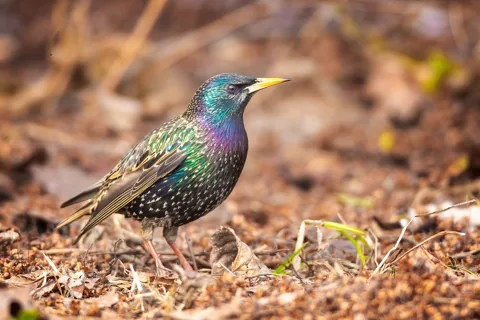 European starling
Sturnus vulgaris
The European starling is a stocky, short-tailed, non-native bird that now lives across most of North America. Pairs nest in building cavities and vents in spring, and fall and winter flocks of thousands foul roost sites with noise and droppings. The Missouri Department of Conservation lists it as invasive.
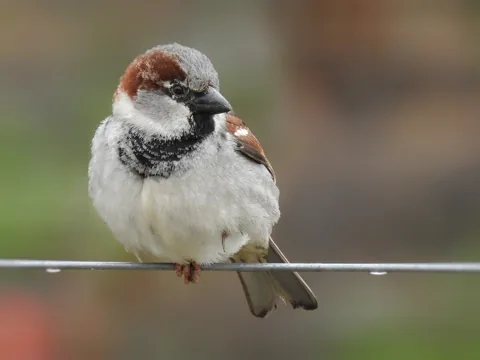 House sparrow (English sparrow)
Passer domesticus
The house sparrow is a small, chunky, non-native bird that thrives wherever people build farms, towns and cities. It packs messy nests into any sheltered gap on buildings, leaves droppings where it roosts, and drives native birds from nest boxes.
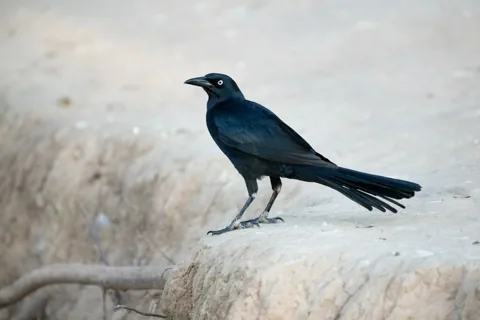 Great-tailed grackle
Quiscalus mexicanus
The great-tailed grackle is a big, loud blackbird of open country, farms, parks and suburbs. Complaints usually come from large fall and winter roosts in town trees and on powerlines, where noise can last all night in well-lit areas and droppings coat cars and pavement below.
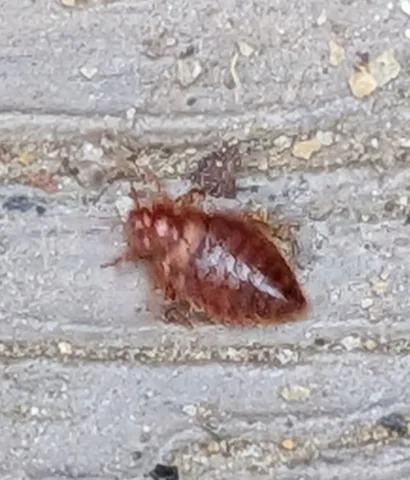 Bat Bugs
Cimex adjunctus (eastern bat bug) and Cimex pilosellus (western bat bug)
Bat bugs are close relatives of bed bugs that feed on the blood of roosting bats. They turn up in homes that have bats in the attic or walls, and they may bite people when the bats leave or are shut out.
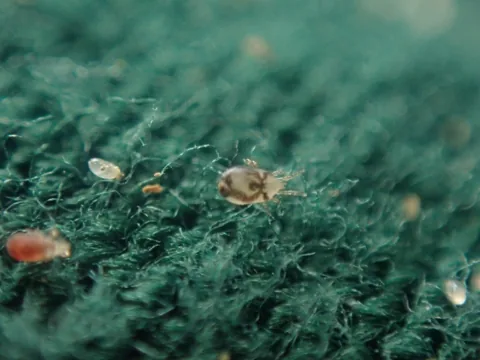 Northern Fowl Mite
Ornithonyssus sylviarum
The northern fowl mite is a tiny blood-feeding mite that Mississippi State Extension calls the most serious external parasite of poultry in North America. It lives its whole life on chickens and other birds, crowding around the vent, and heavy infestations cause anemia, fewer eggs and even death.
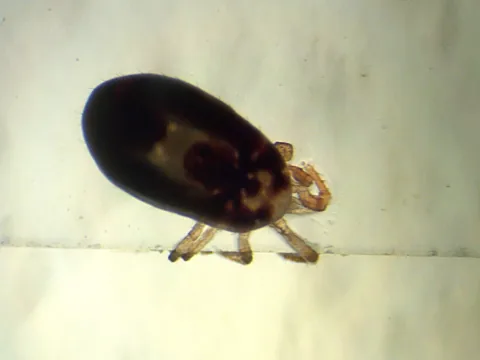 Chicken Mite
Dermanyssus gallinae
The chicken mite (poultry red mite, roost mite) is a tiny blood-feeding mite that hides in cracks, nests and litter by day and crawls onto chickens and wild birds to feed at night. Mites from coops or bird nests can also crawl onto people and bite.
What's in the droppings
Illinois's health department says health risks from birds and bats are often exaggerated, but large roosting populations can pose a disease risk to people nearby. The most serious risks come from organisms that grow in the nutrient-rich mix of droppings, feathers and debris under a roost, particularly one that has been active for years.[1]
Histoplasmosis is caused by a fungus, Histoplasma capsulatum. Illinois's health department says it's found mainly in the areas drained by the Mississippi and Ohio rivers, and CDC and NIOSH say that in the United States it lives mostly in soil in the central and eastern states, around the Ohio and Mississippi River valleys, though it can turn up elsewhere where conditions suit it. Wisconsin's health department says it grows throughout that state, most often in dirt that hasn't been moved for a long time, especially where bird and bat droppings collect, such as caves, attics and bridges, and Minnesota's health department reports cases from across that state.[1][5][10][2][17]
Breathing the spores is common where the fungus lives. CDC says people in those areas regularly breathe it in without getting symptoms, and Illinois's health department says up to 80 percent of people in some areas, including parts of Illinois, show evidence of a past infection. Minnesota's health department counted an average of 192 cases a year from 2017 to 2025.[7][1][17]
Illinois's health department says the soil under a roost usually has to be enriched by droppings for two years or more before the fungus reaches significant levels. It is almost always tied to soil, but it has been found in droppings alone, particularly bat droppings in places such as an attic.[1]
NIOSH explains that the droppings feed fungus already present in the soil, so the fungus grows especially well in soil or other material with large amounts of bird or bat droppings. It also notes that droppings aren't required: many people with histoplasmosis had no contact with birds, bats or droppings.[10]
Cryptococcosis comes from the fungus Cryptococcus neoformans, and pigeon droppings appear to be its most important source in the environment. It's typically found in droppings around roosting and nesting sites such as attics, cupolas, ledges and water towers, and even old, dry droppings can be a significant source of infection.[1]
Illinois says most cryptococcosis infections are mild and may cause no symptoms, and that people with weakened immune systems are more susceptible. CDC says most infections occur in people with weakened immune systems, especially advanced HIV/AIDS; healthy people can get it, but not commonly. When it does take hold it usually infects the lungs or brain and needs antifungal treatment.[1][14]
Birds carry other diseases that affect people less often. Psittacosis, a bacterial infection, is normally mild in people, though serious illness can rarely occur. CDC says people most often catch it by breathing dust that contains dried bird droppings or secretions, that birds can shed the bacteria without looking sick, and that it is most often tied to pet birds and poultry.[1][15]
How people get sick, and who is most at risk
Histoplasmosis spreads when people breathe in spores released into the air as dirt or dry droppings are disturbed. It doesn't pass from person to person, or between people and pets.[2][6][5]
Most infections are mild and cause either no symptoms or a minor flu-like illness. On occasion the disease causes high fever, blood abnormalities, pneumonia and even death. CDC adds that it can turn into a long-term lung infection, mainly in people with weakened immune systems, and in rare cases spreads to the brain and spinal cord.[1][5]
People with a weakened immune system or a chronic illness are more likely to get sick from histoplasmosis, and people with weakened immune systems are also more susceptible to cryptococcosis.[2][1]
CDC lists the groups at higher risk of infection and of severe illness: people with HIV/AIDS, organ transplant recipients, people taking medicines such as corticosteroids or TNF inhibitors, adults over 55 and infants, and people exposed to large amounts of the fungus. NIOSH adds that how sick someone gets depends on how much they breathe in and for how long.[8][9]
Outbreaks are uncommon, CDC says, and most followed events that disturbed soil contaminated with droppings. A review of 105 histoplasmosis outbreaks reported in the United States from 1938 to 2013, with 2,850 cases in all, found birds, bats or their droppings present in 77% of outbreak settings. Disturbance of accumulated droppings was described in 40% of the outbreaks, and common settings were chicken coops and buildings undergoing renovation or demolition.[4][6]
The disturbance behind an outbreak can be small, such as walking on contaminated ground, or large, such as excavating or clearing foliage at a bird roost.[4]
NIOSH says about one-third of U.S. outbreaks are work-related, but outbreak cases make up only about 5% of known histoplasmosis cases. Wisconsin's list of jobs at risk includes chimney cleaners, roofers, heating and air conditioning workers, pest control workers and restorers of historic or abandoned buildings.[9][2]
Fresh droppings or an old buildup?
Histoplasma needs time to grow before it becomes hazardous. That is why Wisconsin's health department rates the routine cleaning of a chicken coop as a low-risk job, while people removing droppings that have accumulated for a year or more are at elevated risk.[2]
Bat droppings differ in one way. Illinois's health department says fresh bat droppings, unlike fresh bird droppings, can contain the histoplasmosis fungus and don't need to touch soil to be a source of the disease, although transmission from bat droppings to people isn't thought to be high. NIOSH explains why: birds themselves are rarely infected, while bats can become infected and may pass the fungus in their droppings.[1][10]
There's no test that shows whether the fungus is present before work begins. NIOSH doesn't recommend routine sampling and says a negative result doesn't prove the fungus is absent, so the safest approach is to assume the material contains Histoplasma and take the precautions below wherever droppings have accumulated.[2][10]
To tell what you're dealing with: bat droppings crush easily and show shiny bits of undigested insects, mouse droppings lack the shiny bits, and bat droppings are never white or chalky the way bird droppings are. If they turn out to be mouse droppings, follow our hantavirus cleanup guide instead.[3]
Before you start
Deal with the animals first. Never handle bats or breathe dust from their droppings, and when bat droppings pile up in a building, eviction and exclusion are the only safe and permanent remedies; NIOSH likewise says the best prevention is keeping droppings from building up in the first place, and that ultrasonic devices and chemical repellents don't get bats out of a roost.[3][12]
Time a bat exclusion so no young are shut inside. UC IPM says flightless young are usually present May through September in California, and CDC warns against trapping young bats inside when bat-proofing between May and August; UC IPM says most bats leave in late fall, making winter an ideal time for exclusion, and CDC calls fall and winter the best times to bat-proof. Our bat profile covers the details.[3][16]
Decide who should do the job. The cleanup should be done by healthy people, and anyone with a weakened immune system or lung problems should take extra precautions or avoid the area if possible. For a large quantity of droppings, get advice from an environmental engineering consultant (Illinois) or hire a company that specializes in hazardous waste (CDC, NIOSH).[1][2][8][11]
Sometimes the best choice is to leave it. NIOSH says that if people are unlikely to be active around an accumulation, simply leaving the material alone may be the best course. Before removing it, weigh how much there is and where, whether the structure is sound, the weather, and whether people are nearby.[12]
Indoors, seal the heating and cooling air ducts or shut the system down for the duration, and keep everyone but the people doing the cleanup out of the area.[1]
Outdoors, don't dig or move dirt or droppings on windy days; NIOSH says earthmoving should stop during windy periods or whenever dust control isn't working.[2][12]
Protective gear
- A respirator. Wisconsin's health department says a facemask will help but a high-quality respirator such as an N95 or N99 provides the most protection, and Illinois calls for one that filters particles as small as 0.3 microns. NIOSH says it should be a NIOSH-approved particulate respirator (a filtering facepiece such as an N95, an elastomeric half- or full-face respirator, or a powered air-purifying respirator); Histoplasma spores are 1 to 5 micrometers across.[2][1][13]
- Where Histoplasma is common, NIOSH treats cleanup of a large accumulation as a high-risk job and suggests considering a powered air-purifying respirator or a full-facepiece respirator with 100-series filters. An N95-type filtering facepiece gives some protection, but NIOSH puts it at about 20% of the protection of those respirators. Replace the filter or respirator if it gets damaged or hard to breathe through.[13]
- Eye protection: NIOSH recommends eyecup or cover-type safety goggles.[2][13]
- Disposable gloves, a hat, coveralls and shoe coverings, or clothes and boots you can take off at the site and wash.[1][2]
- NIOSH suggests disposable gloves (vinyl, nitrile, PVC or polyethylene) under regular cotton or leather work gloves, hooded disposable coveralls when material may fall from overhead, as it can in an attic, and disposable shoe covers with ridged, slip-resistant soles. Protective clothing holds in heat, so take precautions against heat stress.[13]
Cleanup steps
Don't count on disinfectants. NIOSH says no EPA-registered product is specifically registered as effective against Histoplasma, and that formaldehyde, used in some past outbreaks, is not recommended because of its own health effects. Its methods are wetting the material and collecting it, or vacuuming it up with a high-efficiency filter.[12]
- Moisten the droppings with a light mist of water so spores don't become airborne, and keep them wet while you work. NIOSH says not to shovel or sweep dry, dusty material, and that adding a surfactant to the water may cut airborne dust further.[1][2][12]
- Don't eat, smoke or take off your mask for any reason in an area where droppings or dirt have been disturbed.[2]
- Put the wet droppings into plastic garbage bags and seal them. Rinse off the outside of each bag before it goes into a disposal container.[1][2][12]
- When you finish, take off the protective clothing and shoe covers while you're still wearing the respirator, and seal them in a heavy-duty plastic bag.[1][13]
- Wash your hands after removing your protective gear, then wash or shower.[2][1]
- Check with your local government that the bagged waste can go out with regular trash pickup. NIOSH says to follow state and local disposal rules, notes that some landfills classify Histoplasma-contaminated material as infectious waste, and says not to move it somewhere else where it could still be a hazard.[1][12]
- Look the area over when you're done. NIOSH says testing afterward is usually unnecessary; make sure no dust or debris is left.[12]
- Modify the structure so birds or bats can't re-establish the roost.[1][12]
Mites, bugs and flies left behind
Bird and bat roosts can harbor parasites that invade buildings and bite people once infested birds or bats leave. Northern fowl mites and chicken mites are usually the main culprits; others include pigeon nest bugs, bat bugs, soft ticks, biting lice and pigeon flies. They can bite and irritate but are unlikely to transmit disease to people.[1]
Bat bugs look so much like bed bugs that a microscope is needed to tell them apart. They can bite people, but they can't reproduce without a bat host.[3]
Most of these parasites die soon after their hosts are gone, though some live for several weeks. If they're still a problem after the birds or bats have been excluded, the Illinois Department of Public Health says the roost area may be treated with a residual insecticide labeled by EPA for fleas, ticks, mites and similar pests. Follow the label.[1][3]
Droppings, feathers, food and dead birds under a roost can also breed flies, carpet beetles and other insects that get into buildings through open windows and cracks.[1]
Symptoms to watch for
Histoplasmosis is treatable, but symptoms don't appear right away. People may start feeling sick 3 to 17 days after breathing in the fungus, with fever or chills, cough, chest pain, body aches, headache or feeling very tired. CDC says mild cases usually clear up on their own within a few days to a month.[2][5][7]
See a doctor or nurse if symptoms don't get better or get worse, and explain that you were exposed. Histoplasmosis is rare and its symptoms match common illnesses, so doctors may not test for it unless they know you're at risk.[2]
Ask about testing. CDC says histoplasmosis is often misdiagnosed or diagnosed late because it looks like common pneumonia, and that antibiotics, usually tried first, don't treat a fungal infection. It advises asking about testing if you live in or recently traveled to an area where the fungus lives and have pneumonia symptoms, or have taken antibiotics and aren't getting better, and NIOSH suggests telling the provider about the exposure and asking for a test.[5][9]
CDC says symptoms of psittacosis usually start 5 to 14 days after exposure, typically a dry cough, fever and chills, headache and muscle aches. CDC advises seeing a healthcare provider if you get sick after buying or handling a pet bird or live poultry.[15]
Common questions
- Is it safe to clean out a chicken coop?
- Wisconsin's health department rates routine cleaning as low risk because the droppings are fresh, and removing droppings that have built up for a year or more as riskier. CDC is more cautious: it lists cleaning chicken coops among activities that can raise histoplasmosis risk and counts farmers who clean up after chickens among those exposed to large amounts of the fungus, and NIOSH rates work with live poultry as medium risk, higher where droppings have piled up. In the U.S. outbreak review, 28 of 29 outbreaks tied to farms or chicken coops occurred from 1943 to 1969, and the last was in 1985.[2][8][13][4]
- Are bat droppings more dangerous than bird droppings?
- For histoplasmosis, fresh bat droppings can contain the fungus while fresh bird droppings are low risk. Even so, Illinois's health department says transmission from bat droppings to people isn't thought to be high.[1][2][10]
- Do bats in the attic mean rabies?
- Not usually: Illinois's health department says only about 5 percent of bats submitted for testing are infected. But CDC says bats are the most reported rabid animals in the United States and are behind most U.S. rabies deaths, and their bites can be too small to notice. Never touch a bat with bare hands, and contact animal control or your health department about any bat found in a living space.[1][16]
- Are droppings on my windowsill or sidewalk a histoplasmosis risk?
- Fresh bird droppings on sidewalks and windowsills likely aren't, according to NIOSH, because birds themselves are rarely infected; the risk comes from droppings that have built up and mixed with soil or debris over time. Fresh bat droppings are different and can carry the fungus.[10][1]
- Should I disinfect the droppings before cleaning them up?
- NIOSH says no EPA-registered product is specifically registered as effective against Histoplasma. Wet the droppings with water to keep the dust down and remove them carefully with protective gear.[12][1]
Photo credits
- Bats (big brown bat and little brown bat): (c) Thomas Irvine, some rights reserved (CC BY) — via iNaturalist, CC BY 4.0
- Pigeon (feral rock pigeon): (c) cornwallcen, some rights reserved (CC BY) — via iNaturalist, CC BY 4.0
- European starling: (c) egorbirder, some rights reserved (CC BY) — via iNaturalist, CC BY 4.0
- House sparrow (English sparrow): (c) Esteban Poveda, some rights reserved (CC BY) — via iNaturalist, CC BY 4.0
- Great-tailed grackle: Adam Jackson, public domain (CC0), via iNaturalist
- Bat Bugs: (c) Jason Hill, some rights reserved (CC BY) — via iNaturalist, CC BY 4.0
- Northern Fowl Mite: Deniz Wilson, public domain (CC0), via iNaturalist
- Chicken Mite: Dermanyssus gallinae, microscopic view by Sylvain Larrat — via Wikimedia Commons, CC BY 4.0
Sources
- Illinois Department of Public Health, “Health Hazards Associated With Bird and Bat Droppings.” idph.illinois.gov/public/hb/hbb&bdrp.htm (accessed 2026-11-10)
- Wisconsin Department of Health Services, “Histoplasmosis: Employers and Workers (P-03621, June 2024).” dhs.wisconsin.gov/publications/p03621.pdf (accessed 2026-11-10)
- University of California Statewide IPM Program, “Pest Notes: Bats (Publication 74150).” ipm.ucanr.edu/home-and-landscape/bats/ (accessed 2026-11-10)
- Emerging Infectious Diseases (CDC journal), “Benedict and Mody (2016), Epidemiology of Histoplasmosis Outbreaks, United States, 1938-2013, Emerging Infectious Diseases 22(3): 370-378.” wwwnc.cdc.gov/eid/article/22/3/15-1117_article (accessed 2026-11-10)
- Centers for Disease Control and Prevention, “About Histoplasmosis.” www.cdc.gov/histoplasmosis/about/index.html (accessed 2026-11-10)
- Centers for Disease Control and Prevention, “How People Get Histoplasmosis.” www.cdc.gov/histoplasmosis/causes/index.html (accessed 2026-11-10)
- Centers for Disease Control and Prevention, “Symptoms of Histoplasmosis.” www.cdc.gov/histoplasmosis/signs-symptoms/index.html (accessed 2026-11-10)
- Centers for Disease Control and Prevention, “Reducing Risk for Histoplasmosis.” www.cdc.gov/histoplasmosis/prevention/index.html (accessed 2026-11-10)
- National Institute for Occupational Safety and Health (CDC), “Histoplasmosis and Work.” www.cdc.gov/niosh/histoplasmosis/about/index.html (accessed 2026-11-10)
- National Institute for Occupational Safety and Health (CDC), “Histoplasma in the Environment: An Overview.” www.cdc.gov/niosh/histoplasmosis/about/environment.html (accessed 2026-11-10)
- National Institute for Occupational Safety and Health (CDC), “Preventing Histoplasma Exposures at Work.” www.cdc.gov/niosh/histoplasmosis/prevention/index.html (accessed 2026-11-10)
- National Institute for Occupational Safety and Health (CDC), “Histoplasmosis: Elimination and Engineering Controls.” www.cdc.gov/niosh/histoplasmosis/prevention/elimination-and-engineering-controls.html (accessed 2026-11-10)
- National Institute for Occupational Safety and Health (CDC), “Histoplasmosis: Personal Protective Equipment.” www.cdc.gov/niosh/histoplasmosis/prevention/personal-protective-equipment.html (accessed 2026-11-10)
- Centers for Disease Control and Prevention, “About Cryptococcosis.” www.cdc.gov/cryptococcosis/about/index.html (accessed 2026-11-10)
- Centers for Disease Control and Prevention, “About Psittacosis.” www.cdc.gov/psittacosis/about/index.html (accessed 2026-11-10)
- Centers for Disease Control and Prevention, “Preventing Rabies from Bats.” www.cdc.gov/rabies/exposure/animals/bats.html (accessed 2026-11-10)
- Minnesota Department of Health, “Histoplasmosis (Histoplasma capsulatum).” www.health.state.mn.us/diseases/histoplasmosis/index.html (accessed 2026-11-10)