The short answer
- Empty, cover or turn over anything that holds water, and change the water in bird baths, pet dishes and watering troughs every week.[1][7][14][15]
- Scrub containers as you empty them. Aedes mosquitoes glue their eggs to the inside walls of containers just above the waterline, and the eggs can survive drying out for up to 8 months; CDC says weekly emptying and scrubbing should remove them.[10][9]
- Don't wait long between checks. EPA says the life cycle typically takes about two weeks but can be as short as 4 days; CDC puts egg to adult at 7 to 10 days for Aedes and Culex mosquitoes.[4][10][11]
- For water you can't drain, such as ponds, rain barrels or unused pools, use a larvicide such as Bti. EPA says Bti has no toxicity to people, and its toxins affect only the larvae of mosquitoes, black flies and fungus gnats.[3][1][6][8][12]
- Where there's a county mosquito and vector control agency, it can advise on local mosquito problems; some areas have no organized mosquito control.[1]
Mosquitoes this applies to
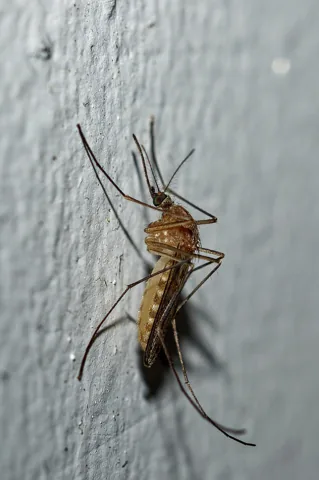 Mosquito
Culicidae (shown: Culex pipiens complex)
Mosquitoes are small, delicate flies whose females feed on blood and can pass on viruses such as West Nile; the control that works best goes after the larvae in standing water.
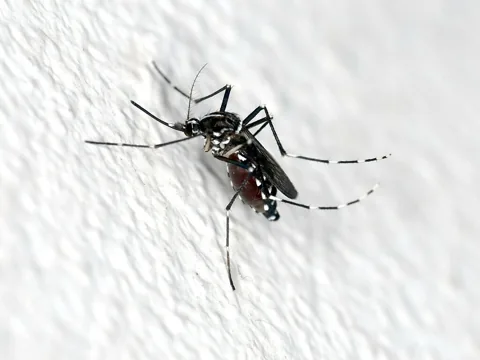 Asian Tiger Mosquito
Aedes albopictus
The Asian tiger mosquito is an invasive, aggressive mosquito that bites during the day and breeds in small water-holding containers around homes. First found at a tire dump near Houston in 1985, it spread rapidly through the southern United States and up the East Coast.
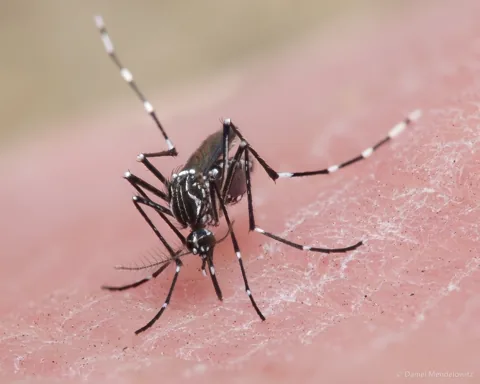 Yellow Fever Mosquito
Aedes aegypti
The yellow fever mosquito, Aedes aegypti, is a container-breeding mosquito that lives close to people and prefers to bite them. It lives indoors and outdoors, and the CDC calls it the main type of mosquito that spreads Zika, dengue and chikungunya viruses.
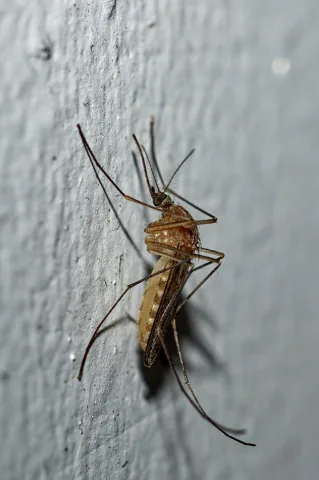 Northern House Mosquito
Culex pipiens
The northern house mosquito, Culex pipiens, is often the most common pest mosquito in cities and suburbs. It bites from dusk to dawn, breeds in stagnant and polluted water, and is a major carrier of West Nile virus in North America.
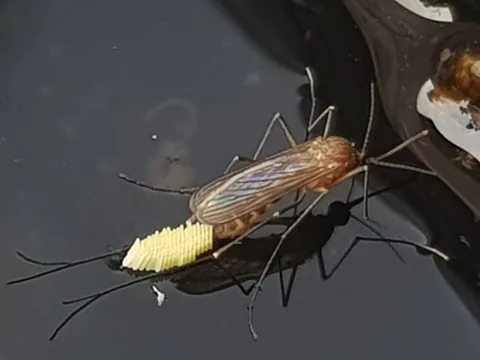 Southern House Mosquito
Culex quinquefasciatus
The southern house mosquito bites in the evening, at night and in the early morning, and Texas A&M calls it the most important carrier of West Nile virus and St. Louis encephalitis, especially in the eastern U.S. It prefers birds but will come through unscreened windows and open doors to bite sleeping people.
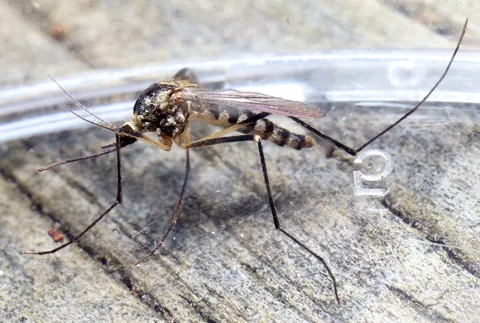 Eastern Treehole Mosquito
Aedes triseriatus
The eastern treehole mosquito is an aggressive daytime biter in and near deciduous woods and the primary vector of La Crosse virus. It lays its eggs in water held in tree holes and in containers, especially discarded tires.
Why standing water is the target
Females lay eggs on or near water, on soil and at the base of plants in places that may fill with water. The eggs can survive dry conditions for a few months and hatch when they're flooded.[4]
Sources differ on how long dry eggs last: EPA says a few months, CDC says Aedes eggs can survive drying out for up to 8 months, and UC IPM says eggs laid on the sides of saucers, jars or cans may not hatch until flooding months or even years later.[4][10][1]
Larvae (wrigglers) and pupae (tumblers) live in the water; pupae don't feed, and adults emerge after two days to a week in the pupal stage. The whole cycle typically takes about two weeks, ranging from 4 days to a month depending on conditions.[4]
Other estimates are a little narrower: CDC says an Aedes or Culex egg takes 7 to 10 days to become an adult, and UW-Madison says mosquitoes can reach the adult stage in roughly a week and a half to two weeks depending on species and temperature.[10][11][15]
Texas A&M says mosquitoes breed in standing water, especially water that stands for at least 7 days. The larvae feed on bacteria and other microorganisms, so the water has to be stagnant and hold some organic matter such as leaves, soil, bird droppings or grass clippings. That's why they usually don't breed in running streams or maintained swimming pools. UNH Extension likewise says all mosquito species need slow-moving or stagnant water to lay eggs.[13][16]
Larvicides kill larvae in the breeding site before they can become adults and disperse, which reduces adult mosquitoes in nearby areas.[2][8]
Some container-breeding Aedes mosquitoes can develop in any small amount of water, even a bottle cap's worth.[1]
UW-Madison says larvae and pupae can develop in as little as one inch of water, and CDC says Aedes mosquitoes need only a small amount of water to lay eggs.[15][10]
Container breeders and pond breeders
Aedes aegypti (the yellow fever mosquito) and Aedes albopictus (the Asian tiger mosquito) lay eggs on the inner walls of containers that hold water, just above the waterline. The larvae hatch when rain or a sprinkler covers the eggs. CDC lists bowls, cups, fountains, tires, barrels and vases as typical nurseries.[10]
These two don't travel far. CDC says they fly only a few blocks in their lifetime, and Texas A&M says they tend to live and bite within 200 to 300 yards of their breeding sites. CDC's home control advice notes that you, your neighbors and the community can all take steps to reduce mosquitoes in your neighborhood.[10][13][7]
Culex mosquitoes, which can spread West Nile virus in the US, prefer permanent standing water such as ponds, lake edges, swamps and unmaintained swimming pools, plus floodwater areas like storm drains and ditches. They sometimes use small containers around the home, including buckets, unused tires, planters, toys, birdbaths and flowerpots. A female lays her eggs in a floating raft of 100 to 300 eggs.[11]
Culex adults are most active from dusk to dawn and rest in grass, shrubs and other thick vegetation. CDC says they don't fly long distances but have been known to fly up to 2 miles.[11]
Where mosquitoes breed around a home
- Unused garden pots and other containers: empty them, store them upside down, cover them or throw them out so they can't hold water.[1][7][14]
- Scrub, don't just dump: CDC says to empty and scrub containers once a week, which should remove mosquito eggs stuck to the inner walls.[7][9][10]
- Bird baths, pet dishes and watering troughs: change the water every week.[1][7][9]
- Gutters and drains: Texas A&M calls clogged gutters excellent mosquito breeding sites, and Penn State and UW-Madison list them too. UC IPM says to clear debris from rain gutters and downspouts every year and keep litter and garden debris out of street gutters and storm drains.[13][14][15][1]
- Rain barrels and landscape drainage: rain barrels and drainage systems can raise enough mosquitoes to affect a whole neighborhood. Cover barrel openings with window screen or seal them, keep filters and prefilters clean, and check for cracks, leaks and loose fittings.[1][7][9]
- Water storage: tightly cover buckets, cisterns and rain barrels. For containers without lids, CDC and Penn State say to use mesh with holes smaller than an adult mosquito.[7][14]
- Tarps and wheelbarrows: remove water from tarps covering things in the yard, including loose or low spots where it pools, and turn wheelbarrows over or cover them.[9][15][13]
- Lawns and gardens: avoid overwatering, which leaves standing water.[1]
- Tall grass and weeds: mow and cut weeds near the house. They don't hold water, but adult mosquitoes shelter and rest there.[16][9]
- Pools: keep swimming pool water treated, keep water off pool covers, and cover or drain plastic pools when they're not in use.[1][7][9][8][13]
- Tree holes: sources disagree on what to fill them with. UC IPM says sand or mortar. CDC says to fill holes that hold water with water-resistant expanding foam made for home insulation, and not to use gravel or sand (they don't stop water collecting and can be a hazard if the tree is cut down) or concrete (it isn't flexible, adds weight and can damage the tree), and not to drill drain holes. Texas A&M also says to seal tree holes with expanding foam. CDC adds that tree holes that don't hold water may be nest sites for birds or other wildlife and don't need filling.[1][9][13]
- Ponds: remove excess vegetation, stock mosquito-eating fish, or use a Bti product.[1][14]
- Ponds and water features: UW-Madison suggests adding a fountain or small pump to keep a permanent pond's water moving.[15]
- Septic tanks and pipes: repair cracks or gaps in a septic tank, and cover open vent or plumbing pipes with mesh smaller than an adult mosquito.[7][14]
- Plants that hold water: CDC suggests a larvicide for containers with aquatic plants and for plants that hold water, such as bromeliads.[9]
- Tires, flower pot saucers, funeral urns, self-watering planters and other containers also collect water where larvae grow.[6][3][7][14]
- Eliminate standing water in even tiny amounts.[3][10][15]
Treating water you can't drain
Bti (Bacillus thuringiensis subspecies israelensis) is a naturally occurring soil bacterium. Its toxins target only the larvae of mosquitoes, black flies and fungus gnats; larvae that eat it can't digest their food and starve.[3][2][8][12]
EPA says Bti has no toxicity to people, has minimal toxicity to honey bees, and has no documented resistance in mosquitoes, even in populations treated with it for decades. Homeowner Bti products are easy to use. Some Bti products may be used in certain drinking water, such as cisterns, and others may not, so follow the label.[3]
Other sources agree on Bti's safety. NPIC says Bt is practically nontoxic to birds, fish and shrimp and doesn't cause disease in them, and Texas A&M says larvicides such as Bti are safe to apply around pets and are toxic only to aquatic insects, not fish or birds.[12][13]
CDC's rules for homeowners: use larvicides where mosquitoes lay eggs, only on water that won't be used for drinking and can't be covered, dumped or removed. Follow the label, and don't apply more than directed or reapply more often than instructed.[8][7]
Bti does not kill biting adult females. Lysinibacillus sphaericus (also called Bacillus sphaericus) works well on some mosquito species but not on Aedes aegypti, per CDC. Spinosad, made from a soil bacterium, is another larvicide; Penn State lists Bti and spinosad granules or dunks for small ponds that can't be drained, covered or removed.[8][14]
Other larvicides include Bacillus sphaericus and insect growth inhibitors such as methoprene, which keep larvae from maturing into adults. Oils and films spread on the water's surface drown larvae and pupae.[2][8]
CDC says mineral oils and films are used by licensed mosquito control professionals, and they are the only effective method for killing pupae.[8]
In water, half of the methoprene breaks down in 1 to 28 days depending on sunlight, though briquets, pellets and granules release it slowly. It is very highly toxic to freshwater invertebrates and moderately toxic to some fish.[5][13]
Sources differ on methoprene and fish. Texas A&M groups methoprene with Bti as larvicides that are toxic only to aquatic insects and don't hurt fish or birds; NPIC says methoprene is moderately toxic to some fish, can accumulate in fish tissues, and is very highly toxic to freshwater invertebrates. Texas A&M adds that, depending on the formulation, methoprene may last more than 30 days.[13][5]
Mosquito-eating fish are another option for isolated ponds and neglected swimming pools.[1][14]
Use only fish your state allows. UC IPM says mosquitofish (Gambusia affinis) work best in man-made water that doesn't connect with natural waters, and that releasing them into streams, ponds and lakes is illegal in California because they aren't native there. Penn State says to avoid introducing non-native, potentially destructive species and to follow the Pennsylvania Fish and Boat Commission's rules.[1][14]
Treating natural water can need a permit. In Wisconsin, applying pesticides to lakes, ponds and other surface waters for mosquito control typically requires a Department of Natural Resources permit, on public or private land. Check your state's rules before treating a pond.[15]
Using Bti dunks: what one label says
Follow the label on the product you buy. These directions come from the EPA-stamped label for one Bti dunk product (EPA Reg. No. 6218-87).[6]
- Dose by the water's surface area: 1/4 dunk for up to 25 square feet, 1/2 dunk for more than 25 to 50, 3/4 dunk for more than 50 to 75, and 1 dunk for more than 75 to 100 square feet.[6]
- A dunk releases Bti for about 30 days under typical conditions. It floats, so Bti is released at the surface and also gradually settles to the bottom.[6][13]
- Allow at least 48 hours for control; larvae that hatch after treatment may partly develop before they die.[6]
- To keep a dunk from washing away, tie a string through the hole in the center or stake it in place with a small stick.[6]
- Dunks can be placed ahead of time in dry spots that flood after rain, such as woodland pools and abandoned swimming pools; they float up and start releasing Bti when water arrives, and wetting and drying don't reduce their effectiveness.[6]
- Sites on the label include flower pots and saucers, gutters, rain barrels used to water plants, discarded tires, bird baths, tree holes, unused pools, and plant and fish water gardens and ponds; the label says it can be used in fish habitats.[6]
- Don't put it directly in treated, finished drinking water reservoirs.[6]
What about adult mosquitoes?
Outdoor insecticide sprays and repellent devices vary widely in effectiveness and reduce adult mosquitoes only temporarily. UC IPM says management should focus on larvae and standing water.[1][16][13]
Texas A&M says backyard foggers don't control mosquitoes for long and are best used just before an outdoor event, and UNH notes that pollinators and predatory insects can be harmed by the same sprays.[13][16]
Electric bug zappers are counterproductive, because many of the insects they kill prey on mosquitoes.[1]
Keep window and door screens in good repair, and wear an EPA-registered repellent and long sleeves when mosquitoes are out.[1][3][7][16]
Common questions
- How often should I dump standing water?
- At least weekly for bird baths, pet dishes and similar containers. Mosquitoes can go from egg to adult in as little as 4 days in some conditions, though about two weeks is typical.[1][4][7][14][15]
- Is dumping the water enough?
- Not always. Aedes eggs stick to container walls above the waterline and survive drying for up to 8 months, so CDC says to empty and scrub containers once a week.[10][9]
- Are Bti dunks safe in a fish pond?
- The dunk label says it can be used in fish habitats, and EPA says Bti's toxins affect only the larvae of mosquitoes, black flies and fungus gnats and have no toxicity to people.[6][3][12][13]
- Do mosquito dunks kill adult mosquitoes?
- No. Bti and other larvicides kill larvae in the water before they become adults.[2][3][8]
- What should I fill a tree hole with?
- Sources disagree. CDC and Texas A&M say water-resistant expanding foam, and CDC says not to use sand, gravel or concrete; UC IPM says sand or mortar. Holes that don't hold water don't need filling, per CDC.[9][13][1]
- Can I put a mosquito dunk in a rain barrel?
- The EPA-stamped label for one dunk product lists rain barrels used to water plants, but says not to put it directly in treated, finished drinking water reservoirs. EPA says some Bti products may be used in certain drinking water such as cisterns and others may not, so check your product's label; CDC says to use larvicides on water that won't be used for drinking. Covering or screening the barrel keeps mosquitoes out in the first place.[6][3][8][7]
Photo credits
- Mosquito: (c) Donald Davesne, some rights reserved (CC BY) — via iNaturalist, CC BY 4.0
- Asian Tiger Mosquito: (c) Rafael Carbonell Font, some rights reserved (CC BY) — via iNaturalist, CC BY 4.0
- Yellow Fever Mosquito: (c) Dan Mendelowitz, some rights reserved (CC BY) — via iNaturalist, CC BY 4.0
- Northern House Mosquito: (c) Donald Davesne, some rights reserved (CC BY) — via iNaturalist, CC BY 4.0
- Southern House Mosquito: (c) Lek Khauv, some rights reserved (CC BY) — via iNaturalist, CC BY 4.0
- Eastern Treehole Mosquito: (c) Chris Baer, some rights reserved (CC BY) — via iNaturalist, CC BY 4.0
Sources
- University of California Statewide IPM Program, “Pest Notes: Mosquitoes (Home and Landscape).” ipm.ucanr.edu/home-and-landscape/mosquitoes/ (accessed 2026-11-10)
- U.S. Environmental Protection Agency, “Controlling Mosquitoes at the Larval Stage (last updated February 26, 2026).” www.epa.gov/mosquitocontrol/controlling-mosquitoes-larval-stage (accessed 2026-11-10)
- U.S. Environmental Protection Agency, “Bti for Mosquito Control (last updated June 2, 2026).” www.epa.gov/mosquitocontrol/bti-mosquito-control (accessed 2026-11-10)
- U.S. Environmental Protection Agency, “Mosquito Life Cycle.” www.epa.gov/mosquitocontrol/mosquito-life-cycle (accessed 2026-11-10)
- National Pesticide Information Center, “Methoprene General Fact Sheet.” npic.orst.edu/factsheets/methogen.html (accessed 2026-11-10)
- U.S. EPA Pesticide Product Label System, “Summit Mosquito Dunks (DUNKS) label, EPA Reg. No. 6218-87 (EPA-stamped, Feb. 11, 2026).” www3.epa.gov/pesticides/chem_search/ppls/006218-00087-20260211.pdf (accessed 2026-11-10)
- Centers for Disease Control and Prevention, “Mosquito Control at Home (April 16, 2024).” www.cdc.gov/mosquitoes/mosquito-control/mosquito-control-at-home.html (accessed 2026-11-10)
- Centers for Disease Control and Prevention, “Larvicides (May 14, 2024).” www.cdc.gov/mosquitoes/mosquito-control/larvicides.html (accessed 2026-11-10)
- Centers for Disease Control and Prevention, “Fill Tree Holes to Reduce Mosquitoes (April 20, 2024).” www.cdc.gov/mosquitoes/mosquito-control/fill-tree-holes-to-reduce-mosquitoes.html (accessed 2026-11-10)
- Centers for Disease Control and Prevention, “Life Cycle of Aedes Mosquitoes (April 16, 2024).” www.cdc.gov/mosquitoes/about/life-cycle-of-aedes-mosquitoes.html (accessed 2026-11-10)
- Centers for Disease Control and Prevention, “About Culex Mosquitoes.” www.cdc.gov/mosquitoes/about/life-cycle-of-culex-mosquitoes.html (accessed 2026-11-10)
- National Pesticide Information Center, “Bacillus thuringiensis (Bt) General Fact Sheet.” npic.orst.edu/factsheets/btgen.html (accessed 2026-11-10)
- Texas A&M AgriLife Extension, “ENTO-054: Do-It-Yourself Backyard Mosquito Control (June 2016).” agrilifeextension.tamu.edu/wp-content/uploads/2025/07/Mosquitoes-Backyard-Mosquito-Control-1.pdf (accessed 2026-11-10)
- Penn State Extension, “Watershed Friendly Mosquito Control (updated June 15, 2026).” extension.psu.edu/watershed-friendly-mosquito-control (accessed 2026-11-10)
- University of Wisconsin-Madison Extension, Wisconsin Horticulture, “Making Informed Mosquito Control Decisions (published August 6, 2026).” hort.extension.wisc.edu/articles/making-informed-mosquito-control-decisions/ (accessed 2026-11-10)
- University of New Hampshire Extension, “Dealing with Backyard Mosquitoes (July 2018).” extension.unh.edu/blog/2018/07/dealing-backyard-mosquitoes (accessed 2026-11-10)