The short answer
- Identify the termite before you pick a treatment. Fumigation, heat, freezing and electrocution, the tools used for drywood termites, don't control subterranean termites, whose colonies sit in nests near or below ground.[3][4]
- Subterranean termites: the two main options are a liquid soil termiticide or a bait system, alone or combined. Today's liquids are non-repellent (fipronil, imidacloprid, chlorantraniliprole) and usually act faster; baits use far less pesticide and need no drilling, but can take several months or longer and must be monitored for as long as you want protection.[1][2][3]
- Drywood termites: whole-structure fumigation or heat treats every infestation in the building at once, hidden ones included. Spot treatments only work on the infestations someone actually finds.[4][12]
- This is a job for licensed professionals. Do-it-yourself products seldom eradicate a termite infestation in a house, and the products needed for drywood termites aren't sold to homeowners.[1][3][4][5]
- Get inspections and written proposals from at least three companies, and don't let anyone rush you; termites damage wood slowly. Read the warranty: retreatment only or repairs too, what it excludes, the yearly renewal cost and what can void it.[6][4][1][5]
Related profiles
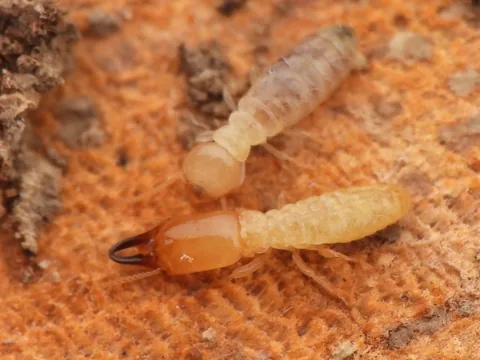 Eastern Subterranean Termite
Reticulitermes spp. (shown: R. flavipes)
Subterranean termites live in the soil and travel into buildings through earthen shelter tubes; they are the most destructive termites in most of the United States and usually warrant a professional.
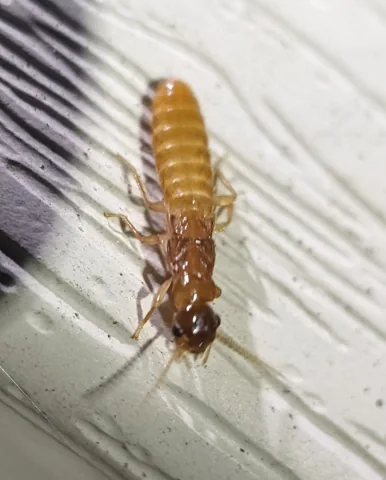 Formosan Subterranean Termite
Coptotermes formosanus
The Formosan subterranean termite is an invasive species from East Asia and one of the most aggressive and economically damaging termites in the world; its colonies are much larger than those of native subterranean termites. EPA lists it among the less common termites in the U.S., behind the native subterranean termite.
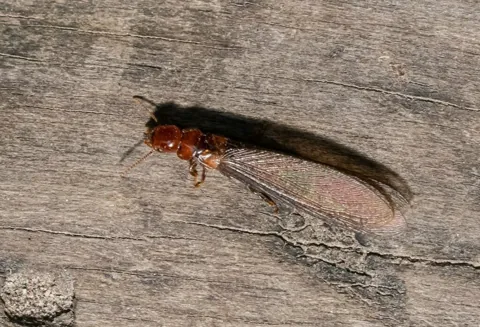 Western Drywood Termite
Incisitermes minor
Drywood termites live entirely inside wood without needing soil contact; the western drywood termite is California's second most important termite pest after subterranean termites. Clemson Extension says drywood termites get the moisture they need from humid air and are most common along humid coastal areas of South Carolina.
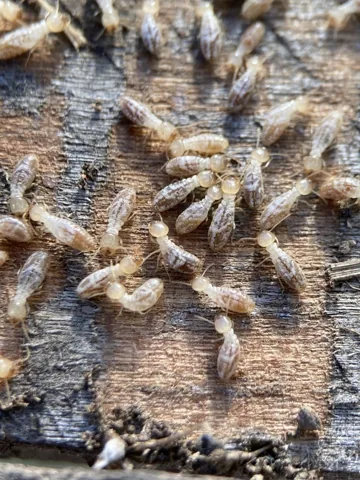 Western Subterranean Termite
Reticulitermes hesperus
The western subterranean termite lives in soil and travels through mud tubes to feed on wood, including the lumber in houses. Its genus, Reticulitermes, holds the most destructive termites found in California and ranks among the most economically important wood-destroying pests in the western United States.
Start with which termite you have
Subterranean termites build nests in soil and reach wood that touches the soil or travel to it through earthen shelter tubes. Drywood termites nest above ground in fairly dry wood such as lumber, utility poles, fences and dead tree limbs, and need no soil contact. Dampwood termites nest in very moist wood.[3][4]
The native subterranean termite is the most common termite in most of the United States; drywood and the invasive Formosan termite are less common. In Texas, drywood termites turn up more often in coastal areas such as Houston and Corpus Christi.[9][12]
Drywood termites push six-sided fecal pellets out of small kickout holes, less than 2 mm across. Subterranean termites leave mud tubes about the diameter of a pencil, and the wood they damage is hollowed along the grain with bits of dried mud or soil in the galleries. Dampwood problems are best handled by fixing the moisture problem and replacing damaged wood.[4][1]
Fumigation, heat treatment, freezing and electrocution devices won't control subterranean termites in a structure, because the reproductives and most of the colony are in nests near or below ground, out of reach. Subterranean termites are controlled with insecticides applied to the soil next to the structure, directly to nests through shelter tubes, or through bait stations.[3]
Subterranean termites: liquid soil treatments
A liquid termiticide is meant to leave a long-lasting treated zone in the soil that keeps termites from getting into the building. Termites already inside usually die off too, because they can no longer get back to the soil for moisture. Texas A&M notes that soil treatments are not intended to kill every termite colony in the area; they protect the structure.[1][6]
A typical treatment may put hundreds of gallons of termiticide into the ground along the foundation, under concrete slabs and inside foundation walls, using trenching, rodding and drilling. Texas A&M says rodding alone can leave gaps, so rodding combined with trenching is preferred, and that foam is a supplement for hard-to-treat spots such as chimney bases, dirt-filled porches and wall voids, not a substitute for soil treatment. See what the crew does on treatment day in our liquid treatment guide.[1][6]
Many companies offer an exterior perimeter application with a non-repellent product such as fipronil: the whole outside of the house is treated, plus spot treatment of infested or high-risk areas inside. The University of Kentucky says most companies back these with a warranty because they are reliable.[1]
Wells, cisterns, nearby ponds or streams, plenums, sub-slab heating ducts, drainage systems and inaccessible crawl spaces can make a liquid treatment hard to do. Some companies won't offer a warranty when those features keep them from treating to industry standards; baits may be the only practical option in those homes.[2][1]
Repellent vs. non-repellent termiticides
Older liquid termiticides were mostly repellent. Termites can detect repellent active ingredients, usually pyrethroids, and turn away without picking up a lethal dose.[3][1]
Current non-repellent products, including fipronil, imidacloprid and chlorantraniliprole (Altriset), don't repel termites; termites tunneling into treated soil are killed. The University of Kentucky says research has shown non-repellent, lethal barrier products tend to be most reliable, and that they are usually more reliable at controlling an infestation on the first attempt. UC IPM says they kill termites at low dosage rates.[1][2][3]
Sources differ on whether repellent products are still in use. UC IPM says termiticide products with repellent active ingredients have been phased out, but EPA's termite page still lists the pyrethroids bifenthrin, cypermethrin and permethrin among common termiticide active ingredients. Ask each company to name the product in its proposal and give you the label.[3][9]
How long a liquid treatment lasts
EPA requires termiticide makers to show their products protect a structure for at least five years, and all liquid termiticides are supposed to control termites for at least five years when applied according to label directions. NC State says modern termiticides applied properly to the soil are typically effective for 5 to 10 years.[5][1]
That five-year figure is not a guarantee. How long a treatment holds depends on the product, how thoroughly it was applied, the region, local conditions and how many termites are on the property. Digging in treated soil during renovation or landscaping can open a way in. If termites swarm and keep infesting the year after treatment, the University of Kentucky says the cause is an untreated gap, not the termiticide breaking down.[1][5]
Termites can still turn up in the walls for six to eight weeks after a proper treatment, according to the Texas Department of Agriculture, and they need only a 1/32-inch opening to get in.[12]
Re-treating every year is not allowed. NC State says annual treatments without evidence of termite activity are illegal under most termiticide labels. Texas rules allow retreatment when there are no records of the first treatment, there is clear evidence of active termites, the treated barrier has been removed or destroyed, there is evidence the barrier no longer works, or at least 5 years have passed since the last full treatment.[5][6][12]
Some contracts require a booster treatment after a set number of years to keep the guarantee. NC State says these are usually partial retreatments around the foundation, usually not covered by the contract, and the requirement should be spelled out in the contract before you sign.[5]
Subterranean termites: bait systems
Termite baits are cellulose combined with a slow-acting insecticide that disrupts molting. Termites eat it, share it with nest mates, and die within weeks of eating it as they try to molt. The slow action lets the bait spread through the colony before sick termites pile up near the stations. Systems named by the University of Kentucky include Sentricon, Exterra and Trelona Advance; EPA notes that hexaflumuron, used in a monitoring and baiting system, was the first active ingredient registered as a reduced-risk pesticide.[2][9]
Stations go into the ground around the whole house, usually 1 to 2 feet from the foundation and typically 10 to 15 feet apart, plus extra stations near woodpiles, stumps, moist spots and old damage. Some systems also mount stations indoors over active mud tubes. Depending on the product and company, stations are checked monthly, quarterly, twice a year or once a year.[2][1]
Termites can't see or smell bait underground; they find it by chance while foraging, which takes weeks or months, and elimination can take several months or longer. UC IPM says bait systems may take several months or even years, and Texas A&M says control may take from a few months to more than a year. In Kentucky, termites find baits most from spring through fall; baiting in late fall and winter is less productive, and drought can reduce feeding.[2][3][6]
Baits leave no pesticide in the soil once termites are gone. Termites from neighboring colonies can move in later, so protection lasts only as long as the stations stay in the ground and are monitored. The University of Kentucky warns that letting the annual renewal lapse carries extra risk with baits for that reason.[2]
- Baits fit when you don't want floors or porches drilled or furniture moved; the technician usually doesn't even need to come inside.[2]
- Baits fit when you want as little pesticide as possible around the house. The amount of active ingredient is tiny and stays below ground in tamper-resistant stations.[2]
- Baits fit homes with wells, drains, ducts or crawl spaces that complicate liquid treatment, and homes where a liquid treatment failed.[2]
- A liquid may suit better when the infestation is severe or a real estate sale can't wait several months; some damage can continue before a bait takes effect. Some owners in that spot prefer a liquid, alone or with baits.[2]
- Baiting can sometimes cost more than a liquid treatment because it takes more visits. Compare the first-year price and the annual renewal fee, not just one.[2]
Drywood termites: fumigation, heat and spot treatments
Drywood treatments fall into two groups. A whole-structure treatment treats every infestation in the building at once, accessible or not. A localized or spot treatment covers a single board or a small group of boards. Because drywood colonies are hard to find, especially behind drywall, you can never be sure every infestation was treated with a localized method.[4]
Fumigation: the house is covered with tarps and filled with sulfuryl fluoride, which kills drywood termites within several days and is highly effective if applied correctly. A monitored fumigation, with gas-monitoring lines inside the house, has the highest success rate; unmonitored fumigations may not reach a killing concentration. You, your pets and plants leave for several days, and tarps dragged across the roof can damage it. Sulfuryl fluoride is a restricted use pesticide that only certified applicators may use. The Texas Department of Agriculture calls a wood-penetrating gas fumigant the only sure way to get them all.[4][11][12]
Heat: all wood in the structure is heated to at least 120°F and held there for at least 33 minutes. It uses no chemicals, you're out for hours instead of days, and parts of large buildings such as apartments or condos can be treated separately. Large beams can take many hours or days to heat to the core, wood against concrete or tile can stay too cool, and heat can damage plastics such as outlet covers and cable wiring.[4]
Neither fumigation nor heat leaves anything behind to stop the next infestation; preventive wood treatments can be applied afterward. NPIC says heat is currently the only whole-structure alternative to fumigation. If you go with tenting, our fumigation prep guide covers getting the house ready.[4][11]
- Drill-and-inject: liquids, dusts or foams are injected into the termite galleries. UC IPM says control is high when the colony is correctly located and the treatment reaches the termites, results vary with the active ingredient, and infestations can rebound. A callback treatment and detection equipment improve results.[4][3]
- Borates: borate products are one of the spot treatments for drywood termites, per Mississippi State and the Texas Department of Agriculture.[8][12]
- Microwaves and electrocution: both leave no residue and the equipment is portable, but each depends on finding the infestation. Microwaves can damage wood and struggle with heat sinks; electrocution devices (90,000 volts, less than 0.5 amps) are hampered by metal, concrete and glass. Few firms offer microwaves.[4]
- Removing infested wood: if an infestation is caught early while colonies are small, removing and destroying the few infested pieces may be all that's needed. If the wood is load-bearing, bring in an architect, engineer or contractor; permits may be required.[8][4]
- Infested furniture: options include chamber fumigation, or freezing or kiln drying if that won't damage the piece.[8]
- For a major infestation, Texas A&M recommends fumigation over spot treatment.[6]
Formosan termites
Formosan termites are subterranean termites, and the treatments used for eastern subterranean termites also work on them. Soil-applied termiticides and in-ground bait stations are the primary treatments for preventing infestations. The difference is that Formosan termites are more aggressive and can do more damage in less time.[8]
Where there's a source of moisture above ground, such as a leak, Formosan termites can build an aerial nest of carton inside a wall. Once established, it can survive without the soil, so soil treatments and in-ground baits won't control it. Moisture problems have to be found and fixed and the nests found and treated; a moisture meter helps find them. NC State notes that above-ground infestations are typically excluded from termite contract warranties.[8][7][5]
- Spot treatments of less than 10 square feet or 10 linear feet may not keep Formosan termites from getting in somewhere else, Texas A&M says.[7]
- Fumigation doesn't leave protection behind, so for Formosan termites Texas A&M says to establish a soil barrier, treat plumbing penetrations and foundation cracks, and remove carton nest material first. If the barrier works, fumigation may not be needed.[7]
- Baits can be highly effective because Formosan termites feed aggressively. Above-ground baits go against active mud tubes; in-ground baits may take several months to years, and stations need frequent checks because Formosan termites eat wood fast.[7]
- Some Texas termite contracts exclude Formosan termites, so get the species identified before you sign.[7]
DIY or professional?
For an infested house, the University of Kentucky's advice is not to do it yourself. Treatment takes knowledge of building construction to find hidden entry points, plus equipment such as masonry drills, large spray tanks and soil-injection rods. A possible exception is a mailbox post or other small wooden item not attached to the house.[1]
NC State doesn't recommend DIY chemical control either. Spraying swarmers or the surface of infested wood kills the termites you see, but it doesn't reach the inside of the wood or stop termites coming up from the soil. UC IPM says no reliable over-the-counter termite products are available in California and the effective ones are professional-use only.[5][3]
Some termite baits can be bought online, but the University of Kentucky says baiting takes diligence and is usually best left to professionals, and Texas A&M says do-it-yourself bait systems are generally not equivalent to a professionally installed and maintained system.[2][6]
What you can do yourself: replace termite-damaged wood, fix conditions that attract termites, and sweep or vacuum swarmers, which can't damage wood and live only about a day.[3][1]
Warranties and termite contracts
Most companies will come back and retreat at no extra charge if termites return, as long as you keep paying the annual renewal. The University of Kentucky calls buying any termite treatment without an ongoing service agreement a bit of a gamble. NC State says a treatment usually comes with a one-year warranty, after which you decide whether to renew; whether to keep it is your call.[1][5]
An annual contract doesn't mean the house is treated every year. The company inspects (or should inspect) once a year and treats only if there's evidence of termites.[5]
- Retreatment-only vs. repair: many contracts only cover retreating the problem areas. Others also pay for repairs to termite damage, usually at a higher renewal fee.[5][1]
- Existing damage: on a house bought without a contract, the repair coverage likely excludes damage that was already there, and nobody can reliably date termite damage. NC State says that if you've had a repair contract with one company since the house was built, switching companies means that exclusion starts over.[5]
- Read it as a service guarantee: Texas A&M says a warranty is a guarantee of service, not of the termite barrier. Find out whether there's a yearly charge, what it costs to extend and for how long, and keep copies.[6]
- Exclusions: contracts usually cover termites only, not carpenter ants, carpenter bees, powderpost beetles or wood decay, and may exclude Formosan termites or above-ground infestations.[5][7]
- Spot treatments: most reputable firms won't warrant a spot treatment for subterranean termites, except as retreatment under an existing warranty.[1][5]
- Drywood: UC IPM advises reading your guarantee carefully and considering an annual inspection service.[4]
Comparing bids: questions to ask
Get inspections and estimates from at least three companies; UC IPM and Texas A&M both say three. Prices vary with the perimeter of the house, construction type and region, and the overall quality depends less on the salesperson than on the technician who does the work. Texas A&M says delaying a few weeks makes no difference, and the University of Kentucky says to avoid firms that push specials or scare tactics.[6][4][2][1]
Texas A&M says a proper inspection report shows where active or inactive infestations are, where and how many treatments will be made, a diagram of the house with problem features such as porches, utility accesses, wood-to-soil contact and moisture, and an estimated cost; find out whether it's a firm price. In Texas, the company must also hand you disclosure documents with the bid: a diagram, the label and proposed concentration of each termiticide, the full warranty terms and a certified applicator's signature.[6][12]
- Is the company licensed by the state for termite work? Ask to see it and check with your state pesticide regulatory agency.[9][10][1]
- Which product, by name and EPA registration number, and where will it go? Ask for a copy of the label. EPA says a product whose label doesn't include directions to protect a structure isn't meant to.[10][9]
- Liquid, bait, or both? Full treatment, perimeter, or spot? What areas are left out, and why?[6][12][1]
- What does the warranty cover: retreatment only or repairs too? How long, what's the renewal cost, and what could void it?[12][5][10]
- Will the contract later require a booster treatment, and who pays?[5]
- Does it cover Formosan termites and above-ground nests, where those occur?[7][5]
- Does the company carry insurance covering you, your property and its employees? How experienced are its technicians?[10]
- Check complaints and violations with the Better Business Bureau or your state pesticide regulatory office. In California, UC IPM points to the Structural Pest Control Board.[10][4]
Red flags
Texas A&M lists warning signs of bad or fraudulent termite operators. Texas also requires a 3-day cooling-off period for home solicitations.[6]
- A price based only on the number of gallons of material used.[6]
- A secret formula. Every termiticide must be registered with EPA.[6]
- A crew that shows up unannounced, pointing to termites in trees, fences or the house next door.[6]
- A deal that bundles tree trimming or foundation repair, or a discount for chemical supposedly left over from another job if they can treat right away.[6]
- Claims of endorsement by Texas A&M or a state agency, or pressure aimed at elderly people living alone.[6]
What doesn't work
These are the approaches the extension and agency sources say fail, or have little evidence behind them, for termites in a house.[1][3][4]
- Spraying the termites you can see: it kills those termites but not the infestation, and spraying the soil surface or outside of the foundation won't stop termites coming in from below.[5]
- Tenting or heat for subterranean termites: their colonies are in the soil, out of reach.[3]
- Spot-treating subterranean termites without a full treatment: colonies forage in many directions and will likely find another way in.[1][5]
- Store-bought products for a house infestation: they will seldom eradicate it. EPA says products that only claim to kill termites haven't shown they protect a structure.[1][9]
- Orange oil: botanical products such as orange oil and neem oil have been tried on drywood termites, but lab and field tests at two universities question the efficacy of d-limonene, per UC IPM.[4]
- Unmonitored fumigation: it may not reach a killing gas concentration, and failures may occur.[4]
- Rodding alone, which can leave gaps, or foam in place of a liquid soil treatment: Texas A&M says foam isn't suitable for treating the soil directly.[6]
- Biological control: insect pathogens and parasites aimed at drywood termites have mostly failed, per UC IPM, and EPA says nematodes and fungi have shown some success, mainly in the lab.[4][9]
If termites come back after treatment
A comeback doesn't necessarily mean you were cheated. Termite control involves living animals, and even good treatments sometimes fail when termites find an untreated gap in the soil. With baits, it can take weeks or months for termites to find the stations and months more for control. Call the company first if you're under contract.[1][12]
If you can't resolve it, contact your state pesticide regulatory agency. In Texas, the Department of Agriculture's Structural Pest Control Service takes complaints but can't make a company pay damages, and it advises not repairing the damage or having the house retreated before its inspector has investigated.[9][12]
Common questions
- What is the best termite treatment?
- It depends on the termite. For subterranean termites, a non-repellent liquid soil treatment and a bait system can both work; liquids act faster, baits suit owners who want fewer pesticides or homes hard to treat with liquids. For drywood termites spread through a house, whole-structure fumigation or heat is the way to reach every infestation.[2][1][4]
- How long does a termite treatment last?
- Liquid termiticides must protect for at least five years when applied according to label directions, and NC State says they are typically effective 5 to 10 years. Baits protect as long as the stations are kept in the ground and monitored. Fumigation and heat leave no residual protection.[1][5][2][4]
- Does tenting kill subterranean termites?
- No. Fumigation and heat work on drywood termites living in the wood, but subterranean colonies are in the soil, out of reach.[3]
- Is a termite bond or annual contract worth it?
- That's your call. Most companies retreat at no charge only while the renewal is kept up, and the University of Kentucky calls buying a treatment without an ongoing agreement a gamble. NC State compares the annual contract to insurance and says a repair contract costs more to renew than a retreatment-only one.[1][5]
- Can I treat termites myself?
- Not for a house. Extension specialists say store-bought products seldom eradicate an infestation and the effective products are professional-use only. A small item not attached to the house, such as a mailbox post, is the exception the University of Kentucky gives.[1][3][5]
- Why do termite bids vary so much?
- Companies use different methods and warranties, and price depends on the perimeter of the house, construction type and region. Compare the treatment plan, product, warranty terms and renewal fee, not just the first-year price.[1][2][5]
Photo credits
- Eastern Subterranean Termite: (c) Sam Kieschnick, some rights reserved (CC BY) — via iNaturalist, CC BY 4.0
- Formosan Subterranean Termite: (c) ncb1221, some rights reserved (CC BY) — via iNaturalist, CC BY 4.0
- Western Drywood Termite: (c) Jeremiah Degenhardt, some rights reserved (CC BY) — via iNaturalist, CC BY 4.0
- Western Subterranean Termite: (c) Z, some rights reserved (CC BY) — via iNaturalist, CC BY 4.0
Sources
- University of Kentucky Entomology, “Termite Control: Answers for Homeowners (ENTFACT-604).” entomology.ca.uky.edu/ef604 (accessed 2026-11-10)
- University of Kentucky Entomology, “Termite Baits: A Guide for Homeowners (ENTFACT-639).” entomology.ca.uky.edu/ef639 (accessed 2026-11-10)
- University of California Statewide IPM Program, “Subterranean and Other Termites (Pest Notes, Home and Landscape).” ipm.ucanr.edu/home-and-landscape/subterranean-and-other-termites/ (accessed 2026-11-10)
- University of California Statewide IPM Program, “Drywood Termites (Pest Notes, Home and Landscape).” ipm.ucanr.edu/home-and-landscape/drywood-termites/ (accessed 2026-11-10)
- NC State Extension, “Termites: Biology and Control.” content.ces.ncsu.edu/termites-biology-and-control (accessed 2026-11-10)
- Texas A&M AgriLife Extension, “How to Select a Termite Control Service (E-369, 2005; R. E. Gold, M. E. Merchant, H. N. Howell Jr., G. J. Glenn).” aes.tamu.edu/files/2010/06/HowtoSelectTermite-ControlService.pdf (accessed 2026-11-10)
- Texas A&M AgriLife Extension, “Formosan Subterranean Termites (E-367).” extensionentomology.tamu.edu/wp-content/uploads/sites/3/2017/01/Formosan-subterranean-termites-E367.pdf (accessed 2026-11-10)
- Mississippi State University Extension, “Species of Termites in Mississippi.” extension.msstate.edu/insects/termites/species-termites-mississippi (accessed 2026-11-10)
- U.S. Environmental Protection Agency, “Termites: How to Identify and Control Them.” www.epa.gov/safepestcontrol/termites-how-identify-and-control-them (accessed 2026-11-10)
- National Pesticide Information Center, “Selecting a Pest Control Company.” www.npic.orst.edu/pest/selectpco.html (accessed 2026-11-10)
- National Pesticide Information Center, “Structural Fumigation.” npic.orst.edu/pest/fumigation.html (accessed 2026-11-10)
- Texas Department of Agriculture, “Termite FAQs (Structural Pest Control Service).” texasagriculture.gov/Regulatory-Programs/Pesticides/Structural-Pest-Control-Service/Termite-Fumigation-Applications/Termite-FAQs (accessed 2026-11-10)