The short answer
- Read the list of areas that weren't inspected first. The rules let inspectors leave out areas hidden by furniture, stored items, insulation or wall and floor coverings, or that can't be reached without tearing into the structure, but the report has to name them.[2][1][3][5][11][7]
- A clean report isn't a guarantee. Florida law says a report doesn't guarantee the absence of wood-destroying organisms or their damage unless it states the extent of a guarantee, Arizona law says a report isn't a guarantee for any date after the inspection, and Texas rules note that concealed infestations and damage may not be found.[1][9][3][7][8]
- Evidence isn't the same as activity. North Carolina inspectors must report all visible evidence of wood-destroying insects, past or present, whether or not the infestation is active, and evidence of an earlier treatment alone doesn't count as an infestation. NC State Extension adds that old, dry shelter tubes leave etching that can stay visible for years.[4][7][15]
- Conditions conducive to infestation, such as wood touching soil, wood debris under the house, excess moisture and too little crawl space clearance, are listed so they can be corrected; UC IPM advises fixing structural problems that attract subterranean termites.[3][4][6][8][5]
- On a California report, Section I items show visible evidence of active infestation or infection, Section II items are conditions likely to lead to one where no evidence was found, and further-inspection items are areas the inspector couldn't get into.[5][10]
- It isn't a damage report. The Texas Department of Agriculture and North Carolina's homebuyer guide both say the inspector isn't expected to judge structural damage; North Carolina sends that question to a structural engineer, contractor or other building expert.[8][7]
Wood-destroying pests these reports cover
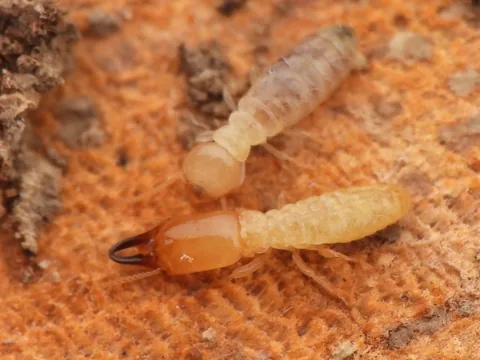 Eastern Subterranean Termite
Reticulitermes spp. (shown: R. flavipes)
Subterranean termites live in the soil and travel into buildings through earthen shelter tubes; they are the most destructive termites in most of the United States and usually warrant a professional.
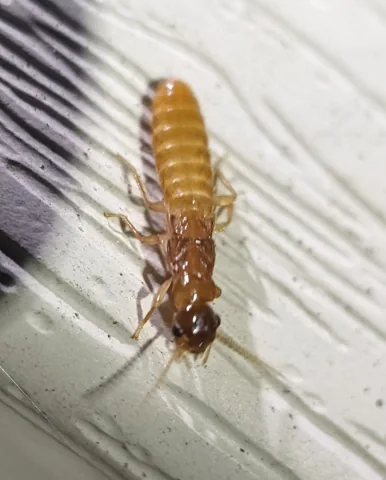 Formosan Subterranean Termite
Coptotermes formosanus
The Formosan subterranean termite is an invasive species from East Asia and one of the most aggressive and economically damaging termites in the world; its colonies are much larger than those of native subterranean termites. EPA lists it among the less common termites in the U.S., behind the native subterranean termite.
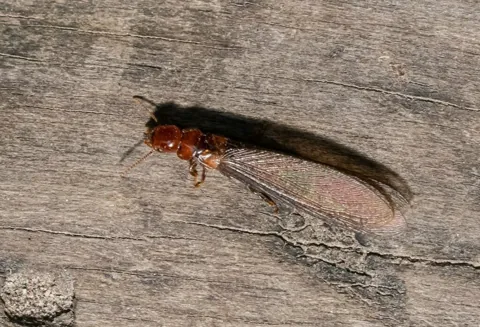 Western Drywood Termite
Incisitermes minor
Drywood termites live entirely inside wood without needing soil contact; the western drywood termite is California's second most important termite pest after subterranean termites. Clemson Extension says drywood termites get the moisture they need from humid air and are most common along humid coastal areas of South Carolina.
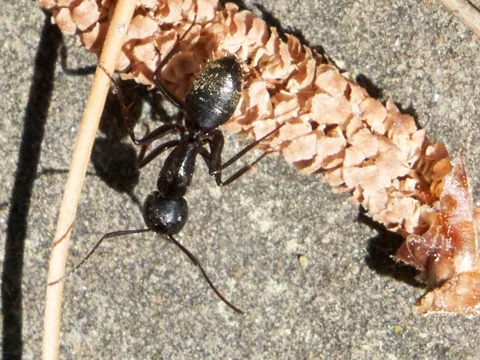 Carpenter Ants
Camponotus species
Carpenter ants don't eat wood the way termites do; they excavate it to nest, usually starting where wood is damp or decayed, and indoor nests are often satellites of a parent colony outdoors. Minnesota and Clemson extension both stress that they don't eat wood; they tunnel into it to make a nest.
 Eastern Carpenter Bee
Xylocopa virginica
Carpenter bees are large, solitary bees that bore round tunnels into bare, weathered wood to rear their young; they rarely cause severe damage but can weaken wood that is reused year after year.
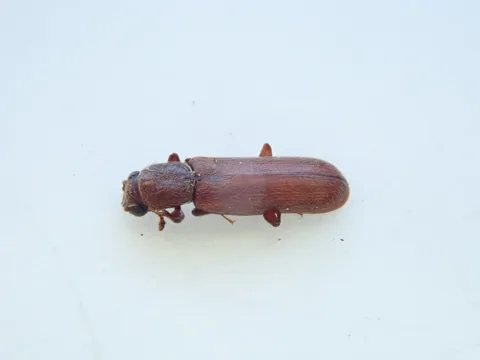 Powderpost Beetles
Lyctinae (e.g., Lyctus brunneus, Lyctus planicollis)
Powderpost beetles are small brown beetles whose larvae tunnel through dry, seasoned hardwood. Often the first clues are tiny round exit holes and little piles of flour-fine dust on floors, furniture or paneling.
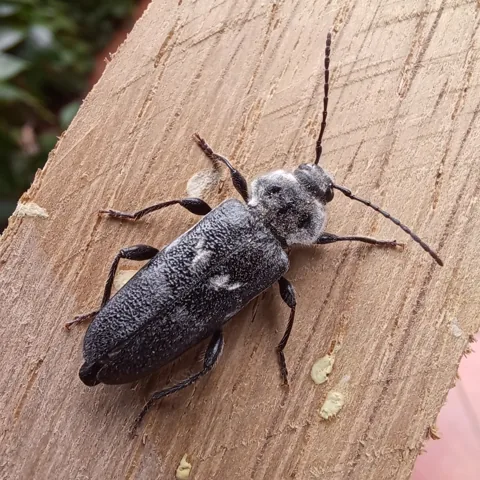 Old House Borer
Hylotrupes bajulus
Despite its name, the old house borer most often turns up in fairly new buildings. Its larvae tunnel inside pine, spruce, fir and other softwood framing for years, and damp, poorly ventilated spaces let infestations spread.
What the report is, and who writes it
In Florida, when a licensed company inspects for wood-destroying organisms for a real estate transaction and charges a fee or the customer asks for a written report, the findings go on the state's form, the Wood-Destroying Organisms Inspection Report (FDACS-13645). The company may not add disclaimers or other language to the form, and it has to keep a copy for at least 3 years.[1][2]
North Carolina's Wood-Destroying Insect Information Report, the WDIR 100, is the only form a pest control operator may use to report the presence or absence of wood-destroying insects or their damage in a structure that's for sale. It can't be altered, for example by adding an arbitration clause or using it as a proposal, and no report may be issued before the building is inspected.[4][7]
In Texas, the inspection behind a wood destroying insect report (WDIR) must be done by a licensed certified applicator or technician in the termite and wood destroying insect category. Its stated purpose is to report whether wood destroying insects are present and whether conditions conducive to infestation exist, as the basis for any preventive or corrective recommendations.[3]
A California report has to show the structural pest control license number and the signature of the licensee who made the inspection, along with any infestations, infections or evidence of them, and any wood members damaged by wood-destroying pests or organisms.[5]
North Carolina treats this paperwork seriously: an incomplete or inaccurate report isn't acceptable, and issuing one is grounds for disciplinary action under the state's structural pest control rules.[4]
North Carolina's homebuyer guide says the WDIR is required on almost every residential structure sold, and Kentucky Entomology notes that a termite inspection report is normally a condition of sale. Though people call it a clearance letter or a termite letter, North Carolina says it's neither: it doesn't necessarily clear a structure, and it covers more than termites.[7][14]
Texas A&M AgriLife Extension notes that a company may use its own form for an inspection done to decide whether treatment is needed, but an inspection for a real estate transaction must be reported on the Texas Official Wood Destroying Insect Report form.[13][3]
Arizona allows only an applicator certified in wood-destroying organism management to complete these reports, and the business has to keep a copy for three years. A Florida report must certify that neither the inspector nor the company has a financial interest in the property or any role in the sale beyond the inspection, and Arizona bars anyone from completing a report on a property they own or occupy.[9][1]
What the inspector looks at
These are visual inspections of the areas the inspector can reach. Florida's standard covers all areas accessible by normal means, and the inspector may probe and sound structural members when there's a preliminary finding of visible evidence of infestation or damage.[2][3][8]
North Carolina describes the inspection as a careful visual examination of all accessible areas, plus sounding of accessible structural members next to slab areas in contact with masonry walls and other areas especially open to attack. Permanently attached decks, porches and storage sheds are included; outbuildings and other detached structures aren't routinely inspected unless the client asks.[7]
A Florida inspection also looks for visible evidence of wood-decaying fungi and their damage, such as the fungi that cause white rot, brown rot, poria and cubical rot, but not surface molds that don't damage sound wood.[2]
Texas lists the areas an inspection must include when they're accessible and unobstructed: plumbing areas in the bathroom, kitchen and laundry, and others such as a hot tub; window and door frames and sills; baseboards, flooring, walls and ceilings; entrance steps and porches; the outside of the slab or foundation wall; crawl space piers, floor joists, subfloors, sill plates and foundation walls; the fireplace; and weep holes.[3]
Texas A&M AgriLife's inspection checklist for subterranean termites includes checking floor coverings for raised or split areas, looking where plumbing or utility pipes enter the foundation or flooring, and noting any earth-to-wood contact such as fences, stair carriages or trellises, along with any area where inspection can't be made.[12]
The Texas report also needs a diagram of the structure with approximate perimeter measurements, marking areas of current and previous wood destroying insect activity and areas with conditions conducive to infestation.[3]
California reports must give information on all accessible areas, including the substructure, foundation walls and footings, porches, patios and steps, stairways, air vents, abutments, stucco walls, columns and attached structures, plus any outdoor wooden deck, stairs or landing that's attached to or touching the house.[5]
Read the not-inspected list first
All four states' rules let the inspector leave out areas that can't be reached, as long as the report says which ones.[1][3][5][4]
Florida's standard doesn't cover areas that are enclosed or inaccessible, areas concealed by wall coverings, floor coverings, furniture, equipment, stored articles or insulation, or any part of the house that would have to be removed or defaced to inspect.[2]
Texas recognizes inaccessible or obstructed areas that include inaccessible attics, the inside of hollow walls, the space between a floor or porch deck and the ceiling or soffit below, areas behind or beneath stoves, refrigerators, furniture, built-in cabinets, insulation and floor coverings, and places where storage or locks make inspection impractical. Inspecting those areas isn't required.[3][11]
California's list of areas an inspector may treat as inaccessible includes furnished interiors, inaccessible attics, the inside of hollow walls, stall showers over finished ceilings, built-in cabinet work and floors beneath coverings, but the inspector still has to say which of them weren't inspected.[5]
Florida requires the report to list any visible, accessible areas that weren't inspected and the reasons, plus the areas that were inaccessible. California requires the inspector to state which areas weren't inspected and why inspecting them isn't practical.[1][5][11]
North Carolina inspectors must list movable obstructions such as furniture, appliances and equipment, and items that vary from house to house such as insulation and attic access, separately for each structure. Permanently installed floor and wall coverings don't have to be listed one by one, because the form already covers them.[4][7]
The longer that list, the more of the house the report can't speak to; Texas rules note that concealed infestations and damage may not be discovered. On a California report, a recommendation for further inspection marks an area the inspector couldn't get into to finish the job.[3][5][14]
North Carolina's homebuyer guide tells buyers to take note of the areas listed as inaccessible, because the inspector isn't responsible for evidence that couldn't be reached. Opening them up may mean removing walls, and an additional fee may be charged. Kentucky Entomology notes that infestations can go undetected for years behind walls, floor coverings and insulation, and even the most experienced inspector can overlook signs that are hidden.[7][14]
Findings: evidence, activity and past treatment
Florida's report must identify any wood-destroying organisms present and any visible damage they caused, and note any visible evidence of previous treatments for, or infestations of, wood-destroying organisms.[1][8]
In Texas, the inspector must report visible evidence of wood destroying insects or signs of current infestation, termite tubes or frass, exit holes or frass from other wood destroying insects, and evidence of previous treatment or infestation.[3]
North Carolina's policy spells out the difference between evidence and activity. All visible evidence of wood-destroying insects, past or present, has to be reported, and an active infestation isn't required before evidence is reported; evidence of a prior treatment by itself isn't enough to report an infestation.[4][7]
The age of evidence is hard to read. NC State Extension says an empty tube doesn't necessarily mean termites are gone, since they may have abandoned that tunnel, and that without the inspection history of the house it's impossible to tell the age of tunnels or etching, or of recently found damage.[15]
The location has to be specific. North Carolina wants phrases such as 'in floor joists behind front porch' or 'in sill along rear wall'; 'in crawl space' isn't enough.[4][7]
North Carolina's form has a box for subterranean termite evidence with no recent activity and evidence that the infestation was treated in the past. The box saying there's no evidence of wood-destroying insects may be checked only when there's no evidence at all in the structure or in or on debris under it.[4]
Wood-destroying insects aren't only termites. North Carolina's 'others' category includes carpenter ants and wood-boring beetles that can infest seasoned wood, and its homebuyer guide lists subterranean termites, powderpost beetles, old house borers, carpenter ants and sometimes carpenter bees as the insects commonly noted. California inspectors who find evidence of carpenter ants or carpenter bees must report it and recommend control.[4][7][5]
Damage may not be on the form. North Carolina's WDIR 100 no longer requires damage to be reported; if a company does report damage, it has to be on that form.[4]
North Carolina inspectors may not remove or destroy evidence of wood-destroying organisms found in, on or under the structure, or in debris under it, except when the rules require them to treat.[4]
Damage and repairs: what the report leaves to others
A wood-destroying insect report isn't a structural damage report. The Texas Department of Agriculture says the inspector isn't ordinarily a construction or building trade expert and isn't expected to detect the extent of structural damage; North Carolina says evaluations of damage should be left to a structural engineer, contractor or other building expert.[8][7]
North Carolina's homebuyer guide says that if the report shows wood-destroying insects in the wooden members, you should assume there is some damage, and it's the buyer's responsibility to have it repaired, or evaluated and acknowledged as of no structural consequence by a qualified contractor or engineer. A repair invoice may be attached to the WDIR.[7]
What counts as a wood-destroying organism differs by state. Florida's inspection includes wood-decaying fungi, while North Carolina's guide says its WDIR won't reveal wood-decay fungi or wildlife damage, though decay fungi may be listed as a condition conducive to subterranean termites. Structural, electrical, plumbing and roof problems belong to a home inspector or contractor.[2][7]
North Carolina also says a clear report isn't mandatory for a sale to go through, and that lenders and buyers shouldn't expect one on an older home: the report's job is to show all visible evidence, and an older house may well have some.[7]
Conditions conducive to infestation
Texas requires the report to note conditions conducive to wood destroying insect infestation, including wood-to-ground contact, formboards left in place, excessive moisture, wood debris under or around the structure, a footing too low or soil line too high, too little crawl space clearance, expansion joints or cracks in a slab, and decks.[3]
At a minimum, North Carolina inspectors must report wood in direct contact with soil, cellulose debris under the structure, and excessively wet wood in the crawl space, as determined with a moisture meter. The state's homebuyer guide defines excessively wet as a wood moisture content of 20% or greater and adds that other conditions, such as too little clearance between wood and soil, crawl space moisture, construction flaws or improper grading, are judged house by house.[4][7]
The Texas Department of Agriculture's consumer list adds firewood stacked against the foundation, wood mulch within 3 feet of the foundation and insufficient ventilation to earth-wood contact, crawl space wood debris, faulty grade and moisture.[8]
UC IPM advises identifying and correcting structural problems that attract or promote subterranean termites. Ideally, all wood under the building should be at least 12 inches above the soil, and California's report rule counts less than 12 inches of clear space under the floor joists as a condition likely to lead to infestation. Texas A&M AgriLife says the soil line should be several inches below the top of the slab or foundation wall.[6][5][12]
California's Section I and Section II report
A California report that separates its findings must open with a set statement defining the sections. Section I items show visible evidence of active infestation or infection, or conditions that have resulted in or from an infestation or infection. Section II items are conditions deemed likely to lead to infestation or infection where no visible evidence was found.[5][10]
Further-inspection items are a third category: recommendations to inspect areas the inspector couldn't get into during the original inspection. They can't be classed as Section I or Section II.[5]
The conditions California counts as likely to lead to infestation or infection include a faulty grade level, where the top of the foundation is even with or below the soil next to it; inaccessible subareas and spots with less than 12 inches of clear space between the bottom of the floor joists and the ground; excessive cellulose debris, meaning any cellulose debris of a size that can be raked or larger; earth-wood contacts; and commonly controllable moisture conditions that would foster a fungus infection damaging to woodwork.[5]
Stumps and wood embedded in footings in contact with soil have to be reported.[5]
HUD's archived FHA guidance quotes the Structural Pest Control Board's advice that Section II items will probably be major items that haven't become infestations or infections but possibly will in the future.[10]
Which form, and how long it's good for
HUD's FHA reference guide (archived in 2012, so check current rules with your lender) says FHA required an inspection of an existing home only when there was evidence of infestation, decay or suspicious damage, when state or local law required it, when it was customary in the area, or at the lender's discretion.[10]
Where a clear report was required, that guide called for the National Pest Management Association's NPMA-33 Wood Destroying Insect Inspection Report, except in states with their own mandated form: Alabama, Arizona, California, Florida, Georgia, Hawaii, Louisiana, Maryland, Mississippi, Nevada, North Carolina, Oklahoma, South Carolina and Texas.[10]
Sources differ on how long a report stays good. The archived HUD guide gave a clear report a validity period of 90 days from the initial inspection date. Texas A&M AgriLife says Texas inspectors aren't required to state how long an inspection is valid, though some services guarantee theirs until a set date, and Arizona law says a report isn't a guarantee for any time after the inspection.[10][11][9]
Termites can appear soon after a clean inspection. North Carolina's homebuyer guide notes research showing termites can build tubes at approximately two and one-half inches per hour, so they can show up shortly after a structure has been inspected, and old house borers can become active after an inspection too.[7]
When the report recommends treatment
Texas lets a real estate transaction report recommend corrective treatment only when there's visible evidence of an active infestation, or visible evidence of a previous infestation with no evidence of prior treatment.[3]
In North Carolina, if the inspector finds live subterranean termites or visible evidence of a past or present infestation and no visible evidence the structure was treated, the company has to treat before it can issue a report stating the structure is free from subterranean termites. When a treatment is done along with the report, a copy of the contract and any warranty must be attached to it.[4][7]
North Carolina's homebuyer guide stresses that reporting comes first: if there's no evidence of an earlier subterranean termite treatment, the company may offer a bid to treat, but it's up to the seller or buyer to contract for treatment. Prior treatments for powderpost beetles, old house borers and other wood-boring beetles are difficult or impossible to establish.[7]
If a Florida company treats at the time of the inspection, the report must name each wood-destroying organism treated, the pesticide used, and all the conditions and terms of that treatment.[1]
Florida inspectors post a notice of the inspection next to the attic or crawl space access or another readily accessible spot, and companies that treat post a separate notice giving the treatment date, the pesticide and the wood-destroying organism treated. Each notice is at least 3 by 5 inches, made of material that will last at least 3 years, and only the property owner may remove it.[1]
Texas has a similar posting rule. Texas A&M AgriLife says that after a real estate inspection a durable sign must be posted at or near the water heater closet, the electric breaker box, under the kitchen sink or inside the bath trap access, and its subterranean termite guide says the sticker documents the company's name, the date and the outcome of the inspection.[13][12]
UC IPM notes that an inspection by a licensed pest management professional is required before any termite treatment can be done.[6]
If treatment is recommended, Texas A&M AgriLife and Iowa State suggest asking three or more licensed companies for inspections, and Kentucky Entomology says inspections and estimates from more than one company help verify that an infestation exists and let you compare services. Don't let anyone rush you; Texas A&M notes a house won't collapse or be ruined overnight.[13][16][14][17]
What a clean report doesn't tell you
Florida law says an inspection report is not a guarantee that wood-destroying organisms or their damage are absent unless the report specifically states the extent of a guarantee.[1]
Arizona law treats a report as evidence of the wood-destroying insects and conducive conditions that were visible and accessible when the inspection was made, and says it isn't a guarantee of what's in the structure after that date. North Carolina's guide calls the WDIR a report of the visible presence or absence of wood-destroying insects at the time of the inspection, not a warranty.[9][7]
Texas rules say the inspection must examine all visible, accessible areas, but concealed infestations and damage may not be discovered, and inaccessible or obstructed areas don't have to be examined.[3][8]
The Texas Department of Agriculture says termites work from the inside out and are often hard to detect, especially drywood termites, which spend their entire lives indoors in walls and roofs.[8]
Subterranean termites stay hidden behind walls, in crawl spaces and under slabs, and most homeowners don't know they have a problem until something turns it up: an inspection for a home sale, damaged wood found in a remodel, a shelter tube on a wall, or a sudden swarm indoors. UC IPM recommends that homes with a history of subterranean termites be inspected by a professional every several years.[6]
Advice on how often to re-inspect differs. UC IPM says homes with a history of subterranean termites should be inspected every several years. NC State Extension says annual inspections, with records kept, matter because they give a reference point for dating damage, while noting that inspections aren't a guarantee for areas that can't be seen, such as inside walls.[6][15][12]
When the accuracy of a North Carolina report is in question, regulators ask whether visible evidence was there at the time and whether a properly performed inspection should have found it, taking into account the time of year, the insect's life cycle, treatment status and whether live insects were present.[4]
Common questions
- Does a clean termite report mean the house has no termites?
- No. It means no visible evidence was found in the areas the inspector could reach on the inspection date. Florida law says a report isn't a guarantee unless it spells one out, Arizona law says it isn't a guarantee for any time after the inspection, and Texas rules note that concealed infestations and damage may not be found.[1][9][3][5][7]
- What's the difference between Section 1 and Section 2 on a California termite report?
- Section I items have visible evidence of active infestation or infection, or conditions that resulted in or from one. Section II items are conditions likely to lead to infestation or infection, such as earth-wood contact or controllable moisture, where no visible evidence was found.[5][10]
- The report shows old termite evidence but recommends no treatment. Is that normal?
- It can be. A Texas real estate report recommends corrective treatment only for visible evidence of an active infestation, or of a previous infestation with no evidence of prior treatment, and North Carolina's form has a box for termite evidence with no recent activity and signs of past treatment.[3][4]
- Why isn't termite damage described on my North Carolina report?
- The WDIR 100 no longer requires damage to be reported. If a company does report damage, it has to be on that form.[4][7]
- How long is a termite inspection report good for?
- There's no single answer. HUD's archived FHA guidance gave a clear report 90 days from the inspection date, Texas inspectors aren't required to state any validity period, and Arizona law says a report isn't a guarantee for any time after the inspection.[10][11][9]
- The report shows termite evidence in the wood. Who tells me how bad the damage is?
- Not the pest inspector. Texas and North Carolina regulators both say the report isn't a structural damage report; North Carolina says to assume some damage when insects have reached the wood and to have a contractor or structural engineer evaluate or repair it.[8][7]
Photo credits
- Eastern Subterranean Termite: (c) Sam Kieschnick, some rights reserved (CC BY) — via iNaturalist, CC BY 4.0
- Formosan Subterranean Termite: (c) ncb1221, some rights reserved (CC BY) — via iNaturalist, CC BY 4.0
- Western Drywood Termite: (c) Jeremiah Degenhardt, some rights reserved (CC BY) — via iNaturalist, CC BY 4.0
- Carpenter Ants: (c) Linda Watson, some rights reserved (CC BY) — via iNaturalist, CC BY 4.0
- Eastern Carpenter Bee: Erik Schiff, public domain (CC0), via iNaturalist
- Powderpost Beetles: Karel Schoonvaere, public domain (CC0), via iNaturalist
- Old House Borer: (c) Johannes Schlagbauer, some rights reserved (CC BY) — via iNaturalist, CC BY 4.0
Sources
- The Florida Senate, “Florida Statutes s. 482.226: Wood-destroying organism inspection report; notice of inspection or treatment; financial responsibility (2025).” www.flsenate.gov/Laws/Statutes/2025/482.226 (accessed 2026-11-10)
- Florida Department of Agriculture and Consumer Services (via Cornell LII), “Fla. Admin. Code R. 5E-14.142: Responsibilities and Duties - Records, Reports, Advertising, Applications.” www.law.cornell.edu/regulations/florida/Fla-Admin-Code-Ann-R-5E-14-142 (accessed 2026-11-10)
- Texas Department of Agriculture (via Cornell LII), “4 Tex. Admin. Code s. 7.175: Official Wood Destroying Insect Report Inspection Procedures.” www.law.cornell.edu/regulations/texas/4-Tex-Admin-Code-SS-7-175 (accessed 2026-11-10)
- North Carolina Department of Agriculture and Consumer Services, Structural Pest Control and Pesticides Division, “SPCD Enforcement Policy: Wood-Destroying Insect Information Report (WDIR 100), revised August 2003.” ncagr.gov/divisions/structural-pests-and-pesticides/wdir-100-enforcement-policy/open (accessed 2026-11-10)
- California Structural Pest Control Board (via Cornell LII), “Cal. Code Regs. tit. 16, s. 1990: Report Requirements Under Section 8516(b) 1-9, Inclusive.” www.law.cornell.edu/regulations/california/16-CCR-1990 (accessed 2026-11-10)
- University of California Statewide IPM Program, “Pest Notes: Subterranean and Other Termites (Publication 7415).” ipm.ucanr.edu/home-and-landscape/subterranean-and-other-termites/ (accessed 2026-11-10)
- North Carolina Department of Agriculture and Consumer Services, Structural Pest Control Division, “A Home Buyer's Guide for Wood Destroying Insect Information Report (WDIR).” ncagr.gov/divisions/structural-pests-and-pesticides/structural-homebuyers-guide-to-wdir-brochure/open (accessed 2026-11-10)
- Texas Department of Agriculture, “Termite FAQs.” texasagriculture.gov/Regulatory-Programs/Pesticides/Structural-Pest-Control-Service/Termite-Fumigation-Applications/Termite-FAQs (accessed 2026-11-10)
- Arizona State Legislature, “Arizona Revised Statutes 3-3633: Wood-destroying insect inspection reports.” www.azleg.gov/ars/3/03633.htm (accessed 2026-11-10)
- U.S. Department of Housing and Urban Development, “HOC Reference Guide: Pest Control, page 1-23 (content archived November 2, 2012).” archives.hud.gov/offices/hsg/sfh/ref/sfhp1-23.cfm (accessed 2026-11-10)
- Texas A&M AgriLife Extension, “Formosan Subterranean Termites (E-367).” extensionentomology.tamu.edu/wp-content/uploads/sites/3/2017/01/Formosan-subterranean-termites-E367.pdf (accessed 2026-11-10)
- Texas A&M AgriLife Extension, “Subterranean Termites (E-368).” extensionentomology.tamu.edu/wp-content/uploads/sites/3/2017/01/Subterranean-termites-E368.pdf (accessed 2026-11-10)
- Texas A&M AgriLife Extension, “How to Select a Termite Control Service (E-369, 2005; R. E. Gold, M. E. Merchant, H. N. Howell Jr., G. J. Glenn).” aes.tamu.edu/files/2010/06/HowtoSelectTermite-ControlService.pdf (accessed 2026-11-10)
- University of Kentucky Entomology, “Termite Control: Answers for Homeowners (ENTFACT-604).” entomology.mgcafe.uky.edu/ef604 (accessed 2026-11-10)
- NC State Extension, “Termites - Biology and Control.” content.ces.ncsu.edu/termites-biology-and-control (accessed 2026-11-10)
- Iowa State University Extension and Outreach, “Termite Control in Iowa.” yardandgarden.extension.iastate.edu/encyclopedia/termite-control-iowa (accessed 2026-11-10)
- National Pesticide Information Center, “Termites.” npic.orst.edu/pest/termite.html (accessed 2026-11-10)