The short answer
- Treat every dog and cat in the house with a flea product your veterinarian recommends, usually a monthly spot-on or an oral tablet. Read the label: some flea products must never be used on cats.[2][1][4]
- Vacuum carpets, upholstered furniture, under cushions and along baseboards daily or every other day, and wash pet bedding in hot, soapy water at least once a week.[1][4]
- If the infestation is heavy, spray carpets and pet resting areas with an insecticide that contains an insect growth regulator (IGR) such as methoprene or pyriproxyfen.[1][2]
- Expect to keep seeing some fleas for about 2 weeks or more after treatment. Pupae inside their cocoons survive sprays, and new adults keep emerging. Keep vacuuming instead of spraying again right away.[1][2]
- No pets? Look for wildlife. Raccoons, opossums, skunks, squirrels or a feral cat living in the attic, chimney or crawl space can be the source.[2][4]
Flea profiles
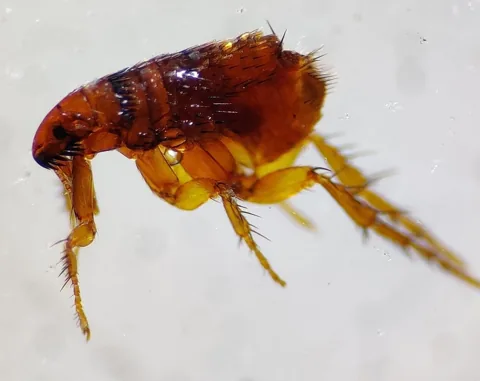 Cat Flea
Ctenocephalides felis
The cat flea is the most common external parasite of domestic cats and dogs, and the flea most often found on both. Adults spend most of their time on the pet, while eggs, larvae and pupae build up wherever the pet rests.
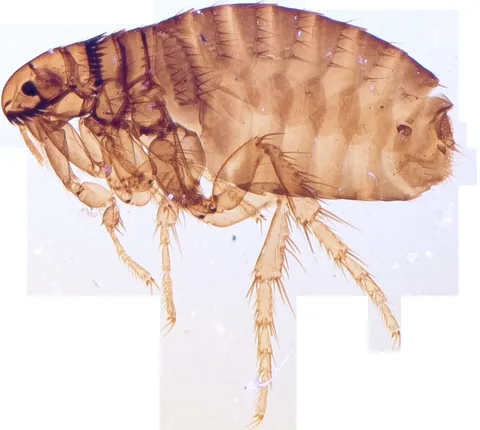 Dog Flea
Ctenocephalides canis
The dog flea looks very much like the cat flea but is the less common of the two on U.S. pets: UC IPM says the cat flea is the most common external parasite on domestic cats and dogs and calls the dog flea rare in California. In some countries, such as South Korea and Uzbekistan, surveys have found it to be the main flea on dogs.
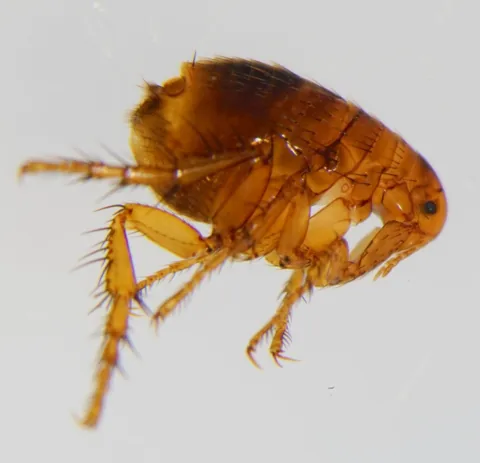 Human Flea
Pulex irritans
The human flea is a bloodsucking flea with a long association with people, one of its main hosts, though it also feeds on a wide range of wild and domestic animals.
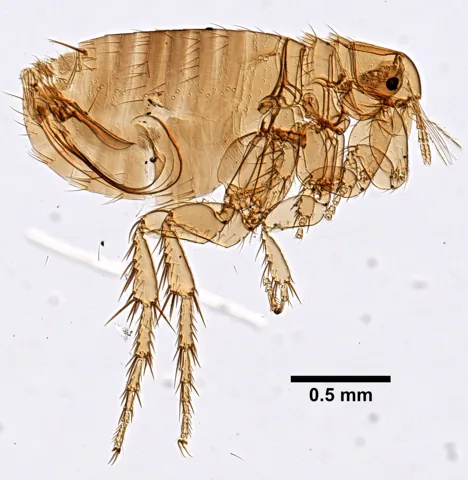 Oriental Rat Flea
Xenopsylla cheopis
The oriental rat flea is a parasite of rats and other small mammals and is best known for spreading two diseases to people: plague and flea-borne (murine) typhus. People are incidental hosts.
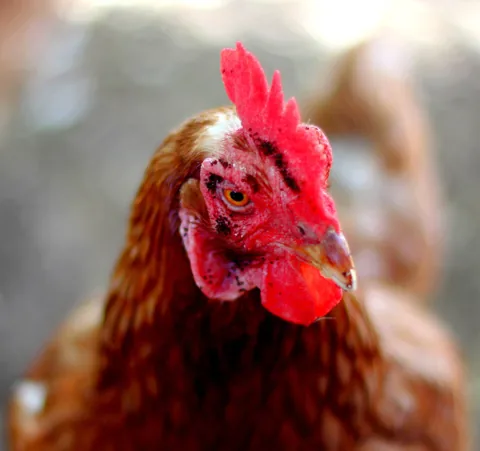 Sticktight Flea
Echidnophaga gallinacea
The sticktight flea is a small, dark flea that embeds its mouthparts in its host's skin and stays put for days or weeks. Texas A&M's veterinary diagnostic lab calls it the main flea pest of poultry, and it also attaches to dogs, cats and people.
No photo yet
Ground squirrel flea
Oropsylla montana
This is the flea behind the handful of plague cases the western United States records each year. It lives in the nests of ground squirrels, west of the Rockies, and it only bothers people when squirrels are abundant or dying. Researchers call it a moderately effective vector, which is the useful part: a bite is unlikely to transmit anything, but a burrow full of dead squirrels and hungry fleas is a situation worth backing away from.
The flea life cycle, and why fleas keep coming back
The flea in most homes is the cat flea, which despite its name infests both dogs and cats and also bites people. Adults are reddish-brown, wingless and no larger than 1/8 inch, flattened side to side so they slip through fur.[1][2][3][4]
Adult fleas spend most of their time on the animal, not in the carpet. Everything else happens off the pet, which is why treating only the pet or only the house tends to fail.[2][4]
- Eggs: females lay eggs in the fur within 24 hours of their first meal. UC IPM puts it at about 20 to 50 eggs a day, Kentucky at 40-50 and NPIC at 30-50. The smooth, pearly white eggs, about 1/32 inch long, fall off wherever the pet rests and sleeps.[1][2][4]
- Hatching: UC IPM says eggs hatch in about 2 to 5 days; NPIC says in about a week.[1][4]
- Larvae: tiny, legless, wormlike larvae no larger than 3/16 inch hide at the base of carpet fibers and under cushions. They feed on the dried blood that adult fleas pass as feces, the dark, pepper-like specks you may see in a pet's fur. They need protected spots with at least 75% relative humidity and feed for 8 to 15 days.[1][2]
- Pupae: each larva spins a silken cocoon covered with lint, hair and carpet fibers. Kentucky says pupae stay in the cocoon for 1 to 4 weeks and Texas A&M says 7-14 days, but both note it can take much longer. UC IPM says that at cool temperatures fully formed fleas can stay in their cocoons for up to 12 months.[2][3][1]
- Emergence: warmth and the pressure of footsteps or a vacuum trigger adults to leave the cocoon. Kentucky notes that emergence can be delayed when conditions are unfavorable, for example when an infested home sits empty.[1][2]
- Speed: at normal room temperatures the whole cycle can take about 18 days, and an adult cat flea generally lives about 30 to 40 days on its host.[1]
- The cocoon is the weak spot in every treatment plan. It resists insecticides, so fleas that were pupae on treatment day survive and emerge days or weeks later.[2][3][1]
Step 1: Treat every pet, with your veterinarian
Pet treatment comes first. Modern spot-on and oral products kill fleas within hours of their jumping on the animal and stay effective until the next dose, so fleas stop laying eggs in the house. As long as all pets stay treated, fleas still developing in the home emerge, jump on a pet and die.[2][1]
Ask your veterinarian which product fits each animal. Vets also tend to know which products are still working well locally, since some flea populations have become resistant to older insecticides.[2][1][9]
- Spot-ons: a few drops on the skin between the shoulder blades spread over the body. Active ingredients include fipronil, imidacloprid, dinotefuran and selamectin. Kentucky notes the monthly spot-ons it lists control adult fleas and flea eggs.[2][1][3]
- Oral tablets: some products work systemically after the pet swallows a tablet or chew. Nitenpyram kills the fleas on the animal fast (within 30 minutes in UC IPM's account, 4-6 hours in Texas A&M's) but gives no lasting protection; spinosad and the isoxazolines last longer between doses. Some chewables are labeled for dogs only.[1][3][2]
- Isoxazolines: CDC points pet owners to an FDA fact sheet on possible adverse events with isoxazoline flea and tick products and suggests discussing them with your veterinarian.[9]
- Lufenuron, given monthly as a pill or food additive, doesn't kill adult fleas but stops them from reproducing. Texas A&M says to allow 4-6 weeks for a clear drop in flea numbers when an IGR-type product is used alone.[1][3]
- Collars: collars with methoprene or pyriproxyfen affect eggs and immature fleas. UC IPM notes that very little has been published on how well collars work.[1]
- Shampoos, dusts, dips and sprays: UC IPM rates these as less effective and more hazardous to pets, people and the environment than spot-ons, oral products and collars. A flea comb dipped in soapy water removes adults and shows whether fleas are coming back.[1][3]
- Never put on a pet any product made for carpets or the yard.[2]
Never use dog flea products on cats
Cats are more sensitive than dogs to certain pesticides. EPA's veterinarian team found that cats getting dog products, by mistake or by contact with a treated dog, was an important problem, and that label warnings against it were not working well enough.[11]
UC IPM says products containing permethrin or amitraz should never be applied to cats, and NPIC warns that many dog products cannot be used on cats. An Australian review of adverse-event reports found that permethrin poisoning in cats usually followed an owner applying a dog permethrin product, typically a spot-on, and that cats are also at risk from grooming or close contact with a recently treated dog.[1][4][13]
Match the product to the species and the pet's weight on the label. EPA required narrower pet weight ranges per package because how much the animal weighs matters a lot in dosing, and small dogs were affected more than large ones by some products. Texas A&M adds that some cats react even to botanical products, especially citrus oils.[11][3]
In a home with both, remember the cat can be exposed through the dog: by grooming it or lying against it after a dog product goes on. Ask your vet for a plan that is safe for every animal in the house.[13][11]
Step 2: Vacuum and wash bedding
Vacuuming is the single most useful thing you can do indoors. It picks up eggs, larvae and adults, kills many larvae, removes the dried blood larvae feed on, and the vibration coaxes pupae to emerge sooner so they meet the insecticide or the pet's treatment.[1][2][3]
- How much it removes: Texas A&M found that thorough vacuuming with a beater-bar vacuum removes 15-30% of larvae and 30-60% of flea eggs from carpet. One pass isn't enough, so repeat it.[3]
- How often: UC IPM recommends vacuuming floors, rugs, carpets, upholstered furniture and crevices along baseboards and cabinets daily or every other day during an infestation.[1]
- Where: focus on the places the pet rests and sleeps, under furniture, beneath cushions, along room edges and under beds and throw rugs. Larvae are rarely found in high-traffic paths or in sunny spots.[2][1]
- The bag: Kentucky says to seal the bag in a garbage bag and put it in an outdoor trash can, and Texas A&M warns that fleas can keep developing inside a bag. NPIC suggests sprinkling cornstarch before vacuuming to kill fleas in the bag, or freezing the bag. UC IPM notes recent studies suggesting destroying the bag isn't necessary, so treat bag disposal as a precaution.[2][3][4][1]
- Bedding: wash pet bedding in hot, soapy water at least once a week. NPIC also recommends washing fabrics and bedding in hot water and steam-cleaning carpets or upholstered furniture.[1][4][9]
- Bare floors: Kentucky says hardwood, tile and concrete floors generally don't need an insecticide, but they should be vacuumed.[2]
Step 3: Treat indoors with an IGR spray (when needed)
Many infestations clear up with pet treatment plus cleaning. A home spray speeds things up and is worth it in a severe infestation, when people and pets are getting bitten.[2][1]
Look for an IGR on the label. Insect growth regulators mimic insect hormones and stop eggs from hatching and larvae from becoming adults. They rarely kill adult fleas, so home flea sprays usually pair an IGR (methoprene or pyriproxyfen) with an adult-killing insecticide such as permethrin, imidacloprid or dinotefuran. UC IPM says the most effective indoor products contain methoprene or pyriproxyfen, and that sprays without an IGR often miss larvae at the base of carpet fibers.[6][2][1]
- Methoprene vs. pyriproxyfen: methoprene breaks down quickly in direct sunlight, so it is mainly an indoor spray. Pyriproxyfen is more stable outdoors.[3][8]
- Safety: NPIC describes pyriproxyfen as low in toxicity to humans and other mammals, and IGRs in general as low in toxicity to people because they act on hormones people don't have.[7][6]
- Before spraying: pick up toys, clothes and stored items from floors and under beds, remove pet food and water bowls, cover fish tanks and turn off their pumps, and take pets out of the room.[2][5]
- Where: carpets, rugs, under and behind beds and furniture, beneath sofa cushions and anywhere a pet sleeps or hides. Use a hand sprayer or aerosol aimed at the infested areas.[2][1]
- After: keep people and pets off treated surfaces until they are dry, which may take a few hours, and ventilate the room. Follow the product label for anything more specific.[2][5][12]
- A review of cat flea biology notes that the immature stages are extremely susceptible to IGRs, and that flea control has increasingly relied on IGRs applied to the pet or the indoor environment.[14]
- Skip the bug bomb. Kentucky doesn't recommend total-release foggers for fleas because the spray goes up into the air and doesn't reach where larvae develop. UC IPM says foggers lack the coverage of direct sprays unless they contain methoprene or pyriproxyfen.[2][1]
- Home remedies: NPIC says most home remedies haven't been shown to control fleas in homes. Studies show neither brewer's yeast nor vitamin B1 stops fleas from feeding, and herbal collars and ultrasonic devices don't repel them. Texas A&M found diatomaceous earth unlikely to give practical control outdoors, though it can kill larvae when dusted into dry spots such as pet bedding.[4][1][3]
Step 4: The yard, only where pets rest
Most flea problems end with pet and indoor treatment. The yard matters mainly when pets spend a lot of time outdoors or sleep outside. Flea larvae are unlikely to survive in sun or heavy foot traffic, so they concentrate in shaded, sheltered spots.[2][1][9]
- Check first: walk pet resting areas wearing white socks pulled up high. Adult fleas jump on and show up against the white.[2][1]
- Treat spots, not lawns: spray doghouses, kennels, along fences, under decks and shrubs, next to the foundation and in crawl spaces where pets lie. Treating the whole yard or sunny lawn is seldom necessary.[2][1][3]
- Use pyriproxyfen outdoors. Kentucky says pyriproxyfen sprays prevent flea eggs and larvae from developing for several months. UC IPM warns that many outdoor cat flea populations are resistant to pyrethroids such as permethrin.[2][1][3]
- Make it less flea-friendly: mow often, rake out debris, avoid overwatering, and trim low branches so sun reaches pet resting spots.[9][1][4]
Fleas but no pets? Look for wildlife and rodents
When a home has fleas and no pets, Kentucky says raccoons, opossums, skunks or squirrels are often the source. A family of raccoons or opossums in the attic or chimney, or a skunk or feral cat under the house, can feed fleas into the living space.[2]
- Identify the flea: NPIC suggests having the species identified, especially if you have no pets, because it can point to rodents or other animals living in the attic or walls. Your county extension office can help.[4]
- Remove the animals: Kentucky recommends having a nuisance wildlife or pest control professional remove them, then treating the home as described above.[2]
- Keep them out: store food and pet food in tight containers, clear brush, rock piles and cluttered firewood, seal holes rodents can use, and don't leave pet food outside for strays.[9][1]
- Health risk: some fleas in the United States can spread the germs that cause plague and flea-borne (murine) typhus. CDC names the cat flea, dog flea, ground squirrel flea and Oriental rat flea as the species that matter for health, and advises wearing gloves when handling sick or dead animals.[10][9]
How long it takes to get rid of fleas
Plan on weeks, not days. The stages already in the house have to finish developing and die, and the cocoons can't be sprayed away.[2][1]
- Day 1: treat every pet, vacuum thoroughly, wash bedding, and spray an IGR product indoors if the infestation is heavy. Treating the house at the same time as the pets works best.[2][1][3]
- First 2 weeks: keep vacuuming daily or every other day. UC IPM says fleas keep emerging for about 2 weeks after a spray, which doesn't kill pupae, and advises not reapplying pesticide during that time.[1]
- Weeks 2 to 4: Kentucky says to expect some fleas for a few weeks or longer, mostly newly emerged adults, and to keep vacuuming instead of retreating right away.[2]
- After 4 weeks: if adult fleas are still showing up, retreating the house and/or the pets may be necessary. In severe infestations eradication can take several weeks even with all pets treated.[2]
- Sources differ on follow-up sprays: Texas A&M suggests two or more follow-up applications 5-10 days after the first when using short-lived botanical sprays, while UC IPM, discussing IGR sprays, says not to treat again for at least several weeks. Follow your product's label.[3][1]
- Going forward: keep pets on a preventive product, seasonal or year-round depending on where you live. CDC recommends year-round treatment, noting that fleas can survive all year if an animal is available.[2][9]
When to call a vet or a pro
- Call the vet if a pet scratches constantly, loses hair or has red, irritated skin. Some pets are allergic to flea bites, and a single bite can set off intense itching. Kentucky notes hypersensitive animals often need veterinary care, and Texas A&M says heavier or chronic infestations on pets are best handled by a veterinarian.[1][2][3]
- Call a pest control company if you don't want to treat the house yourself, or if fleas are still appearing more than 4 weeks after a thorough pet and home treatment.[2]
- Call a wildlife or pest professional when animals living in or under the house are the source.[2]
- Ask any company you hire which products they will use and what the risks are for your pets.[5]
Common questions
- Why do I still see fleas after treating?
- Fleas that were pupae inside cocoons when you treated survive and keep emerging. UC IPM says this goes on for about 2 weeks after a spray, and Kentucky says to expect some fleas for a few weeks. Keep vacuuming to make them emerge faster, and keep the pets treated so new adults die before laying eggs.[1][2]
- Can fleas live in a house without pets?
- Yes, for a while. Pupae can wait in their cocoons for weeks, or up to 12 months in cool conditions, which is why vacant homes can have fleas. Fleas prefer animals but will bite people when no animal is available. If fleas keep turning up with no pets, check for raccoons, opossums, squirrels or rodents.[1][2][10]
- Do I need to treat the yard?
- Usually not. Pet treatment plus indoor cleaning solves most flea problems. Treat outside only where white socks pick up fleas in shaded spots where pets rest, and use a pyriproxyfen product there rather than treating the whole lawn.[2][1][4]
- Can I use my dog's flea treatment on my cat?
- No. Products with permethrin or amitraz must never be used on cats, and many dog products are not labeled for cats. Use a product labeled for cats at the right weight, chosen with your veterinarian.[1][4][13]
- Do flea bombs work?
- Not well. Kentucky says total-release foggers seldom work against fleas because they don't reach where larvae live, and they can be flammable near a flame. A targeted spray with an IGR on carpets and pet resting areas works better.[2][1]
Photo credits
- Cat Flea: (c) Thomas Gyselinck, some rights reserved (CC BY) — via iNaturalist, CC BY 4.0
- Dog Flea: Ctenocephalides canis by Hallvard Elven, Naturhistorisk museum, Universitetet i Oslo — via Wikimedia Commons, CC BY 3.0
- Human Flea: (c) carnifex, some rights reserved (CC BY) — via iNaturalist, CC BY 4.0
- Oriental Rat Flea: Daniel J. Drew, public domain (CC0), via Wikimedia Commons
- Sticktight Flea: Tradimus, public domain (CC0), via Wikimedia Commons
Sources
- University of California Statewide IPM Program, “Pest Notes: Fleas (Home and Landscape).” ipm.ucanr.edu/home-and-landscape/fleas/ (accessed 2026-11-10)
- University of Kentucky Entomology, “ENTFACT-602: Flea Control and Prevention.” entomology.mgcafe.uky.edu/ef602 (accessed 2026-11-10)
- Texas A&M AgriLife Extension, Urban Entomology, “Flea control and prevention (ENT-3001).” citybugs.tamu.edu/factsheets/biting-stinging/others/ent-3001/ (accessed 2026-11-10)
- National Pesticide Information Center, “Fleas.” npic.orst.edu/pest/flea.html (accessed 2026-11-10)
- National Pesticide Information Center, “Pesticide Use Around Pets.” npic.orst.edu/health/pets.html (accessed 2026-11-10)
- National Pesticide Information Center, “Insect Growth Regulators (IGRs).” npic.orst.edu/ingred/ptype/igr.html (accessed 2026-11-10)
- National Pesticide Information Center, “Pyriproxyfen General Fact Sheet.” npic.orst.edu/factsheets/pyriprogen.html (accessed 2026-11-10)
- National Pesticide Information Center, “Methoprene General Fact Sheet.” npic.orst.edu/factsheets/methogen.html (accessed 2026-11-10)
- U.S. Centers for Disease Control and Prevention, “Preventing Fleas.” www.cdc.gov/fleas/prevention/index.html (accessed 2026-11-10)
- U.S. Centers for Disease Control and Prevention, “About Fleas.” www.cdc.gov/fleas/about/index.html (accessed 2026-11-10)
- U.S. Environmental Protection Agency, “EPA Evaluation of Pet Spot-on Products: Analysis and Plans for Reducing Harmful Effects.” www.epa.gov/pets/epa-evaluation-pet-spot-products-analysis-and-plans-reducing-harmful-effects (accessed 2026-11-10)
- U.S. Environmental Protection Agency, “Read the Label First: Protect Your Pets.” www.epa.gov/pets/read-label-first-protect-your-pets (accessed 2026-11-10)
- Australian Veterinary Journal, abstract via PubMed, “Linnett 2008, Permethrin toxicosis in cats.” pubmed.ncbi.nlm.nih.gov/18271821/ (accessed 2026-11-10)
- Annual Review of Entomology, abstract via PubMed, “Rust and Dryden 1997, The biology, ecology, and management of the cat flea.” pubmed.ncbi.nlm.nih.gov/9017899/ (accessed 2026-11-10)