The short answer
- Itchy welts in a line or zigzag on any skin left uncovered in bed point first to bed bugs. Confirm it by finding the bugs, their dark droppings or shed skins along mattress seams, not by the bites.[3][4][2]
- Mosquitoes bite at night too: house mosquitoes (Culex) are most active from dusk to dawn, and CDC says mosquitoes can live inside if screens are missing or torn.[6][7][8]
- Bites mainly around the ankles, with a pet in the house or wildlife in the attic, point to fleas.[2][11][10]
- Bites in only one room, near an attic, eave or wall where birds or rats have nested, suggest bird or rodent mites.[17][18]
- Intense itching at night with a pimple-like rash, especially if others in the household itch too, may be scabies, which needs a doctor and prescription treatment.[20][21]
- If you find no bug and the itch persists, many skin and medical conditions can cause it. MedlinePlus advises seeing a health care provider for itching that is severe, won't go away or can't be easily explained.[26][27]
Common night biters
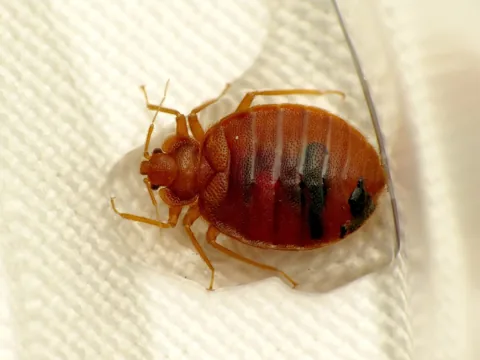 Bed Bug
Cimex lectularius
Bed bugs are wingless, blood-feeding insects that feed on sleeping or resting people, mostly at night; they have resurged worldwide and now turn up even in the finest hotels. CDC says they turn up in five-star hotels and resorts, and how clean a place is does not determine whether bed bugs are present.
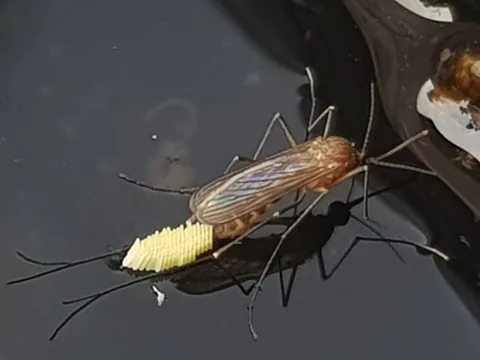 Southern House Mosquito
Culex quinquefasciatus
The southern house mosquito bites in the evening, at night and in the early morning, and Texas A&M calls it the most important carrier of West Nile virus and St. Louis encephalitis, especially in the eastern U.S. It prefers birds but will come through unscreened windows and open doors to bite sleeping people.
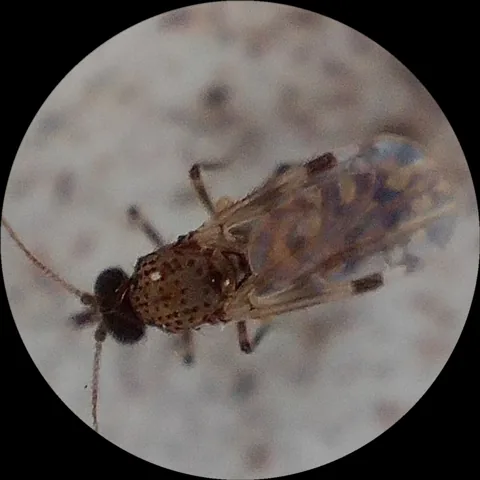 Biting Midges
Culicoides spp.
No-see-ums, also called biting midges, punkies, sand gnats or sand flies, are tiny flies, mostly in the genus Culicoides, whose bites itch intensely; most people feel them without ever seeing them.
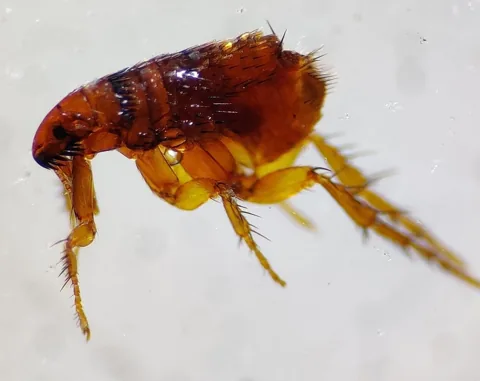 Cat Flea
Ctenocephalides felis
The cat flea is the most common external parasite of domestic cats and dogs, and the flea most often found on both. Adults spend most of their time on the pet, while eggs, larvae and pupae build up wherever the pet rests.
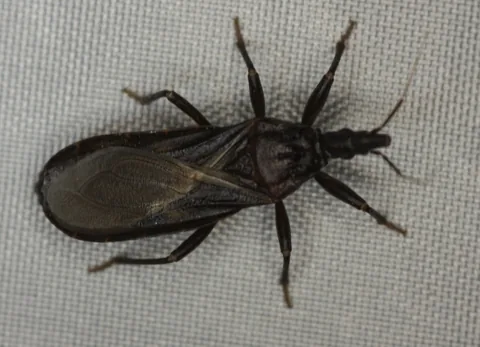 Western bloodsucking conenose
Hospesneotomae protracta
The western bloodsucking conenose (Hospesneotomae protracta, formerly Triatoma protracta) is the most important kissing bug in California and one of the three species most often found around homes in Arizona. It normally lives in the nests of wood rats (pack rats) and other wildlife, but adults fly to lights at night, get into houses and may feed on sleeping people. The bite is painless, yet it can leave itchy, swollen welts, and in people who become allergic it can trigger anaphylaxis.
No photo yet
Tropical rat mite
Ornithonyssus bacoti
The tropical rat mite is a tiny blood-feeding mite that lives in the nests of rats and mice. It isn't a true parasite of people, but when its hosts die, leave or are exterminated, the hungry mites wander through the house and bite readily, causing itchy red bumps.
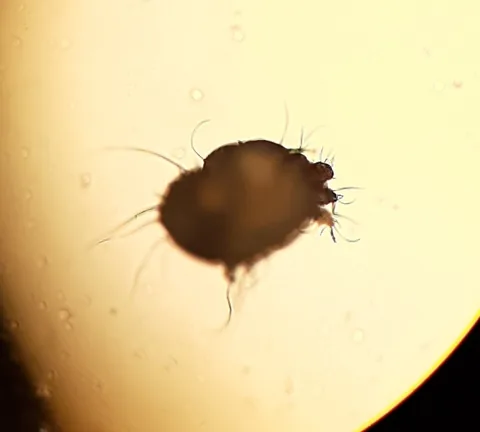 Scabies mite
Sarcoptes scabiei
Scabies is a skin infestation caused by a microscopic mite, Sarcoptes scabiei, that burrows into the upper layer of the skin of people and many other mammals. Its hallmark is intense itching, especially at night, and it spreads mainly through direct, prolonged skin-to-skin contact.
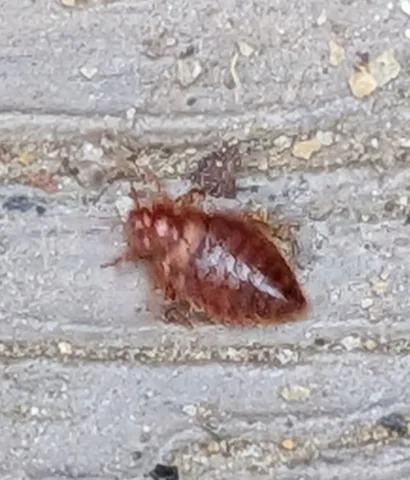 Bat Bugs
Cimex adjunctus (eastern bat bug) and Cimex pilosellus (western bat bug)
Bat bugs are close relatives of bed bugs that feed on the blood of roosting bats. They turn up in homes that have bats in the attic or walls, and they may bite people when the bats leave or are shut out.
Start with the clues, not the bite
Most bites look alike: CDC says bed bug bites look similar to mosquito or flea bites, a slightly swollen red area that may itch, and the American Academy of Dermatology (AAD) says people who rarely see the bugs often blame mosquitoes, fleas or spiders, or mistake the bites for hives, an itchy rash or chickenpox. Write down what you notice for a few nights; these details narrow it faster than the bumps do.[1][4]
- When you notice them: AAD says most people bitten by bed bugs don't know it until the next day, while with a mosquito bite the cause is usually obvious and the itch tends to go away quickly.[3][27]
- Where on your body: Kentucky Extension says flea bites occur mainly around the ankles, while bed bugs feed on any skin exposed during sleep, such as the face, neck, shoulders, back, arms and legs. UC IPM says conenose (kissing) bug bites come in groups on the face, neck, arms or legs.[2][13]
- The pattern: AAD describes bed bug bites as clusters of 3 to 5 in a zigzag line; CDC says the marks may be random or in a straight line.[4][1]
- Who else is affected: Kentucky Extension says reactions to bed bug bites vary from person to person, and some people have little or no reaction, so one bitten sleeper doesn't rule out the bed. Scabies, by contrast, spreads through close, prolonged skin-to-skin contact, according to CDC.[2][20]
- Which room: Texas A&M says bird and rodent mite bites are usually noticed only in certain rooms, near the nest.[17]
- The season: UC IPM says conenose bug bites usually happen in late spring to early summer and that flea numbers tend to rise sharply in spring and early summer. Texas A&M says bird mite problems are most common in spring and summer, and rodent mite problems seem most frequent in fall and winter.[13][10][17]
Bed bugs
CDC says bed bugs bite people at night while they sleep, can travel over 100 feet in a night, and tend to live within 8 feet of where people sleep. They don't live on the body: AAD says a bed bug comes out of hiding, feeds for about 4 to 12 minutes and goes back. CDC says they are not known to spread diseases, but the bites can cause itching, lost sleep and, rarely, allergic reactions.[1][3]
Timing varies, and that confuses people. AAD says the first bites may take up to 14 days to itch, and people tend to become more sensitive so later bites can raise welts within seconds. A study in Medical and Veterinary Entomology found the delay fell from about 10 days to a few seconds with repeated exposure, and 18 of 19 volunteers eventually reacted. Kentucky Extension, on the other hand, cites studies in infested apartments suggesting about 30 percent of people don't react even when bitten repeatedly. Either way, bites alone can't confirm or rule out bed bugs.[3][5][2]
AAD's list of things to check near where you sleep: tiny blackish specks of excrement, specks of blood on sheets and mattress seams, shed shells, and small white, oval eggs in cracks and crevices. The signs of bed bugs guide walks through a full inspection; bed bug look-alikes covers bat bugs, swallow bugs and others that get confused with them. AAD advises against bug sprays or foggers for bed bugs, which have little effect on them.[4][2]
Mosquitoes in the bedroom
CDC says mosquitoes bite day and night, and house mosquitoes (Culex) are most active from dusk to dawn. Indoors they rest in dark, humid places such as closets, under furniture, under sinks and in showers. The guide to getting rid of mosquitoes in the house covers screens, indoor water and resting spots.[7][6][8]
No-see-ums (biting midges) are a less obvious night-and-twilight biter. Arizona Extension says they are usually active at dawn or dusk, are small enough to pass through ordinary window screens and will occasionally bite people indoors, leaving small red welts or water-filled blisters that itch intensely. They are a nuisance in almost any habitat near springs, ponds, lakes or river banks.[9]
Fleas
UC IPM describes a flea bite as a small red spot with a red halo, usually without much swelling, and says fleas don't live and breed on people. CDC says flea bites can cause discomfort, itching and irritation, and sometimes fleas carry the germs of flea-borne typhus, plague or cat scratch disease.[10][12]
A pet that sleeps on the bed brings fleas to you. No pets? Kentucky Extension says raccoons, opossums, skunks or squirrels living in an attic, chimney or crawl space are often the source when fleas infest a home with no pets. The flea guide covers treating pets with your veterinarian and treating the house.[11][10]
Kissing bugs (conenose bugs)
CDC says triatomine bugs hide in walls and roofs during the day and come out to feed on blood at night. UC IPM says the bites are painless at first but may soon itch and swell into a welt that can last several days, and they are often confused with spider or other bites. The adults fly and are drawn to lights at night, and in California they live in wood rat nests and fly into homes.[14][13]
Some kissing bugs carry the parasite that causes Chagas disease. CDC says infection can happen when someone unknowingly rubs the bug's feces into the bite wound, eyes or mouth, and that the bugs rarely infest U.S. homes because houses are well sealed. Texas A&M advises not touching a kissing bug with bare hands and collecting it with a glove or small plastic bag; the kissing bugs and Chagas disease guide covers safe collection, testing and what to tell a doctor.[14][15][16]
Bird and rodent mites
Bird mites and rat mites live in nests and turn to people when the birds or rodents leave or die. Minnesota Extension says bird mites are about 1/32 inch, small but visible, and go looking for other hosts when a nest is abandoned. Texas A&M says they don't hop or fly but can crawl several yards from a nest, and they don't hitchhike on people to other places the way bed bugs do.[18][17]
Remove or deal with the nest or the rodents first, and collect a few mites on tape for identification before anyone treats. The mites that bite people guide covers sampling, chiggers, straw itch mites and other mites.[17][19]
Scabies: itching at night that's in the skin
Scabies isn't a bedroom pest; it's a microscopic mite that burrows into the upper layer of the skin. CDC lists intense itching, especially at night, and a pimple-like rash as the most common symptoms. AAD says the itch can be intense enough to keep people awake, and MedlinePlus lists severe itching, most often at night.[20][21][22]
CDC says it spreads mostly through direct, prolonged skin-to-skin contact, and that the first time someone is infested, symptoms can take 4 to 8 weeks to appear, though they can spread it before then. Pest control in the house won't fix it: a health care provider has to diagnose and treat it. See mites that bite people for scabies treatment and cleaning.[20]
Spiders: rarely the answer
Spiders get blamed for many night bites they didn't cause. UC IPM says the jaws of most spiders are too small to bite people, that spiders don't seek people out, and that a spider trapped in bedding usually causes no more than itching or a bee-sting-like reaction. MedlinePlus also says most spider bites are harmless. Kentucky Extension notes that some bites do happen when a sleeping person presses against a spider that has crawled onto the bed. Bug bite identification covers the few spiders that matter medically.[23][25][24]
Itching at night with no bug in sight
Itch often feels worse at night, and not only because of bites. A review in the International Journal of Molecular Sciences describes nocturnal itch as common in people with long-term itch from many causes. A systematic review in Dermatology and Therapy found sleep disturbance much more likely in adults with atopic dermatitis (eczema) than in those without it, with itching and scratching as major contributors.[29][30]
AAD says you can have intensely itchy skin and see nothing on it, and MedlinePlus says unexplained itching may be a sign of a disease that could be serious. Causes these sources name include:[27][26]
- Dry skin, which MedlinePlus calls a common cause of itching, especially in the dry winter months; AAD adds that skin becomes thinner and drier by age 65.[26][27]
- Skin conditions such as eczema, psoriasis, hives, contact dermatitis and superficial skin infections like folliculitis (MedlinePlus).[26]
- Allergic reactions to things you touch, such as nickel in jewelry, zippers and belt buckles, or fragrances and shampoos (AAD), and irritants such as soaps, chemicals or wool (MedlinePlus).[27][26]
- Medicines: AAD names some opioid pain relievers, aspirin and some blood pressure drugs, and MedlinePlus lists several antibiotics and other drugs. Ask the prescriber before stopping anything.[27][26]
- Conditions inside the body, including kidney disease, liver disease, iron deficiency anemia and some blood cancers (MedlinePlus and AAD). AAD says itch from liver disease often starts on the palms and soles.[26][27]
- Pregnancy, and nerve problems such as the itch that can linger after shingles (MedlinePlus and AAD).[26][27]
- Other parasites that live on the body, such as head, body or pubic lice and pinworms (MedlinePlus).[26]
When no one can find a bug
Cornell's New York State IPM program says an entomologist can only tell you whether a sample contains an identifiable arthropod; if nothing is found, no pest control should be recommended, and a dermatologist or other medical provider is often needed. Cornell also warns that repeated exposure to cleaning chemicals, rubbing alcohol and pesticides can make itching worse.[19]
Sometimes the feeling of bugs crawling or biting persists with no bug at all. A review in the Annual Review of Entomology describes this as a medical condition that physicians treat, not a pest problem. The mites that bite people guide has more on it and on household irritants that cause the same feeling.[31][19]
Easing the itch tonight
These steps come from MedlinePlus and AAD. They are for ordinary bites and itch, not for a serious reaction.[26][28]
- Wash the bites with soap and water; AAD says this helps prevent a skin infection and reduces itching.[4][25]
- Don't scratch. MedlinePlus suggests keeping fingernails short and wearing cool, light, loose bedclothes.[26]
- Apply an ice pack or cold compress, or an over-the-counter hydrocortisone cream (AAD and MedlinePlus).[28][26]
- An over-the-counter oral antihistamine can help; MedlinePlus warns some cause drowsiness.[28][26]
- For itch without bites, lukewarm baths with little soap and moisturizer afterward help dry skin (MedlinePlus).[26]
- Watch the bites for several days for signs of infection: increasing redness, swelling or pain (MedlinePlus), or bites that feel tender or ooze pus (AAD).[25][4]
When to see a doctor
Call 911 for trouble breathing, wheezing, swelling of the face, mouth or tongue, throat tightness or trouble swallowing, or feeling faint or weak after a bite. MedlinePlus lists these as signs of a severe allergic reaction, and AAD lists difficult breathing, a swollen tongue and an irregular or forceful heartbeat as serious reactions to bed bug bites that need immediate care. UC IPM says some people react this strongly to kissing bug bites too.[25][3][13]
- Many bites, large blisters, fever or feeling very sick after bed bug bites (AAD).[3]
- A rash, fever or body aches after a bug bite; AAD says to tell the doctor about the bite so they can check for a disease it may have spread.[28]
- A bite that looks infected (AAD and MedlinePlus).[4][25]
- A possible kissing bug bite, or swelling of one eyelid after one: CDC describes eyelid swelling as a sign of Chagas infection when the bug's feces get into the eye or a bite near it.[15][14]
- Itching that keeps you awake, spreads among household members or comes with a pimple-like rash, which can be scabies (CDC).[20][21]
- Itch that is severe, keeps coming back without a clear cause, covers your whole body, or comes with hives that keep returning (MedlinePlus).[26]
Common questions
- How can I tell bed bug bites from mosquito bites?
- Often you can't from the bite alone. Bed bug bites tend to show up the next morning in lines or zigzag clusters, while a mosquito bite's itch usually goes away quickly. Finding bed bugs or their droppings and shed skins in the bed is what confirms them.[3][4][27][1]
- Why am I the only one getting bitten?
- People react differently. Kentucky Extension says some people have little or no reaction to bed bug bites, and a study found reactions can take days to appear on first exposure. Someone else in the bed may be bitten without any marks.[2][5]
- Why does my skin itch more at night?
- Many people with long-term itch say it's worse at night, and it's well described in medical reviews. Bites, scabies, dry skin, eczema and some medical conditions can all do it; see a provider if it keeps you up or has no clear cause.[29][20][26][27]
- Can spiders bite me while I sleep?
- Rarely. Most spiders can't bite through human skin, and a spider pressed against you in bed usually causes no more than itching or a bee-sting-like reaction.[23][24]
- Should I spray my bedroom?
- Not until you know what's biting. AAD says foggers and bug sprays have little effect on bed bugs, and Cornell's IPM program says no pest control should be recommended if no pest is found.[4][19]
Photo credits
- Bed Bug: (c) Katja Schulz, some rights reserved (CC BY) — via iNaturalist, CC BY 4.0
- Southern House Mosquito: (c) Lek Khauv, some rights reserved (CC BY) — via iNaturalist, CC BY 4.0
- Biting Midges: Sinaloa Silvestre, public domain (CC0), via iNaturalist
- Cat Flea: (c) Thomas Gyselinck, some rights reserved (CC BY) — via iNaturalist, CC BY 4.0
- Western bloodsucking conenose: (c) Andrew Meeds, some rights reserved (CC BY) — via iNaturalist, CC BY 4.0
- Scabies mite: Tero Linjama, public domain (CC0), via iNaturalist
- Bat Bugs: (c) Jason Hill, some rights reserved (CC BY) — via iNaturalist, CC BY 4.0
Sources
- Centers for Disease Control and Prevention, “About Bed Bugs.” www.cdc.gov/bed-bugs/about/index.html (accessed 2026-11-10)
- University of Kentucky Entomology, “ENTFACT-636: Bed Bugs.” entomology.mgcafe.uky.edu/ef636 (accessed 2026-11-10)
- American Academy of Dermatology, “Bedbugs: Signs and symptoms.” www.aad.org/public/diseases/a-z/bed-bugs-symptoms (accessed 2026-11-10)
- American Academy of Dermatology, “Bedbugs: Diagnosis and treatment.” www.aad.org/public/diseases/a-z/bed-bugs-treatment (accessed 2026-11-10)
- Medical and Veterinary Entomology, via PubMed, “Reinhardt, Kempke, Naylor and Siva-Jothy (2009), Sensitivity to bites by the bedbug, Cimex lectularius, Med. Vet. Entomol. 23(2):163-166.” pubmed.ncbi.nlm.nih.gov/19292820/ (accessed 2026-11-10)
- U.S. Centers for Disease Control and Prevention, “Life Cycle of Culex Mosquitoes.” www.cdc.gov/mosquitoes/about/life-cycle-of-culex-mosquitoes.html (accessed 2026-11-10)
- Centers for Disease Control and Prevention, “Preventing Mosquito Bites.” www.cdc.gov/mosquitoes/prevention/index.html (accessed 2026-11-10)
- U.S. Centers for Disease Control and Prevention, “Mosquito Control at Home.” www.cdc.gov/mosquitoes/mosquito-control/mosquito-control-at-home.html (accessed 2026-11-10)
- University of Arizona Cooperative Extension, “Something's biting me, but I can't see it! (No-See-Ums IPM Short, June 2018).” cales.arizona.edu/apmc/docs/No-See-Ums-IPMShort.pdf (accessed 2026-11-10)
- University of California Statewide IPM Program, “Pest Notes: Fleas (Home and Landscape).” ipm.ucanr.edu/home-and-landscape/fleas/ (accessed 2026-11-10)
- University of Kentucky Entomology, “ENTFACT-602: Flea Control and Prevention.” entomology.mgcafe.uky.edu/ef602 (accessed 2026-11-10)
- U.S. Centers for Disease Control and Prevention, “About Fleas.” www.cdc.gov/fleas/about/index.html (accessed 2026-11-10)
- University of California Statewide IPM Program, “Pest Notes: Conenose Bugs, UC ANR Publication 7455.” ipm.ucanr.edu/home-and-landscape/conenose-bugs/ (accessed 2026-11-10)
- Centers for Disease Control and Prevention, “How Chagas Disease Spreads.” www.cdc.gov/chagas/spreads/index.html (accessed 2026-11-10)
- Centers for Disease Control and Prevention, “About Chagas Disease.” www.cdc.gov/chagas/about/index.html (accessed 2026-11-10)
- Texas A&M University, College of Veterinary Medicine & Biomedical Sciences, “Found a Bug? (Kissing Bug Community Science Program).” kissingbug.tamu.edu/found-a-bug/ (accessed 2026-11-10)
- Texas A&M AgriLife Extension, Insects in the City, “Rat and Bird Mites (ENT-3009).” citybugs.tamu.edu/factsheets/biting-stinging/others/ent-3009/ (accessed 2026-11-10)
- University of Minnesota Extension, “Bird and Rodent Mites.” extension.umn.edu/insect-relatives/bird-and-rodent-mites (accessed 2026-11-10)
- Cornell University, New York State Integrated Pest Management, “Mystery Bites.” cals.cornell.edu/integrated-pest-management/mystery-bites (accessed 2026-11-10)
- Centers for Disease Control and Prevention, “About Scabies (2024).” www.cdc.gov/scabies/about/index.html (accessed 2026-11-10)
- American Academy of Dermatology, “Scabies: Signs and Symptoms.” www.aad.org/public/diseases/a-z/scabies-symptoms (accessed 2026-11-10)
- MedlinePlus, U.S. National Library of Medicine, “Scabies (Medical Encyclopedia).” medlineplus.gov/ency/article/000830.htm (accessed 2026-11-10)
- University of California Statewide IPM Program, “Pest Notes: Spiders, UC ANR Publication 7442.” ipm.ucanr.edu/home-and-landscape/spiders/ (accessed 2026-11-10)
- University of Kentucky Entomology, “Eliminating Spiders Around Homes and Buildings (ENTFACT-623).” entomology.mgcafe.uky.edu/ef623 (accessed 2026-11-10)
- MedlinePlus, U.S. National Library of Medicine, “Insect bites and stings (Medical Encyclopedia).” medlineplus.gov/ency/article/000033.htm (accessed 2026-11-10)
- MedlinePlus, U.S. National Library of Medicine, “Itching (Medical Encyclopedia).” medlineplus.gov/ency/article/003217.htm (accessed 2026-11-10)
- American Academy of Dermatology, “10 reasons your skin itches uncontrollably and how to get relief.” www.aad.org/public/everyday-care/itchy-skin/itch-relief/relieve-uncontrollably-itchy-skin (accessed 2026-11-10)
- American Academy of Dermatology, “Tips to prevent and treat bug bites.” www.aad.org/public/everyday-care/injured-skin/bites/prevent-treat-bug-bites (accessed 2026-11-10)
- International Journal of Molecular Sciences, via PubMed, “Lavery, Stull, Kinney and Yosipovitch (2016), Nocturnal Pruritus: The Battle for a Peaceful Night's Sleep, Int. J. Mol. Sci. 17(3):425 (abstract).” pubmed.ncbi.nlm.nih.gov/27011178/ (accessed 2026-11-10)
- Dermatology and Therapy, via PubMed, “Jeon et al. (2017), Frequency and Management of Sleep Disturbance in Adults with Atopic Dermatitis: A Systematic Review, Dermatol. Ther. 7(3):349-364 (abstract).” pubmed.ncbi.nlm.nih.gov/28707054/ (accessed 2026-11-10)
- Annual Review of Entomology, abstract via PubMed, “Hinkle 2010, Ekbom syndrome: the challenge of 'invisible bug' infestations.” pubmed.ncbi.nlm.nih.gov/19961324/ (accessed 2026-11-10)