The short answer
- Grasp the tick with clean, fine-tipped tweezers right at the dog's skin, then pull upward with steady, even pressure. Don't twist or jerk it.[3][6][5]
- Don't smother it with petroleum jelly, nail polish or alcohol-soaked cotton, and don't use heat. Clean the bite spot and your hands afterward.[5][6][3]
- Remove ticks as soon as you find them. Cornell says the Lyme disease bacteria need the tick attached for at least 24 to 48 hours before they pass to a dog, and CDC tells veterinarians that removing attached ticks right away lowers the risk of disease.[7][4]
- Watch your dog for changes in behavior or appetite for weeks afterward. CDC says signs of tick-borne disease may not show for 7 to 21 days or longer, and Lyme signs in dogs can take 2 to 5 months.[1][7][6]
- Check dogs that go outdoors every day, and ask your veterinarian which tick preventive suits your dog. Never use human insect repellents on a dog, and never put any tick product on a cat without asking your veterinarian first.[1][3]
Ticks that bite dogs
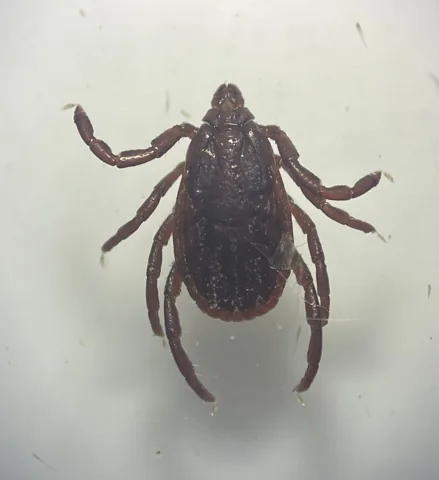 Brown Dog Tick
Rhipicephalus sanguineus
The brown dog tick is unusual: unlike most ticks, it can complete its entire life cycle indoors. It occurs across the United States, is met more often in the southern states, and can build up to high numbers on dogs and in homes and kennels.
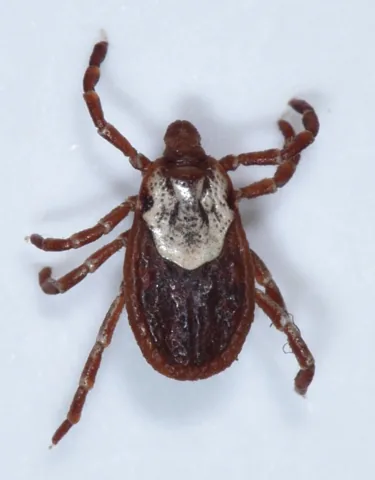 American Dog Tick
Dermacentor variabilis
The American dog tick, also called the wood tick, is widely distributed east of the Rocky Mountains. Adult females are the stage most likely to bite people, especially in spring and summer, and adults commonly climb to the crown of the head.
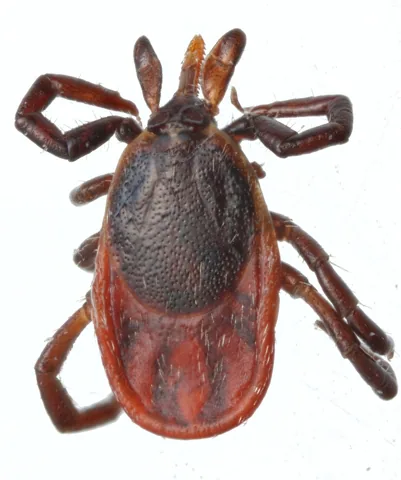 Blacklegged Tick
Ixodes scapularis
The blacklegged tick, often called the deer tick, is widely distributed across the eastern United States and transmits the bacteria that cause Lyme disease along with several other diseases.
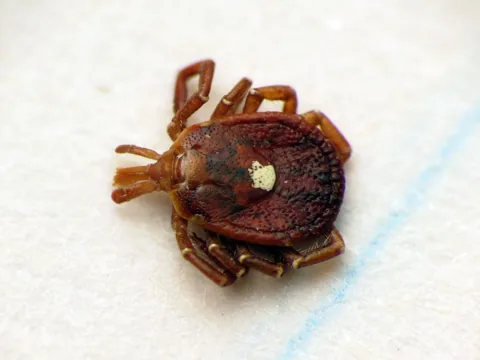 Lone Star Tick
Amblyomma americanum
The lone star tick is a very aggressive tick that readily bites people and pets across the Northeast, South and Midwest; its bite is linked to alpha-gal syndrome, a red meat allergy.
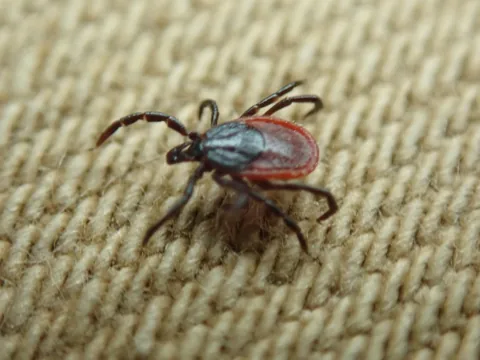 Western Blacklegged Tick
Ixodes pacificus
The western blacklegged tick is the West Coast relative of the eastern deer tick and the only tick that spreads Lyme disease bacteria to people in California. It bites people more often than any other tick in the state.
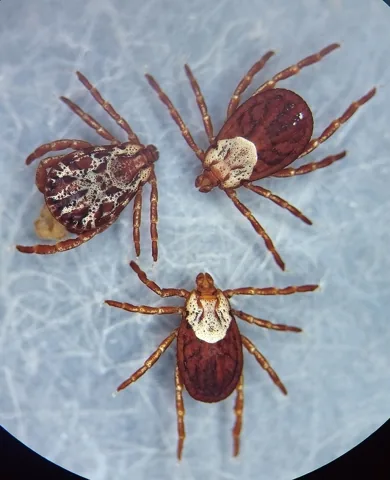 Rocky Mountain Wood Tick
Dermacentor andersoni
The Rocky Mountain wood tick is the tick most often found on people and pets in Colorado and Utah. It is most active in spring, then goes dormant as the weather turns hot and dry, and it is the vector of Colorado tick fever.
What you need
- Fine-tipped tweezers. CDC's dog fact sheet calls for clean, fine-tipped tweezers, and AVMA says to use fine-tipped tweezers for dogs the same way as for people.[3][6]
- A tick removal tool, if you have one. Cornell's veterinary college says either tweezers or a tick removal device works, used with slow, steady pull. For people, CDC says plain tweezers work very well among the many removal devices sold.[7][5]
- Something between your fingers and the tick if you have no tweezers. AVMA suggests shielding your fingers with tissue paper, a foil gum wrapper or a plastic sandwich bag, because a tick's body fluids may be infectious.[6]
- Soap and water, rubbing alcohol or hand sanitizer for cleaning up, and a sealed container, tape or some alcohol for the tick.[5]
Step by step
- Find the tick by running your fingers through the fur. CDC notes that ticks are hard to spot on dogs with long or dark fur.[2][1]
- Grip the tick as close to the skin's surface as you can. Grasping it there, rather than by the swollen body, avoids squeezing the tick.[3][5][6]
- Pull straight up and away from the skin with steady, even pressure. Twisting or jerking can leave the mouthparts behind in the skin, CDC and AVMA both warn.[3][5][6]
- Clean the bite area and wash your hands well.[3][5]
- Look the dog over for more ticks. Finding one attached often means there are others, CDC says of people, and its pet guidance calls for checking the whole animal.[5][2]
- Remember that your dog had a tick. If it gets sick later, CDC says to tell your veterinarian that you saw ticks on it or that it spent time in wooded or grassy areas.[3]
What not to do
Most folk methods try to make the tick back out on its own. CDC says petroleum jelly, heat, nail polish and other substances may agitate the tick and push infected fluid into the skin. AVMA says suffocating a tick with alcohol-soaked cotton makes it regurgitate while its mouthparts are still in, which can raise the risk of infection.[5][6]
- Don't burn the tick, coat it, or soak it in place.[5][6]
- Don't twist. A systematic review of tick-removal studies, all done in animals, found only limited, very low-quality evidence, but what there was favored pulling, with forceps or commercial devices, over rotating with forceps.[10][5]
- Don't crush the tick with your fingers, and avoid handling its body bare-handed.[5][6]
- Don't wait for a vet appointment to remove it. CDC warns, for people, that delaying removal to get professional help can raise the risk of tick-borne disease, and Cornell's advice for dogs is prompt removal.[5][7]
If the head stays in
CDC's advice for people is to take them out with tweezers if that's easy and otherwise leave them alone, because the skin pushes them out as it heals. The veterinary sources used here don't give separate advice for dogs, so ask your veterinarian if you are concerned about the spot.[5][6]
What to do with the tick
Kill it by putting it in alcohol, sealing it in a container or bag, wrapping it tightly in tape or flushing it. If you want it identified, keep it in the sealed container or alcohol instead of flushing it, and see the human tick-bite guide for how to save one. Knowing the species helps, because different ticks carry different diseases: CDC says the brown dog tick spreads Ehrlichia canis, the lone star tick spreads E. ewingii and E. chaffeensis, and the blacklegged tick carries the Lyme disease bacteria and Anaplasma.[5][4][7][8]
How to check a dog for ticks
CDC recommends a tick check every day for dogs that go outdoors, especially after time outside. Run your fingers through the fur with gentle pressure and feel for small bumps. AVMA says dogs on outdoor trips should be checked often, or at least at the end of each day.[1][2][6]
- In and around the ears.[2][3]
- Around the eyelids.[2][3]
- Under the collar.[2][3]
- Under the front legs and between the back legs.[2][3]
- Between the toes.[2][3]
- Around the tail.[2][3]
- Ticks can be active all year, though CDC says they're most active in spring and summer, and Cornell notes they can be active whenever it's above about 40 degrees F.[3][7][9]
Why fast removal matters
Many tick-borne germs don't pass to the dog the moment a tick bites. Cornell says a blacklegged tick must stay attached for 24 to 48 hours to pass on the bacteria behind anaplasmosis, and at least that long for Lyme disease. CDC tells veterinarians that removing attached ticks right away reduces the risk of disease, which is why a daily check is worth the few minutes it takes. The sources used here don't give figures for other diseases and ticks.[8][7][9][4]
What to watch for afterward
Cornell says many dogs infected with Lyme disease or anaplasmosis never get sick, but CDC asks owners to watch closely for changes in behavior or appetite after a known or suspected tick bite. How long signs take depends on the disease, and the sources give different windows:[1][7][8]
- General: CDC says signs of tick-borne disease in pets may not appear for 7 to 21 days or longer.[1]
- Ehrlichiosis: signs can start 1 to 3 weeks after the bite, according to CDC.[3]
- Anaplasmosis: Cornell says signs appear 1 to 2 weeks after transmission.[8]
- Rocky Mountain spotted fever: AVMA says the first sign is usually a high fever 4 to 5 days after the bite.[6]
- Lyme disease: Cornell and AVMA both say signs often don't appear until 2 to 5 months after the bite.[7][6]
- CDC's ehrlichiosis fact sheet says to take your dog to a veterinarian if it isn't eating, acts tired, or shows bruising or bleeding. Cornell lists fever, lameness, lethargy, poor appetite, swollen joints and swollen lymph nodes as the most common Lyme signs.[3][7]
Tick-borne diseases in dogs
These are the main ones CDC, AVMA and Cornell describe in dogs. Your veterinarian can tell you which occur where you live.[1][9]
- Lyme disease: spread by the blacklegged (deer) tick and most common in the Northeast, mid-Atlantic and upper Midwest, Cornell says. Most exposed dogs never get sick. A less common kidney form, Lyme nephritis, is serious and may be more likely in young to middle-aged retrievers.[7]
- Anaplasmosis: also spread by blacklegged ticks, and by western blacklegged ticks per AVMA. Many dogs that test positive never get ill; sick dogs commonly have fever, poor appetite, lethargy and dehydration, Cornell says. AVMA notes it's hard to tell from Lyme disease because the signs and regions overlap.[8][6]
- Ehrlichiosis: CDC says it can be life-threatening if untreated. The brown dog tick spreads E. canis across the United States, and the lone star tick spreads other Ehrlichia species mainly in the Southeast and East. AVMA describes weight loss, fever, swollen lymph nodes and bleeding in severe cases.[3][4][6]
- Rocky Mountain spotted fever: besides the high fever, AVMA describes pinpoint or larger blood spots on the lips, gums and thin-haired skin, and swelling of the legs, lips and ears.[6]
- Babesiosis: AVMA says infected dogs may look normal or may suddenly go into shock, with fever, weakness, swollen lymph nodes and very pale gums.[6]
- Testing: antibody blood tests can stay positive after a dog has recovered, for months to years according to CDC, or several months according to Cornell, so a positive result doesn't always mean active disease. Cornell says Lyme testing should wait at least 4 to 8 weeks after a bite. Treatment, when needed, is the veterinarian's call; CDC and Cornell both name the antibiotic doxycycline as the usual choice for these infections.[3][7][8]
Tick preventives: the main kinds to ask your vet about
CDC says dogs are very susceptible to tick bites and tick-borne disease, and that a tick preventive is important because vaccines don't exist for most of these diseases. Cornell's veterinary college sorts the options by how they work. Your veterinarian can help you pick the one that works best for your dog and tell you which tick diseases occur in your area.[1][9]
- Collars: some repel ticks and prevent attachment, but Cornell says they have to fit snugly enough to touch the skin.[9]
- Permethrin spot-ons: many topical products containing permethrin repel ticks and keep them from attaching, Cornell says. Some of these dog products are not safe for cats.[9]
- Fipronil spot-ons: these don't repel ticks or stop attachment, so you may still see ticks on the dog. Cornell says they don't kill a tick until it has been attached for 24 hours.[9]
- Isoxazoline chews (oral): these don't prevent attachment either, but kill ticks relatively fast. Cornell says they have been linked to rare seizures and that dogs with a seizure history should see the vet before using them. CDC points owners to the FDA's 2018 notice on possible side effects from isoxazoline products.[9][1]
- All year: CDC advises year-round use of vet-recommended preventives, and Cornell calls year-round prevention best practice.[3][9]
- Bathing and swimming: Cornell says most topicals should dry for two days before a bath or swim, and collars that are often submerged may stop working sooner.[9]
- Side effects to watch for, per Cornell: anxiousness, itching, vomiting or diarrhea, and red or irritated skin.[9]
- Pregnant or nursing dogs: Cornell says fipronil products may be used, but ask your vet before any other collar or topical. Oral preventives haven't been evaluated for safety in pregnant or nursing dogs.[9]
- Never use human insect repellents on dogs, CDC says. For more on keeping pets safe around pesticides, see the pet-safe pest control guide.[3][4]
The Lyme vaccine
Lyme disease is the only tick-borne disease dogs can be vaccinated against, CDC says. Cornell says the vaccine is given once, boosted after 3 to 4 weeks and then yearly, that an earlier Lyme infection does not give natural immunity, and that vaccinated dogs still need year-round tick prevention. Ask your veterinarian whether it fits your dog's location, risk and lifestyle.[1][7]
A note about cats
CDC's pet tick-check advice covers cats as well as dogs, but prevention is different. CDC says cats are extremely sensitive to many chemicals and that no tick product should go on a cat without asking a veterinarian first. Cornell warns that many products safe for dogs are not appropriate for cats.[2][1][9]
Ticks in the house, the yard and on people
- Dogs can carry ticks indoors, where those ticks may bite people. CDC says the brown dog tick is unusual because it can infest homes and kennels. If you keep finding ticks on an indoor dog, see the brown dog tick guide.[1]
- People don't catch Lyme disease or anaplasmosis from their dogs, Cornell says, but from the same ticks. Check yourself too after walks in tall grass or woods, and see the tick-bite guide if one bites you.[7][8]
- In the yard, Cornell suggests keeping the lawn short and clearing leaf piles, and CDC suggests reducing tick habitat. The yard tick control guide covers that in detail.[7][1]
- Where you can, keep dogs out of tick-infested areas, AVMA advises.[6]
Common questions
- What is the safest way to get a tick off a dog?
- Grasp the tick at the skin with fine-tipped tweezers and pull straight up with steady, even pressure. Don't twist, squeeze, burn or coat it. Clean the spot and your hands afterward.[3][5][6]
- Should I put alcohol or petroleum jelly on the tick first?
- No. CDC says substances like petroleum jelly or nail polish may push infected fluid into the skin, and AVMA says alcohol-soaked cotton makes the tick regurgitate. Use alcohol only to kill the tick after it's off.[5][6]
- What if part of the tick is left in my dog's skin?
- For people, CDC says to remove the mouthparts with tweezers if it's easy and otherwise let the skin push them out. The veterinary sources used here don't address dogs separately, so ask your veterinarian if you are concerned.[5]
- Do I need to take my dog to the vet after removing a tick?
- Watch your dog closely for weeks for changes in behavior or appetite. CDC and Cornell say to see a veterinarian for signs such as not eating, tiredness, limping, fever, or bruising or bleeding.[1][3][7]
- How long does a tick have to be on a dog to spread Lyme disease?
- Cornell's veterinary college says at least 24 to 48 hours, which is why daily checks and prompt removal help.[7][9]
- Can my dog give me Lyme disease?
- No. People get it from tick bites, not from dogs, but a dog can carry ticks into the house where they may bite people.[7][1]
Photo credits
- Brown Dog Tick: (c) NoahM, some rights reserved (CC BY) — via iNaturalist, CC BY 4.0
- American Dog Tick: (c) Don Loarie, some rights reserved (CC BY) — via iNaturalist, CC BY 4.0
- Blacklegged Tick: (c) Christian Back, some rights reserved (CC BY) — via iNaturalist, CC BY 4.0
- Lone Star Tick: (c) Katja Schulz, some rights reserved (CC BY) — via iNaturalist, CC BY 4.0
- Western Blacklegged Tick: Randal, public domain (CC0), via iNaturalist
- Rocky Mountain Wood Tick: (c) Toby, some rights reserved (CC BY) — via iNaturalist, CC BY 4.0
Sources
- Centers for Disease Control and Prevention, “Preventing Ticks on Pets.” www.cdc.gov/ticks/prevention/preventing-ticks-on-pets.html (accessed 2026-11-10)
- Centers for Disease Control and Prevention, “How to Check Your Pet for Ticks (fact sheet).” www.cdc.gov/healthy-pets/media/pdfs/publications/check-pets-for-ticks-508.pdf (accessed 2026-11-10)
- Centers for Disease Control and Prevention, “Ehrlichiosis in Dogs: Fast Facts for Dog Owners.” www.cdc.gov/ehrlichiosis/pdfs/FS-EhrlichiosisOwners-508.pdf (accessed 2026-11-10)
- Centers for Disease Control and Prevention, “Ehrlichiosis in Dogs: Fast Facts for Veterinarians.” www.cdc.gov/ehrlichiosis/pdfs/fs-ehrlichiosisvet-508.pdf (accessed 2026-11-10)
- Centers for Disease Control and Prevention, “What to Do After a Tick Bite (tick removal).” www.cdc.gov/ticks/after-a-tick-bite/index.html (accessed 2026-11-10)
- American Veterinary Medical Association, “Disease precautions for outdoor enthusiasts and their companion animals.” avma.org/resources-tools/veterinarians-and-public-health/quick-tips-outdoor-enthusiasts (accessed 2026-11-10)
- Cornell University College of Veterinary Medicine, “Lyme disease (Riney Canine Health Center).” www.vet.cornell.edu/departments-centers-and-institutes/riney-canine-health-center/canine-health-topics/lyme-disease (accessed 2026-11-10)
- Cornell University College of Veterinary Medicine, “Anaplasmosis (Riney Canine Health Center).” www.vet.cornell.edu/departments-centers-and-institutes/riney-canine-health-center/canine-health-topics/anaplasmosis (accessed 2026-11-10)
- Cornell University College of Veterinary Medicine, “Flea and tick prevention (Riney Canine Health Center).” www.vet.cornell.edu/departments-centers-and-institutes/riney-canine-health-center/health-info/flea-and-tick-prevention (accessed 2026-11-10)
- Journal of Evidence-Based Medicine (PubMed 28464468), “Huygelen V, Borra V, De Buck E, Vandekerckhove P. Effective methods for tick removal: a systematic review. J Evid Based Med. 2017;10(3):177-188.” pubmed.ncbi.nlm.nih.gov/28464468/ (accessed 2026-11-10)