The short answer
- Less is more: lay down a film so fine it's barely visible. Cockroaches avoid heavy piles of powder, and thick layers cake and clump.[2][1][11]
- Use a bulb or bellows duster to put dust into cracks, wall voids and the spaces under cabinets and appliances, never on countertops or other exposed surfaces.[2][1]
- Use only products registered as pesticides. EPA says not to use pool- or food-grade diatomaceous earth against bed bugs, because it can harm you when you breathe it in. In a 2024 lab test, diatomaceous earth bought at a supermarket and DE sold as a litter conditioner didn't kill bed bugs, while DE from a pest management company did.[5][16]
- Keep dusts dry, out of reach of children and pets, and out of electrical boxes and electronic equipment.[1][8][10][2][11]
Pests dusts are used on
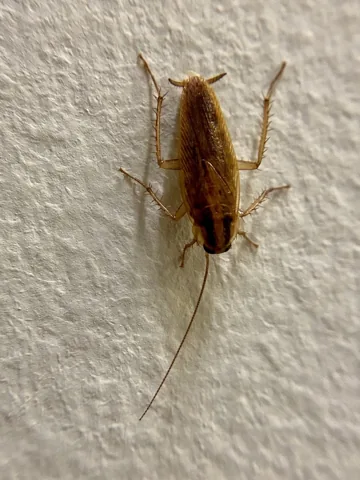 German Cockroach
Blattella germanica
The German cockroach is the most common cockroach living indoors in California and perhaps worldwide, especially in apartment buildings, and it has the fastest reproductive cycle of the common pest cockroaches. Penn State and Kentucky call it the most common cockroach in homes, apartments and other buildings, and Kentucky says it does not live outdoors.
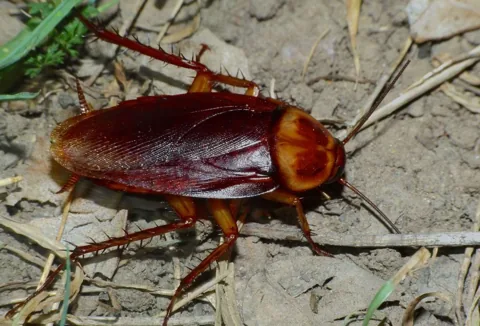 American Cockroach
Periplaneta americana
The American cockroach is the largest of the common pest cockroaches. It prefers warm, humid places and readily lives outdoors, in sewers, storm drains and water meter boxes, coming indoors to forage. Kentucky, Penn State and Minnesota all describe it as the largest cockroach commonly found in buildings.
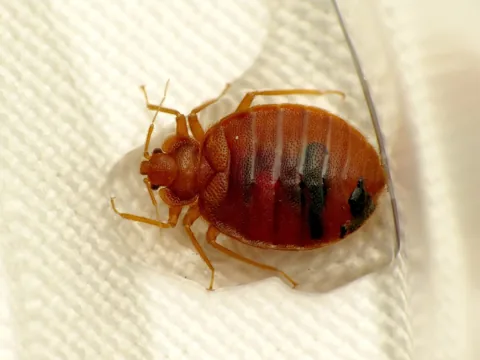 Bed Bug
Cimex lectularius
Bed bugs are wingless, blood-feeding insects that feed on sleeping or resting people, mostly at night; they have resurged worldwide and now turn up even in the finest hotels. CDC says they turn up in five-star hotels and resorts, and how clean a place is does not determine whether bed bugs are present.
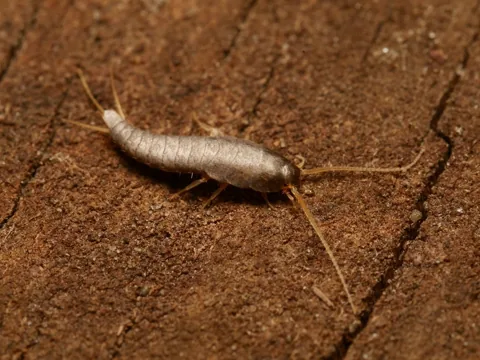 Silverfish
Lepisma saccharinum
Silverfish are nocturnal, wingless insects that hide by day and graze at night on paper, book bindings, starch in clothing and dry foods, preferring damp, warm places such as laundry rooms.
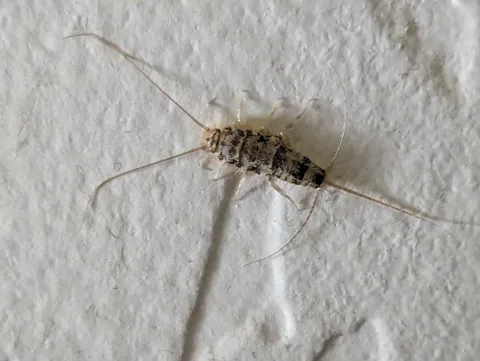 Firebrat
Thermobia domestica
Firebrats are close relatives of silverfish that thrive in very warm, dry spots such as around ovens, heaters, fireplaces and hot water pipes, grazing on paper, starch and dry foods.
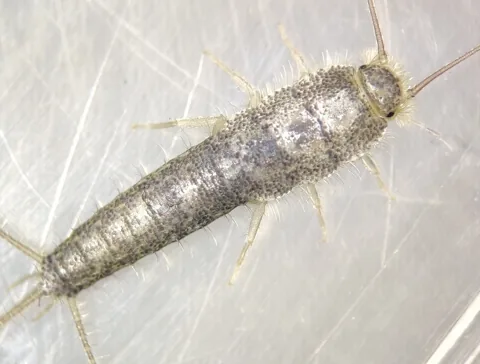 Long-tailed silverfish
Ctenolepisma longicaudatum
The long-tailed silverfish, Ctenolepisma longicaudatum, also called the gray silverfish or paperfish, is a large indoor silverfish that tolerates drier rooms than the common silverfish. It eats paper, book bindings, photos and cotton, and in recent years it has spread quickly in Europe, turning up in homes, museums and archives.
The three common dusts
- Boric acid kills insects that eat it: it disrupts their stomach, can affect their nervous system, and can also scratch their outer surface. The dust clings to a cockroach walking through it, and the roach swallows it while grooming its legs and antennae.[6][2][1]
- Diatomaceous earth doesn't have to be eaten. It absorbs the oils and fats from an insect's outer layer so the insect dries out and dies, and its sharp edges speed that up. UC IPM describes the same thing for bed bugs: dusts cling to the insect and wear away its protective wax layer.[7][3]
- Silica gel (silica aerogel) also kills by drying. It clings to the insect and absorbs its waxy coating; one silica gel label notes it has no odor and won't stain.[1][10]
- Because desiccant dusts work by drying insects out, bed bugs can't develop resistance to them, but they may take several months to work. A diatomaceous earth label makes the same point, calling the product a mechanical insect killer that insects can't become immune to.[5][9]
Where dusts make sense
Dusts belong in enclosed, out-of-the-way places where pests hide, such as wall voids, the hollow spaces under cabinets and appliances, drawer wells and openings around pipes and wiring. Used that way, they can be an important part of an IPM program for cockroaches. Penn State adds cracks in dressers and closet shelves, valances above windows, and the hollow legs of chairs and tables.[1][10][8][11]
For cockroaches, Kentucky finds boric acid more effective than diatomaceous earth. It acts slowly, often taking 7 days or more to have a significant effect, but it isn't repellent and keeps working for a very long time if it stays dry and undisturbed.[2][1]
Desiccant dusts such as diatomaceous earth and silica aerogel are repellent but effective in voids and other out-of-the-way places. Silica aerogel can also be applied during construction to keep cockroaches from getting established.[1]
Bed bugs react to dusts too. In a New Mexico State University video-tracking study, bed bugs took longer to first touch areas treated with diatomaceous earth products than areas treated with pyrethroid, pyrethrin or silica gel dusts, and they visited areas treated with the DE products and with silica gel less often than areas treated with two pyrethroid dusts or a silica-and-pyrethrum dust.[15]
For bed bugs, borate, diatomaceous earth, silica gel and pyrethrin or pyrethroid dusts can give long-term control as part of an integrated program when placed in dry spots under baseboards and in wall voids. Bed bugs may not groom as much as other pests, so dusts that must be eaten, such as borates, may work less well than expected. NPIC likewise says to apply dust products for bed bugs in small amounts in the cracks and crevices where they hide.[3][12]
Kentucky Entomology calls diatomaceous earth messy to apply and seldom much help in eliminating bed bugs, but says silica gel can be very effective if applied correctly. Quality matters as well: a 2024 French lab study found that diatomaceous earths varied in how well they killed bed bugs depending on their quality.[4][16]
Boric acid is not recommended outdoors, because it is toxic to plants.[1][6]
How to apply dust
- Use a bulb or bellows hand duster from a hardware store; it's the easiest way to put out the small amounts that work best.[2]
- Aim for a fine deposit barely visible to the eye. Cockroaches avoid heavy accumulations of powder much as people avoid walking through a snowdrift, and thin films work better than thick layers.[2][1][11]
- For German cockroaches, puff dust into crevices along the edges and corners of cabinets, the wall-floor joint behind the refrigerator, stove and dishwasher, and openings where sink plumbing enters the wall.[2]
- To reach the void under appliances, take off the kick panel and lay a light film through the whole space. Under cabinets, you can drill holes the size of the duster tip in the top of the kick panel and dust through them.[1]
- Pull out bottom drawers to dust the drawer wells, and don't leave dust exposed when you put the drawers back.[10][8]
- Wall voids can be reached by taking off a switch plate cover, but don't put dust directly into the electrical box.[10]
- A craft or paint brush pushes dust into cracks and into the tufts and folds of mattresses and cushions. For bed bugs, Kentucky recommends brushing tiny, barely visible amounts of silica gel onto seams, tufts, folds and crevices.[10][4]
- Mattresses are a point where sources differ. The silica gel and diatomaceous earth labels both include directions for dusting mattresses, especially folds, tufts and edges, but UC IPM says pesticides generally aren't applied to mattresses or bedding because of the potential risk to people. If you treat a mattress at all, use only a product whose label lists mattresses.[10][9][3]
- Insects need moisture, so check damp areas such as kitchens and bathrooms carefully. Keep the dust itself dry: boric acid that gets wet and then cakes loses its electrostatic charge and roaches won't pick it up, so clean up caked deposits and reapply.[10][1]
- Don't steam over dust. In a Rutgers study, a short burst of steam on dust-treated tiles significantly cut how well all three bed bug dusts tested worked, and silica gel deposits aged one or two months at 52 to 100% relative humidity killed fewer bed bugs than fresh ones. If you steam for bed bugs, avoid steaming surfaces you've already dusted.[14]
- Once the pests are gone, seal the cracks you treated to help prevent new problems.[10]
How much to use
Rates come from the label. One silica gel label calls for 2 ounces per 100 square feet as a light, visible film, or 1 pound per 1,000 square feet in attics and crawlspaces, and about 1/4 ounce in each wall void reached for bed bugs. A diatomaceous earth label says the amount should usually be 1 to 5 ounces per 100 square feet, applied lightly and uniformly.[10][9]
The diatomaceous earth label says to reapply no more than once a week and that insects that touch or eat the powder die within 48 hours. Its indoor ant directions exclude fire, harvester, carpenter and Pharaoh ants.[9]
Label wording varies. One boric acid label says to create a barrier the insects must crawl through, and to brush any powder still visible after application into cracks or remove it.[8]
Labels and extension advice don't always match on quantity. The same boric acid label tells you to apply liberally under and behind appliances and to dust drawer wells liberally, while Kentucky, UC IPM and Penn State all recommend light deposits because cockroaches avoid heavy ones. Stay within what your label allows, and know that the extension sources find a thin film does the work.[8][2][1][11]
Safety
- Any dust can irritate the eyes. Breathing diatomaceous earth can irritate the nose, and an extremely large amount can cause coughing and shortness of breath. All three labels cited here carry a caution that the product causes moderate eye irritation.[7][8][9][10]
- Kentucky advises eye protection and disposable gloves when applying silica gel: the powder is light and dusty, airborne particles irritate, and it dries the skin.[4]
- The diatomaceous earth label calls for a NIOSH-approved dust mask during prolonged use. In living areas it says to avoid leaving deposits on exposed surfaces or putting dust into the air, and to test a small area for staining first.[9]
- Pesticide diatomaceous earth is mostly amorphous silica, which is associated only with mild, reversible lung inflammation. Long-term breathing of crystalline silica, present in very small amounts in pesticide products, is linked to silicosis and other lung problems. NIOSH says silicosis comes from breathing in excessive amounts of respirable crystalline silica and can't be reversed, though it can be prevented.[7][13]
- Pool-grade and food-grade diatomaceous earth are not for bed bugs. EPA says this type can harm you when inhaled; the pesticide version uses a different size of diatoms, which reduces the hazard.[5]
- Boric acid is low in toxicity if eaten or touched, but children crawl on floors and put things in their mouths, so many boric acid products must be applied out of their reach. NPIC suggests getting down to a child's level afterward to check. Penn State says not to let children into areas treated with boric acid, and the boric acid label restricts it to places children and pets can't reach.[6][11][8]
- Never put boric acid on countertops or other exposed surfaces, especially where food is prepared, and wipe up stray powder with a damp cloth. Don't puff it into electronic equipment, which the dust can damage.[2]
- Don't apply dust with kitchen spoons or measuring cups and then use them for food again, and don't treat toys or stuffed animals.[8][10]
Common questions
- Why isn't my boric acid working?
- Check three things: too much powder (roaches avoid heavy deposits), dust that got wet and caked (roaches won't pick it up), and placement (it works in the cracks and voids where roaches hide). It's also slow; expect 7 days or more for a significant effect.[2][1]
- Can pets get into insecticide dust?
- Yes, if the dust is within their reach; NPIC lists that as a route of exposure for both diatomaceous earth and boric acid. The boric acid label allows it only in areas children and pets can't get to, and Penn State says not to place dusts where children or pets could contact them. Keep pets out of the room while you work.[7][6][8][11]
- Can I use these dusts outdoors?
- Boric acid isn't recommended outdoors because it is toxic to plants. One diatomaceous earth label allows outdoor dusting of patios, sills, window and door frames and foundations; any of these dusts works only while it stays dry.[1][9][7]
- Is diatomaceous earth from the garden center or grocery store good enough?
- Not for bed bugs. EPA says pool- and food-grade DE shouldn't be used because it can harm you when breathed in, and a 2024 lab study found supermarket DE and litter-conditioner DE ineffective against bed bugs. Use only a product registered by EPA as a pesticide.[5][16]
- Do dusts still work in a humid basement or bathroom?
- Less well. UC IPM says boric acid that gets wet and cakes stops being picked up by cockroaches, and a Rutgers study found silica gel aged in humid air killed fewer bed bugs than fresh dust. Clean up caked deposits and reapply.[1][14]
Photo credits
- German Cockroach: (c) Sandra H Statner, some rights reserved (CC BY) — via iNaturalist, CC BY 4.0
- American Cockroach: (c) Steve Kerr, some rights reserved (CC BY) — via iNaturalist, CC BY 4.0
- Bed Bug: (c) Katja Schulz, some rights reserved (CC BY) — via iNaturalist, CC BY 4.0
- Silverfish: (c) Alexis Tinker-Tsavalas, some rights reserved (CC BY) — via iNaturalist, CC BY 4.0
- Firebrat: (c) Rachel Stringham, some rights reserved (CC BY) — via iNaturalist, CC BY 4.0
- Long-tailed silverfish: (c) Thomas Gyselinck, some rights reserved (CC BY) — via iNaturalist, CC BY 4.0
Sources
- University of California Statewide IPM Program, “Pest Notes: Cockroaches, UC ANR Publication 7467 (Home and Landscape).” ipm.ucanr.edu/home-and-landscape/cockroaches/ (accessed 2026-11-11)
- University of Kentucky Entomology, “ENTFACT-614: Cockroach Elimination in Homes and Apartments (revised March 2026).” entomology.mgcafe.uky.edu/ef614 (accessed 2026-11-11)
- University of California Statewide IPM Program, “Pest Notes: Bed Bugs, UC ANR Publication 7454 (Home and Landscape).” ipm.ucanr.edu/home-and-landscape/bed-bugs/ (accessed 2026-11-11)
- University of Kentucky Entomology, “ENTFACT-636: Bed Bugs (revised March 2026).” entomology.mgcafe.uky.edu/ef636 (accessed 2026-11-11)
- U.S. Environmental Protection Agency, “Do-it-yourself Bed Bug Control.” www.epa.gov/bedbugs/do-it-yourself-bed-bug-control (accessed 2026-11-11)
- National Pesticide Information Center, “Boric Acid General Fact Sheet.” npic.orst.edu/factsheets/boricgen.html (accessed 2026-11-11)
- National Pesticide Information Center, “Diatomaceous Earth General Fact Sheet.” npic.orst.edu/factsheets/degen.html (accessed 2026-11-11)
- U.S. EPA Pesticide Product Label System, “Harris Famous Roach Powder (boric acid) label, EPA Reg. No. 3-10 (EPA-stamped, Mar. 9, 2021).” www3.epa.gov/pesticides/chem_search/ppls/000003-00010-20210309.pdf (accessed 2026-11-11)
- U.S. EPA Pesticide Product Label System, “Harris Diatomaceous Earth label, EPA Reg. No. 3-18 (EPA-stamped, Apr. 28, 2021).” www3.epa.gov/pesticides/chem_search/ppls/000003-00018-20210428.pdf (accessed 2026-11-11)
- U.S. EPA Pesticide Product Label System, “SiliCide (alternate brand name CimeXa Insecticide Dust) label, EPA Reg. No. 73079-12 (EPA-stamped, June 1, 2016).” www3.epa.gov/pesticides/chem_search/ppls/073079-00012-20160601.pdf (accessed 2026-11-11)
- Penn State Extension, “German Cockroaches.” extension.psu.edu/german-cockroaches (accessed 2026-11-11)
- National Pesticide Information Center, “Bed Bugs.” npic.orst.edu/pest/bedbug.html (accessed 2026-11-11)
- Centers for Disease Control and Prevention, NIOSH, “Silica and Worker Health.” www.cdc.gov/niosh/silica/about/index.html (accessed 2026-11-11)
- Journal of Economic Entomology, via PubMed, “Ranabhat and Wang (2020), Effect of Moisture on Efficacy of Selected Insecticide Dusts Against the Common Bed Bug, Journal of Economic Entomology 113(4):1933-1939.” pubmed.ncbi.nlm.nih.gov/32491179/ (accessed 2026-11-11)
- Insects, via PubMed, “Agnew and Romero (2017), Behavioral Responses of the Common Bed Bug, Cimex lectularius, to Insecticide Dusts, Insects 8(3):83.” pubmed.ncbi.nlm.nih.gov/28786920/ (accessed 2026-11-11)
- Parasite, via PubMed, “Oumarou et al. (2024), Bed bug control with various dusts: Efficacy comparison between silicon dioxide, diatomaceous earth, and Sommieres earth, Parasite 31:41.” pubmed.ncbi.nlm.nih.gov/39052011/ (accessed 2026-11-11)